Support

Banlung

About

Banlung is a stunning city hidden in the heart of Ratanakiri Province, often referred to as the gateway to the country's "wild east." Surrounded by dense jungles, rolling hills, and rubber plantations, it immediately leaves an impression on travelers with its streets painted in the characteristic color of red earth. For those wishing to see authentic Asia without the tourist crowds, Cambodia reveals itself here from a completely different, pristine side.

The city's geographical location is unique: it is nestled in the northeast, near the borders of Laos and Vietnam, giving it the special atmosphere of a cultural crossroads. With a population of about 30,000 people, Banlung remains a quiet and cozy place with a steady pace of life, despite its role as an important administrative and transport hub for the region. The climate here is slightly cooler than in the lowlands, making your stay quite comfortable.
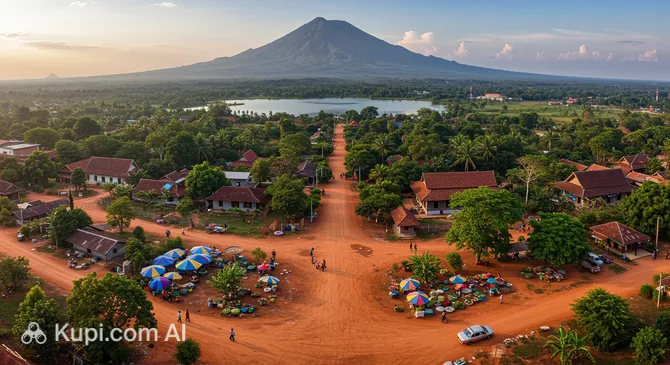
Banlung. Illustration.
Source: Kupi.com AI

Despite its remoteness, the city is not standing still. Modern hotels and administrative buildings are appearing alongside traditional ways of life. To better understand how this settlement transformed from a quiet village into an ecotourism center, looking into the history of Banlung would be useful. This place is perfect for those tired of the hustle and bustle of megacities and seeking solitude.

Travelers come here for incredible natural beauty. Banlung serves as the starting point for trips to the mystical volcanic Yeak Laom Lake with its emerald water and to powerful waterfalls hidden in the thickets of the forest. Another unique feature of the region is the opportunity to visit ethnic tribal villages ("Highland Khmer"), who have preserved their ancient beliefs and traditions.

Banlung is a city with a soul, ready to give you a true sense of discovery. If you are looking for adventure, want to swim in an ancient volcanic crater, or simply enjoy the sincere hospitality of the locals, be sure to include this corner in your travel itinerary.

Weather Overview

The climate in Banlung is tropical monsoon, which means a clear division of the year into dry and wet seasons. Due to its location in the hilly terrain of Ratanakiri Province, it is often a bit fresher here than in the flat parts of the country. Checking a detailed weather in Banlung forecast before your trip will help, but general trends remain consistent from year to year.

The best time to visit is considered the dry season, which lasts from November to April. The most comfortable months are December and January: average temperatures are around 26-27°C, and nights can be pleasantly cool with minimums around 21°C. There is practically no rainfall during this time. However, by March and April, the heat intensifies, and daytime temperatures often reach 35-36°C, which should be considered when planning active walks.

From May to October, the rainy season prevails in the region. The peak of precipitation occurs in July, August, and September, when it can rain almost every day (up to 30 rainy days a month). Despite the high humidity, nature flourishes at this time: waterfalls become full-flowing, and the jungle turns a deep green. Expect consistently warm weather throughout the year with periodic downpours in summer and dry, cooler nights in winter.

Average monthly temperature

Average monthly precipitation

Interesting Facts

Beyond its main attractions, Banlung holds many fascinating secrets that only reveal themselves to the most curious travelers. Here are a few facts that offer a new perspective on this city:

  • A name with deep meaning. The name of Ratanakiri Province, of which Banlung is the capital, comes from the Sanskrit words "Ratna" (gem) and "Giri" (mountain). This is more than just a poetic image: sapphires, zircons, and amethysts have been mined in the region's volcanic soils for centuries. Even today, you can find prospectors at the local market selling raw stones mined from small-scale pits nearby.

  • Unique transport. On the city roads, you will often see amazing vehicles resembling something out of a sci-fi movie—trucks without cabs. The driver operates the vehicle while sitting practically on the open engine, while passengers ride in the back. These "mechanical buffaloes" are perfectly adapted for navigating washed-out dirt roads during the rainy season.

  • Land of the "Highland Khmer." Banlung is surrounded by villages of ethnic minorities (Krung, Tumpoun, Jarai), known as the "Highland Khmer." Their culture is strikingly different from that of lowland Cambodia: they have preserved ancient animist beliefs, worship forest spirits, and build houses with entrances always oriented to the east to greet the sun.

  • Gateway to the real jungle. The city serves as a starting point for unique eco-tours where travelers can feel like explorers. Routes include overnight stays in hammocks under the open sky and wildlife watching. The surrounding forests are home to rare northern yellow-cheeked gibbons, and the morning air is often filled with their distinctive singing, which can't be heard anywhere else in the region.

How to Get There

A journey to Banlung, the administrative center of Ratanakiri Province, is a trip to one of the most remote and picturesque corners of the country. Since the city lies off the main tourist routes, logistics require prior planning. You can find more details on how to get to Banlung to choose the most suitable route. There is no direct air service to the city, and the nearest airports are located in neighboring countries, making the trip an interesting multi-country route.

The nearest hub is Pleiku Airport (IATA: PXU), located in Pleiku, Vietnam. It is approximately 116 km from Banlung. The journey by taxi or transfer takes about 3 hours and 15 minutes; however, it is important to factor in time for crossing the border between Vietnam and Cambodia. This is a regional airport with moderate passenger traffic, convenient for those entering from the Vietnamese highlands.

Another option is flying into Buon Ma Thuot Airport (IATA: BMV), which is in Buon Ma Thuot (Vietnam), at a distance of about 171 km. Travel time is approximately 4 hours and 35 minutes. You can also consider Pakse Airport (IATA: PKZ) in Laos, located 202 km from the city (about a 5 hour and 20 minute drive). Using these airports requires having the appropriate visas for border crossings.

For convenience, here is summary information on the main airports in the region:

AirportPassenger trafficDistance
Pleiku Airport600 000116 km
Phung-Duc Airport1 mln171 km
Pakse Airport200 000202 km
Phu Cat Airport1.6 mln224 km
Chu Lai International Airport1.7 mln262 km

There is no rail service to Banlung. The most common way to reach the city within Cambodia remains buses and minivans. Regular services depart from Phnom Penh and Siem Reap; the journey takes between 8 to 10 hours and passes through scenic provincial landscapes. Roads have significantly improved in recent years, making land travel quite comfortable.

Main Attractions

Banlung is primarily a gateway to the world of wildlife that northeastern Cambodia is so famous for. You won't find pompous palaces or noisy amusement parks here, but there are places that take your breath away with their pristine beauty and tranquility.

The undisputed symbol of the region is the volcanic Yeak Laom Lake (Boeng Yeak Laom). Located just a few kilometers from the city, it is an almost perfect circle of clear emerald water. The lake formed in the crater of an extinct volcano about 4,000 years ago and is considered sacred by local tribes. It is an ideal spot for swimming in calm waters, having a picnic on the provided wooden decks, or walking along the shaded path that circles the crater through the dense jungle.

Waterfalls are equally popular with tourists, and there are many around the city. One of the most accessible and picturesque is Ka Chanh Waterfall. Here, the water drops from a height of about 12 meters into a wide pool, creating a constant mist. A highlight of this spot is the wooden suspension bridge stretched across the river right in front of the falls. It offers a great angle for photos, and the brave can head down to swim at the base of the powerful flow.

Another impressive cascade is Katieng Waterfall, located in the middle of an untouched forest. It attracts travelers with its power and unique geology: the rock hangs over in such a way that you can walk directly behind the falling wall of water. This spot is often chosen for relaxation not only by tourists but also by local families, giving it a particularly cozy atmosphere.

For those who want to touch Buddhist culture and enjoy a panoramic view of the surroundings, it is worth visiting Wat Rahtanharahm, also known as the Reclining Buddha temple. It is located at the foot of Eisey Patamak Hill. The main attraction here is a huge statue of Buddha in a state of Nirvana, and from the top of the hill, there is a magnificent view of the city and the endless green hills of the province, which is especially captivating at sunset.

Local Cuisine

Banlung's cuisine is a true kaleidoscope of flavors from the northeastern part of the country, where Khmer gastronomic traditions intertwine with the customs of local hill tribes. Many dishes are based on the freshest products sourced from local lakes and rivers. A signature of the region is a hearty soup with fish or river crayfish, generously seasoned with tropical herbs. It has a rich aroma and a mild spiciness that perfectly highlights the taste of fresh seafood.

For lovers of the exotic, Cambodia reveals an unexpected side in this region. Thanks to the proximity of the jungle, unique ingredients often appear on the menu: wood mushrooms, wild vegetables, and even fried insects. Special mention goes to dishes cooked over an open fire, such as wild boar, deer, or chicken meat with aromatic spices. This cooking method gives the food a unique "smoky" note and is considered a delicacy.

Dining culture in the city is centered around the central market and street stalls. Life is always buzzing here, and the counters overflow with exotic fruits and spices. Locals and tourists often stop by to drink the famous Cambodian coffee or grab a snack on the go: crispy spring rolls and sweet rice cakes with coconut are particularly popular. Additionally, Banlung occasionally hosts gastronomic festivals where you can try dishes from various ethnic groups and learn the secrets of ancient recipes.

Travel Tips

Preparing for a trip to Banlung requires special attention, as this city is the gateway to the wild jungles of Ratanakiri Province, where the infrastructure differs from that of the capital. To ensure your adventure in this authentic corner for which Cambodia is famous goes smoothly and leaves only pleasant memories, we have gathered the most relevant tips.

  1. Clothing and the "Red Dust Factor." The golden rule for your wardrobe in Ratanakiri is to avoid white and easily soiled items. The famous local red dust (in the dry season) or mud (in the rainy season) stains fabric and shoes permanently. Opt for khaki or dark-colored clothing. Be sure to bring comfortable trekking sandals or sneakers with non-slip soles for the descents to waterfalls, as well as swimwear for relaxing at Yeak Laom Lake.
  2. Transport Specifics. There is no conventional public transport here. Ride-hailing apps (like Grab) are extremely unstable or simply find no cars. The best way to get around is by renting a scooter, but only if you are confident driving on gravel and sand. A safer and more relaxed alternative is to hire a tuk-tuk with a driver for the whole day at a fixed price.
  3. Financial Preparation. Bank cards are only accepted at a few expensive hotels, so cash is king. Two currencies are used: US Dollars (for larger expenses) and Riels (for change and small purchases). Try to carry small-denomination US bills ($1, $5, $10) in perfect condition—torn or old banknotes may be refused. There are ATMs in the center, but it's better to withdraw money in advance.
  4. Health and First Aid Kit. Since the city is surrounded by jungle, the risk of insect bites is higher here. Always use repellents with a high DEET content, especially at sunset. Pack your own first aid kit with antiseptics, Band-Aids, and stomach remedies, as local pharmacies close early and have a limited range.
  5. Connectivity and Navigation. Wi-Fi is available in most guesthouses, but the signal often drops outside the city. It is recommended to buy a local SIM card (Smart or Metfone) for mobile data. Important: download offline maps of the region in advance, as forest trails to waterfalls are often not marked and there is no signal in low-lying areas.
  6. Etiquette When Visiting Tribes. Ethnic minorities ("Highland Khmer") live in the surroundings of Banlung. When visiting their villages, show maximum respect: always ask for permission before photographing people (especially the elderly), and never enter their homes without an invitation. Remove your shoes before entering any residence or temple.
  7. What to Avoid. Do not buy souvenirs made from wild animal parts or rare wood species—this is not only unethical but also illegal. Also, refrain from walking through thick brush off established trails without a local guide—the jungle can easily disorient an unprepared tourist.
  8. Protecting Your Tech. Take several zip-lock bags or a waterproof case for your phone and camera. In the dry season, they will save your electronics from the ubiquitous red dust that gets everywhere, and in the rainy season, from sudden tropical downpours during a bike ride.

Banlung is an amazing and somewhat wild place where nature dictates its own rules. By following these simple recommendations, you can avoid everyday troubles and fully focus on the beauty of the waterfalls, the mysterious crater lakes, and the sincere hospitality of the local people.

Entertainment & Nightlife

Nightlife in Banlung is strikingly different from the noisy parties of Siem Reap or Phnom Penh. Here, you won't find neon signs, booming nightclubs, or streets packed with bars until dawn. Evening leisure in the capital of Ratanakiri Province is primarily about a relaxed atmosphere, heartfelt conversations among travelers after trekking through the jungle, and the chance to enjoy the silence of a tropical night. The city falls asleep quite early, with most establishments closing their doors by 10:00–11:00 PM.

The center of gravity for tourists in the evening becomes the restaurants and bars at guesthouses located near the central market and the old airfield. The crowd here is eclectic: from backpackers in hiking boots to expats enjoying the cool mountain air. The dress code is completely informal—comfortable clothes and no pretension. One of the most popular places for evening gatherings is The Green Carrot. This establishment functions as both a restaurant and a bar, where you can not only have a delicious dinner but also grab a cocktail or a local beer while swapping travel stories with other tourists.

If you want to see how the locals relax, look for traditional Khmer karaoke bars (KTV). They are scattered around the outskirts of the city and are easily recognizable by their bright, sometimes excessive lighting. This is the only type of "club" that Cambodia offers in this region. The atmosphere there is specific: loud music, private booths, and plenty of beer. For a Western tourist, it can be an interesting cultural experience, but be prepared for a language barrier.

For those seeking a more tranquil and refined setting, an evening at a hotel bar, such as the one at the Ratanakiri Boutique Hotel, is an excellent option. Here, you can spend time by the pool with a glass of wine surrounded by a well-kept garden, enjoying comfort and service—especially pleasant after a day spent in the wild.

Practical Tips and Safety:

When planning an evening out, keep in mind that street lighting in Banlung is poor. After sunset, the streets plunge into darkness, so having a flashlight is essential for your safety. The main risks are not crime (the city is generally very peaceful), but uneven roads, open storm drains, and packs of stray dogs that become active at night.

Transport can be difficult at night. Tuk-tuk and moto-taxi drivers usually finish work early. If you plan to stay out late at a location far from your hotel, be sure to arrange a pickup time with a driver in advance or ask the staff at the establishment to call transport for you. Prices for drinks and food in the evening remain very affordable: a glass of draft beer costs about $1–1.50 on average.

As for daytime entertainment within the city limits, the choice is also limited. Banlung has no cinemas, bowling alleys, or large shopping malls. Cultural leisure is replaced by walks through the colorful market and visits to small craft workshops. The main "stage" and "theater" here is nature itself and the life of the ethnic villages nearby, so travelers usually spend daylight hours on active excursions out of town.

Parks & Museums

Banlung is a city where the boundaries between urban parks and wild jungle are practically non-existent. You won't find the usual manicured squares with benches or classic museum halls with display cases here. The "green zones" are the majestic forests and hills surrounding the city, while the role of museums is played by indigenous villages and small cultural centers that preserve the memory of traditions dating back centuries.

Among the natural areas available for visiting, Eisey Patamak Hill (Phnom Svay) holds a special place. This is not just a hill, but a favorite relaxation spot for locals and tourists, located just a couple of kilometers from the center. Climbing to the top, you'll find an observation deck with a breathtaking panorama of the city and the province's endless red roads. It is especially beautiful here at sunset when the jungle is painted in golden tones. This spot is perfect for meditative rest and enjoying the silence.

Another important natural attraction is Cha Ong Waterfall. Although technically not a city park, it serves a recreational function. This is the highest waterfall in the vicinity of Banlung (about 25 meters), with water plunging from a stone ledge into a picturesque gorge. A unique feature of this place is the ability to walk into a grotto behind the flow of water and see the jungle through a "water curtain." The surrounding area is minimally developed, allowing for a feeling of complete union with nature.

Regarding cultural heritage, there are few classic museums in Banlung, but they are worth your attention. The main one is the Ethnic Minority Cultural Centre, located at the entrance to Yeak Laom Lake. This small wooden building houses a collection of items from the daily lives of hill tribes: woven baskets, musical instruments, hunting gear, and traditional clothing. The exposition is modest, but it provides an excellent overview of the lives of the people who inhabited these lands long before modern roads appeared.

A kind of "open-air museum" can be found in the gemstone mines. Ratanakiri is famous for its blue zircons and amethysts. By visiting the mining sites, you can see how prospectors manually, using century-old technologies, extract gems from deep shafts. This is a unique opportunity to touch the industrial history of the region and see the birth process of jewelry stones in real-time.

Among the architectural monuments, Wat Rahtanharahm, located at the foot of Eisey Patamak Hill, stands out. Its main shrine is a giant statue of the Reclining Buddha, one of the largest in the region. The temple complex is richly decorated with traditional Khmer carvings and paintings depicting scenes from the life of the Enlightened One. This is an active monastery where you can observe the life of monks and immerse yourself in an atmosphere of Buddhist tranquility.

For those seeking a truly unique experience, we recommend visiting the Airavata Elephant Foundation. This is not a zoo, but a conservation project that cares for the province's last elephants. You won't see shows or tricks here—only respectful treatment of the animals in their natural habitat. Walking with these giants through the forest will be one of the brightest memories of your trip to Cambodia.

Getting Around

The public transport system in Banlung differs significantly from the usual model found in megacities. In this small provincial center, there is no metro, trams, trolleybuses, or even a regular city bus system. The city is quite compact, and the main way to get around is by hired private transport or personal means of movement.

The primary modes of transport for tourists are tuk-tuks (motorcycles with a passenger trailer) and motodops (moto-taxis). They can be found everywhere: drivers usually wait at the central market, near bus stations, and outside popular hotels. A tuk-tuk is ideal for groups of 2–4 people, while a moto-taxi is a fast and budget-friendly option for solo travelers.

The payment system here is as simple and conservative as it gets: cash only. There are no transport cards, validators, or travel passes. You can pay in Cambodian Riels or US Dollars (it is better to have small bills like $1 or $5). Ride-hailing apps like Grab or PassApp hardly work in this remote region or function very unstable, so they should not be relied upon.

A key tip for any tourist in Banlung: always agree on the price in advance before getting into the vehicle. Local drivers do not use meters, and the cost of the trip is fixed verbally. Haggling is appropriate and even expected. A short trip within the city is very inexpensive, but if you plan to visit distant waterfalls, it is more economical to hire a tuk-tuk driver for a half-day or a full day at a fixed price.

The most popular alternative to public transport is renting a scooter (motorbike). This gives you complete freedom to move around the province's scenic surroundings. Rental points are available at most guesthouses and in the city center. You can also rent a mountain bike, which is an excellent choice for active travelers wishing to leisurely explore the city and nearby lakes.

An important feature of local traffic is the road condition. The region's famous red soil creates a lot of dust during the dry season, so when traveling by open transport (tuk-tuk or bike), it is highly recommended to use sunglasses and a mask or scarf. During the rainy season, dirt roads can be washed out. Remember that regular transport stops running after dark, so for evening outings, it is better to arrange a return transfer with the driver in advance.

Accommodation

Accommodation options in Banlung perfectly reflect the spirit of this remote region: you won't find high-rise five-star chain hotels or world-class luxury resorts here. The bulk of the accommodation consists of cozy guesthouses, family-run mini-hotels, and atmospheric eco-lodges. Housing here is generally simple but soulful, aimed at nature lovers and those seeking quiet. Most options offer stays in wooden bungalows on stilts surrounded by gardens, allowing you to feel the local flavor.

In terms of location, tourists are usually attracted to two main areas. The first is the city center and the vicinity of the market. Staying here is convenient for logistics: bus stations, motorbike rentals, and inexpensive cafes are all nearby. However, it can be a bit noisy and dusty. The second area, more popular with travelers, is located around Boeung Kansaign lake. A more relaxed atmosphere prevails here; many hotels have terraces overlooking the water, and the center is still just a 10–15 minute walk away.

The price range in Banlung will pleasantly surprise budget travelers. Simple fan rooms can cost from $5 to $10 per night. For this price, you get basic comfort and likely a hammock on the veranda. The mid-range segment ($15 to $40) offers rooms with air conditioning, hot water, and often a swimming pool—a huge plus after dusty trips along the province's red roads.

Booking tips:

  • Seasonality. During the peak tourist season (December to February), the best options, especially those with pools and nice views, fill up quickly. It is recommended to book them 2–3 weeks in advance.

  • Booking methods. Most popular guesthouses are listed on major international booking platforms. However, many small family lodges still prefer direct communication via messengers or social media. If you are looking for something truly authentic, you can find accommodation upon arrival, but this is risky after a long journey.

  • Payment. Be prepared for the fact that card terminals are not available everywhere. Even if you booked your room online, having a supply of cash (USD or Riel) for additional services or a deposit is essential.

Nearby Cities

For those wishing to explore the surroundings, Banlung serves as an excellent starting point for trips to several interesting places in the region, although distances in this part of the country suggest short overnight visits rather than quick day trips:

Kampong Cham is one of the nearest major cities, located on the banks of the great Mekong River. This place attracts with its relaxed atmosphere and preserved colonial architecture. Travelers often stop here to see the bamboo bridge (during the dry season) and ancient temples, enjoying authentic Cambodian provincial life away from the crowds.

Siem Reap, although quite far away, remains the main magnet for all guests of the country. It is the gateway to the legendary Angkor Wat temple complex. A trip here from Banlung allows you to swap wild jungles for the majesty of the ancient Khmer Empire and a developed tourist infrastructure with many restaurants and markets.

Phnom Penh is the capital of the kingdom, where history and modernity merge. Here you can visit the Royal Palace, the National Museum, and the lively riverfront. It is a logical continuation of the route for those who want to see the dynamic face of modern Cambodia after the quiet of Ratanakiri.

CityPopulationDistance
Lumphat19 20528 km
Stung Treng29 665113 km
Pleiku218 765114 km
Attapeu35 000121 km
Kon Tum140 000129 km

These nearby destinations provide an insight into the diverse culture and landscapes of the region, offering a contrast between the wilderness of the east and the country's cultural centers.

Shopping & Souvenirs

General Overview

Shopping in Banlung is far from the usual gloss of major tourist centers. You won't find multi-story malls with escalators or streets lined with designer boutiques. Trade in the capital of Ratanakiri Province is primarily an immersion into the authentic atmosphere of an Asian province. The city is famous for unique goods that are hard to find in other parts of the country: from the famous gemstones mined in local pits to handcrafted items by hill tribes. This is the place for those looking for local flavor and exclusive souvenirs with a history.

Main Shopping Areas

All the city's commercial life is concentrated in its central part. The main landmark is the roundabout and its adjacent streets, which are literally dotted with small shops and stores. This area is compact and easy to explore on foot. Here you can find everything you need: from pharmacies and electronics stores to souvenir shops and trekking gear outlets, which is especially relevant for tourists heading into the jungle.

Shopping Centers

There are no large shopping centers or Western-style chain supermarkets in Banlung. The role of department stores is played by small minimarkets where you can buy imported food, drinks, cosmetics, and basic necessities. The assortment in them is quite basic, so if you need specific products or branded clothing, it's better to take care of it before arriving in the province.

Markets

The heart of urban trade is Banlung Market (Phsar Banlung). This is the most colorful place in the city, worth visiting not just for shopping, but for the experience. The best time to visit is early morning, when farmers bring in fresh produce and women from ethnic minorities (Krung, Tumpoun) come to sell forest herbs, roots, and vegetables, carrying them in traditional woven baskets on their backs. At the market, you can find sections with clothing, household goods, and, of course, counters with gemstones.

Souvenirs

Banlung offers a unique range of souvenirs reflecting the richness of the region:

  • Gemstones. Ratanakiri Province is known for its deposits of zircon (blue zircon is especially prized) and amethyst. Stones are sold both cut and raw. Tip: Be careful and cautious, as glass counterfeits can be found at the market; it's better to make expensive purchases with an expert.
  • Hill Tribe Crafts. Look for traditional fabrics with geometric patterns, woven baskets, wooden pipes, and musical instruments.
  • Local Products. A great gift would be the famous Ratanakiri coffee, grown in volcanic soils, as well as local pepper and high-quality cashew nuts.

Opening Hours and Payment

Life in the province begins at sunrise. The market opens very early, around 6:00 AM, and by 5:00 PM most vendors are already packing up. Private shops may stay open a bit longer, until 7:00–8:00 PM. The main payment method is cash. Both Cambodian Riels and US Dollars are in use (it's better to have small bills). Bank cards are accepted very rarely, mostly only in expensive hotels, so a cash reserve is essential. There are ATMs in the city, concentrated in the center.

Tax Free

The Tax-Free refund system is not common in Banlung. Purchases are made at a fixed price or by agreement; no special VAT refund forms are processed in local shops. However, friendly haggling is appropriate and even welcomed at the market and in souvenir shops.

Reached the end of the page?

That means the route is fully explored