Support

Phu Yen

About

Phu Yen is a hidden gem of the coast, nestled between the turquoise waves of the South China Sea and the green hills of the Central Highlands. This picturesque corner, with Tuy Hoa as its administrative center, offers travelers a "different" Vietnam — peaceful, authentic, and free from the hustle and bustle of major metropolises.
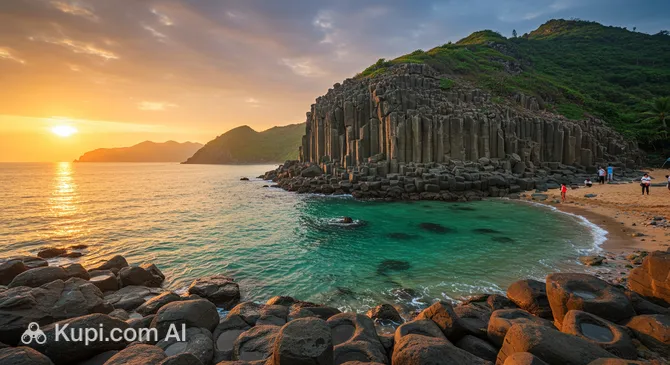
Phu Yen. Illustration.
Source: Kupi.com AI

With a population of about 231,000, Phu Yen maintains the soulful atmosphere of a province where every guest feels the sincere hospitality of the locals. There are no noisy crowds typical of popular resorts; instead, you'll find endless beaches with fine white sand, fertile plains, and pristine lagoons. The region's climate favors relaxation, allowing you to enjoy the warm sea and sun almost year-round.

The main treasures of Phu Yen are its unique natural attractions. The region's hallmark is the Ghenh Da Dia basalt columns — an amazing geological formation resembling giant stone honeycombs. Romance seekers will surely appreciate the Dai Lanh lighthouse, which offers breathtaking views of the ocean, especially at sunrise. The history of Phu Yen has also left its mark in the form of ancient monuments harmoniously integrated into the natural landscape.

A trip to Phu Yen is the perfect choice for those seeking peace and inspiration. This place invites you to forget about the urban rhythm, walk along untouched beaches, and feel like a true pioneer in a land of amazing natural beauty.

Weather Overview

The climate in this region of Vietnam can be described as warm and humid, with comfortable temperatures throughout the year. Even in the "coldest" months, such as January and December, the average temperature stays around +22°C, and at night the thermometer rarely drops below +20°C. Summer here is truly hot: from May to August, averages are around +29°C, and during the daytime, the air often warms up to +33°C.

Precipitation is unevenly distributed throughout the year but is present in almost every month. The current weather in Phu Yen is often characterized by high cloud cover and regular rains. The rainiest season lasts from September to December, when up to 26 days of precipitation per month are recorded. Expect a hot summer and a very mild winter, but be prepared for frequent rain much of the year; the driest and sunniest period is considered to be from February to April.

Average monthly temperature

Average monthly precipitation

Interesting Facts

Beyond its popular beaches and picturesque landscapes, Phu Yen holds many fascinating secrets and unique features that only reveal themselves to curious travelers.

  • Vietnam's "Giant's Causeway." Phu Yen is famous for its geological wonder — the Ghenh Da Dia basalt columns. This phenomenon occurred millions of years ago when volcanic lava met the cold waters of the sea and solidified into the shape of thousands of perfect pentagonal and hexagonal columns. In its scale and beauty, this place is often compared to the famous Giant's Causeway in Ireland.

  • Mysticism of Ancient Champa. On the top of a mountain rises the Nhan Tower — a sacred temple built in the 12th century by the ancient Champa civilization. This architectural structure is still shrouded in mystery and serves as a place of worship, while historians continue to study the unique construction techniques that allowed the tower to survive for centuries.

  • A 19th-Century Sentinel of the Sea. At Cape Dai Lanh stands one of the oldest and most beautiful lighthouses in Vietnam. Built by French engineers at the end of the 19th century, it is still operational. This place attracts romantics wishing to catch the sunrise, as it offers a stunning view of the endless ocean.

  • Land of Poets and Legends. The region is famous not only for its nature but also for its rich cultural heritage. In local fishing villages, ancient legends about sea spirits are still alive, and colorful festivals are held in honor of a bountiful catch. The beauty of Phu Yen has served as a source of inspiration for many famous Vietnamese writers and poets born in this land.

How to Get There

When planning a trip to this picturesque region, it's important to think through the logistics in advance, as there may not be direct international flights to the city itself. You can find more details on how to get to Phu Yen and choose the most suitable route, but the main method of arrival for most tourists remains a flight followed by a transfer.

The most convenient option is Tuy Hoa Airport (IATA: TBB). It is located in Tuy Hoa, the administrative center of the province. The distance to the central part of the Phu Yen area is about 27 km, so the trip by taxi or bus will take only about 60 minutes. This is a small airport primarily handling domestic flights from major cities in Vietnam.

Many travelers also choose Cam Ranh International Airport (IATA: CXR), located in the neighboring city of Nha Trang. This is a large aviation hub with high passenger traffic, receiving many international flights. However, keep in mind that the airport is in a different city, approximately 121 km from Phu Yen. A transfer to your destination will take time — expect about 3 hours and 20 minutes on the road.

An alternative is Phu Cat Airport (IATA: UIH), located in the city of Quy Nhon. It is 96 km from Phu Yen. A trip from here by ground transport will take about 2 hours and 45 minutes. This is a medium-traffic airport that can be convenient for building complex itineraries across the country.

For clarity, here is a summary of the main airports:
AirportPassenger trafficDistance
Tuy Hoa Airport620 00027 km
Phu Cat Airport1.6 mln96 km
Phung-Duc Airport1 mln115 km
Cam Ranh International Airport7 mln121 km
Pleiku Airport600 000153 km

In addition to air travel, Phu Yen can be reached by ground transport. The country's main railway line passes through the province, as does National Highway 1A, connecting the north and south of Vietnam. A trip by train or intercity bus allows you to enjoy the picturesque scenery of the coast and rice fields, although it will take significantly longer than flying.

Main Attractions

Phu Yen is a true treasure trove for lovers of nature and authentic culture. The attractions of this region are not limited to standard tourist routes; they offer immersion into a world of amazing geological forms, ancient architecture, and cinematic landscapes. A journey here is impossible to imagine without visiting several iconic sites that are the pride of the province.

Ghenh Da Dia is the undisputed highlight of the region's tourist map. This unique natural phenomenon is a coastline composed of thousands of black basalt columns. The stones have regular pentagonal and hexagonal shapes, fitting tightly together to create the effect of a giant honeycomb. Tourists come here to see powerful waves crash against the black rocks, creating snow-white foam — a sight that fascinates with its natural power and geometric harmony.

For connoisseurs of history and architecture, the Mang Lang Church is a must-visit. Built at the end of the 19th century, this temple is one of the oldest in all of Vietnam. The building is designed in a Gothic style with many elegant details and grayish walls that give it an aura of mysterious antiquity. The church is famous not only for its architecture but also for housing the first book printed in the modern Vietnamese language (Quoc Ngu), making it an important cultural monument.

If you are looking for serenity and beautiful views, head to Bai Xep Beach. This location gained wide popularity after the release of the film "Yellow Flowers on the Green Grass." A small but incredibly picturesque beach with golden sand is bordered by rocky capes. The main feature of the location is a green hill covered with cacti, offering a panoramic view of the endless sea. It is an ideal place for leisurely walks, picnics, and atmospheric photography.

Another gem of the region is the O Loan Lagoon, located at the foot of the Quan Cau Pass. This brackish body of water is especially beautiful at sunset, when the sun paints the water in golden and crimson tones. The lagoon is famous not only for its scenery but also for its gastronomy: it is here that the famous blood clams are harvested, the taste of which is considered a local standard. A trip here is a great opportunity to combine aesthetic pleasure with gastronomic discoveries.

Local Cuisine

Phu Yen's culinary map is a true discovery for foodies, where seafood takes center stage. Thanks to its extensive coastline, the core of the local menu consists of the freshest seafood. Here, you should definitely try shrimp, squid, oysters, and crabs, which local chefs prepare with great skill: grilled over charcoal, stewed in spicy sauces, or served simply with garlic and lime to highlight the natural flavor of the catch.

Among the region's authentic dishes, bánh canh hẹ is considered a true legend. This is a thick and hearty rice noodle soup with pieces of fish and an incredible amount of finely chopped chives, which give the broth a special aroma and a rich green color. Another gastronomic symbol of Phu Yen is bánh bèo. These delicate steamed rice cakes are traditionally served with shrimp, crispy fried shallots, and drizzled with a savory soy sauce.

Street food in Phu Yen is a separate pleasure, available at bustling markets and small stalls. Walking through the city, it’s impossible to miss the aroma of fried rice cakes or sweet coconut-based desserts. The food culture here is very democratic: locals and tourists often eat at small tables right on the street, enjoying the lively atmosphere. If you're lucky, you might catch a food festival featuring seafood tastings and masterclasses on preparing traditional soups.

As for drinks, freshly squeezed sugarcane juice, sold on almost every corner, and cool fruit smoothies are perfect escapes from the tropical heat. Coffee lovers should order a classic Vietnamese coffee with condensed milk — here it is particularly strong, sweet, and aromatic.

Travel Tips

Phu Yen is a region where mass tourism has not yet displaced local color, so traveling here requires a bit more preparation than a trip to popular resorts. To make your holiday as comfortable as possible and leave only pleasant impressions, we have compiled a list of important practical recommendations to help you feel confident in this authentic part of the country.

  1. Clothing and Gear. Given the hot tropical climate, opt for light clothing made from natural fabrics (cotton, linen). Be sure to bring comfortable non-slip shoes (sneakers or sandals with a heel strap), as visiting the main attraction — the basalt columns — involves walking on uneven stones. For visits to temples and pagodas, prepare clothing that covers your shoulders and knees.

  2. Transportation Logistics. Public transport in the city is poorly developed and not very convenient for tourists. The most popular way to get around is by renting a scooter, but remember that you need an international driving permit (Category A). Within Tuy Hoa, taxis and the Grab app work well, but for trips to remote natural locations, it's better to negotiate a "round-trip" rate with a driver including waiting time, as it will be difficult to call a car in the middle of nowhere.

  3. Financial Matters. Phu Yen is a provincial region, so cash is king here. Bank cards are accepted in hotels, large restaurants, and supermarkets in the administrative center, but you will need Vietnamese dong in beach cafes, markets, and souvenir shops. ATMs are easy to find in Tuy Hoa, but they are scarce outside the city. Tipping is not a strict rule, but rounding up the bill is always welcomed.

  4. Communication and Connectivity. Be prepared for the fact that locals know little to no English. We strongly recommend downloading an offline translator (such as Google Translate) and offline maps to your smartphone. For stable connectivity, it's better to buy a local SIM card (Viettel or Vinaphone have the best coverage in rural areas) immediately upon arrival in Vietnam or at mobile shops in the city.

  5. Health and Safety. The sun in Central Vietnam is very intense, even when it's cloudy, so SPF 50+ sunscreen and a hat are mandatory. Pharmacies in Tuy Hoa are common, but they usually close by 9:00 PM. Drink only bottled water. Overall, the region is safe, but be extremely careful when crossing roads — traffic here is chaotic.

  6. Local Etiquette. Vietnamese people highly value politeness. It is customary to remove your shoes when entering a private home, and often in small shops or guesthouses. It's better to hand over money or a business card with both hands — it's a sign of respect. A smile here is a universal way to smooth over any misunderstanding.

  7. What to Avoid. Do not walk around the city or enter shops in swimsuits or trunks — this is only acceptable on the beach and may offend conservative locals. Also, avoid public displays of anger, shouting, or heated arguments: in Asian culture, this means "losing face" and will only aggravate the situation rather than solve the problem.

  8. Tip for "Early Birds." Phu Yen is the perfect place for early risers. Try to wake up before dawn at least once and head to Cape Dai Lanh. This is the easternmost point of the country's mainland, and you can be among the first to see the sun rise over the ocean, painting the sky in incredible colors.

By following these simple tips, you can avoid everyday difficulties and focus on the main thing — enjoying the wild beauty and tranquility of this amazing land. Phu Yen opens up to those who respect its traditions and are ready for small adventures!

Entertainment & Nightlife

Nightlife in Phu Yen province, and specifically in its administrative center Tuy Hoa, differs significantly from the noisy parties in major tourist hubs. You won't find endless rows of discos open until morning here, but the evening city has its own unique charm. It’s a place for those who prefer a relaxed atmosphere, the sound of the surf, and an authentic immersion into local culture. Traveling through the province, you will see the "real" Vietnam — hospitable and calm, where the main entertainment consists of gastronomic discoveries and lively conversation.

The epicenter of evening activity is Tuy Hoa city. As the sun sets, life here moves to the central streets and the waterfront. The main artery of nightlife is Hung Vuong Street and the parallel coastal street, Doc Lap. This is where most karaoke bars, coffee shops with live acoustic music, and open-air restaurants are concentrated. Locals love to spend their evenings in leisurely conversation, enjoying the cool sea breeze.

A special place in the leisure culture is occupied by so-called "Beer Clubs" and seafood establishments. The atmosphere here is casual and very friendly. The crowd is mostly local youth and families, so there is practically no dress code: shorts and a T-shirt are perfectly appropriate. Most establishments close by midnight, although some bars may stay open later.

If you are looking for specific locations for evening leisure, we recommend checking out the following places:

Tuy Hoa Night Market is the heart of the city in the evening. People come here not just for shopping, but for the atmosphere. The market offers a huge selection of street food: from roasted quail to sweet "che" desserts. It’s an ideal place to have an inexpensive dinner and buy souvenirs.

April 1st Square is a massive public space in the city center that turns into a gathering spot for locals in the evening. People rollerblade, fly kites, or simply walk here. Numerous cafes and eateries are located around the square.

Gozo Brew House is one of the most stylish venues in the city, located within the Stelia Beach Resort. It is known for its unique bamboo architecture (one of the largest bamboo buildings in Vietnam) and an excellent selection of drinks. This place is suitable for those seeking a more European level of service and comfort.

In terms of safety, Phu Yen is a very peaceful region. Night walks along well-lit central streets and the waterfront pose no threat. However, as elsewhere, it’s wise to keep an eye on personal belongings. To get to your hotel at night, it is best to use an official taxi (such as Mai Linh) or call a car through the Grab app, as public transport does not run late at night. Taxi prices here are quite affordable.

Daytime entertainment in the city is more traditional and educational. If you want to diversify your beach holiday, you can visit the Phu Yen Provincial Museum, which houses artifacts telling the history and ethnography of the region. It is also pleasant to walk in Dien Hong Park — a green oasis in the city center where you can hide from the midday heat in the shade of trees by a lotus pond.

Parks & Museums

Although Phu Yen is better known for its wild beaches and cinematic landscapes, the city of Tuy Hoa and its surroundings offer travelers cozy green zones and interesting cultural sites. Here, nature harmoniously intertwines with architecture, and museums, though few, allow for a deep dive into the unique history of the region and the ancient Champa civilization.

The heart of modern city life and the main walking area is Nghinh Phong Square. It is not just a park but a large-scale architectural space on the seashore, inspired by the famous Ghenh Da Dia basalt columns. At the center stands a unique tower with a split that creates a special sound when the sea wind passes through it. Tourists should come here to enjoy the fresh breeze, the open space, and take striking photos against the futuristic architecture that contrasts with the blue of the ocean.

For those seeking peace and coolness in the city center, Dien Hong Park is the ideal spot. This is the true "green lung" of Tuy Hoa, featuring shaded paths and a large pond where lotuses bloom. The park is perfect for leisurely walks, morning exercises, or a picnic away from the street noise. Here, you can observe the measured life of locals who come here with their families to rest from the midday heat.

To better understand the cultural code of the region, be sure to visit the Phu Yen Provincial Museum. The museum's exhibition covers various eras: from ancient archaeological finds to ethnographic collections telling the story of the peoples who inhabit Vietnam. Ceramics, traditional costumes, musical instruments, and ancient weapons are on display here. This place will be of interest to those who want to learn more about how the unique identity of this coastal province was formed.

A special place in the cultural landscape is occupied by the Nhan Tower, which functions as an open-air museum. Located on a mountain within the city limits, this 12th-century structure is an important heritage of Cham culture. In addition to seeing the architecture itself, visitors can often witness traditional dance performances and musical evenings held at the foot of the tower. This is living history that allows you to touch the mystical past of the region.

Insider Tip: Try to visit Nghinh Phong Square in the evening after sunset. At this time, impressive 3D lighting is turned on, turning the stone tower into a light show, and locals gather around to socialize, creating an incredibly friendly and lively atmosphere.

Getting Around

The public transport system in Phu Yen, and specifically in its administrative center Tuy Hoa, is quite simple and differs from what tourists are used to in large metropolises. There is no metro, trams, or trolleybuses here. The main transport burden falls on the bus network, taxis, and personal transport, creating the measured and calm pace of movement typical of the province.

City and suburban buses are the most budget-friendly way to travel, suitable for trips to distant beaches or neighboring districts. The route network covers main directions, connecting the center of Tuy Hoa with popular locations like Dai Lanh beach or Vung Ro Bay. Buses are easily recognized by their blue-and-white color scheme. Comfort is basic, but the presence of air conditioning in newer models makes the trip quite pleasant.

The payment system in public transport is conservative: cash rules here. Tickets are purchased directly on board from the conductor after boarding. The fare depends on the distance and varies from 8,000 to 30,000 VND. It is important to have small bills with you, as drivers or conductors do not always have change for large banknotes. Special travel cards or mobile apps for bus payments are not yet available in the region.

For getting around within the city, tourists most often choose taxis or ride-hailing services. Popular apps like Grab operate reliably in Tuy Hoa, allowing you to see fixed trip costs in advance and link a bank card for payment. There are also many traditional taxis on the streets (such as Mai Linh or Sun Taxi) that work strictly by the meter. This is a reliable and safe option, especially in the evening when buses stop running (usually around 5:30–6:00 PM).

The local classic remains motorcycle taxis, known as "xe om." Drivers in helmets can be found at intersections or near markets. This is a fast and cheap way to get from point A to point B; however, there are no meters, and the price must be negotiated in advance before starting the trip. Haggling is appropriate and even expected. For those who prefer independence, the most popular alternative is renting a scooter. Rental points are available at many hotels and in the city center; a passport or a deposit is usually required for rental.

Bicycles are less popular in Phu Yen due to the long distances between attractions and the hot climate, though some hotels provide them to guests for free for short rides along the waterfront. Walking is only comfortable within the central square and coastal zone of Tuy Hoa, while a vehicle is simply necessary for exploring the natural beauty of the region.

Accommodation

The hospitality infrastructure in Phu Yen province is actively developing, offering travelers options for every taste and budget. Unlike overcrowded tourist centers, a calm atmosphere prevails here, and accommodation prices remain very affordable. Tourists can choose from budget family guesthouses ("nha nghi"), modern city hotels, or secluded coastal resorts.

Most travelers prefer to stay in the administrative center — Tuy Hoa city. This is a strategically convenient point for day trips to attractions. In the city, there are two main areas for accommodation:

  • City Center (Hung Vuong Street and market area). An ideal choice for those who want to be in the heart of the action, close to cafes, shops, and transport hubs. Many inexpensive hotels and hostels are concentrated here. You'll have to walk a bit to the sea, but all the city life will be at your fingertips.
  • Coastline (Doc Lap Street area). This area stretches along the sea and April 1st Square. More expensive hotels and resort complexes with ocean views are located here. This is the best choice for beach lovers and those who enjoy evening promenades to the sound of the surf.

For those seeking complete privacy and luxury, exclusive eco-resorts and villas can be found outside the city in picturesque bays (for example, around the Xuan Dai Peninsula or Vung Ro Bay). These locations offer a high level of service and private beaches, allowing you to enjoy the region's wilderness in maximum comfort.

Price Range and Booking:

Phu Yen pleasantly surprises with the cost of accommodation. A budget room in a clean guesthouse can cost from 250,000 to 400,000 VND per night. Mid-range hotels (3 stars) offer rooms in the range of 600,000 – 1,200,000 VND. Staying in high-end resort hotels starts from 2,000,000 VND and up.

Large hotels and resorts are easily booked through popular international online platforms. However, to find small guesthouses or apartments, it is often more effective to use Google Maps or social networks, contacting owners directly. Booking Tip: If your trip falls during Vietnamese national holidays (especially Tet) or summer weekends, book your accommodation at least a month in advance, as Vietnam is experiencing a boom in domestic tourism, and the best options sell out quickly.

Nearby Cities

For those who want to explore the surroundings, Phu Yen serves as an excellent starting point for day trips to several interesting nearby locations. The province's convenient location makes it easy to reach both bustling resorts and mountain regions, each with its own unique character.

Just a couple of hours' drive north is Quy Nhon — a city often called the "Maldives of Vietnam" for its incredible beaches like Ky Co and Eo Gio. It is an ideal place for lovers of quiet relaxation and history, as ancient Cham towers are preserved here. To the south is the famous Nha Trang — a complete contrast to quiet Phu Yen. It is a bustling tourist hub with the VinWonders amusement park, vibrant nightlife, and many islands. And if you want to swap sea views for mountain coolness, head to Buon Ma Thuot — the country's coffee capital, known for its powerful waterfalls and the culture of Central Highland ethnic minorities.

CityPopulationDistance
Tuy Hoa242 84022 km
Dong Hoa119 99132 km
Ninh Hoa227 63067 km
Qui Nhon311 00078 km
Ayun Pa53 72082 km

These nearby destinations provide insight into the diverse culture and landscapes of the region, making your journey through Vietnam even more rich and memorable.

Shopping & Souvenirs

Shopping in Phu Yen is primarily an immersion into the authentic atmosphere of a Vietnamese province. You won't find endless rows of luxury boutiques or giant outlets typical of big cities here. Instead, the region offers colorful markets, small private shops, and a few modern shopping areas in the provincial capital, Tuy Hoa. Shopping here is an opportunity to purchase unique local delicacies and handmade products at very pleasant prices.

The main commercial activity is concentrated in the administrative center. The primary artery for shopping enthusiasts is Tran Hung Dao Street. This is a lively thoroughfare passing near the main market, where many clothing, shoe, jewelry, and electronics stores are located. Another important location is Hung Vuong Street, where you can find more modern boutiques, cosmetics stores, and souvenir shops.

For those who prefer comfortable air-conditioned shopping, Vincom Plaza Tuy Hoa is open in the city. It is a modern complex featuring well-known clothing brands, a supermarket, a cinema, and a food court area. The Co.opmart supermarket is also popular for buying groceries, local coffee, tea, and basic necessities at fixed prices.

The heart of local commerce is Tuy Hoa Market (Cho Tuy Hoa). It is a large and noisy bazaar selling absolutely everything: from the freshest seafood and tropical fruits to fabrics and kitchen utensils. It’s worth coming here for the atmosphere and to buy gastronomic souvenirs. In the evening, the Night Market opens, where you can not only buy inexpensive accessories and souvenirs but also try the region's famous street food.

From a trip to Phu Yen, tourists most often bring back gastronomic specialties that Vietnam is famous for. The region's main brand is "Bo Mot Nang" (one-sun-dried beef), which is beef dried under the sun for exactly one day. It is traditionally bought along with an exotic seasoning — yellow ant salt (Muoi Kien Vang). Also worth looking for are dried seafood (especially squid), high-quality fish sauce (nuoc mam), and edible bird's nests (yen sao).

Markets open very early, around 6:00 AM, and operate until sunset, although some vendors may take a break at lunchtime. Shopping centers and supermarkets are usually open from 8:00 or 9:00 AM until 10:00 PM. Regarding payment, shopping centers (Vincom, Co.opmart) accept bank cards without problems. However, in markets, street stalls, and small shops, cash (Vietnamese dong) is essential. ATMs are easy to find in the city.

While a VAT refund system exists in the country, it is extremely difficult to find shops in Phu Yen province that issue Tax-Free forms. You can only claim a tax refund for large purchases made in major chain stores when departing from international airports (such as Cam Ranh or Ho Chi Minh City), provided you have the correctly filled out forms and receipts.

Reached the end of the page?

That means the route is fully explored