Support

Cam Ranh

About

Cam Ranh is a cozy city nestled in the south of central Vietnam, on the shores of one of the country's most picturesque bays—Cam Ranh Bay. Geographically, it is conveniently located between popular resorts such as Nha Trang and Phan Rang, making it an excellent starting point for exploring the southern coast. Thanks to Cam Ranh International Airport, which welcomes flights from all over the world, the city serves as an important gateway to this hospitable region.

With a population of approximately 146,771 people, Cam Ranh retains the charm of provincial tranquility, where life flows at a measured pace and locals are famous for their warm hospitality. The city is actively developing, with new hotels and resort complexes springing up along the coast, yet one can still find secluded corners for those seeking peace and quiet.
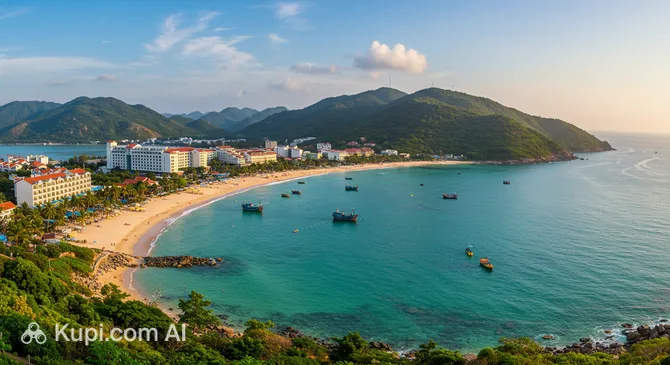
Cam Ranh. Illustration.
Source: Kupi.com AI

The main treasure of Cam Ranh is undoubtedly its nature. Pristine white-sand beaches, such as the famous Bai Dai, stretch for many kilometers, washed by the crystal-clear and warm waters of the South China Sea. Picturesque mountain landscapes and lush tropical forests create ideal conditions for a serene vacation and communion with nature. Here, you can forget the bustle of the city while enjoying walks along the coast or heading into the mountains for a picnic.

Cam Ranh is an excellent choice for those looking for a leisurely and authentic holiday, those who love discovering new places, and those who value the harmony of nature and culture. Visit Cam Ranh to feel like a welcome guest, enjoy the freshest seafood, get acquainted with Vietnamese traditions, and recharge under the gentle southern sun.

You can find more interesting facts on the Cam Ranh city history page.

Weather Overview

A typical tropical climate awaits you in Cam Ranh. Air temperatures remain high year-round: the coolest months are January (average temperature 23.2°C) and December (23.5°C), while the hottest are June (28.5°C) and August (28.4°C), when maximum values can reach 31.7°C. Expect a hot summer with occasional rains, especially from May to October, and a drier but still very warm winter, primarily from January to April, when precipitation is minimal (1-2 mm per month). In autumn, the weather becomes more humid: the highest number of rainy days occurs in September and October (28 days each), while the peak of precipitation is observed in November (10 mm). For more detailed weather information by month, visit the Cam Ranh Climate page.

Average monthly temperature

Average monthly precipitation

Interesting Facts

In addition to its famous beaches and convenient airport, Cam Ranh holds many surprising details and stories that make it even more attractive to curious travelers. Here are just a few interesting facts about this corner of Vietnam:

  • Cam Ranh Bay is recognized as one of the best natural deep-water harbors in the world. Its unique geographical position and protection from storms have attracted the attention of mariners and the naval fleets of various powers for centuries.

  • The famous Cau Long Ho Bridge, built in the 1960s and 70s, is now not only an important transport artery but also a popular observation deck. It offers breathtaking panoramas of the bay and the surrounding area, perfect for photography.

  • Despite the fact that Cam Ranh today serves as a "gateway" to the popular resorts of Vietnam, the city remained closed to mass tourism for a long time. Only in recent years have its natural beauty and unique atmosphere become accessible to travelers from all over the world.

  • In Cam Ranh, you can find one of the longest beaches in Vietnam — Bai Dai. It is about 15 kilometers long, and its soft white sand and relative lack of crowds make it a true paradise for those who appreciate peaceful relaxation and natural exoticism.

How to Get There

Cam Ranh, a picturesque resort city in Vietnam, attracts travelers with its beaches and peaceful atmosphere. The most convenient way to get here is by air, as the city and its surroundings are served by several airports, the main one being an international airport located in close proximity.

The primary point of arrival for most tourists heading to Cam Ranh is Cam Ranh International Airport (CXR). Although it serves the city of Nha Trang, it is actually located only 4.7 km from the center of Cam Ranh. This is a large, modern airport that accepts many international and domestic flights. A taxi ride or transfer from the airport to your hotel in Cam Ranh will take about 25-30 minutes.

Alternatively, you could consider Lien Khuong Airport (DLI), which is located in the city of Da Lat, approximately 93 km from Cam Ranh. This airport serves the popular mountain resort of Da Lat and also handles international and domestic flights. The journey from Lien Khuong Airport to Cam Ranh by car or bus will take roughly 2.5-3 hours, which may be an option if you plan to visit Da Lat as well.

For convenience, here is a summary of the main airports through which you can reach Cam Ranh:

AirportPassenger trafficDistance
Cam Ranh International Airport7 mln5 km
Lien Khuong Airport2.5 mln93 km
Tuy Hoa Airport620 000120 km
Phung-Duc Airport1 mln140 km
Phu Cat Airport1.6 mln221 km

In addition to air travel, Cam Ranh can be reached by bus or car from other Vietnamese cities such as Nha Trang, Ho Chi Minh City, or Da Lat. The country has a well-developed bus network. There is no direct rail link to Cam Ranh; the nearest major stations are located in other cities, from which an additional transfer will be required.

Main Attractions

One of the main gems of Cam Ranh is Bai Dai Beach. This long stretch of sandy beach is famous for its clear turquoise water and a gentle slope into the sea, making it an ideal spot for family vacations. Here, you can not only enjoy the sun and swimming but also engage in various water sports or simply take a stroll along the picturesque coastline, admiring the views of the bay.

An equally interesting place to visit is the unique Tu Van Pagoda, also known as Chùa Ốc or the "Snail Pagoda." This Buddhist sanctuary is striking for its unusual architecture: the towers and walls of the temple are skillfully decorated with millions of sea shells, corals, and pieces of ceramics. The 39-meter-high Bao Tich tower, created entirely from shells, is particularly impressive. A visit to the pagoda is an opportunity to touch the local culture and see a true work of art.

Cam Ranh Bay itself is an outstanding natural attraction. As one of the deepest and most beautiful natural harbors in Southeast Asia, it offers spectacular landscapes. The calm waters of the bay, surrounded by green hills, create a peaceful atmosphere. Many tourists enjoy views of the bay from coastal vantage points or during boat trips, discovering its hidden coves and islets.

To dive deeper into local life, it is worth visiting the local markets of Cam Ranh. Here you can experience the authentic atmosphere of a Vietnamese city, see the variety of fresh seafood that is the pride of the region, and try exotic fruits and local delicacies. Markets are not just places for shopping but also a great opportunity to observe the daily life of the citizens.

Local Cuisine

Cam Ranh is a true paradise for lovers of fresh seafood and authentic Vietnamese cuisine. Located on the coast, the city offers an incredible variety of sea bounty that reaches the table literally straight from the water. Here, you can expect the freshest shrimp, squid, mussels, crabs, and, of course, fish, prepared in many different ways while preserving their natural flavor.

Among the dishes that are a must-try in Cam Ranh are grilled sea scallops with garlic and herbs—they are served in almost every coastal cafe. No less popular is the thick and flavorful seafood soup with rice noodles, which is perfectly filling and conveys the full palette of oceanic tastes. Street food lovers should look for bánh căn—small round rice flour pancakes filled with seafood or eggs, and bánh xèo—large crispy Vietnamese pancakes with shrimp, pork, and bean sprouts, often cooked right before your eyes.

The dining culture in Cam Ranh is very informal and focused on the freshness of products. Locals and tourists alike enjoy eating in small cozy restaurants and coastal cafes, as well as at lively street stalls where the atmosphere is particularly colorful. Local markets hold a special place—here you can not only buy the freshest seafood at affordable prices but also ask for it to be prepared on the spot. You will also find an abundance of exotic fruits and local spices at the markets. Occasionally, the city hosts gastronomic festivals where you can get acquainted with rare recipes and the culinary traditions of the region.

As for drinks, refreshing freshly squeezed juices from tropical fruits (mango, passion fruit, pineapple), cool coconut water straight from a young nut, and, of course, traditional Vietnamese iced coffee (cà phê sữa đá) with its rich taste and aroma are offered everywhere in Cam Ranh. Beer lovers can try local varieties that perfectly complement seafood dishes.

The gastronomic scene in Cam Ranh is, above all, a celebration of freshness and the genuine flavors of Vietnam. The main emphasis is on seafood, which is prepared simply but with great skill, allowing you to enjoy its natural splendor. Immersing yourself in the local cuisine, whether by tasting street food or dining in a restaurant overlooking the sea, will undoubtedly be one of the brightest and most delicious experiences of your trip to Cam Ranh.

Travel Tips

Planning a trip to sunny Cam Ranh? Wonderful! To make your journey through this picturesque corner of Vietnam as comfortable and pleasant as possible, we have prepared some practical tips to help you feel more confident.

  1. Clothing and Essentials: Cam Ranh has a tropical climate, so the foundation of your wardrobe should be light, breathable clothing made of natural fabrics—cotton or linen. Be sure to bring swimwear, sunscreen with a high SPF, a hat or cap, and sunglasses. Comfortable shoes, such as sandals or flip-flops, are ideal for the beach and walking. If you plan to visit local temples or pagodas, don't forget clothing that covers your shoulders and knees. A power adapter for plug types A, C, and sometimes G may be useful, although many hotels already have universal ones.

  2. Transport: The main ways to get around Cam Ranh and its surroundings are taxis and motorcycle taxis (xe om). It is recommended to use official taxi companies or order a car through apps like Grab (if available in the region at the time of your trip) to avoid inflated prices. Renting a motorbike is possible but requires an international license of the appropriate category and experience driving in Asian traffic conditions. Public transport within the city itself is poorly developed, but there may be buses connecting Cam Ranh with Nha Trang.

  3. Finance: The local currency is the Vietnamese Dong (VND). You can exchange money at banks, official exchange offices, or jewelry stores (which often offer a good rate). Large hotels, restaurants, and shops accept international bank cards, but always have enough cash on hand for purchases at markets, in small cafes, and for paying for taxis. ATMs are quite common. Tipping is not strictly mandatory in Vietnam but is always welcomed for good service (usually 5-10% of the bill in restaurants).

  4. Health and Safety: There are pharmacies in Cam Ranh where you can buy basic medications, but if you require specific medicines, it's better to bring them with you in reserve along with a doctor's prescription. For serious medical care, you may have to go to clinics in Nha Trang. Cam Ranh is considered a relatively safe place, but basic precautions won't hurt: keep an eye on your belongings, don't leave valuables unattended on the beach, and avoid walking in poorly lit and deserted places after dark. Drink only bottled water.

  5. Communication: The official language is Vietnamese. In tourist areas, hotels, and restaurants, staff often speak English, but knowing a few basic phrases in Vietnamese (for example, "Xin chào"—hello, "Cảm ơn"—thank you) will be very helpful and bring a smile to the locals. You can buy a local SIM card with internet access right at the airport or at numerous mobile shops. Wi-Fi is available in most hotels, cafes, and restaurants.

  6. Local Etiquette: Vietnamese people are friendly and hospitable. It is customary to greet with a slight bow or a nod of the head, especially to elders. In public places, try to behave with restraint. When visiting temples and pagodas, show respect: remove your shoes before entering, dress modestly, and do not talk loudly. It is better to photograph locals only with their permission. If you are invited to visit, a small souvenir would be appropriate.

  7. What to Avoid: Try not to touch the heads of locals, especially children, as the head is considered a sacred part of the body in Vietnamese culture. Also, avoid pointing at anyone or anything with your foot—this is considered extremely rude. Don't haggle too aggressively or loudly at markets; do it with a smile and respect.

  8. Additional Tip: Cam Ranh is famous for its beautiful beaches, such as Bai Dai. Be sure to set aside time for a relaxing break on the coast. It is also a great starting point for exploring nearby islands and bays. Inquire about boat trip opportunities—it could be one of the highlights of your trip!

We hope these tips help you better prepare for your trip and fully enjoy every moment of your stay in charming Cam Ranh. We wish you an unforgettable vacation and vivid impressions!

Entertainment & Nightlife

Cam Ranh, known for its serene beaches and calm atmosphere, offers a different format of evening leisure compared to the noisy tourist centers of Vietnam. The nightlife here is more measured and focused on relaxed pastimes, dinners with sea views, and pleasant conversation in cozy settings. One should not expect an abundance of loud nightclubs here, as in neighboring Nha Trang, but evening Cam Ranh certainly possesses its own charm.

The foundation of evening entertainment in Cam Ranh consists of numerous restaurants and cafes, especially those specializing in fresh seafood. A significant number of them are concentrated along the coast, for example, on the long Nguyen Tat Thanh Avenue, where many resorts are located, as well as on other main streets of the city. These establishments usually stay open until late evening. Local eateries offering authentic Vietnamese dishes are also popular. Many hotels and resorts also feature their own bars and lounge areas where you can enjoy drinks in a stylish setting. While specific names of venues from a current list of attractions (such as bars or restaurants with late-night hours) were not provided for this review, you will easily find a suitable place for dinner or an evening cocktail while strolling through the mentioned areas. Specialized nightclubs in Cam Ranh itself are a rarity; for a more active club scene and a variety of bars, it is worth heading to neighboring Nha Trang.

The atmosphere in evening Cam Ranh is predominantly calm and friendly. The crowd here is a mix of locals relaxing after a workday and tourists enjoying the tranquility of the resort. The dress code in most establishments is casual—shorts and a t-shirt are perfectly appropriate. Venues usually start to liven up closer to sunset and continue operating until 10:00 PM – 11:00 PM, though some hotel bars may stay open longer.

When planning your evening leisure in Cam Ranh, it is best to aim for the time after 7:00 PM, when the daytime heat subsides and it becomes more comfortable for walks and outdoor dining. Prices in local cafes and restaurants in Cam Ranh are generally very affordable, especially in establishments catering to a local audience. In bars and restaurants at large hotels and resorts, prices may be higher, reflecting the level of service. For getting around in the evening, you can use taxi services. It is recommended to use official services or popular Southeast Asian ride-hailing apps like Grab if they are available in the region, or walk if your accommodation is near your chosen destination.

Cam Ranh is generally considered a safe city for evening walks, especially in the tourist zones along the coast and on well-lit central streets. Nevertheless, as in any tourist destination, basic precautions should always be observed: do not leave valuables unattended and avoid poorly lit and deserted places late at night. You can call a taxi for a safe return to your hotel through your hotel reception or using mobile apps if they are functioning in the city.

Regarding daytime entertainment, Cam Ranh primarily offers magnificent beaches, such as the famous Bai Dai, which are ideal for relaxation, swimming, and water sports. You can also visit colorful local markets to soak up the atmosphere of Vietnamese trade and purchase fresh fruit or souvenirs. There are few museums or large theme parks in the city of Cam Ranh itself; the main focus here is on nature-based recreation and relaxation by the sea.

Parks & Museums

Cam Ranh, known for its magnificent bay and strategic location, offers travelers not only outdoor recreation but also an introduction to unique cultural sites reflecting its history and local traditions.

The main natural attraction of Cam Ranh is, undoubtedly, Cam Ranh Bay itself—one of the deepest and most beautiful bays in the world. Its calm waters and picturesque surroundings create ideal conditions for boat trips and contemplative relaxation. Not far from the city lies the famous Bai Dai Beach, also known as Long Beach. This multi-kilometer strip of pure white sand, washed by turquoise waters, attracts tourists with its natural beauty and the opportunity for a secluded holiday. While there may not be extensive classic parks within the city itself, the entire coastal area and its surroundings represent a large natural zone for exploration.

Although Cam Ranh is not famous for a large number of traditional museums, its cultural heritage can be felt through other landmark sites. One of the most unusual and memorable objects is Tu Van Pagoda (Chùa Từ Vân), also known as the "Shell Pagoda" or the "Ocean Treasure Pagoda." This unique structure is almost entirely built from coral and shells collected on local beaches. The towers and walls of the pagoda, decorated with intricate patterns made of gifts from the sea, make a lasting impression and tell of the close connection between local residents and the ocean. Visiting the pagoda is an opportunity to touch the local spiritual culture and see a truly unique architectural creation.

The city also has a rich history related to its strategic port, and although access to some sites may be limited, the very atmosphere of the city serves as a reminder of its important past. A walk through the town may reveal local temples and shrines that are less well-known but reflect the daily life and beliefs of the people of Cam Ranh. Instead of formal museums, history here is felt in the very fabric of the city and its surroundings.

For a deeper immersion into local life, stop by one of the bustling markets in Cam Ranh, where you can try fresh seafood and local delicacies. It is also worth exploring the lesser-known coves and beaches around the city, where you can enjoy peace and untouched nature away from the main tourist routes—this is your chance to find your own authentic impression of Vietnam.

Getting Around

Public transport in Cam Ranh is mainly represented by buses and taxis, including motorcycle taxis. The city is not large enough to have a metro or tram system, so tourists most often use these modes of transport for getting around.

Buses run on the main urban and suburban routes. This is the most budget-friendly way to get around. Schedules and routes may not always be obvious to tourists, as information is most often presented in Vietnamese. Fare payment is usually made in cash to the conductor or driver upon entry. The fare is low. It is recommended to have small bills with you for convenience.

Taxis in Cam Ranh are a more comfortable but more expensive way to travel. Official taxis are equipped with meters. Motorcycle taxis (known as "xe om") are also popular, offering a faster and more maneuverable trip, especially for short distances. You should agree on the price with the motorcycle taxi driver in advance, before the trip starts. In recent years in Vietnam, and Cam Ranh is no exception, taxi booking services via mobile apps like Grab have been actively developing. This is a convenient way to order both a car and a motorcycle taxi, knowing the approximate cost of the trip in advance.

For more freedom of movement, especially if you plan to explore the surrounding area, you can consider renting a scooter or motorcycle. There are rental points in the city, but it is important to remember the need to have an appropriate driver's license and to follow traffic rules. Bicycle rentals may also be available, especially in tourist areas and hotels, and are suitable for leisurely rides around the city.

Practical tips for tourists: * For buses: have small cash available for payment. If possible, clarify the route in advance with locals or at your hotel. * For taxis and motorcycle taxis: when using a regular taxi, make sure the meter is on. Always agree on the price with motorcycle taxi drivers before the trip. Using taxi-hailing apps often helps avoid misunderstandings about the price. * Operating hours: Public transport usually runs from early morning until evening. Taxis and motorcycle taxis are available almost 24/7, especially in busy areas.

Accommodation

Cam Ranh offers tourists a variety of accommodation options to suit different preferences and budgets. Here you can find luxury resort complexes with a full range of services operating on an "all-inclusive" basis or offering villas with private pools, as well as more affordable mid-range hotels. In recent years, apartments and guesthouses have also been gaining popularity, offering a more homey atmosphere and self-catering facilities.

Most popular housing options are concentrated along the picturesque coastline, especially in the Bai Dai beach area, which is famous for its white sands and calm, clean sea. Staying here provides easy access to beach activities and magnificent views. Some hotels are also located closer to the city of Cam Ranh itself or Cam Ranh International Airport (CXR), which can be convenient for transit travelers or those planning to actively explore Khanh Hoa province.

When planning a trip to Cam Ranh, especially during the high tourist season (usually from December to April, as well as during the summer months), it is recommended to book accommodation in advance. This not only guarantees availability at your preferred hotel or resort but often allows you to take advantage of better deals and early booking discounts.

The price range for accommodation in Cam Ranh is quite wide: from relatively budget-friendly options in small hotels and guesthouses to premium prices at five-star resorts belonging to international chains. You can book a hotel or apartment through popular international online booking platforms, the official websites of the hotels themselves, or through local and international travel agencies. Pay attention to reviews from other travelers when choosing a place to stay.

Nearby Cities

For those who want to explore the surrounding area, Cam Ranh serves as an excellent starting point for day trips to several interesting nearby locations:

Among the popular destinations for short excursions is Nha Trang, located just 32 km away. This vibrant resort city is famous for its long beaches, islands for diving and snorkeling, and the ancient Po Nagar Cham Towers. Another interesting option could be a trip to Phan Thiet (about 165 km), known for its unique red and white sand dunes in the Mui Ne area, as well as opportunities for kite- and windsurfing.

CityPopulationDistance
Nha Trang392 27932 km
Phan Rang - Thap Cham200 00048 km
Ninh Hoa227 63058 km
Da Lat210 00080 km
Phan Ri Cua45 805111 km

These nearby destinations provide an insight into the diverse culture and landscapes of the region, complementing the experience of a holiday in Cam Ranh.

Shopping & Souvenirs

Cam Ranh is not a major shopping center like Nha Trang or Ho Chi Minh City, but you can still find interesting goods and souvenirs here. The main shopping opportunities are centered around local markets and small shops offering everyday items, fresh produce, and some products for tourists. The city is not famous for any exclusive goods, but here you can experience the atmosphere of authentic Vietnamese trade.

The primary shopping destination in Cam Ranh is the central market (Chợ Cam Ranh). Here you can find fresh fruits, vegetables, seafood, spices, as well as clothing, footwear, and household goods. There are also small stalls and shops around the market. There are no specialized shopping streets with famous brand boutiques in the city; shopping here is more local and utilitarian in nature.

There are no large modern shopping centers in the Western sense in Cam Ranh. For more extensive shopping with visits to malls, chain stores, and entertainment complexes, tourists should head to the nearest large city, such as Nha Trang, which offers much more in this regard.

The city's main trading point is the Cam Ranh Central Market. This is a lively place where locals do their daily shopping. Here you can not only buy the freshest products but also observe the daily life of the Vietnamese, try street food, and find inexpensive souvenirs. The atmosphere of the market is very colorful, and a visit to it can be an interesting experience in itself.

As souvenirs from Cam Ranh and Vietnam in general, you can bring back traditional non la conical hats, silk products (though the selection may be limited compared to larger cities), local coffee and tea, spices, fish sauce (nuoc mam), as well as various crafts made of wood or shells. Sometimes you can find pearls in the markets, but you should approach their purchase with caution, checking for authenticity.

Shops and markets in Cam Ranh usually start operating early in the morning (markets may open at 6:00 AM – 7:00 AM) and close in the afternoon or early evening (around 5:00 PM – 6:00 PM). Some small private shops may have their own schedule. The main method of payment, especially in markets and small shops, is cash (Vietnamese Dong, VND). The possibility of paying by bank card is rare, found mostly in hotels or larger stores, if any.

A Tax Free refund system exists in Vietnam, but it is generally available at major international airports and authorized stores in large cities when purchasing goods over a certain amount. In smaller cities like Cam Ranh, finding shops that operate under the Tax Free system is unlikely. If you plan to use this option, it is better to check the details and make relevant purchases in larger tourist centers or immediately before departing from the country.

Reached the end of the page?

That means the route is fully explored