Support

Imperial City of Hue

About

The Imperial City of Hue is a grand historical and architectural complex located in the heart of Hue, Vietnam. This outstanding monument, listed as a UNESCO World Heritage site, served as the residence for the emperors of the powerful Nguyen Dynasty for 143 years. Today, it stands as one of the most significant symbols of the country's rich history and culture.

The complex, often called "a city within a city," is a massive citadel enclosed by impressive walls and a deep moat. The walls stretch for about 10 kilometers and reach a thickness of up to two meters in some places, highlighting the fortress's former grandeur and defensive strength. You can enter the grounds through one of several monumental gates, with the southern Ngo Mon Gate being particularly prominent.
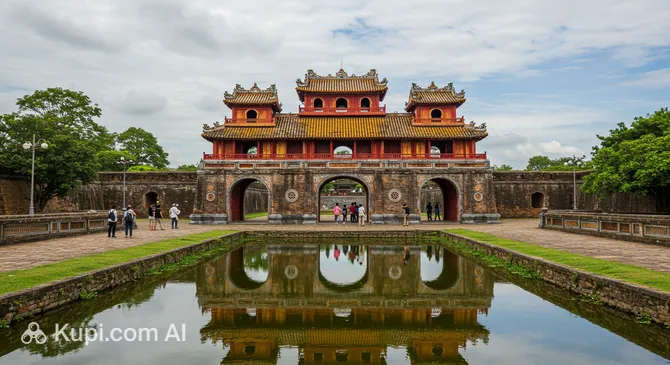
Imperial City of Hue. Illustration.
Source: Kupi.com AI

Traveler photos:

Beyond the walls of the Imperial City, a whole world awaits visitors, consisting of exquisite palaces, ancient temples, quiet gardens, and pavilions. The complex is divided into several zones, including the Forbidden Purple City, which was once accessible only to the imperial family. A walk through this vast territory is not just sightseeing, but a true immersion into the atmosphere of the imperial past, allowing you to touch the unique heritage of Vietnam.

Contacts

To plan your visit to the Imperial City and check the most up-to-date information, such as opening hours and ticket prices, it is recommended to consult official sources. Key contact details and useful links are provided below.

How to contactContact
AddressHuế, Thua Thien Hue, Vietnam
Phone number+84 234 3523 237
Websitewww.hueworldheritage.org.vn

What to Do

Visiting the Imperial City in Hue is an opportunity to dive headfirst into the history and culture of imperial Vietnam. Guests can spend hours strolling along spacious alleys, exploring numerous palaces, temples, pavilions, and manicured gardens. Each structure tells its own story, while the lavish throne halls and private quarters of the emperors allow you to imagine the scale and splendor of the Nguyen Dynasty. The main Ngo Mon Gate deserves special attention, as it was the site of spectacular parades and ceremonies where monarchs once addressed their people from the balcony.

Inside the complex, themed exhibitions, cultural events, and court music performances at the Duyet Thi Duong Royal Theater are held regularly, adding authenticity to the visit. You can join a themed tour to gain a deeper understanding of the life and traditions of the imperial court, or even take a cyclo ride around the grounds to cover more sights without getting tired. This is a wonderful opportunity not only to see the architecture but also to feel the living spirit of this historical place.

To fully explore the Imperial City, it is worth setting aside several hours, so it is recommended to wear comfortable shoes and bring a hat for sun protection and some drinking water. After walking through the citadel, you can continue exploring the heritage of Hue by visiting nearby landmarks like the famous Thien Mu Pagoda or the impressive Tomb of Emperor Khai Dinh. To top off the day with some culinary experiences, head to the bustling Dong Ba Market, where you can try authentic local dishes.

Getting There

The Imperial City is conveniently located in the very heart of Hue, on the picturesque banks of the Perfume River (Huong River). Thanks to this central position, getting there from any part of the city is quite easy. Travelers can easily use local transport such as taxis, buses, or rented motorbikes to reach the entrance. Additionally, cyclos (cycle rickshaws) operate around the city, and a ride on one can be a charming adventure in itself.

For those who prefer a more organized approach, many travel agencies in Hue offer guided tours, which often include transfers to the Imperial City and other iconic landmarks. Independent travelers arriving on rented transport will find it helpful to know that the area around the complex is well-maintained, featuring parking lots and convenient pedestrian zones.

Getting to the city of Hue itself is also quite simple, as it has excellent transport links with Vietnam’s major tourist hubs, such as Hanoi, Ho Chi Minh City, and Da Nang. Depending on your itinerary and budget, you can choose to travel by train, intercity bus, or plane. Phu Bai Airport is located just 15 kilometers from the city center, making air travel an especially convenient option.

Nearest city: Hue

History & Facts

The history of the Imperial City of Hue is inextricably linked to the rise of the Nguyen Dynasty, which ruled Vietnam for 143 years. Its foundation in 1802 was initiated by Emperor Gia Long, who moved the capital to Hue to strengthen national unity. It was the rulers of the Nguyen Dynasty who first adopted the title of emperors, and their majestic residence became a powerful symbol of the unified state.

The construction of the grand citadel began in 1804 and continued for several decades, becoming one of the most ambitious projects of its time. Modeled after the Forbidden City in Beijing, the complex was surrounded by massive walls and a deep moat, emphasizing its impregnability and grandeur. Throughout the 19th century, the citadel was constantly expanded and refined with new palaces, temples, and pavilions.

Although many of the complex's structures were damaged during the historical events of the 20th century, the Imperial City has managed to retain its majesty. Thanks to large-scale restoration work that continues to this day, more halls and palaces are being opened to visitors. In 1993, the outstanding historical and cultural significance of the complex was recognized globally when it was included in the UNESCO World Heritage list, cementing its status as one of Vietnam's primary treasures.

Time Needed

When planning a visit to the Imperial City of Hue, you should allow for a duration of 2 to 4 hours. This time is generally sufficient for a leisurely walk through the main grounds, viewing the major palaces, temples, and picturesque gardens. This timeframe will allow you to immerse yourself in the atmosphere of this grand complex without rushing and fully appreciate its historical grandeur.

If your time is limited, you can cover the essentials in 1.5-2 hours by focusing on the most iconic landmarks, such as the Ngo Mon Gate and Thai Hoa Palace. However, for a more thoughtful and comprehensive exploration, including the Forbidden Purple City, exhibition halls, and remote corners of the complex, it is better to set aside half a day (about 4 hours). This is especially true for history buffs and photography enthusiasts who want to capture the unique architecture and soak up the spirit of Vietnam’s imperial past.

Working Hours

The Imperial City of Hue is pleased to welcome visitors year-round. The standard opening hours of the complex are daily, approximately from 8:00 AM to 5:30 PM. However, please note that these times may vary depending on the season: during the summer months, the working day is usually longer, while in winter, it may be shorter. The schedule may also be adjusted during public holidays or special events.

While pre-booking tickets is usually not mandatory and they can always be purchased at the ticket offices near the entrance, buying online can be a convenient solution. This will save time and help you avoid queues, especially during the peak tourist season. In any case, before planning your visit, it is highly recommended to check the current opening hours on the official website of the complex or at local information centers to ensure your visit is as comfortable as possible.

7:30 – 17:00

Nearby

A visit to the Imperial City is undoubtedly a highlight of any trip to Hue. However, to get a complete picture of the rich heritage of Vietnam's former capital, it's worth exploring its surroundings as well. Many iconic sites are located within walking distance of the citadel, making it easy to complement your itinerary and dive deeper into the city's history and culture.

Exploring nearby attractions will not only enrich your experience but also show you how multifaceted Hue truly is. From ancient pavilions and museums to lively pedestrian streets—everything is close by and waiting for explorers. Below is a list of interesting places to visit in the immediate vicinity of the Imperial City.

NameDistance
Kien Trung Palace0.7 km
Luc Bo Cultural Space0.9 km
Imperial City of Hue0.9 km
Museum of Royal Antiquities1.1 km
Meridian Gate1.2 km
Phu Van Lau1.5 km
Nguyen Dinh Chieu Walking Street2 km

Have you reached the end of the page?

So the route has been studied inside and out