Guadeloupe

About

Guadeloupe is an enchanting archipelago in the Caribbean Sea, often called "Butterfly Island" due to the shape of its two main islands, Basse-Terre and Grande-Terre. This overseas department of France attracts travelers with its unique combination of Caribbean exoticism and European charm, offering an unforgettable vacation amidst tropical nature and a rich cultural heritage.
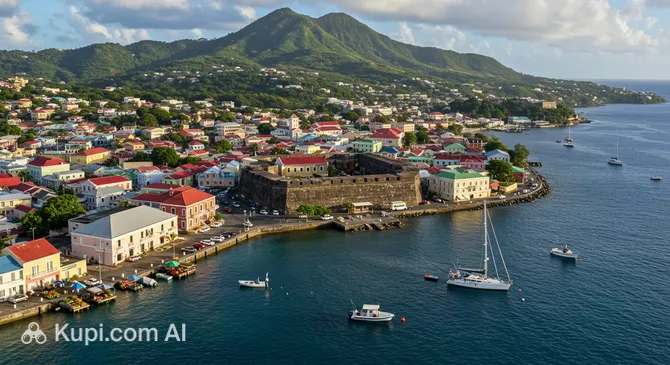
Illustration.
Source: Kupi.com AI

Guadeloupe's nature is strikingly diverse: from volcanic peaks and lush tropical forests of the Guadeloupe National Park to idyllic white and black sand beaches and picturesque coral reefs. The administrative center, the city of Basse-Terre, is located at the foot of the active Soufrière volcano and serves as a starting point for exploring the western, more mountainous, and green part of the island. The climate here is tropical maritime, with comfortable air and water temperatures year-round, making Guadeloupe an ideal destination for lovers of beach holidays, diving, and ecotourism.

Guadeloupe's culture is a vibrant kaleidoscope of Creole traditions, energetic zouk music, colorful festivals, and exquisite cuisine, where French gastronomic art harmoniously blends with African, Indian, and Caribbean notes. Bustling and lively Pointe-à-Pitre, the economic capital of the archipelago, offers a chance to dive into the local flavor at its markets and visit iconic sites such as the Memorial ACTe. Guadeloupe leaves an impression of warm hospitality, a relaxed Caribbean atmosphere, and endless opportunities for adventure.

Currency

The official currency of Guadeloupe is the Euro (EUR), as Guadeloupe is an overseas department of France. Banknotes of 5, 10, 20, 50, 100, 200, and 500 euros are in circulation, along with coins of 1, 2, 5, 10, 20, 50 cents and 1, 2 euros. The design of the banknotes is the same throughout the eurozone, while the coins have one common side and one national side (the French design for Guadeloupe). You can exchange currency at banks or official exchange offices (bureaux de change), which are usually located at the airport and in major cities. It is recommended to avoid exchanging money with individuals on the street due to the risk of fraud.

Credit cards, especially Visa and Mastercard, are widely accepted in most hotels, restaurants, supermarkets, and shops in tourist areas. However, it is always useful to carry some cash for small purchases, payments at markets, or in small establishments, especially in remote areas. Before your trip, check with your bank regarding the conditions for using your card abroad and any potential fees.

Visa Requirements

When planning a trip to Guadeloupe, it is important to check the visa requirements in advance. Guadeloupe is an overseas department of France, so for citizens of European Union and European Economic Area countries, entry is generally visa-free. Citizens of many other countries, including the USA and Canada, may also not require a visa for short-term tourist trips. However, for citizens of most CIS countries and several other states, a visa is required to visit Guadeloupe; this is usually a Schengen visa with a note specifying validity for French overseas territories, or a special visa for overseas departments. Such a visa must be obtained in advance at French consulates or visa centers.

Regardless of visa requirements, all travelers need a valid passport, the expiration date of which must exceed the intended period of stay. Return tickets, proof of hotel booking, sufficient financial means, and medical insurance may also be required. Since visa rules can change, it is strongly recommended to check for updated information on the official websites of the French embassy or consulate in your country or at visa centers before your trip.

We'll let you know if you need a visa

Enter your destination or
Your nationality
Destination

Timezones

When planning your trip to Guadeloupe, you won't have to worry about changing time zones within the country. A single time zone applies throughout Guadeloupe.

It corresponds to Atlantic Standard Time (AST), which means UTC-4. This means the time here is 4 hours behind Coordinated Universal Time. Thanks to this, you will be able to easily keep track of time while traveling across the various islands and regions of this Caribbean archipelago.

Getting There

The main way to reach Guadeloupe is, of course, by air. The archipelago is served by several airports, the most important being Pointe-à-Pitre International Airport (PTP), located on Grande-Terre. Direct flights and convenient connections to Guadeloupe are most often available from Europe, specifically from France, as well as from some cities in North America and other Caribbean islands. Flights from other regions of the world usually involve one or more transfers.

Since Guadeloupe is an island territory, sea transport also plays a vital role. Regular ferry lines connect Guadeloupe with neighboring islands such as Martinique, Dominica, and Saint Lucia, offering a scenic way to travel between the islands. Additionally, Guadeloupe is a popular port of call for many cruise ships touring the Caribbean Sea. To move between the islands of the Guadeloupe archipelago itself (Grande-Terre, Basse-Terre, Marie-Galante, La Désirade, and the Les Saintes islands), local ferries and short flights are also used.

There is no land connection with other countries for Guadeloupe, as it is an overseas department of France consisting of a group of islands in the Caribbean Sea. Therefore, reaching here by train or international bus is impossible. When planning your trip, especially during the peak tourist season (usually from December to April), it is recommended to book air and ferry tickets in advance to ensure the best prices and availability.

AirportCityIATA
Pointe-à-Pitre International AirportPointe-à-PitrePTP
Les BasesGrand BourgGBJ

Guadeloupe offers travelers a kaleidoscope of experiences, from lively urban centers to serene resort areas and charming island settlements. Here, everyone will find something to their liking: whether exploring colonial architecture, relaxing on white sand beaches, or immersing themselves in Creole culture.

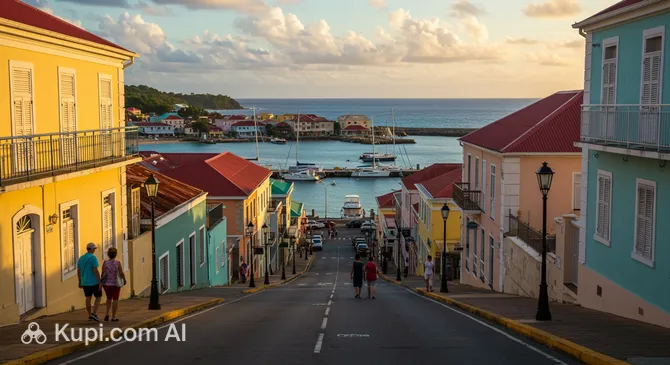
One of the key cities in the archipelago is Pointe-à-Pitre, the economic and cultural heart of Guadeloupe, known for its bustling markets and colorful streets. This is a place where modernity meets tradition, offering tourists both business opportunities and vibrant cultural events. Equally interesting is the capital, Basse-Terre, located at the foot of the Soufrière volcano. This city attracts visitors with its historic buildings, a botanical garden, and a calmer, more measured atmosphere compared to Pointe-à-Pitre.

Illustration.
Source: Kupi.com AI

For beach and water sports enthusiasts, Saint-François, a popular resort in southeastern Grande-Terre, is ideal. It is famous for its marinas, golf courses, and, of course, magnificent beaches with crystal-clear water. If you are looking for seclusion and authenticity, head to the Les Saintes islands, for example, to the picturesque Terre-de-Haut. This charming town, with its colorful houses and beautiful bays, offers an unforgettable experience of immersing yourself in a Caribbean idyll. Each of these places reveals its own unique facet of multifaceted Guadeloupe.

Top Attractions

Guadeloupe enchants travelers not only with its beaches but also with its rich culture and history, reflected in its landmarks. Everyone will find something to their liking, from memorial complexes to picturesque natural spots.

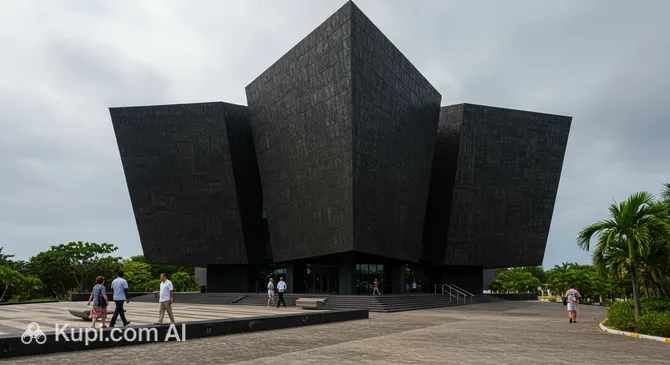
One of the iconic sites is the Memorial ACTe (Caribbean Centre for Expressions and Memory of the Slave Trade and Slavery). This impressive museum and cultural center, located in Pointe-à-Pitre, is dedicated to the history of the slave trade and slavery in the Caribbean. Its modern architecture and profound exhibitions leave an indelible impression and prompt reflection on significant chapters of the past.

Illustration.
Source: Kupi.com AI

Traveller photos:

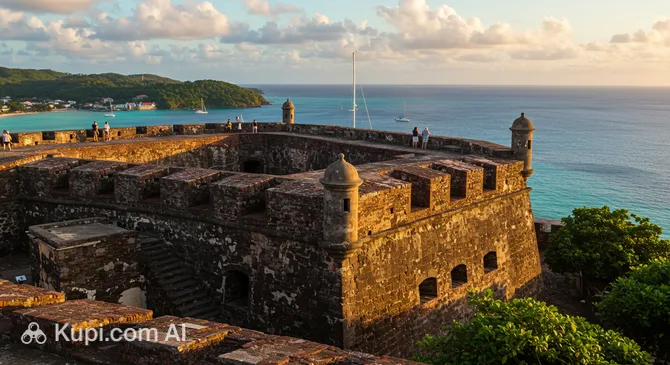
History buffs should visit Fort Napoléon des Saintes. Located on Terre-de-Haut Island in the Les Saintes archipelago, this 19th-century fort offers not only an immersion into the region's military past but also stunning panoramic views of the surrounding islands and the Caribbean Sea. Inside the fort is a museum detailing local history and culture.

Illustration.
Source: Kupi.com AI

Traveller photos:

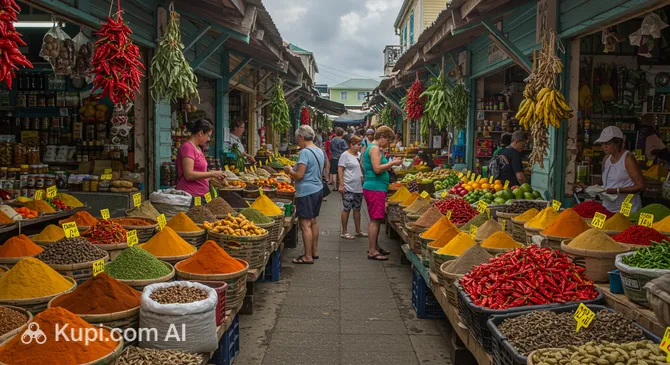
To experience the authentic flavor of Guadeloupe, head to the Spice Market in Pointe-à-Pitre. This is a vibrant and bustling place where you can find a variety of local spices, fruits, vegetables, and handicrafts. The aromas of curry, vanilla, nutmeg, and other exotic spices fill the air, creating a unique atmosphere.

Illustration.
Source: Kupi.com AI

Traveller photos:

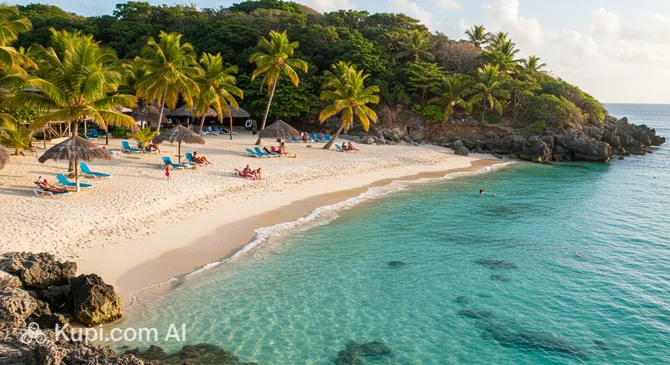
For beach holiday connoisseurs, an excellent choice is Raisins Clairs Beach (Plage des Raisins Clairs). This beach with white sand and crystal-clear turquoise water, located near Saint-François, is perfect for swimming, sunbathing, and relaxation. The coconut palms framing the beach create a picturesque tropical landscape.

Illustration.
Source: Kupi.com AI

Traveller photos:

Best Time to Visit

Choosing the best time to visit Guadeloupe largely depends on your priorities and the type of holiday you prefer. High season traditionally lasts from December to April. During this period, the islands enjoy dry and sunny weather with comfortable temperatures around 28-30°C, ideal for beach holidays, diving, snorkeling, and boat trips. This is considered the best time to visit; however, it's worth noting that airfares and accommodation prices will be higher, and popular tourist spots will be more crowded.

Low season, or the off-season, falls between May and November. During this time, the weather becomes more humid, the probability of short tropical showers increases, and air temperatures may be slightly higher. The hurricane season officially lasts from June to November, with the highest probability occurring in August and September. The main advantages of this period are a significant reduction in vacation costs and fewer tourists, allowing you to enjoy a more secluded atmosphere and lush tropical greenery. However, some smaller establishments may operate on reduced hours or be temporarily closed.

When planning your trip, pay attention to cultural events. The bright and colorful Guadeloupe Carnival takes place in January-February (sometimes extending into early March) and is one of the year's main events, attracting many guests. In summer, despite the possible whims of the weather, interesting events also take place, such as the Feast of the Female Cooks (Fête des Cuisinières) in Pointe-à-Pitre in August. The climate across the islands of the archipelago is generally tropical and fairly consistent, so your choice of timing will more likely depend on your budget, your desire to attend specific events, and your tolerance for potential rainfall.

Traditions

When planning a trip to Guadeloupe, it's worth remembering that locals value politeness and a respectful attitude. Greetings are important here: standard French "Bonjour" (good day) and "Bonsoir" (good evening), accompanied by a light handshake, will be appropriate. Direct eye contact during a conversation is perceived positively. Although the official language is French, you may also hear the local Creole dialect; attempts to speak French, even just a few phrases, are usually warmly received. Guadeloupeans are hospitable, and if you are invited into a home, a small token of appreciation (such as flowers or high-quality chocolate) will be appreciated, though it is not a strict obligation for every visit.

In daily life on the islands, a casual style of clothing prevails, especially on beaches and in resort areas. However, when visiting churches and other religious sites, it is customary to dress modestly, covering shoulders and knees. In some restaurants, a more elegant outfit, known as "island chic," may be appropriate in the evening. At the table, follow general European etiquette; trying local dishes is a good way to show respect for the culture. Always try to ask permission before photographing people, especially the older generation. Avoid overly loud behavior and public displays of strong negative emotions, as this may be perceived as impolite.

Guadeloupe's cultural life is filled with vibrant events. One of the main ones is the Carnival, which takes place in the days leading up to Lent—a spectacle of music, dance, and colorful costumes demonstrating the full palette of Creole culture and joy. Abolition of Slavery Day (May 27) is also widely celebrated, an important date in the island's history, accompanied by commemorative events. Respecting local traditions and customs, as well as being open to new experiences, will make your stay in Guadeloupe even more pleasant and meaningful.

Entertainment

Guadeloupe offers a variety of entertainment for every traveler, combining natural beauty with Creole culture. Fans of active recreation will find plenty to do: from hiking through tropical forests and climbing volcanoes to water sports such as diving at coral reefs, snorkeling, surfing, and kayaking along picturesque coasts. The archipelago's islands are literally made for exploration both on land and in the water.

Cultural life in Guadeloupe is rich and colorful. Guests can visit small museums dedicated to the history and traditions of the islands, such as the Memorial ACTe, or enjoy local music and dancing, which often resonate at festivals and local venues. Shopping here is an opportunity to bring home unique souvenirs: local handicrafts, spices, and, of course, the famous Guadeloupean rum. Main shopping points can be found in cities like Pointe-à-Pitre and the capital Basse-Terre.

As evening falls, nightlife in Guadeloupe comes alive, offering a relaxed Caribbean atmosphere. Many restaurants and bars, especially in coastal areas, invite you to enjoy local cuisine and exotic cocktails to the sounds of live music. For a family vacation, Guadeloupe is also perfectly suited: magnificent beaches like Raisins Clairs Beach, calm lagoons for swimming with children, and the opportunity to discover the islands' rich flora and fauna will make the holiday unforgettable for all family members.

Currency rates

Planning a trip? Wonderful! To make sure the financial side of your journey holds no surprises, it's worth remembering that exchange rates are constantly changing. That's why we strongly recommend keeping an eye on current rates both before departure and throughout your trip. To help with that, you can use the data provided below — we monitor exchange rates 24/7 and strive to provide the most up-to-date information.

EUR exchange rate for 13/08/2026

4.26 AED
~ 1 EUR
424.12 AMD
~ 1 EUR
1.64 AUD
~ 1 EUR
1.97 AZN
~ 1 EUR
3.45 BYN
~ 1 EUR
1.62 CAD
~ 1 EUR
1 GBP
~ 1.17 EUR
366.40 HUF
~ 1 EUR
110.58 INR
~ 1 EUR
101.38 KGS
~ 1 EUR
1642.09 KRW
~ 1 EUR
539.99 KZT
~ 1 EUR
4.33 PLN
~ 1 EUR
95.92 RUB
~ 1 EUR
4.35 SAR
~ 1 EUR
1.48 SGD
~ 1 EUR
55.36 TRY
~ 1 EUR
51.91 UAH
~ 1 EUR
1.16 USD
~ 1 EUR
13823.98 UZS
~ 1 EUR

Reached the bottom of the page?

Looks like you know this route inside out

We use cookies and services to collect user information. This is essential for the functioning of the site and for marketing purposes. You can find out more in .