Support

Santa Maria delle Grazie

About

Santa Maria delle Grazie is a world-renowned church and monastery complex in Milan, one of the gems of Italy and a UNESCO World Heritage site. Located in the western part of the city, this basilica is not only an active house of worship but also an outstanding architectural monument attracting art connoisseurs from around the globe. However, its worldwide fame comes not only from its architecture but also from one of the greatest masterpieces in the history of painting housed within its walls.
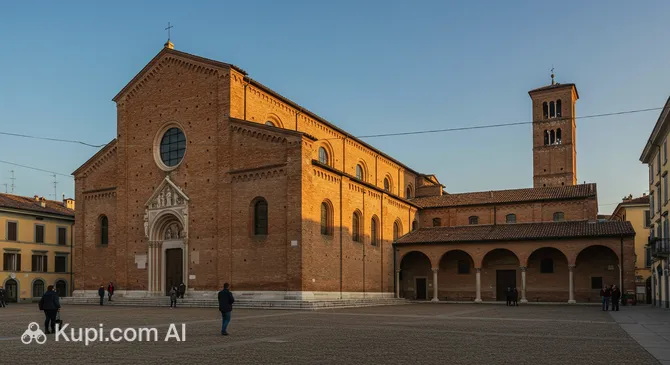
Santa Maria delle Grazie. Illustration.
Source: Kupi.com AI

Traveller photos:

The complex's architectural style is unique due to the harmonious fusion of two styles—Late Gothic and Renaissance. The original building was designed by architect Guiniforte Solari in the Gothic tradition, which is evident in the structure of the main nave. Later, commissioned by Duke Ludovico Sforza, the great Donato Bramante was brought in; he added the magnificent Renaissance tribune and designed the majestic dome that has become the church's signature feature. This combination of brickwork, elegant arches, and Renaissance harmony creates a unique visual impression.

The main treasure that millions of tourists come to see is located in the monastery's refectory—the monumental fresco by Leonardo da Vinci, "The Last Supper." It is one of the most recognizable and significant works of world art, depicting the apostles' reaction to Christ's words about his coming betrayal. Work on the fresco took place from 1495 to 1498. Visits to the refectory are strictly regulated to ensure the preservation of this fragile masterpiece for future generations.

Contacts

To plan your visit and check up-to-date information on opening hours, ticket prices, or visitor rules—especially for viewing "The Last Supper"—we recommend consulting official sources. All the necessary contact information to reach the complex representatives is provided below.

How to contactContact
AddressVia Giuseppe Antonio Sassi, 3, 20123 Milano MI, Italy
Phone+39 02 467 6111
Websitelegraziemilano.it

What to Do

The main highlight for any visitor to Santa Maria delle Grazie is, without a doubt, contemplating one of the greatest works of art in human history. Inside the monastery's refectory lies Leonardo da Vinci's world-famous fresco, "The Last Supper." The opportunity to see this Renaissance masterpiece, which depicts the dramatic moment of Christ's final meal with his disciples, leaves an unforgettable impression. Visits are strictly regulated to ensure the preservation of the painting, making every moment before this work particularly precious.

Beyond "The Last Supper," the church itself offers a rich experience for lovers of architecture and art. Once inside, you can explore the magnificent interior, which demonstrates a unique blend of Late Gothic austerity and Renaissance harmony. Stroll through the three naves, paying attention to the elegant arched vaults decorated with ancient frescoes. Of particular note are the Renaissance altar and the side chapels, which house works by other prominent masters, creating a cohesive and spiritual atmosphere in this historic place.

Getting There

Getting to the church of Santa Maria delle Grazie is quite easy, as it is located in the central part of Milan and boasts excellent transport links. Regardless of where you are staying, you can easily reach this iconic landmark using the city's extensive public transport network or even by taking a pleasant walk from the historic center.

The most convenient way to reach the site is by using the Milan Metro. The nearest station is Conciliazione on the red M1 line, from which the church is just a few minutes' walk away. You can also travel to the major transport hub of Cadorna station, served by the M1 (red) and M2 (green) lines, followed by a walk of about 8 minutes. An equally convenient option is the tram. Route #16 has a stop named "Santa Maria delle Grazie," located almost directly opposite the entrance to the complex.

Additionally, the church can be reached via several bus routes, including #50, 58, and 61. If you prefer walking and want to get a better feel for the atmosphere of Milan, you can walk to Santa Maria delle Grazie from other famous landmarks, such as the Sforza Castle. For those who value comfort and efficiency, taxi services are always available to get you to your destination quickly and directly.

Nearest city: Milan

History & Facts

The history of Santa Maria delle Grazie dates back to the 1460s, when the influential Count Gaspare Vimercati made a generous gift to the Dominican order—a plot of land in western Milan. A small chapel dedicated to Our Lady of Grace (Santa Maria delle Grazie) already stood on this site. It was decided to name the new monastery complex and church in her honor, with construction beginning shortly after.

The architectural project was undertaken by the renowned architect Guiniforte Solari. By 1469, the monastery was completed, and by 1482, the church itself was finished. Initially, the temple was built in the Gothic style traditional for that era: a solemn building with characteristic pointed windows and elegant turrets topped with spires. This original appearance laid the foundation for a future architectural masterpiece, which, however, was destined for great changes.

The fate of the church changed dramatically when the Duke of Milan, Ludovico il Moro, decided to turn it into a family mausoleum for the powerful House of Sforza. On his orders, a large-scale reconstruction began. The semicircular apse at the rear of the building was demolished, and in its place, a massive cube with three apses was erected. Above it rose a majestic tower-like dome, adorned with decorative Renaissance elements. Despite this clear blend of styles, the old Gothic and new Renaissance sections of Santa Maria delle Grazie merge into a surprisingly harmonious and cohesive ensemble.

Time Needed

When planning a visit to Santa Maria delle Grazie, keep in mind that the time spent inside the complex depends on whether you wish to see only the church or also Leonardo da Vinci's famous fresco. Access to the refectory, where "The Last Supper" is located, is strictly regulated. Each session lasts only 15 minutes, and group sizes are limited to ensure the masterpiece's preservation. Despite its brevity, those moments spent before one of the world's greatest works of art leave a profound and unforgettable impression.

In addition to the refectory, it is well worth dedicating time to the basilica itself, where entry is usually free. A leisurely tour of the church, with its majestic architecture blending Gothic and Renaissance styles, and a stroll through the cozy courtyard will take about 30–45 minutes. This is enough time to appreciate the harmony of the space created by great architects and to feel the peaceful atmosphere of this historic site.

Thus, for a complete and thorough exploration of the Santa Maria delle Grazie complex, including viewing "The Last Supper" and the church itself, it is recommended to set aside approximately 1–1.5 hours. This will allow you to enjoy both Leonardo da Vinci's genius and the architectural beauty of the basilica without rushing, providing a comprehensive experience of this iconic Milan landmark.

Working Hours

When planning a visit to Santa Maria delle Grazie, it is important to distinguish between the opening hours of the church itself and those of the "The Last Supper" Museum (Cenacolo Vinciano), which houses Leonardo da Vinci's famous fresco. The museum is open Tuesday through Sunday, typically from 8:15 AM to 7:00 PM, with the last entry at 6:45 PM. It is closed on Mondays. The most important thing to know is that tickets for "The Last Supper" must be booked in advance, often months ahead, as the number of visitors is strictly limited and sessions last only 15 minutes. Purchasing tickets on-site is practically impossible.

The Santa Maria delle Grazie basilica itself is open to visitors year-round, and entry is generally free. Visiting hours for tourists may vary, but the church is usually open in the morning and afternoon—for example, from 9:00 AM to 12:00 PM and from 3:00 PM to 5:30 PM on weekdays, while on weekends it is often only open in the afternoon. Please keep in mind that tourist access may be restricted during religious services. As schedules can change, it is highly recommended to check the current information on the complex's official website before your visit.

DayOpening hours
Monday7:00 – 13:00, 3:00 – 19:30
Tuesday7:00 – 13:00, 3:00 – 19:30
Wednesday7:00 – 13:00, 3:00 – 19:30
Thursday7:00 – 13:00, 3:00 – 19:30
Friday7:00 – 13:00, 3:00 – 19:30
Saturday7:00 – 13:00, 3:00 – 19:30
Sunday7:30 – 12:30, 3:00 – 21:00

Nearby

Visiting the church of Santa Maria delle Grazie is an immersion into the world of high art and architecture. However, to make your visit to Milan even more fulfilling, it is worth exploring its surroundings. The district where the famous monastery complex is located is rich in other iconic sites that can offer equally vivid impressions. A stroll through this neighborhood will allow you to better experience the city's historical atmosphere.

In the immediate vicinity of the church, you will find both world-famous museums and less crowded but equally charming basilicas and parks. Exploring these attractions won't take much time, as they are within walking distance, but it will significantly enrich your understanding of Italy's cultural heritage. Below is a list of interesting places to visit after experiencing Leonardo da Vinci's creation.

NameDistance
The Last Supper0 km
Leonardo da Vinci Museum of Science and Technology0.3 km
Sforza Castle0.8 km
Arch of Peace1.1 km
Gloria Osteria1.2 km
Piazza della Scala1.5 km
Brera Art Gallery1.5 km

Reached the bottom of the page?

Looks like you know this route inside out

We use cookies and services to collect user information. This is essential for the functioning of the site and for marketing purposes. You can find out more in .