Italy

About

Italy is a country where history comes alive at every step, and art and culture permeate the very essence of life. Located on the Apennine Peninsula and washed by the waters of the Mediterranean Sea, it beckons travelers from all over the world with its unique charm. From the majestic ruins of the Roman Empire to Renaissance masterpieces, Italy offers an endless immersion into a rich past. The heart of this country, of course, is Rome — the Eternal City, keeping millennial secrets and treasures.
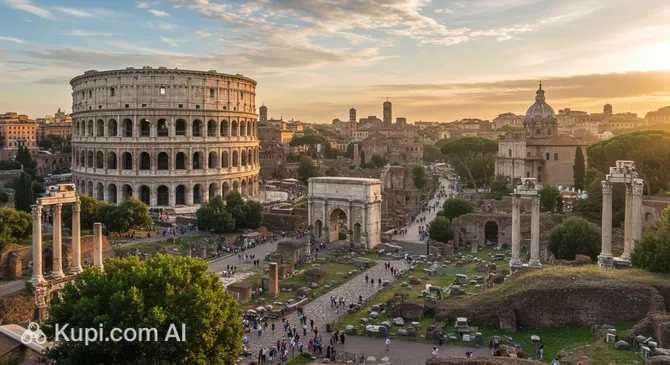
Illustration.
Source: Kupi.com AI

A journey through Italy is a kaleidoscope of impressions. Here you can enjoy exquisite cuisine, recognized as one of the best in the world, stroll through the narrow streets of medieval towns like Siena, or admire the splendor of architectural monuments, among which the legendary Colosseum holds a special place. Fashion lovers will enjoy Milan, and romantics will love the unique Venice with its canals and gondolas. The variety of landscapes – from Alpine peaks to the sunny beaches of Sicily – allows everyone to find something to their liking. The atmosphere of "la dolce vita" – the sweet life – is felt everywhere, making a vacation in Italy truly unforgettable.

Italy is famous not only for its museum-cities but also for its stunning nature. Picturesque lakes like Como and Garda, volcanic landscapes, the vineyards of Tuscany, and the rugged Amalfi Coast create amazing vistas. The mild Mediterranean climate makes the country attractive to visit almost all year round, offering either warm sunny days for a beach holiday or comfortable weather for exploring cultural treasures.

Currency

The official currency of Italy, as in many other European Union countries, is the euro (EUR). Euro banknotes have a uniform design across the Eurozone and differ in denomination by color and size, depicting various architectural styles of Europe — from antiquity to the modern era. Euro coins have one common side and one national side. Italian coins are decorated with images of the country's famous works of art and architectural monuments; for example, the Colosseum can be seen on the 5 euro cent coin, and Leonardo da Vinci's "Vitruvian Man" on the 1 euro coin.

You can exchange currency for euros at banks, post offices, or official exchange offices ("cambio"). It is recommended to avoid exchanging money with private individuals or in questionable places. In large cities and tourist centers of Italy, credit and debit cards (especially Visa and Mastercard) are accepted almost everywhere: in hotels, restaurants, shops, and museums. However, for small purchases at markets, in small cafes, or for paying for taxis and tips, it is better to have some cash on hand.

Visa Requirements

When planning a trip to Italy, it is important to familiarize yourself with the visa requirements in advance, which depend on your citizenship. Citizens of European Union countries and the Schengen area do not need a visa to enter Italy. Tourists from many other countries, such as the USA, Canada, and Australia, can also usually visit Italy without a visa for short-term trips (typically up to 90 days). However, for citizens of most CIS countries and several other states, a Schengen tourist visa is required to enter Italy.

If a visa is required, it should be applied for in advance at the consular section of the Italian embassy or through an authorized visa center in your country of residence. You will definitely need a valid passport to enter the country. Also, be prepared to provide confirmation of the purpose of your trip, such as a hotel reservation, return tickets, and a medical insurance policy. Given that visa policies can change, we strongly recommend checking the latest information on the official websites of the Italian embassy or visa centers before your trip.

We'll let you know if you need a visa

Enter your destination or
Your nationality
Destination

Timezones

A single time zone operates throughout Italy. The country is in Central European Time (CET), which corresponds to UTC+1. Like most European countries, Italy switches to Daylight Saving Time (Central European Summer Time, CEST), corresponding to UTC+2, on the last Sunday of March and back to standard time on the last Sunday of October.

Thus, tourists traveling across mainland Italy and the major islands such as Sicily and Sardinia do not have to worry about changing time zones. The time will be the same in Rome, Milan, Venice, and other cities in the country.

Getting There

There are several ways to get to Italy, a country with a rich history and culture, but air travel is the most popular and fastest. The country has a well-developed network of international airports receiving flights from all over the world. The main air hub is often the Leonardo da Vinci — Fiumicino Airport in Rome, but other major cities like Milan, Venice, and Naples also have large airports with an extensive flight geography. Direct flights and convenient connections are available from most countries in Europe, North America, the Middle East, and Asia.

For travelers from neighboring European countries, land transport can be a convenient option. Italy has excellent rail links with France, Switzerland, Austria, and Slovenia, offering both high-speed and night trains. International bus routes also connect Italy with many European cities, serving as a more budget-friendly alternative. Additionally, thanks to its long coastline, Italy can be reached by sea. Regular ferry services connect Italian ports with Croatia, Greece, Spain, Albania, and other Mediterranean countries. Cruise ships also frequently include Italian cities in their itineraries.

Regardless of the chosen method of travel, it is recommended to book tickets in advance, especially if your trip falls during the peak tourist season (summer, Christmas, and Easter holidays). This will not only help save money but also guarantee the availability of seats for your desired dates.

AirportCityIATA
Leonardo da Vinci-Fiumicino AirportRomeFCO
Milano Malpensa AirportMilanMXP
Orio al Serio International AirportMilanBGY
Naples International AirportNaplesNAP
Catania-Fontanarossa AirportCataniaCTA

Italy is a country with an incredible variety of tourist destinations, from ancient cities preserving millennial history to picturesque resorts on the coast and in the mountains. Of course, a trip through Italy often begins in its heart – Rome. The Eternal City captures the imagination with its ancient ruins, majestic cathedrals, and a unique atmosphere where every stone breathes history.

Illustration.
Source: Kupi.com AI

No less attractive is Venice, the city on the water, known for its romantic canals, gondolas, and unique architecture. For connoisseurs of fashion, design, and business life, the main magnet is Milan – the country's economic capital, where boutiques of world-famous brands are located and landmark cultural events take place. Lovers of romance and Shakespearean stories will enjoy Verona, the city of Romeo and Juliet, with its medieval streets and the famous Arena.

If you dream of a holiday by the sea and thermal springs, the island of Ischia offers you magnificent beaches, healing mud, and a relaxing atmosphere. Each city and resort in Italy is unique in its own way and is ready to give unforgettable impressions, whether it's immersion in history, enjoying art, gastronomic discoveries, or simply a serene vacation.

Top Attractions

Italy is a country with an incredible cultural heritage, and its attractions are known throughout the world. Here are just a few of them that are definitely worth seeing to feel the spirit of this amazing country:

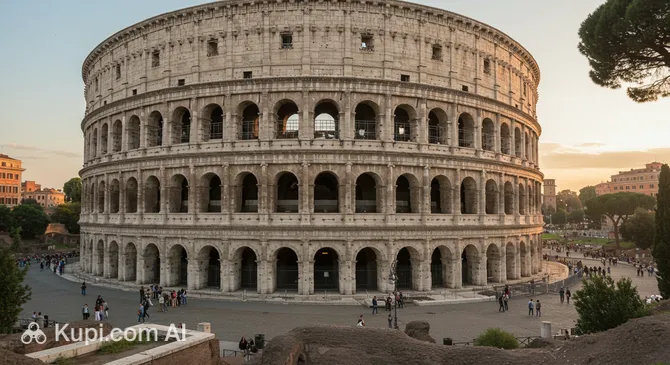
You should certainly start your acquaintance with the wonders of Italy with the Colosseum. This majestic amphitheater in Rome is not just an ancient monument, but a true symbol of power and history, where a crowd once roared while watching gladiatorial combat. Feel the breath of the centuries while strolling through its arena and stands.

Illustration.
Source: Kupi.com AI

Traveller photos:

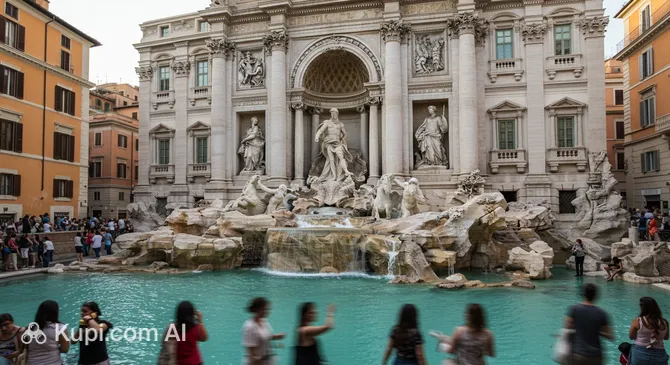
Near the Colosseum is another gem of Rome — the Trevi Fountain. This magnificent Baroque fountain, decorated with sculptures of sea deities, is known worldwide. Don't forget to toss a coin over your shoulder into its waters — according to legend, this guarantees your return to the Eternal City.

Illustration.
Source: Kupi.com AI

Traveller photos:

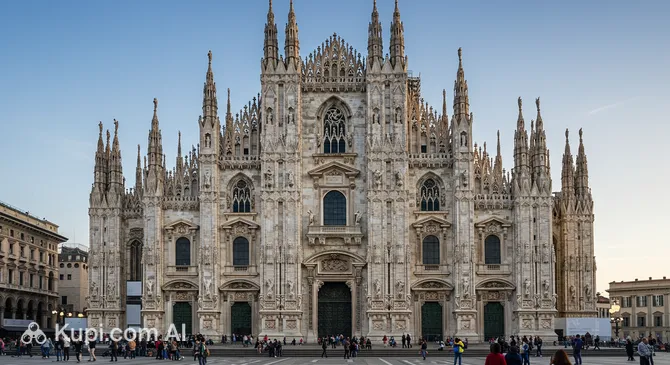
Be sure to visit the northern part of Italy as well, especially the city of Milan, where the stunning Milan Cathedral (Duomo) rises. This miracle of Gothic architecture, decorated with thousands of spires and statues, is striking in its scale and elegance. Climb to the roof to enjoy an unforgettable panoramic view of the city and the Alps on a clear day.

Illustration.
Source: Kupi.com AI

Traveller photos:

Best Time to Visit

Italy is beautiful at any time of year, but the choice of the optimal season depends on your preferences and plans. High season traditionally falls during the summer months (June-August). During this time, the whole country, especially the south and the islands, experiences hot and sunny weather, ideal for beach holidays and swimming in the sea. However, this is also the period of the maximum influx of tourists, which means higher prices for accommodation and services, as well as queues at popular attractions. Spring (April-May) and autumn (September-October) are considered shoulder seasons and are the best time to visit for many. The weather during these months is usually mild and comfortable for city tours in places like Rome, Venice, or Milan. There are fewer tourists, and prices are more affordable. However, the weather can be more changeable, especially in northern regions, and rain is possible.

Winter months (November-March) are the low season for most tourist destinations, except for ski resorts in the Alps and Apennines. Cities can be cool and damp, but it is a great time to visit museums without crowds and enjoy a calmer atmosphere. Moreover, some famous events take place in winter, such as the Venice Carnival (usually in February) or Christmas markets. Easter weeks also attract many pilgrims and tourists, especially to Rome. Given Italy's significant length from north to south, the climate in different regions can vary greatly. In the south, for example, on Sicily, warmth stays longer, while northern regions, such as the surroundings of Bolzano, feel the arrival of autumn and winter earlier. Therefore, it is always worth checking the weather forecast for the specific region before your trip.

Traditions

Italians are an open and expressive people, and understanding their cultural characteristics will make your trip through Italy even more pleasant. Greetings here range from the informal "ciao" (hi/bye) to the more formal "buongiorno" (good day) and "buonasera" (good evening). A handshake is appropriate upon first meeting, while symbolic kisses on both cheeks are often common between friends and good acquaintances. Eye contact during a conversation is considered a sign of respect and sincerity, and active gesturing is an integral part of Italian communication. Hospitality is highly valued in Italy; if you are invited to visit, it is good manners to bring a small gift for the hosts — a bottle of wine, sweets, or flowers. Special attention should be paid to clothing when visiting religious sites: entry to churches and cathedrals is only possible with shoulders and knees covered.

There are also unwritten rules at the table in Italy. For example, it is customary to keep your hands (wrists) on the table rather than on your lap. It is considered bad form to cut spaghetti with a knife or to ask for extra cheese for seafood dishes. Italians drink cappuccino mainly in the morning; after lunch or dinner, espresso is preferred. Among the most important national holidays are Ferragosto (August 15th), the Assumption of the Virgin Mary, which is also the peak of the holiday season, and, of course, Christmas (Natale) and Easter (Pasqua), celebrated on a large scale with family. To show respect to locals, try to be polite, do not criticize Italian cuisine or football (these are sensitive topics!), and do not be surprised by the "coperto" (cover charge/service fee) on the restaurant bill — this is standard practice. In general, Italians greatly value "bella figura" — the ability to carry oneself and make a good impression.

Entertainment

Italy offers an incredible variety of entertainment for every taste, capable of satisfying both adventure seekers and art connoisseurs. Active recreation lovers will find everything here: from exciting hiking and trekking in the Alps and Apennines to diving and surfing on picturesque coasts, and in winter – excellent ski resorts. Alongside this, the country is a real treasure trove of cultural entertainment. Countless world-class museums, art galleries, opera houses, and concert halls await visitors, offering a deep dive into a rich historical and artistic heritage.

As evening falls, Italy is transformed, offering a vibrant and diverse nightlife. In major cities like Rome or Milan, you can find many stylish bars, lively clubs, and fine restaurants where you can enjoy the famous Italian "aperitivo" or dance until morning. For those who prefer a more relaxed holiday, the charming streets of small towns offer cozy cafes and traditional trattorias. Shopping in Italy is a pleasure in itself. The country is famous for its fashion, so boutiques of famous designers attract fashionistas from all over the world. Additionally, you can buy high-quality leather goods, exquisite jewelry, ceramics, and, of course, gastronomic delicacies and wines as souvenirs.

There are also plenty of options for family holidays in Italy. Various theme parks and water parks, especially popular in the summer season, will provide unforgettable experiences for both children and adults. Many resort areas offer special programs and entertainment for young travelers. Thus, when planning a trip to Italy, you can be sure that you will definitely not be bored – this country knows how to surprise and enchant with the variety of its opportunities for recreation and entertainment.

Currency rates

Planning a trip? Wonderful! To make sure the financial side of your journey holds no surprises, it's worth remembering that exchange rates are constantly changing. That's why we strongly recommend keeping an eye on current rates both before departure and throughout your trip. To help with that, you can use the data provided below — we monitor exchange rates 24/7 and strive to provide the most up-to-date information.

EUR exchange rate for 13/08/2026

4.26 AED
~ 1 EUR
424.12 AMD
~ 1 EUR
1.64 AUD
~ 1 EUR
1.97 AZN
~ 1 EUR
3.45 BYN
~ 1 EUR
1.62 CAD
~ 1 EUR
1 GBP
~ 1.17 EUR
366.40 HUF
~ 1 EUR
110.58 INR
~ 1 EUR
101.38 KGS
~ 1 EUR
1642.09 KRW
~ 1 EUR
539.99 KZT
~ 1 EUR
4.33 PLN
~ 1 EUR
95.92 RUB
~ 1 EUR
4.35 SAR
~ 1 EUR
1.48 SGD
~ 1 EUR
55.36 TRY
~ 1 EUR
51.91 UAH
~ 1 EUR
1.16 USD
~ 1 EUR
13823.98 UZS
~ 1 EUR

Reached the bottom of the page?

Looks like you know this route inside out

We use cookies and services to collect user information. This is essential for the functioning of the site and for marketing purposes. You can find out more in .