Czech Republic

About

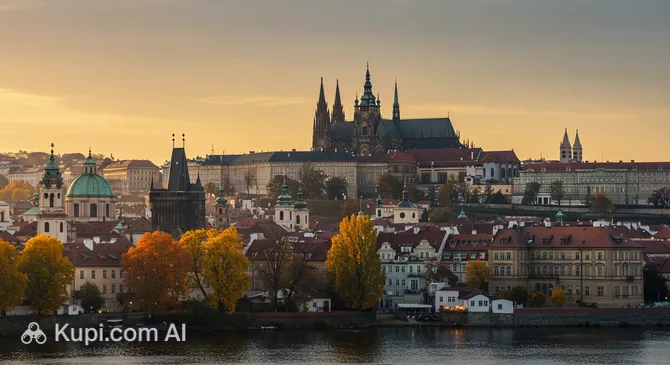
The Czech Republic, nestled in the heart of Europe, is a country with a rich history and culture that attracts travelers from all over the world. Its compact size makes it easy to explore diverse regions, each holding its own unique treasures. The capital, magical Prague, often called the "city of a hundred spires," impresses with its magnificent architecture, cobbled streets, and an atmosphere that seems to have stepped off the pages of historical novels.
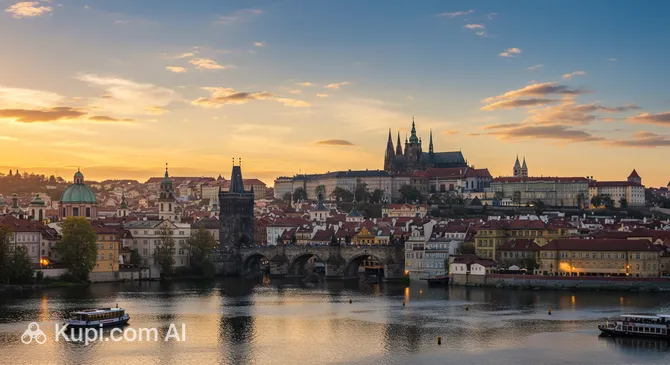
Illustration.
Source: Kupi.com AI

The Czech Republic is famous for its numerous medieval castles and fortresses, majestic cathedrals, and picturesque towns. In addition to the famous capital, it is worth visiting gems such as fairytale Český Krumlov with its impressive castle complex or the spa town of Karlovy Vary, known for its healing springs. The country's cultural heritage is reflected not only in its architecture but also in its traditions, music, and, of course, world-famous Czech beer.

The natural beauty of the Czech Republic also deserves attention: from the rolling landscapes of Bohemia to the mountain ranges of Moravia, the country offers many opportunities for outdoor activities and enjoying nature. The temperate climate makes travel comfortable at any time of year. The overall impression of the Czech Republic is a wonderful combination of historical grandeur, cultural richness, and a warm atmosphere that leaves unforgettable memories for every guest.

Currency

The national currency of the Czech Republic is the Czech koruna (international code CZK). The banknotes feature prominent figures from Czech history and culture, such as Charles IV, Tomáš Garrigue Masaryk, and Emma Destinn. The coins are decorated with symbols of Czech statehood, such as the Czech lion.

You can exchange currency in the Czech Republic at banks or official exchange offices (směnárna). It is recommended to compare rates and pay attention to commissions, as some exchangers, especially in tourist areas, may offer unfavorable terms or hidden fees. Avoid exchanging money with street money changers. Credit and debit cards (Visa, Mastercard) are widely accepted in most hotels, restaurants, and shops, especially in major cities like Prague. However, cash may be required for small purchases at markets or in small towns.

Visa Requirements

To enter the Czech Republic, citizens of countries outside the European Union or the Schengen Area generally require a visa. Most often, this refers to a tourist Schengen visa, which must be arranged in advance at the consulate or visa center of the Czech Republic in your country of residence. Citizens of EU countries and some other states can enter the Czech Republic without a visa for short-term stays.

Regardless of visa requirements, you will need a valid passport to cross the border. It is also recommended to have proof of the purpose of your trip (e.g., return tickets, hotel booking) and medical insurance. Since visa rules can change, we strongly advise checking the latest information on the official website of the Czech embassy or consulate before your trip.

We'll let you know if you need a visa

Enter your destination or
Your nationality
Destination

Timezones

When planning a trip to the Czech Republic, you don't have to worry about changing time zones within the country. The entire territory of the Czech Republic is in one time zone. Standard time here is Central European Time (CET), which is UTC+1. Like many European countries, the Czech Republic transitions to Central European Summer Time (CEST), which is UTC+2. This means there will be no time difference between Prague and other cities in the country, such as Brno or Karlovy Vary.

This single time zone significantly simplifies planning your movements around the country and flight connections if you are traveling in transit through Czech airports. Simply set your watch to local time upon arrival, and it will be relevant throughout your trip across the picturesque corners of the Czech Republic.

Getting There

There are several ways to reach the Czech Republic, but the most popular and convenient for most international tourists is by air. The country has several international airports, the main one being Václav Havel Airport in Prague. This airport serves as a major transportation hub, receiving direct flights from many European cities, as well as offering convenient connections for travelers from other regions of the world, including North America, Asia, and the Middle East. Other international airports, for example in Brno or Ostrava, also serve international and domestic flights, expanding options for arrival in different regions of the country.

Thanks to its central location in Europe, the Czech Republic is perfectly connected to neighboring countries by a developed network of railways and bus routes. International trains and comfortable buses regularly run from Germany, Austria, Poland, Slovakia, and other European states. This method of travel can be not only more economical but also allows you to enjoy the scenic views of Central Europe. It is a particularly convenient option for those planning a multi-country trip through the region.

Whichever way you choose to get to the Czech Republic, it is highly recommended to book your tickets in advance. This is especially relevant if your trip falls during the peak tourist season (usually the summer months, as well as the Christmas and New Year holidays) or during major cultural events. Early booking will not only help you secure better fares but also guarantee seat availability for your desired dates.

AirportCityIATA
Vaclav Havel Airport PraguePraguePRG
Turany AirportBrnoBRQ
Mosnov AirportOstravaOSR
Pardubice AirportPardubicePED
Ceske Budejovice AirportCeske BudejoviceJCL

The Czech Republic is famous for its diverse cities and resorts, each offering unique experiences. From majestic capitals with rich histories to cozy medieval towns and world-renowned health resorts, there is a destination for every taste. Travelers are attracted by the magnificent architecture, cultural events, culinary delights, and the famous Czech hospitality.

Illustration.
Source: Kupi.com AI

Undoubtedly, the main jewel of the country is Prague, the capital of the Czech Republic. This city, as if stepped out of a fairytale, enchants with its medieval architecture, Charles Bridge, Prague Castle, and Old Town Square. Health-conscious travelers will appreciate Karlovy Vary, a famous resort with healing mineral springs, elegant colonnades, and picturesque parks. This place is ideal for relaxation and recovery.

For those seeking a medieval and romantic atmosphere, Český Krumlov is a must-visit. This small town, a UNESCO World Heritage site, impresses with its narrow streets, red-tiled roofs, and the majestic castle rising above the Vltava River. No less interesting is Brno, the second-largest city in the Czech Republic, which harmoniously combines historical landmarks like Špilberk Castle and the Cathedral of St. Peter and Paul with modern dynamic life, numerous museums, and lively cafes.

Top Attractions

The Czech Republic is a country with a rich history and culture, which is reflected in its numerous attractions. Travelers can expect majestic castles, ancient bridges, and unique natural sites, each telling its own fascinating story.

One of the main symbols of not only Prague but the entire Czech Republic is Prague Castle. This grand complex of castles, palaces, temples, and gardens, rising above the Vltava, has served as the residence of Czech kings, emperors, and presidents for centuries. Here, you can spend hours wandering through its streets, visiting St. Vitus Cathedral, Golden Lane, and the Royal Palace.

Illustration.
Source: Kupi.com AI

Traveller photos:

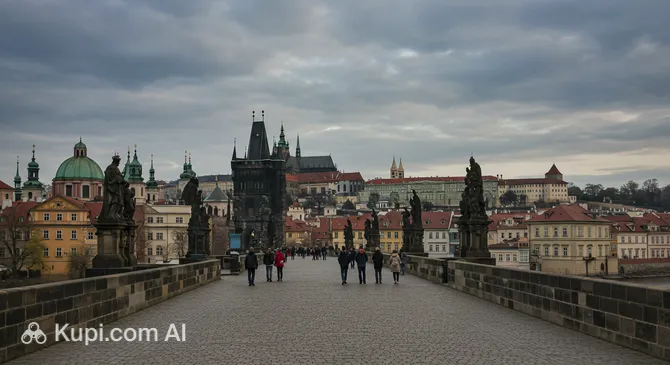
No less famous is the Charles Bridge—a masterpiece of medieval architecture decorated with thirty sculptures of saints. Crossing the Vltava, it connects the Old Town with the Lesser Town (Malá Strana). A walk across the bridge, especially at sunrise or sunset, leaves an unforgettable impression and allows you to enjoy magnificent views of Prague Castle.

Illustration.
Source: Kupi.com AI

Traveller photos:

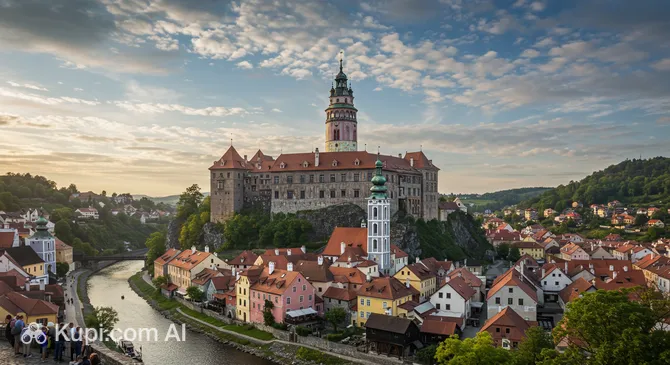
There is also much to see outside the capital. For example, State Castle and Chateau Český Krumlov is the second-largest castle complex in the Czech Republic, located in the picturesque town of Český Krumlov, a UNESCO World Heritage site. The castle impresses with its size, architectural diversity, and unique Baroque theater.

Illustration.
Source: Kupi.com AI

Traveller photos:

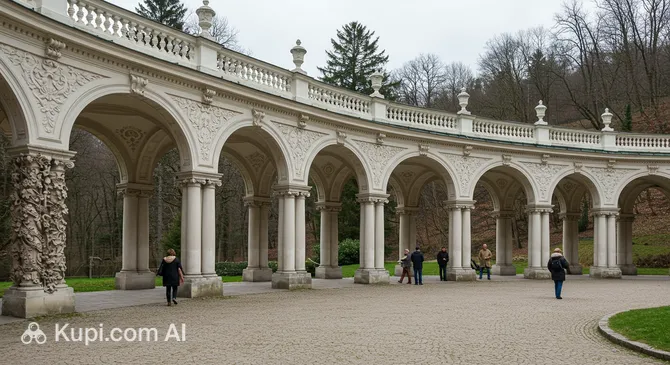
For those interested in resort architecture, a visit to the Mill Colonnade in Karlovy Vary is a must. This is the largest colonnade of the resort, built in the Neo-Renaissance style, under whose vaults there are five mineral springs. It is a favorite place for walking and tasting healing water.

Illustration.
Source: Kupi.com AI

Traveller photos:

Best Time to Visit

High season in the Czech Republic traditionally falls during the summer months (June–August) and the period of Christmas and New Year holidays, especially in Prague. In summer, the weather is usually warm and sunny, ideal for walking through charming cities like Prague, Český Krumlov, or Karlovy Vary, and for outdoor activities. All attractions are open, and cultural life is in full swing. However, be prepared for large crowds and higher prices for accommodation and flights.

Shoulder season, covering spring (April–May) and autumn (September–October), offers a kind of golden mean. The weather during these periods is generally mild, although it can be changeable. In spring, the Czech Republic literally blooms, while in autumn it delights with golden foliage and the grape harvest season, especially in Moravia. There are significantly fewer tourists, and prices are more pleasant. This is an excellent time for a peaceful exploration of the country, visiting castles and resorts such as Karlovy Vary. Some rural attractions may have reduced opening hours.

Low season (from November to March, excluding the festive month of December) attracts travelers seeking solitude and great deals. The weather during this time is cool, often with snow, which creates a special fairytale atmosphere, especially leading up to Christmas with its famous markets in Prague, Brno, and other cities. In winter, you can enjoy the lack of crowds and the lowest prices. It is worth noting that daylight hours are shorter, and some sites outside of major cities may be closed. Significant cultural events also take place in the Czech Republic, such as the Prague Spring International Music Festival in May or the Karlovy Vary International Film Festival in July, which may influence your choice of travel dates.

Traditions

When planning a trip to the Czech Republic, it is useful to get acquainted with some local cultural nuances so that your interaction with the residents is pleasant and respectful. When meeting, Czechs usually exchange handshakes while maintaining eye contact. Using first names is common among young people, but in more formal settings or with the older generation, it is better to use the surname and the appropriate title (Pan/Paní – Mr./Mrs.). Czechs value hospitality, and if you are invited to a home, it is good manners to bring a small gift—flowers for the hostess (an odd number, avoiding chrysanthemums, which are often associated with funerals) or a bottle of quality wine. Punctuality is also highly valued. In public places, try not to be overly loud; Czechs are generally quite reserved. It is not common to point with a finger—this can be perceived as rude.

There are no specific dress code requirements for everyday life in the Czech Republic; however, when visiting churches, monasteries, and other religious sites, you should choose modest clothing that covers the shoulders and knees. For a trip to the theater or a good restaurant, more elegant attire would be appropriate. At the table, it is customary to keep your hands visible, usually with wrists resting on the edge of the table. Do not start eating until the host or the oldest person at the table has begun their meal. It is considered polite to finish everything on your plate. In restaurants, it is customary to leave a tip, usually around 10% of the bill, if you liked the service. Among the important holidays reflecting the culture, St. Wenceslas Day (September 28) stands out—the day of Czech statehood and honoring the country's main patron saint, as well as Easter, which is accompanied by unique folk traditions such as weaving pomlázkas (special whips made of willow twigs) and painting eggs (kraslice).

By showing respect for local customs, you will not only avoid awkward situations but also immerse yourself deeper in the authentic atmosphere of the Czech Republic. For example, it is considered impolite to refuse offered treats, especially if it is home-baked goods or a traditional drink. It is also worth remembering that Czechs are proud of their history and culture, so showing interest in these aspects will always be received positively. Avoid comparisons with neighboring countries, especially in a negative light, and try not to touch upon sensitive historical topics without a deep understanding of the context. A simple "Dobrý den" when entering a shop or cafe and "Na shledanou" when leaving will be greatly appreciated.

Entertainment

The Czech Republic offers its guests a rich choice of entertainment for every taste. Outdoor enthusiasts will appreciate the numerous hiking and cycling routes passing through picturesque national parks and hilly terrain. In winter, ski slopes open up, suitable for both beginners and more experienced athletes. For connoisseurs of cultural events, the country is a real treasure trove: ancient castles and palaces, numerous museums with rich collections, art galleries, as well as theaters, including the famous black light theater performances, and concert halls—especially in Prague—offer a full program all year round.

When night falls, life in Czech cities does not slow down. Prague is particularly famous for its nightlife, where you can find countless bars—from traditional breweries with a century of history to modern cocktail bars—as well as clubs with diverse music. For those who prefer shopping, the Czech Republic offers both traditional souvenirs and modern goods. Bohemian crystal and glass products, garnet jewelry, wooden toys, marionettes, and, of course, the famous Becherovka liqueur are popular choices. The main shopping streets and large shopping centers are concentrated in big cities.

Family travelers will also find plenty of interesting things to do in the Czech Republic. Numerous zoos, among which the Prague Zoo stands out, modern water parks, toy museums, and puppet theaters will bring joy to both children and adults. Many castles and historical sites offer special interactive programs for young visitors, turning historical education into an exciting adventure. Thus, the Czech Republic is capable of offering a diverse and memorable holiday for every tourist.

Currency rates

Planning a trip? Wonderful! To make sure the financial side of your journey holds no surprises, it's worth remembering that exchange rates are constantly changing. That's why we strongly recommend keeping an eye on current rates both before departure and throughout your trip. To help with that, you can use the data provided below — we monitor exchange rates 24/7 and strive to provide the most up-to-date information.

CZK exchange rate for 13/08/2026

1 AED
~ 5.69 CZK
17.49 AMD
~ 1 CZK
1 AUD
~ 14.77 CZK
1 AZN
~ 12.30 CZK
1 BYN
~ 7.03 CZK
1 CAD
~ 15.01 CZK
1 EUR
~ 24.12 CZK
1 GBP
~ 28.25 CZK
15.11 HUF
~ 1 CZK
4.56 INR
~ 1 CZK
4.18 KGS
~ 1 CZK
67.73 KRW
~ 1 CZK
22.27 KZT
~ 1 CZK
1 PLN
~ 5.60 CZK
3.96 RUB
~ 1 CZK
1 SAR
~ 5.58 CZK
1 SGD
~ 16.34 CZK
2.28 TRY
~ 1 CZK
2.14 UAH
~ 1 CZK
1 USD
~ 20.91 CZK
570.20 UZS
~ 1 CZK

Reached the bottom of the page?

Looks like you know this route inside out

We use cookies and services to collect user information. This is essential for the functioning of the site and for marketing purposes. You can find out more in .