Poland

About

Poland is a country located in Central Europe, attracting tourists with its rich historical heritage, diverse culture, and picturesque landscapes. It is a place where centuries-old traditions blend harmoniously with the dynamic rhythm of modern life. Poland offers travelers a unique opportunity to touch history by exploring medieval castles, Gothic cathedrals, and cities that have preserved their original appearance. The country's capital, Warsaw, is a vivid example of resilience and rebirth – a city meticulously restored after historical trials, today it stands as a vibrant cultural and business center.
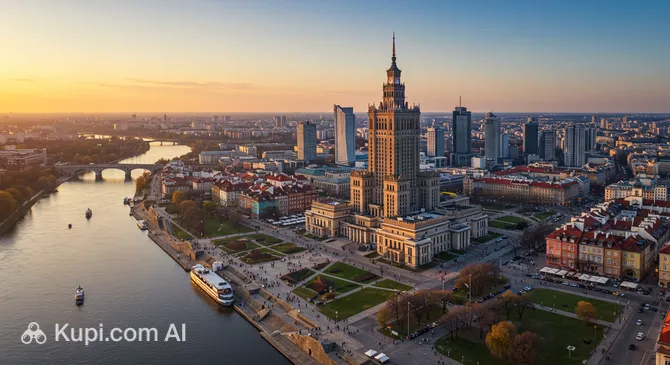
Illustration.
Source: Kupi.com AI

Poland surprises with the diversity of its natural beauty: from the sandy beaches of the Baltic Sea in the north and the Masurian Lakes to the majestic Tatra Mountains in the south. The temperate climate makes the country attractive to visit at any time of year. Besides the capital, many other cities are worth your attention. For example, Krakow, the former royal capital, charms with its ancient architecture, cozy streets, and iconic landmarks such as Wawel Royal Castle. The general atmosphere in Poland is one of local hospitality, delicious national cuisine, and a sense of immersion in rich European culture.

Currency

The national currency of Poland is the Polish zloty, with the international code PLN. One zloty is divided into 100 groszy. Modern banknotes feature portraits of Polish monarchs such as Mieszko I, Bolesław I the Brave, Casimir III the Great, Władysław II Jagiełło, and Sigismund I the Old, which adds historical value and national character. Coins are also in active circulation and used for everyday transactions.

Currency can be exchanged in Poland at banks or numerous exchange offices known as "kantors." It is recommended to compare rates in several places, as they can differ; often the most favorable rates are offered by "kantors" away from the main tourist routes. Try to avoid exchanging currency at airports or hotels, where the rate is usually less attractive. Also, be wary of "no commission" offers, as this can sometimes be offset by an unfavorable exchange rate. Credit and debit cards (especially Visa and Mastercard) are widely accepted in most shops, restaurants, and hotels, particularly in cities. Nevertheless, it is always useful to have some cash on hand for small purchases, paying for travel on some types of public transport, visiting markets, or in smaller settlements.

Visa Requirements

When planning a trip to Poland, it is important to familiarize yourself with the visa requirements in advance. Citizens of European Union and European Economic Area countries can enter Poland without a visa. For citizens of many other countries, such as the USA, Canada, and Australia, visa-free entry is also typically provided for short-term tourist trips (usually up to 90 days within a 180-day period, as Poland is part of the Schengen Area). However, citizens of a number of other states, including some CIS countries, will need to apply for a Schengen visa to visit Poland.

If a visa is required for your trip to Poland, it will be a tourist Schengen visa. It should be obtained in advance at the consulate or embassy of Poland, or at an accredited visa center in your country of residence. A valid passport is required to enter the country. Supporting documents such as return tickets, proof of accommodation, and medical insurance may also be needed. We strongly recommend always checking current information and the full list of requirements on the official websites of the embassy or consulate of Poland before planning your trip, as visa rules may change.

We'll let you know if you need a visa

Enter your destination or
Your nationality
Destination

Timezones

When planning a trip to Poland, you won't have to worry about changing time zones within the country. The entire territory of Poland is in a single time zone – Central European Time (CET), which corresponds to UTC+1 in winter and UTC+2 in summer, when the country switches to daylight saving time (CEST). This means that the time in Warsaw, Krakow, Gdańsk, and any other Polish city will be the same.

Thus, traveling between different regions of Poland will not require you to reset your watch. This simplifies route planning, transport bookings, and excursions, allowing you to focus on enjoying the beauty and culture of the country.

Getting There

There are several convenient ways to reach Poland, depending on your location and preferences. The most popular option is air travel. Several international airports operate in the country, the main one often being Warsaw Chopin Airport in Warsaw, which receives flights from all over the world. Direct flights or convenient connections are available from most European capitals, as well as from other regions.

Due to its central location in Europe, Poland is also easily accessible by land transport. The country has a developed network of international train and bus routes connecting it with Germany, the Czech Republic, Slovakia, Ukraine, Belarus, and Lithuania. This is an excellent option for those who prefer land travel or are combining a visit to Poland with visits to neighboring countries. Additionally, for travelers from Scandinavia and some other Baltic Sea countries, ferry services are available, arriving at ports such as Gdańsk or Świnoujście.

When planning your trip, especially during popular tourist seasons or holidays, it is recommended to book tickets in advance. This will not only allow you to choose the most convenient flights or routes but also often save on travel costs. Early booking also guarantees seat availability, which is particularly important for a comfortable start to your journey in Poland.

AirportCityIATA
Frederic Chopin AirportWarsawWAW
John Paul II International Airport Krakow-BaliceKrakowKRK
Gdansk Lech Walesa AirportGdanskGDN
Katowice International AirportKatowiceKTW
Wroclaw AirportWroclawWRO

Poland is a country with a rich selection of destinations for any tourist. Here you will find large historical centers full of cultural treasures, charming resorts on the Baltic coast, and picturesque mountain towns. Each city and resort in Poland has its own unique character and is ready to offer guests unique experiences.

Undoubtedly, one of the main magnets for travelers is Warsaw, the capital of the country. It is a dynamic city where the historical heritage of the Old Town, meticulously restored and listed as a UNESCO World Heritage site, blends harmoniously with modern architecture and a bustling cultural life.

Illustration.
Source: Kupi.com AI

Another gem of Poland is Krakow, the former royal capital. Its historical center, with the majestic Wawel Castle and the enormous Market Square, attracts millions of tourists with its unique atmosphere and rich history.

For fans of the seaside, Gdańsk is worth a look; it is one of the oldest and most beautiful cities on the Baltic coast, known for its unique architecture and maritime traditions. For those who prefer the mountains, the ideal choice would be Zakopane, a popular ski resort and center of Goral culture located at the foot of the Tatra Mountains. And if you are looking for a city with unique charm, head to Wrocław, famous for its many bridges, canals, and funny gnome figures found at every turn.

Top Attractions

Poland is rich in historical and cultural treasures that attract travelers from all over the world. Among the many interesting places, several iconic attractions stand out, capable of telling the story of the country's history and culture.

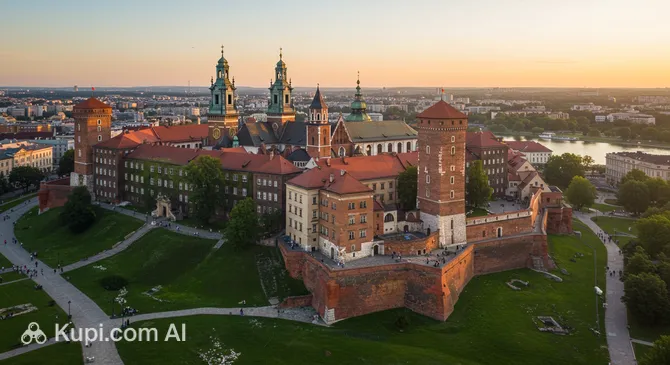
One of the main symbols of Poland is Wawel Royal Castle, located in Krakow. This majestic residence of Polish monarchs was the center of political and cultural life for centuries. Today, visitors can explore its opulent halls, treasury, and cathedral, feeling the breath of centuries-old history.

Illustration.
Source: Kupi.com AI

Traveller photos:

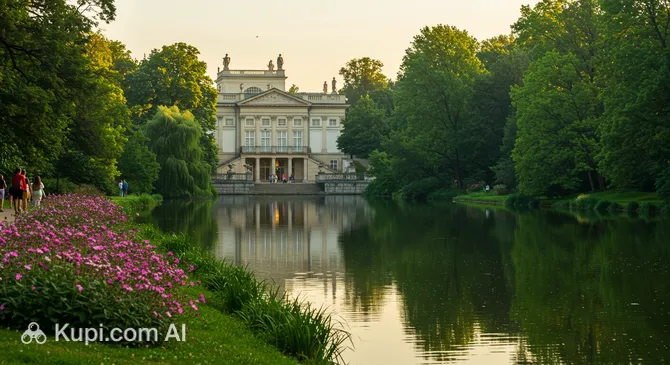
In the country's capital, Warsaw, it is definitely worth visiting Royal Łazienki. This vast and picturesque palace and park complex, with its famous Palace on the Isle and the monument to Fryderyk Chopin, offers a peaceful atmosphere for leisurely walks and a break from the city bustle.

Illustration.
Source: Kupi.com AI

Traveller photos:

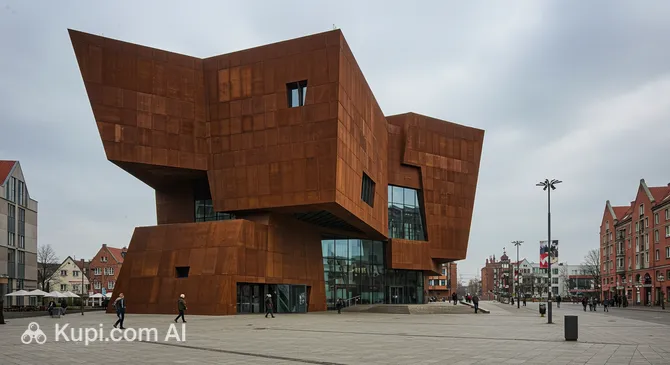
For those interested in 20th-century history, an important place to visit is the Museum of the Second World War in Gdańsk. Its modern and deeply moving exhibition comprehensively covers this tragic period, explaining the causes, course, and consequences of the conflict, as well as the fates of individuals.

Illustration.
Source: Kupi.com AI

Traveller photos:

If you are traveling with family or simply love nature and animals, then Wrocław Zoo is an excellent choice. It is one of the oldest and largest zoos in Poland, located in Wrocław, and is known for its impressive Afrykarium – a unique complex dedicated to the aquatic fauna of Africa.

Best Time to Visit

Poland is welcoming all year round, but the best time to visit depends on your preferences. High season traditionally falls during the summer months – from June to August. At this time, the weather is warm and often sunny, ideal for exploring cities like Warsaw, Krakow, or Gdańsk, relaxing on the Baltic coast, or hiking in the mountains, for example, around Zakopane. In summer, many festivals and outdoor cultural events take place. However, be prepared for large crowds of tourists and higher prices for accommodation and services.

Shoulder season – spring (April-May) and autumn (September-October) – attracts travelers with a calmer atmosphere and lower prices. In spring, nature comes alive, and in autumn, you can catch the famous "golden Polish autumn" with its riot of colors. The weather during these periods is usually mild but can be changeable. Low season covers the period from November to March. Winter in Poland can be quite cold and snowy, especially in the eastern regions and the mountains, creating excellent conditions for skiing. In December, cities like Wrocław and Krakow are transformed by Christmas markets. The main downsides of winter are the short daylight hours and the need for warm clothing.

When planning your trip, it is worth considering that the climate in Poland is temperate but has its regional characteristics. On the Baltic coast (for example, in Świnoujście), winters are milder and summers are cooler than in the central and eastern parts of the country. In mountainous regions, it is always colder, and snow can stay longer. Therefore, when choosing a time to travel, it is recommended to check the weather forecast for the specific region you intend to visit. Also, pay attention to the events calendar: major festivals, such as the summer Open'er Festival, or cultural holidays can make your trip even more eventful.

Traditions

Immersion in the culture of Poland begins with an understanding of local customs of communication and hospitality. When meeting and greeting, it is customary to exchange handshakes, which applies to both men and women. Direct eye contact is important – it demonstrates your openness. Poles are very hospitable, and if you are invited into a home, it is a great sign of respect. In such cases, it is customary to bring a small gift for the hosts, such as flowers (an odd number, and avoid yellow chrysanthemums as they are often associated with funerals), a bottle of good wine, or high-quality chocolate. Refusing an offered treat is considered impolite, so try to at least sample it. In communication with strangers or those older than you, it is customary to use formal address ("Pan" for men/"Pani" for women); switching to informal "you" is usually initiated by the older person or the woman.

When visiting the numerous churches and other religious sites in Poland, remember the dress code: clothing should be modest, covering shoulders and knees, and men should remove their headwear. At the table, Poles also follow certain rules: before eating, it is customary to say "Smacznego!" (Enjoy your meal!), and during the meal, hands are usually kept on the table (wrists on the edge of the table) rather than on the lap. Do not start eating until the host or the eldest person at the table does so. In general, Poles value politeness and punctuality. Loud conversations in public places, especially on transport or in queues, can be perceived negatively. Try to always say thank you ("Dziękuję") and excuse me/sorry ("Przepraszam") when appropriate – these simple words are highly appreciated.

To understand the Polish soul more deeply, pay attention to the national holidays. Some of the most significant are Christmas (Boże Narodzenie) and Easter (Wielkanoc). These are deeply family and religious celebrations filled with age-old traditions, such as a twelve-dish meatless supper on Christmas Eve (Wigilia) or the blessing of Easter baskets (święconka). Another important day is Independence Day (Narodowe Święto Niepodległości), celebrated on November 11, which demonstrates the patriotic spirit of the nation. Knowing these aspects will help you not only avoid awkward situations but also show respect for the rich culture of Poland, making your journey more meaningful and pleasant.

Entertainment

Poland offers various opportunities for active recreation and entertainment for every taste. Nature lovers can go on exciting hikes along picturesque mountain trails, which are particularly popular in the Zakopane area, or enjoy water sports on the Baltic coast and the country's many lakes. In winter, ski resorts open here. There are also many options for family holidays: from visiting interesting zoos, such as the famous Wrocław Zoo, to modern water parks and theme parks that will provide plenty of excitement for both adults and children.

The cultural life of Poland is rich and multifaceted. Major cities, including Krakow, the capital Warsaw, and the charming Wrocław, take pride in their numerous museums, art galleries, theaters, and concert halls. Here you can get acquainted with the country's rich historical heritage, visit iconic sites such as Wawel Royal Castle, or discover modern Polish art. In the evening, these same cities come alive, offering guests a chance to immerse themselves in the atmosphere of cozy bars, stylish restaurants, and lively nightclubs where everyone will find entertainment to their liking.

Shopping in Poland is a pleasant addition to any trip. As souvenirs, tourists often bring back amber products, which are famous for their quality, especially in coastal cities like Gdańsk, as well as beautiful ceramics, traditional embroidered shirts, and local delicacies. Main shopping streets and modern malls can be found in all major cities, offering both world-renowned brands and unique products by local artisans. Overall, Poland provides a wide range of entertainment capable of satisfying the requests of diverse travelers, from adventure seekers to art connoisseurs and fans of peaceful family holidays.

Currency rates

Planning a trip? Wonderful! To make sure the financial side of your journey holds no surprises, it's worth remembering that exchange rates are constantly changing. That's why we strongly recommend keeping an eye on current rates both before departure and throughout your trip. To help with that, you can use the data provided below — we monitor exchange rates 24/7 and strive to provide the most up-to-date information.

PLN exchange rate for 13/08/2026

1 AED
~ 1.01 PLN
98.54 AMD
~ 1 PLN
1 AUD
~ 2.62 PLN
1 AZN
~ 2.18 PLN
1 BYN
~ 1.25 PLN
1 CAD
~ 2.66 PLN
1 EUR
~ 4.28 PLN
1 GBP
~ 5.01 PLN
85.13 HUF
~ 1 PLN
25.69 INR
~ 1 PLN
23.56 KGS
~ 1 PLN
381.54 KRW
~ 1 PLN
125.47 KZT
~ 1 PLN
22.29 RUB
~ 1 PLN
1.01 SAR
~ 1 PLN
1 SGD
~ 2.90 PLN
12.86 TRY
~ 1 PLN
12.06 UAH
~ 1 PLN
1 USD
~ 3.71 PLN
3211.96 UZS
~ 1 PLN

Reached the bottom of the page?

Looks like you know this route inside out

We use cookies and services to collect user information. This is essential for the functioning of the site and for marketing purposes. You can find out more in .