Albania

About

Albania, the pearl of the Balkan Peninsula, attracts travelers with its unique blend of rich history, stunning natural landscapes, and a welcoming atmosphere. Situated on the shores of the Adriatic and Ionian Seas, this country offers both magnificent beaches and majestic mountain scenery, remaining an undiscovered corner of Europe for many tourists.

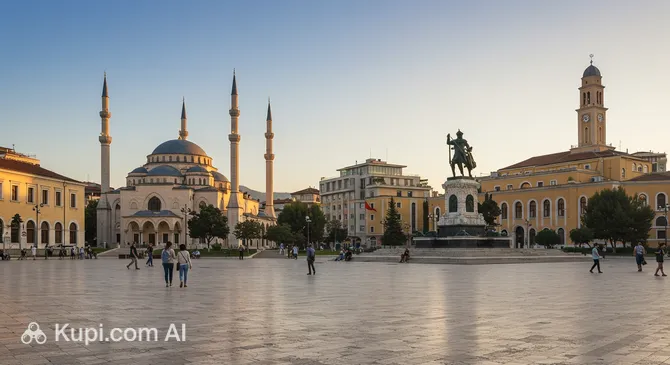
Albania's cultural heritage is multifaceted: here you can find traces of ancient Illyrian civilizations, Roman rule, Byzantine influence, and the Ottoman period. The country's capital, Tirana, is a vibrant and dynamic city where modern buildings stand alongside historical monuments, such as Skanderbeg Square, reflecting the country's rapid development.
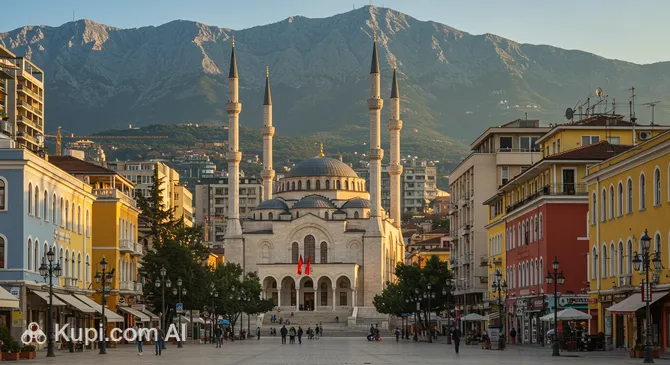
Illustration.
Source: Kupi.com AI

Albania's nature leaves no one indifferent: from picturesque canyons and crystal-clear rivers to untouched beaches and national parks. History buffs will appreciate ancient cities like Gjirokastra with its famous fortress, while fans of seaside relaxation will find their paradise in resort towns like Saranda. Albania is a country where every day can become a discovery full of vivid impressions and warm Balkan hospitality.

Currency

The national currency of Albania is the Albanian lek (ALL). Banknotes of various denominations are in circulation, featuring prominent historical figures and cultural symbols of the country. Coins are also used for small transactions. The design of the bills and coins is quite colorful and reflects the rich history and culture of Albania.

You can exchange currency for lek at banks, official exchange offices (marked as "Kambim Valutor"), and some hotels. It is recommended to avoid exchanging money with street changers to prevent dealing with unfavorable rates or fraud. Credit cards (mostly Visa and Mastercard) are accepted in major cities like Tirana, in hotels, restaurants, and large shops. However, in small towns, rural areas, and at markets, it is preferable to carry cash. ATMs are fairly common in cities, but a commission may be charged for cash withdrawals.

Visa Requirements

When planning a trip to Albania, it is worth familiarizing yourself with the visa rules in advance. For citizens of many countries, including those of the European Union and the USA, entry into Albania for short-term tourist purposes is visa-free. However, regardless of citizenship, you will need a valid passport to cross the border, which must be valid for the entire period of your stay in the country.

If a visa is required for your country, it is usually a tourist visa that can be obtained through an Albanian embassy or consulate. In addition to a passport, standard documents such as return tickets, proof of hotel reservation, and medical insurance may be required. It is extremely important to check current information on visa requirements on the official websites of Albanian embassies or visa centers before your trip, as rules can change.

We'll let you know if you need a visa

Enter your destination or
Your nationality
Destination

Timezones

A single time zone operates throughout Albania. The country follows Central European Time (CET), which corresponds to UTC+1. During the summer period, Albania switches to Daylight Saving Time (CEST), and the difference from UTC is +2 hours.

This means that tourists do not have to reset their watches when moving between different cities and regions of the country, such as Tirana or resort areas. A unified time significantly simplifies the planning of domestic trips and excursions across Albania.

Getting There

Albania is becoming an increasingly attractive tourist destination, and there are several ways to reach this picturesque country. The most common and generally fastest option is air travel. The country's main international hub is Tirana International Airport Mother Teresa (TIA), which serves the capital Tirana and its surroundings. Most European capitals and major cities have direct flights to Tirana, and convenient connecting flights are available for travelers from more distant parts of the world. In addition to the capital's airport, others operate in the country, such as the airport in Kukës, expanding arrival options for different regions of Albania.

For those who prefer overland routes or are traveling across the Balkan Peninsula, Albania can be reached by bus from neighboring countries such as Montenegro, North Macedonia, Greece, and Kosovo. International bus lines offer regular and reasonably comfortable services. Railway connections with other countries are less developed, so the bus is often the primary choice for land border crossings. Thanks to its extensive coastline on the Adriatic and Ionian Seas, you can also arrive in Albania by sea. Regular ferry lines connect Albanian ports, particularly Durrës and Vlorë, with Italian cities such as Bari, Ancona, and Brindisi. This can be a particularly pleasant way to start your journey while enjoying the seascapes.

When planning a trip to Albania, especially during the high tourist season (usually from June to August), it is highly recommended to book flight and ferry tickets in advance. This will not only help save money but also guarantee seat availability for your desired dates. It is also worth considering that prices can vary depending on the season and demand.

AirportCityIATA
Tirana International AirportTiranaTIA
Kukes ZayedKukesKFZ

Albania offers travelers an amazing variety of destinations, from bustling urban centers to idyllic resorts on the Adriatic and Ionian coasts. The country's capital, Tirana, is the pulsing heart of Albania, where modern life harmoniously intertwines with rich history and culture, offering guests many museums, galleries, and lively cafes.

Illustration.
Source: Kupi.com AI

For beach lovers, Albania is a true paradise. Popular resorts like Saranda in the south beckon with their crystal-clear waters and sunny beaches, serving as a popular gateway to the Albanian Riviera. Equally attractive is Durrës – one of the oldest cities and the country's main port, where you can combine a seaside holiday with an exploration of the impressive Roman amphitheater and other historical monuments.

Beyond the coastal gems, Albania is proud of its historical cities with their unique atmosphere. For example, Gjirokastra, known as the "city of a thousand steps," is a UNESCO World Heritage site and charms with its characteristic Ottoman architecture and majestic fortress. Each of these places offers its own unique experience, inviting you to get better acquainted with Albanian culture, history, and hospitality.

Top Attractions

Albania is a country with a rich history and many interesting places that can surprise even the most seasoned traveler. Here, ancient ruins stand alongside bustling modern cities, and natural beauties are breathtaking. Let's get acquainted with some of the main attractions that are definitely worth including in your itinerary.

One of the symbols of the capital and the entire country is Skanderbeg Square in Tirana. It is the heart of the city, named after Albania's national hero. Important cultural and administrative buildings are located here, including the National Historical Museum, the Opera House, and the Et'hem Bey Mosque. The square is a great place to start your acquaintance with Tirana and its atmosphere.

Illustration.
Source: Kupi.com AI

Traveller photos:

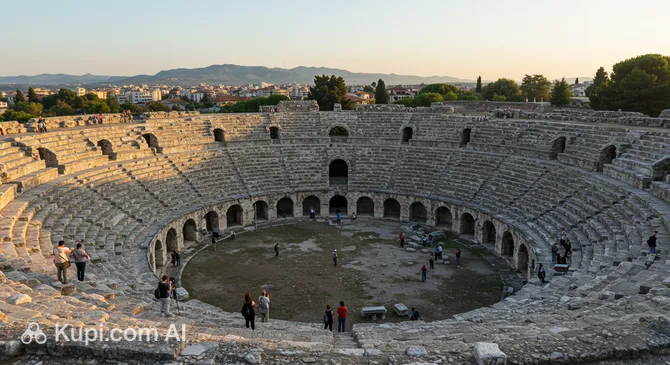
History lovers should certainly visit the Durrës Amphitheatre. This is one of the largest and best-preserved Roman amphitheaters in the Balkans, dating back to the 2nd century AD. Gladiator fights were once held here, and today it is an impressive monument of ancient architecture that allows you to touch history.

Illustration.
Source: Kupi.com AI

Traveller photos:

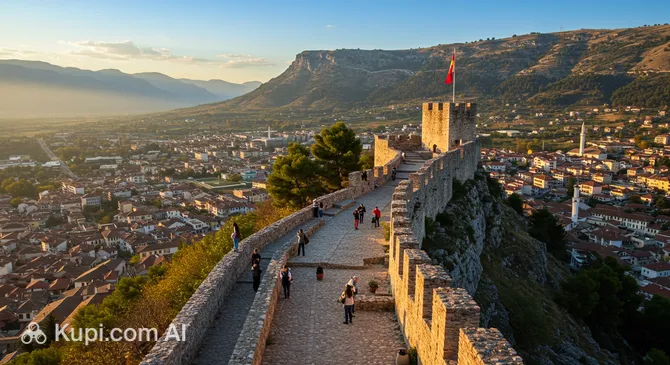
The majestic Gjirokastra Fortress should not be overlooked either. Situated on a hill overlooking the "city of a thousand steps," this citadel is one of the largest in the Balkans. Inside the fortress is a military museum, and from its walls, stunning panoramic views open up over the city of Gjirokastra, a UNESCO World Heritage site.

Illustration.
Source: Kupi.com AI

Traveller photos:

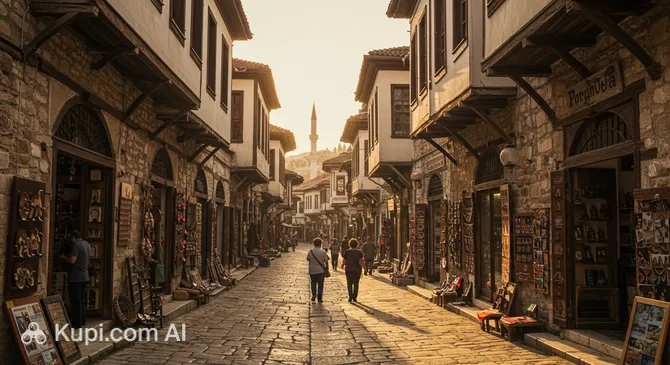
For those who want to immerse themselves in an authentic atmosphere and purchase souvenirs, the Old Bazaar of Korçë will be a true discovery. This is one of the oldest and most colorful bazaars in Albania, where you can find traditional handicrafts, local delicacies, and simply enjoy the lively trade and hospitality of the local residents.

Illustration.
Source: Kupi.com AI

Traveller photos:

Best Time to Visit

Albania welcomes guests year-round, but the choice of the best time to visit depends on your plans. High season traditionally falls during the summer months – from June to August. During this time, the Adriatic and Ionian coasts enjoy hot, sunny weather, ideal for beach holidays and water activities in resort towns such as Saranda, Vlorë, or Durrës. Temperatures often exceed +30°C. The advantages are obvious: maximum sun and warm seawater. However, be prepared for large numbers of tourists and higher prices for accommodation and services.

For those who prefer a quieter holiday and moderate temperatures, spring (April-May) and autumn (September-October) are excellent choices. During these periods, the weather is usually mild and pleasant, with fewer travelers, allowing you to enjoy the sights of Gjirokastra or walks through Tirana without the hustle and bustle. Prices in the shoulder season are generally lower. In spring, nature blooms, while autumn delights with warm colors and comfortable sea temperatures in September. A possible downside might be some weather instability, especially in early spring and late autumn, and not all tourist establishments, particularly in small resort villages, may be fully operational. Winter (November-March) is the lowest season; it is mild but rainy on the coast, while snow falls in the mountains.

When planning your trip, it's also worth considering cultural events. For example, on March 14, the pagan holiday Summer Day (Dita e Verës), symbolizing the farewell to winter, is celebrated across the country, but most vibrantly in Elbasan. In summer, many musical and cultural festivals take place, especially on the coast. The climate in Albania is diverse: Mediterranean on the coast and more continental in the interior and mountains. Therefore, if you plan to visit mountainous regions like the surroundings of Shkodër, picturesque Pogradec on Lake Ohrid, or historic inland cities like Korçë, it's always useful to check the local weather forecast before your trip.

Traditions

Albanians are famous for their cordiality and hospitality, which is an important part of their culture known as "mikpritja", based on the ancient code of honor "Besa." When meeting, it is customary to exchange a handshake while maintaining eye contact. Hugs and kisses on both cheeks are common among friends and relatives. If you are invited to a home, it is considered good manners to bring a small gift for the hosts, such as flowers, sweets, or a bottle of wine. An interesting feature of communication in Albania is that nodding your head up and down often means "no," while shaking your head from side to side means "yes," which can confuse the unprepared tourist.

When visiting religious sites such as mosques or Orthodox churches, it is important to follow a dress code: clothing should cover shoulders and knees. There are no strict rules in everyday life, but overly revealing outfits in conservative areas may draw disapproval. At the table, it is customary to show respect to elders and wait until the hosts invite you to start the meal. Refusing offered food may be perceived as impolite. Significant holidays include Independence Day (November 28), celebrated on a large scale, and Summer Day (Dita e Verës, March 14), a pagan festival welcoming spring, especially popular in some regions of the country. To show respect to local residents, try to be polite, do not raise your voice in public places, and avoid discussing political topics unless you are sure of the conversation's appropriateness.

Entertainment

Albania offers tourists a wide range of entertainment for every taste. Active leisure enthusiasts will appreciate the stunning Adriatic and Ionian coasts, perfect for swimming, sunbathing, and various water sports such as diving and kayaking. The Albanian Alps and other mountain ranges provide excellent conditions for hiking, trekking, and climbing, revealing breathtaking landscapes. For those seeking more adrenaline, options like rafting on turbulent rivers or paragliding are becoming increasingly popular.

Culturally, Albania boasts a rich heritage. Travelers can immerse themselves in history by visiting ancient ruins, medieval castles like the Gjirokastra Fortress, and numerous museums scattered throughout the country, especially in cities like Tirana and Gjirokastra. Theaters and concert halls provide opportunities to experience modern Albanian art. As evening falls, major cities, especially Tirana, and coastal resorts like Saranda and Vlorë, come alive with vibrant nightlife. Here you will find diverse bars, from cozy spots to trendy lounges like the F. Fejmi Bar-Restaurant, as well as restaurants serving delicious local and international cuisine, such as the Urat Traditional Restaurant.

For shopping lovers, Albania offers unique opportunities. Local markets and bazaars, such as the Old Bazaar of Korçë, are excellent places to find traditional handicrafts, kilim carpets, silverware, and local delicacies like olive oil and rakia. Modern shopping centers are also present in major cities. Families traveling with children will also find plenty to do. While large theme parks are not very common here, many coastal resorts offer family-friendly beaches, and cities often have pleasant parks, such as Rinia Park, for leisurely walks. Exploring historical sites, like the Durrës Amphitheatre, can also be an engaging activity for older children.

Currency rates

Planning a trip? Wonderful! To make sure the financial side of your journey holds no surprises, it's worth remembering that exchange rates are constantly changing. That's why we strongly recommend keeping an eye on current rates both before departure and throughout your trip. To help with that, you can use the data provided below — we monitor exchange rates 24/7 and strive to provide the most up-to-date information.

Reached the bottom of the page?

Looks like you know this route inside out

We use cookies and services to collect user information. This is essential for the functioning of the site and for marketing purposes. You can find out more in .