Hungary

About

Hungary, a charming country in the very heart of Central Europe, attracts travelers with its rich historical heritage, distinctive culture, and amazing atmosphere. Located in the Pannonian Basin, it is famous for its magnificent capital – Budapest, which is rightfully called the "Pearl of the Danube" for its architectural splendor and vibrant life.
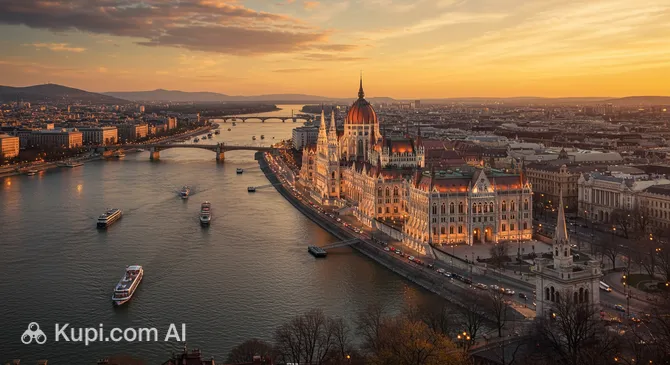
Illustration.
Source: Kupi.com AI

Hungary's cultural richness manifests in everything: from world-famous thermal baths with a history spanning centuries, to unique Hungarian cuisine with its famous goulash and aromatic wines. The country is proud of its musical traditions and numerous festivals. In addition to the lively capital, Hungary offers picturesque spots like the town of Heviz, known for its unique thermal lake, or historical Szentendre with its narrow streets and art galleries.

Hungary's natural landscapes are also noteworthy: from the vastness of Lake Balaton, the largest in Central Europe, to the hilly wine-growing regions. A temperate continental climate makes the country attractive to visit at any time of year. Hungary leaves the impression of a warm, hospitable country where everyone will find something to their liking, whether exploring majestic architectural monuments like the Buda Castle or enjoying a quiet getaway in nature.

Currency

The national currency of Hungary is the Hungarian Forint (international code HUF). The banknotes depict prominent figures of Hungarian history and culture, as well as famous architectural structures of the country. Coins are also decorated with national symbols, making them interesting not only as a means of payment but also as souvenirs.

It is recommended to exchange currency in Hungary at banks or official exchange offices (look for the "Pénzváltó" sign), where the rate is usually more favorable than at airports or hotels. Avoid exchanging money with street money changers, as it is risky. Credit cards (Visa, Mastercard) are widely accepted in most hotels, restaurants, and large stores, especially in Budapest and other tourist centers. However, for small purchases, tipping, or when visiting small towns and markets, it is useful to have some cash with you.

Visa Requirements

When planning a trip to Hungary, it is important to clarify the visa requirements in advance. Hungary is a member state of the Schengen Agreement. Citizens of the European Union and the European Economic Area do not require a visa for entry. For citizens of many other countries, including the USA, Canada, and Australia, a visa-free regime usually applies for short-term tourist trips (generally up to 90 days). However, citizens of a number of states, including some CIS countries, need to obtain a Schengen visa to visit Hungary.

If a visa is required for your trip, it will be a tourist Schengen visa, which should be obtained in advance at the embassy or consulate of Hungary, or at an accredited visa center in your country of residence. Regardless of visa requirements, to enter the country you will need a valid passport (usually with a validity period of at least three months after the intended date of departure from the Schengen Area). Return tickets, confirmation of hotel booking, and a medical insurance policy may also be required. Since visa rules can change, it is strongly recommended to always check the most up-to-date information on the official websites of Hungarian embassies or visa centers before your trip.

We'll let you know if you need a visa

Enter your destination or
Your nationality
Destination

Timezones

When planning a trip to Hungary, you don't have to worry about time zone changes within the country. The entire territory of Hungary is in one time zone. The standard time here is Central European Time (CET), which corresponds to UTC+1.

Like most European countries, Hungary switches to Daylight Saving Time (CEST), which corresponds to UTC+2. This means that from late March to late October, the clock shifts one hour forward. Therefore, when planning calls or online meetings, take this transition into account, but within the country, there will be no time difference between cities, including Budapest.

Getting There

The easiest way to reach Hungary is by air. The country's main international hub is Budapest Ferenc Liszt International Airport in Budapest, which receives flights from most European capitals, as well as from other regions of the world, including North America, the Middle East, and Asia. Many airlines offer both direct flights and convenient connections, making Hungary easily accessible to tourists from all over the world. Additionally, there are other international airports serving regional centers, such as in Debrecen.

Due to its location in Central Europe, Hungary also has well-developed land connections with neighboring countries. Travelers can use international trains and buses that connect Budapest and other major Hungarian cities with Vienna, Prague, Bratislava, Zagreb, and many other European destinations. This is a convenient option for those who prefer ground travel or combine a visit to Hungary with trips to neighboring states. There is no sea connection to Hungary, as the country is landlocked. Regardless of the chosen mode of transport, it is recommended to book tickets in advance, especially if your trip falls during the peak tourist season, to ensure the best prices and availability.

AirportCityIATA
Budapest Ferenc Liszt International AirportBudapestBUD
Debrecen AirportDebrecenDEB

Hungary is a country that will surprise you with its variety of experiences and hospitality. Here, everyone will find a destination to their liking: from bustling metropolises with a rich history to peaceful resorts on thermal lakes and picturesque towns that have preserved their historical appearance.

Illustration.
Source: Kupi.com AI

Of course, the heart of the country is its magnificent capital Budapest, a city with majestic architecture, famous thermal baths, and a rich cultural life. Beyond the capital, Hungary is famous for its unique resorts. One of the most famous is Heviz, home to the largest thermal lake in Europe with healing water, attracting tourists all year round. For lovers of beach holidays and water sports, the ideal choice is Siofok – a popular resort on Lake Balaton, often called the "summer capital" of Hungary.

If you appreciate art and a cozy atmosphere, be sure to visit Szentendre. This charming artists' town, located near Budapest, will win you over with its narrow streets, numerous galleries, and museums. Also noteworthy is Esztergom, the ancient capital of Hungary, where a grandiose basilica stands, one of the largest in Europe, offering unforgettable views and an immersion into history.

Top Attractions

Hungary is a country with a rich history and culture, offering tourists many fascinating attractions. From majestic castles to bustling markets and unique open-air museums – there is something for everyone here. Let's look at some of the most iconic places to visit.

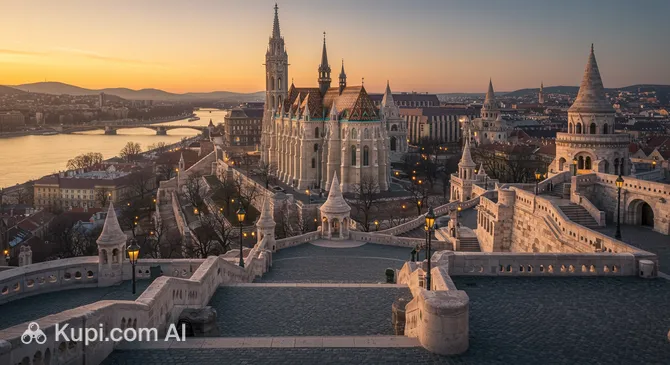
One of the symbols of the Hungarian capital, Budapest, is the Buda Castle. This impressive palace complex, rising on Buda Hill, holds centuries of history. It houses the Hungarian National Gallery, the Budapest History Museum, and the National Széchényi Library. Walking through its cobbled streets and admiring the panoramic views of the Danube and Pest will leave an unforgettable impression.

Illustration.
Source: Kupi.com AI

Traveller photos:

In the city of Esztergom stands the majestic St. Adalbert's Basilica, also known as the Esztergom Basilica. This is the largest church in Hungary and one of the largest in Europe. Its monumental dome is visible from afar, and the interior decoration is striking in its splendor. Visiting the basilica is an opportunity to touch the spiritual heart of the country.

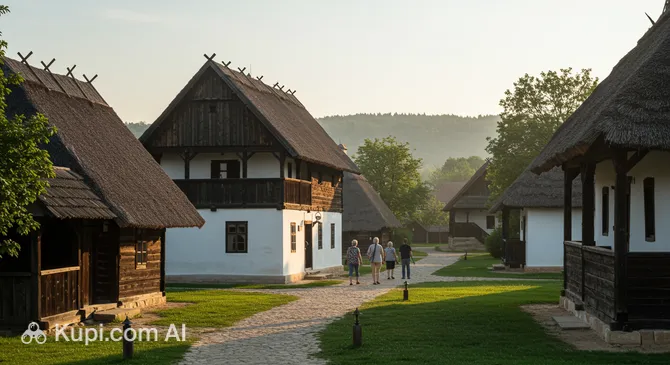
For those who want to immerse themselves in the atmosphere of a traditional Hungarian village, the Szentendre Skanzen is a must-visit. This open-air ethnographic museum features an extensive collection of authentic peasant houses, churches, and outbuildings from all regions of Hungary. Here you can see how Hungarians lived in past centuries and learn about folk crafts and traditions.

Illustration.
Source: Kupi.com AI

Traveller photos:

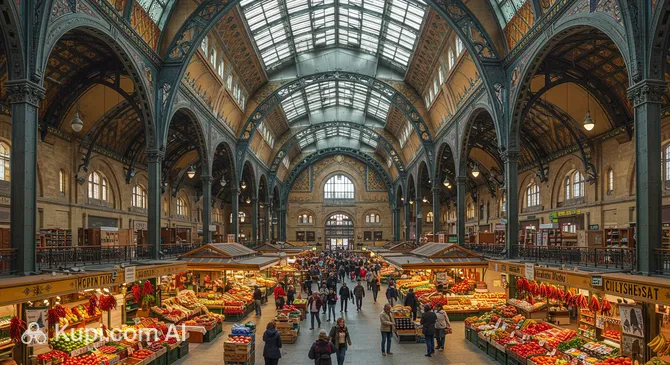
To experience the real flavor of Budapest, stop by the Central Market Hall. This is not just a place for shopping, but a real attraction. The impressive market building, constructed at the end of the 19th century, is an architectural masterpiece in itself. Inside, you will find an abundance of fresh produce, local delicacies, the famous paprika, souvenirs, and handmade goods. On the second floor, you can try traditional Hungarian cuisine.

Illustration.
Source: Kupi.com AI

Traveller photos:

Best Time to Visit

Hungary is beautiful at any time of year, but the best time for a trip depends on your preferences. The high season traditionally falls in the summer months (June-August). During this time, the weather is warm and sunny, ideal for walking around Budapest, relaxing on Lake Balaton, and visiting numerous open-air festivals. However, be prepared for a large influx of tourists and, as a result, higher prices for accommodation and services. The summer months are also known for the famous Sziget music festival in Budapest, which attracts young people from all over the world.

The shoulder season – spring (April-May) and autumn (September-October) – is considered by many tourists to be the golden time to visit Hungary. The weather during these periods is usually very comfortable: warm but not sweltering, with less rainfall than in winter. There are significantly fewer tourists, allowing you to enjoy the sights without the crowds, and prices for hotels and flights can be more pleasant. In spring, the country blooms, while autumn delights with vibrant colors and the harvest season, especially for grapes, which is accompanied by numerous wine festivals. Winter (November-March) is the low season, characterized by cool and sometimes frosty weather. However, this time has its own charm: Christmas markets, the opportunity to visit famous thermal baths such as those in Heviz or Hajduszoboszlo, and a calmer atmosphere in the cities.

The climate in Hungary is temperate continental, so there are no sharp regional differences, but before traveling to a specific region, such as for a holiday at Lake Siofok or visiting historical towns like Esztergom or Gyor, it is always useful to check the local forecast. Regardless of the season, Hungary will offer you a rich cultural program and hospitality.

Traditions

When planning a trip to Hungary, it is worth getting acquainted with some local cultural features to make your journey as comfortable and pleasant as possible. When meeting, Hungarians usually exchange a handshake while maintaining eye contact, which is considered a sign of openness. Hospitality is highly valued: if you are invited to visit, it is good manners to bring a small gift for the hosts – for example, flowers (avoid lilies and chrysanthemums, as they are associated with funerals), high-quality chocolate, or a bottle of good wine. Hungarians are very proud of their culture and history, so a sincere interest in their traditions will be received warmly.

In everyday life, Hungarians are quite casual in their clothing, but when visiting churches and other religious sites, you should choose modest outfits that cover the shoulders and knees. At the table, general European rules of etiquette are followed; for example, it is considered polite to keep your hands on the table (wrists), not under the table. In restaurants and cafes, it is customary to leave a tip, usually about 10-15% of the bill if service is not included. Try to avoid loud conversations in public places and transport. It is considered impolite to point at anything or anyone with your index finger – it is better to use an open palm. It is also worth remembering that toasting with beer has negative historical connotations for some Hungarians, so it is better to clink glasses with wine or another drink.

Among the most important national holidays that give an idea of the spirit of the country is St. Stephen's Day (August 20), which celebrates the foundation of the Hungarian state and is accompanied by lavish celebrations, fireworks, and public festivities, especially in Budapest. Another significant day is March 15, a National Day dedicated to the 1848-1849 revolution. Knowing a few basic phrases in Hungarian, such as "Jó napot" (Good day), "Köszönöm" (Thank you), and "Viszontlátásra" (Goodbye), will undoubtedly endear you to the locals and make communication more pleasant.

Entertainment

Hungary offers tourists a wide variety of leisure activities to suit all tastes. Active recreation enthusiasts will find picturesque routes for hiking and cycling, especially along the lake shores, where water sports are also popular. Don't forget the famous Hungarian thermal baths, which offer not only relaxation but also health benefits. The country's cultural life is rich: numerous museums, art galleries, theaters, and concert halls, especially in the capital Budapest, regularly present interesting programs and festivals.

As evening falls, the cities of Hungary come alive, offering various nightlife options. Budapest is especially famous for its unique "ruin bars," as well as numerous clubs, traditional csardas with live music, and elegant restaurants. For those who prefer calmer entertainment, there is always a cozy cafe or wine bar where you can enjoy local drinks and atmosphere.

Shopping in Hungary is an opportunity to bring home authentic souvenirs. Famous Hungarian paprika, Tokaj wines, items with traditional embroidery, ceramics, and marzipan are all popular. Main shopping streets and markets can be found in large cities, offering a wide selection of both local goods and international brands. For family holidays, the country also offers many interesting things: from visiting zoos and water parks to exciting interactive museums and children's railways, which will provide plenty of impressions for young travelers.

Currency rates

Planning a trip? Wonderful! To make sure the financial side of your journey holds no surprises, it's worth remembering that exchange rates are constantly changing. That's why we strongly recommend keeping an eye on current rates both before departure and throughout your trip. To help with that, you can use the data provided below — we monitor exchange rates 24/7 and strive to provide the most up-to-date information.

HUF exchange rate for 13/08/2026

1 AED
~ 85.63 HUF
1.16 AMD
~ 1 HUF
1 AUD
~ 222.17 HUF
1 AZN
~ 184.98 HUF
1 BYN
~ 105.69 HUF
1 CAD
~ 225.73 HUF
1 EUR
~ 362.71 HUF
1 GBP
~ 424.63 HUF
1 INR
~ 3.30 HUF
1 KGS
~ 3.60 HUF
4.50 KRW
~ 1 HUF
1.48 KZT
~ 1 HUF
1 PLN
~ 84.29 HUF
1 RUB
~ 3.80 HUF
1 SAR
~ 83.84 HUF
1 SGD
~ 245.70 HUF
1 TRY
~ 6.59 HUF
1 UAH
~ 7.02 HUF
1 USD
~ 314.47 HUF
37.92 UZS
~ 1 HUF

Reached the bottom of the page?

Looks like you know this route inside out

We use cookies and services to collect user information. This is essential for the functioning of the site and for marketing purposes. You can find out more in .