Svalbard

Cities in the country

About

Svalbard is a rugged and majestic archipelago in the Arctic Ocean, located halfway between mainland Norway and the North Pole. It is a world where nature dictates its own rules: there are more polar bears than people here, and the landscapes amaze the imagination with glaciers, fjords, and endless tundra. A journey here is an opportunity to find yourself at the edge of the earth, where the polar night gives way to the midnight sun, creating a truly unforgettable atmosphere.
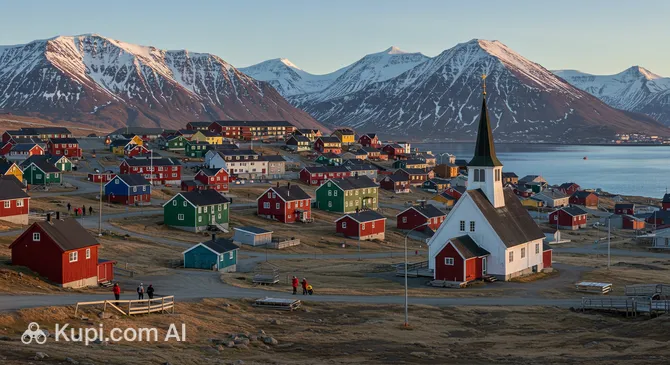
Illustration.
Source: Kupi.com AI

Most journeys across the archipelago begin in its administrative center — the town of Longyearbyen. It is the northernmost settlement in the world with a population of over a thousand people, serving as a gateway to the Arctic wilderness. Despite its modest size, the town offers a surprisingly developed infrastructure with hotels, restaurants, and cultural sites. To gain a deeper understanding of the history of exploration in these lands and get to know the local nature, it is worth visiting the Svalbard Museum, which houses unique exhibits.

Svalbard attracts adventure seekers from all over the world. In winter, you can watch the northern lights, go snowmobiling and dog sledding, while in summer, you can embark on hikes to glaciers and sea excursions for whale and walrus watching. This is a destination for those seeking a unique experience and ready to encounter wild, pristine nature. After a busy day, you can stop by the northernmost Svalbard Brewery in the world to sample some local beer.

Currency

The official currency in Svalbard is the Norwegian Krone (international code: NOK), as the archipelago is under the sovereignty of Norway. Norwegian krones are issued in banknotes of various denominations (e.g., 50, 100, 200, 500, 1000 krones) and coins. The banknote design is modern, often featuring maritime themes and famous Norwegian figures. It is recommended to exchange currency for Norwegian krones before arriving at the archipelago or to withdraw cash from an ATM upon arrival in Longyearbyen, as the number of exchange offices on Svalbard itself is limited. Major banks and some large hotels may offer exchange services, but it is best to check this in advance.

Credit and debit cards (especially Visa and Mastercard) are very widely accepted in Svalbard, particularly in Longyearbyen. Most hotels, restaurants, shops, and even tour providers prefer cashless payments. In fact, in many places, card payment is the primary or even the only method of transaction. Therefore, there is no need to carry large amounts of cash. However, a small amount of cash may be useful for unforeseen minor expenses, though such situations are rare.

Visa Requirements

When planning a trip to Svalbard, it is important to consider its special status. The archipelago itself is a visa-free zone for citizens of all countries that signed the Svalbard Treaty of 1920. This means that a visa is not required to stay on Svalbard itself. However, since the vast majority of routes to Svalbard pass through mainland Norway, which is part of the Schengen Area, you must comply with Norway's visa regulations. If you need a Schengen visa to enter Norway, you will need to obtain one. Citizens of countries with visa-free entry to the Schengen Area (for example, EU/EEA countries, or US citizens for short-term trips) will not require an additional visa for transit through Norway to Svalbard.

Regardless of the visa requirements for entering Norway, you will definitely need a valid international passport to visit Svalbard. It is also recommended to carry confirmation of accommodation bookings, return tickets, and a medical insurance policy that covers the Arctic region. Since visa rules and entry conditions can change, we strongly advise checking the most up-to-date information on the official website of the Governor of Svalbard (Sysselmesteren på Svalbard) and with Norwegian consular services in your country before your trip.

We'll let you know if you need a visa

Enter your destination or
Your nationality
Destination

Timezones

When planning a trip to Svalbard, you won't have to worry about changing time zones within the archipelago. A single time zone applies throughout Svalbard, which corresponds to Central European Time (CET). In winter, this is UTC+1, and during the summer period when daylight saving time is observed, it is Central European Summer Time (CEST), UTC+2. Thus, the time in the capital of the archipelago, Longyearbyen, and the rest of the islands will be the same.

Getting There

Reaching Svalbard, this remote Arctic archipelago, is possible in several main ways, with air transport being the most dominant. The primary international hub is Svalbard Airport, located near the administrative center, Longyearbyen. Regular flights to Svalbard are mostly operated from Norway (for example, from Oslo and Tromsø), which offer convenient connections from other European and world cities. Given the unique location of the archipelago, there is no direct land connection to the mainland.

During the summer navigation period, Svalbard also becomes a destination for some expedition cruise ships. This is more of an opportunity for a fascinating Arctic journey than a regular transport method for independent tourists. However, if you plan to explore the fjords and observe wildlife from the deck of a ship, this option can be very attractive.

When planning a trip to Svalbard, it is crucial to arrange flight and accommodation bookings well in advance. This is especially relevant for the peak tourist season, which falls in the summer months. Demand during this time increases significantly, and finding available options at the last minute can be difficult.

AirportCityIATA
Svalbard AirportLongyearbyenLYR

Svalbard, an archipelago in the Arctic Ocean, offers unique Arctic experiences, and its settlements, though few, serve as gateways to this amazing world. The main and largest settlement, as well as the administrative center, is Longyearbyen. This town is the starting point for most expeditions and tours around the archipelago.

Illustration.
Source: Kupi.com AI

Longyearbyen attracts travelers with its unusual atmosphere as the northernmost town in the world with a permanent population of over a thousand people. Here, you can learn about the history of Arctic exploration, visit the local museum and church, and see unique nature—from majestic glaciers to polar animals in their natural habitat (of course, following all safety precautions and accompanied by guides). The town offers wonderful opportunities for observing the northern lights in winter and the midnight sun in summer. Although Svalbard is not a typical resort destination, Longyearbyen serves as the primary base for those seeking adventure in the high latitudes.

Top Attractions

Svalbard, despite its remoteness and harsh climate, offers travelers unique experiences and attractions concentrated mainly in its capital, Longyearbyen. Here, everyone will find something for themselves, from museums detailing the history of Arctic exploration to unusual gastronomic spots.

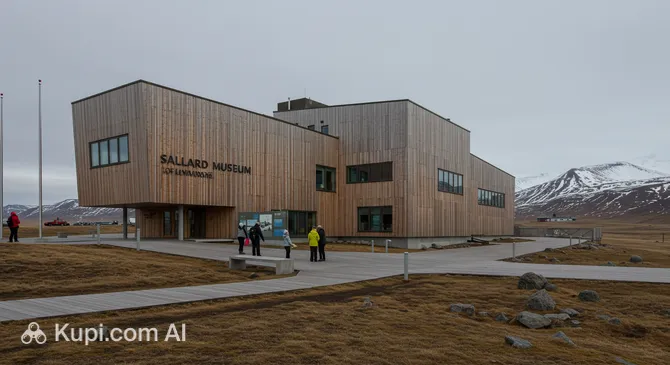
One of the primary places to get to know the archipelago is the Svalbard Museum. The museum's exhibitions cover the 400-year history of the islands in detail, starting from whaling, exploration, and trapping, through to the modern mining industry and scientific research. Here you will see artifacts, photographs, and models that help provide a deeper understanding of life in these harsh conditions.

Illustration.
Source: Kupi.com AI

Traveller photos:

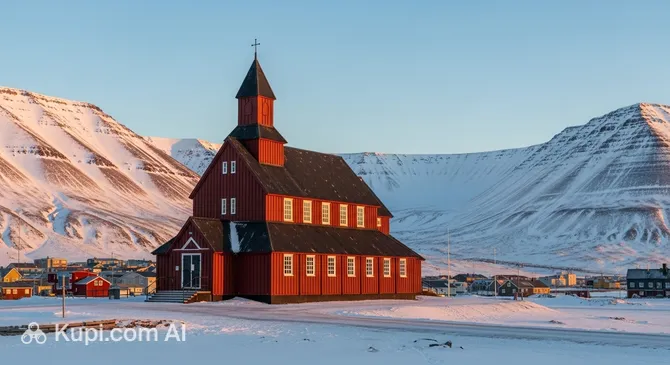
An equally significant site is the Svalbard Church. It is the northernmost church in the world, serving not only as a religious center but also as an important meeting place for the local community. Its simple yet cozy architecture and welcoming atmosphere make it a must-visit. The church is open to everyone and often hosts various cultural events.

Illustration.
Source: Kupi.com AI

Traveller photos:

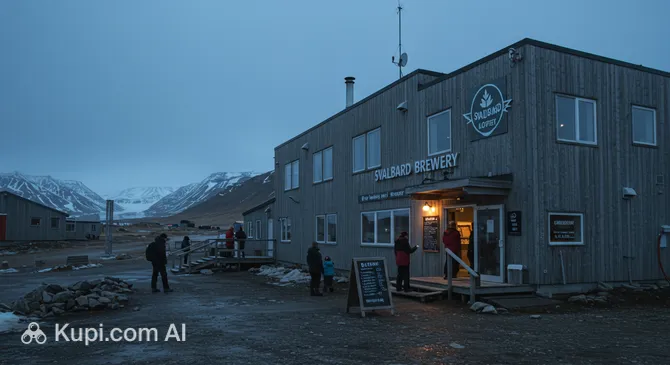
For those interested in local specialties, a visit to the Svalbard Brewery is worthwhile. This is the northernmost brewery in the world, where beer is produced using pure glacial water. Here, you can not only taste unique varieties of beer but also learn about the process of creating it in Arctic conditions, making the experience truly exclusive.

Illustration.
Source: Kupi.com AI

Traveller photos:

Best Time to Visit

Choosing when to visit Svalbard is a key decision, as this Arctic archipelago offers fundamentally different experiences depending on the season. The climate here is harsh and Arctic, with distinct periods of the midnight sun in summer and the polar night in winter, each appealing to travelers in its own way.

The high season in Svalbard traditionally falls in the summer, approximately from June to August. During this time, the archipelago is bathed in the light of the sun that never sets due to the midnight sun. Temperatures usually range from +3°C to +7°C, sometimes rising higher. This is the ideal period for exploring the unique Arctic nature: you can expect boat trips to glaciers, visits to numerous bird colonies, walrus haul-outs, and if you're lucky, encounters with polar bears (of course, at a safe distance and accompanied by experienced guides). Tundra trekking and kayaking among icebergs are also popular in summer. The main advantages of this season are the maximum opportunities for active recreation and relatively comfortable weather. However, keep in mind that summer is when Svalbard sees the most tourists, and prices for accommodation and excursions may be higher.

The shoulder season and winter period reveal Svalbard from a completely different side. Spring (March-May) is the time when the sun gradually returns after the long polar night. The snow cover is still stable, making this period ideal for snowmobile safaris, dog sledding, and exploring impressive ice caves. In early March, the capital of the archipelago, Longyearbyen, hosts the Solfestuka festival, dedicated to the return of the sun. Autumn (September-October) brings the first frosts, paints the tundra in vibrant colors, and increases the chances of seeing the mesmerizing northern lights. Winter (November to February) is the time of the polar night, when the only light comes from the stars, the moon, and, of course, the flashes of the Aurora Borealis. In February, Longyearbyen hosts the famous Polarjazz festival. The advantages of these seasons are the unique atmosphere, the chance to witness rare natural phenomena, and generally fewer tourists compared to summer (though demand for northern lights tours is growing). Disadvantages include harsh weather conditions, very low temperatures, and limited daylight (or its complete absence in winter), which can affect the availability of some activities.

Traditions

The culture of Svalbard is largely defined by its unique Arctic location and the international character of its small population, with a strong influence of Norwegian traditions. When communicating with locals, including staff at hotels and shops in Longyearbyen, a simple and friendly greeting is standard, often accompanied by a handshake and direct eye contact. English is widely spoken. One of the most notable local traditions that is important to observe is the custom of removing outdoor shoes when entering homes, many hotels, public buildings, and even some shops. This is done to keep interiors clean, given the snow and mud outside. Hospitality is valued, but it is typically reserved and practical; if you are invited to a home, a small symbolic gift is appropriate but not strictly mandatory.

There are no specific clothing requirements when visiting public places in Svalbard, beyond the obvious need for warm and functional Arctic gear. Casual style is the norm. At the table, standard European etiquette rules are followed. The main element that forms the "cultural code" of the archipelago is a deep respect for the harsh and fragile nature of the Arctic. Tourists must strictly follow all rules of conduct in nature: do not disturb wild animals (especially polar bears, whose encounters require extreme caution and following guide instructions), do not leave trash, and do not damage vegetation or historical sites.

Among the significant events reflecting the spirit of Svalbard is "Solfestuka"—a week celebrating the return of the sun after the long polar night, usually in early March. This is a joyous occasion for all residents, marking the end of the darkness. Additionally, as in mainland Norway, May 17th—Norwegian Constitution Day—is enthusiastically celebrated with parades and public festivities. To ensure your stay is pleasant and does not cause inconvenience to locals, always follow the instructions of guides, especially those regarding safety and environmental protection, and respect the rules established to preserve the unique ecosystem and maintain safety on the archipelago.

Entertainment

Svalbard offers a unique range of entertainment, shaped by its Arctic location and rugged beauty. Active recreation here is, above all, adventure against the backdrop of pristine nature. Popular activities include snowmobile expeditions, dog sledding, ice hiking to caves and glaciers, and sea trips to observe walruses, seals, and, if you're lucky, polar bears. Summer opens up opportunities for tundra hiking and kayaking along the fjords. It is important to remember that any trips outside the settlements require an armed guide due to the risk of polar bear encounters.

The cultural life of Svalbard is centered in its capital, Longyearbyen. Here, you can visit the Svalbard Museum, which introduces the history of the archipelago's exploration, its nature, and human life in the Arctic. The Svalbard Church—the northernmost church in the world—is also interesting to visit. Periodically, Longyearbyen hosts various cultural events, exhibitions, and lectures reflecting the unique character of the place. An unusual experience can be a visit to the local Svalbard Brewery, where you can learn about beer production in Arctic conditions.

Nightlife in Svalbard, of course, has its own specifics. In Longyearbyen, there are several cozy bars and restaurants where you can spend an evening in the company of other travelers and locals. The atmosphere is friendly and relaxed, conducive to chatting and sharing impressions of Arctic adventures. Popular spots include, for example, the Barentz Gastropub or Karlsberger Pub. Shopping on the archipelago is mainly focused on Arctic-themed souvenirs: reindeer skin products, warm knitwear, books, and postcards featuring views of Svalbard. You can also purchase high-quality equipment for outdoor activities.

Family entertainment in Svalbard is also connected to nature and learning. Visiting museums can be interesting for older children. Some operators offer short hikes or dog sledding trips adapted for families. The key is to choose activities appropriate for the age and physical fitness of the children and always remember safety measures in Arctic conditions. Observing wildlife from a safe distance can also be an unforgettable experience for the whole family.

Currency rates

Planning a trip? Wonderful! To make sure the financial side of your journey holds no surprises, it's worth remembering that exchange rates are constantly changing. That's why we strongly recommend keeping an eye on current rates both before departure and throughout your trip. To help with that, you can use the data provided below — we monitor exchange rates 24/7 and strive to provide the most up-to-date information.

NOK exchange rate for 14/08/2026

1 AED
~ 2.58 NOK
38.69 AMD
~ 1 NOK
1 AUD
~ 6.67 NOK
1 AZN
~ 5.56 NOK
1 BYN
~ 3.15 NOK
1 CAD
~ 6.79 NOK
1 EUR
~ 10.91 NOK
1 GBP
~ 12.76 NOK
33.34 HUF
~ 1 NOK
10.09 INR
~ 1 NOK
9.24 KGS
~ 1 NOK
149.95 KRW
~ 1 NOK
49.23 KZT
~ 1 NOK
1 PLN
~ 2.53 NOK
8.81 RUB
~ 1 NOK
1 SAR
~ 2.52 NOK
1 SGD
~ 7.39 NOK
5.05 TRY
~ 1 NOK
4.73 UAH
~ 1 NOK
1 USD
~ 9.46 NOK
1263.93 UZS
~ 1 NOK

Reached the bottom of the page?

Looks like you know this route inside out

We use cookies and services to collect user information. This is essential for the functioning of the site and for marketing purposes. You can find out more in .