Greece

About

Greece is a country where myths come to life at every turn, and the azure sea meets golden beaches and ancient ruins. Located in the south of the Balkan Peninsula and across numerous islands in the Aegean and Ionian Seas, Greece offers travelers a unique combination of a rich historical heritage, stunning nature, and a welcoming atmosphere. It is the cradle of Western civilization, having given the world democracy, philosophy, theater, and the Olympic Games, and its land preserves countless traces of its great past.
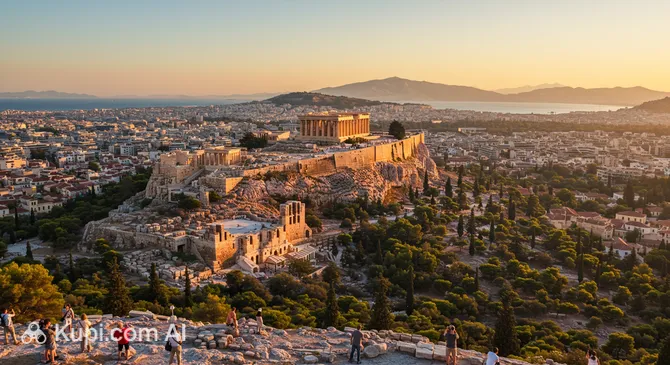
Illustration.
Source: Kupi.com AI

When traveling to Greece, you immerse yourself in a world where modern life is harmoniously intertwined with antiquity. The heart of the country is the legendary Athens, a city where the majestic Acropolis of Athens rises above bustling streets. The Mediterranean climate gives Greece long, sunny summers and mild winters, making it an attractive destination all year round. Snow-white island villages like Santorini, picturesque bays, olive groves, and mountain landscapes create a unique scenery.

In addition to the historical treasures of the capital, Greece is famous for its islands, each possessing its own character. For example, the island of Rhodes attracts visitors with its medieval architecture and knightly tales. A journey through Greece is not only about sightseeing but also about getting to know the hospitable locals, enjoying delicious Mediterranean cuisine, and feeling the serenity that this amazing place provides. This is a country you will want to return to again and again, discovering new facets of its beauty and depth.

Currency

The official currency of Greece is the Euro (international code: EUR). Euro banknotes, which are standard for all Eurozone countries, feature images of architectural styles from different European eras—windows, arches, and bridges—symbolizing openness and cooperation. Euro coins also have a common side and a national side. On Greek coins, you can see images related to the country's history and culture, such as an ancient Greek ship, an owl (an attribute of the goddess Athena), or a portrait of Rigas Feraios.

You can exchange currency for euros at banks, licensed exchange offices (look for the "Exchange" sign), and post offices. It is recommended to compare rates and commissions at different locations, as exchange conditions at airports and some hotels may be less favorable. Credit and debit cards (especially Visa and Mastercard) are widely accepted in most hotels, restaurants, shops, and tourist sites throughout Greece. Nevertheless, it is always useful to carry some cash for small purchases at markets, in small tavernas, or for paying for taxis in some cases.

Visa Requirements

Visa requirements for entry into Greece depend on your citizenship. Citizens of European Union and European Economic Area countries can visit Greece without a visa. For citizens of many other states, including, for example, the USA and Canada, a visa is also not required for short-term tourist trips (usually up to 90 days within a 180-day period). However, citizens of a number of countries, including some CIS countries, must obtain a Schengen visa in advance to enter.

If a visa is required for your trip to Greece, it is typically a tourist Schengen visa, which should be obtained in advance from a Greek embassy or consulate, or at an accredited visa center in your country of residence. In addition to the visa itself (if necessary), you will need a valid passport for entry, the validity of which should usually exceed the intended date of departure from the Schengen area by at least three months. Return tickets, confirmation of hotel booking, and a medical insurance policy may also be required. Since visa rules and the list of required documents can change, we strongly recommend always checking the most up-to-date information on the official websites of the Greek embassy or consulate before planning your trip.

We'll let you know if you need a visa

Enter your destination or
Your nationality
Destination

Timezones

When planning a trip to Greece, you won't have to worry about changing time zones within the country. The entire territory of Greece, including all its numerous islands, is in one time zone. It corresponds to Eastern European Time (EET), which is GMT+2.

Like many European countries, Greece switches to Eastern European Summer Time (EEST), when clocks are moved forward by one hour (GMT+3). This usually occurs from the last Sunday in March to the last Sunday in October. Thus, the time difference with other countries may change depending on the season, but within Greece itself, the time will always be the same, which simplifies planning trips and excursions.

Getting There

The easiest way to reach Greece is by air. The country has many international airports, the main one being Athens International Airport "Eleftherios Venizelos", which serves as a major transport hub. Direct flights to Athens, as well as to many popular islands, operate from most European capitals and major cities. There are also regular flights from the Middle East and North America, and convenient connections allow you to reach Greece from more distant corners of the world.

Thanks to its geographical location, Greece is also accessible by sea. A well-developed ferry network connects the mainland with numerous islands, and international ferries run from Italy and Turkey. Many cruise ships include Greek ports in their itineraries. You can reach Greece by land from neighboring Balkan countries by bus or car, although international rail links are less developed. Regardless of the chosen method, it is recommended to book tickets in advance, especially if your trip falls during the peak tourist season in the summer months.

AirportCityIATA
Eleftherios Venizelos International AirportAthensATH
Heraklion AirportHeraklionHER
Thessaloniki International AirportThessalonikiSKG
Rhodes AirportRhodesRHO
Ioannis Kapodistrias AirportCorfuCFU

Greece is a country where every corner breathes history and beauty, offering travelers an incredible variety of vacation options. Here you will find large cities that are true open-air museums, as well as charming island resorts famous for their beaches and unique atmosphere. From the mainland to the numerous islands of the Aegean and Ionian Seas, Greece is ready to surprise and inspire.

Illustration.
Source: Kupi.com AI

Of course, a journey through Greece often begins with its capital—legendary Athens. This city is the cradle of democracy and philosophy, where you can spend hours wandering among the ancient ruins of the Acropolis and the Agora, and then dive into the lively atmosphere of modern neighborhoods. No less attractive is Thessaloniki—the northern capital of Greece, a city with a rich Byzantine heritage, a vibrant waterfront, and the famous White Tower. History and archaeology enthusiasts should also pay attention to Heraklion, the main city of Crete, where you can touch the legacy of the Minoan civilization.

For those dreaming of a serene holiday on the coast, Greece offers countless island resorts. For example, Rhodes attracts tourists not only with its magnificent beaches but also with its impressive medieval Old Town, which is a UNESCO World Heritage site. And picturesque Fira, the capital of Santorini, is famous for its breathtaking caldera views, white houses with blue domes, and romantic sunsets. Each of these cities and resorts has its own unique charm and is ready to provide unforgettable experiences.

Top Attractions

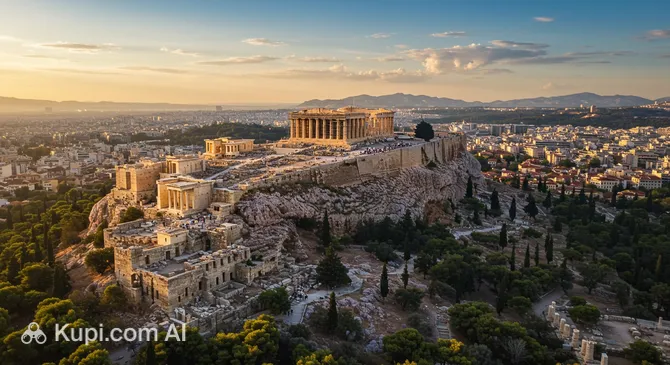
The heart of ancient Hellas and a symbol not only of Athens but of all Western civilization is the majestic Acropolis of Athens. This ancient citadel on a rocky hill captures the imagination with temple ruins, including the famous Parthenon, and offers breathtaking views of the modern capital.

Illustration.
Source: Kupi.com AI

Traveller photos:

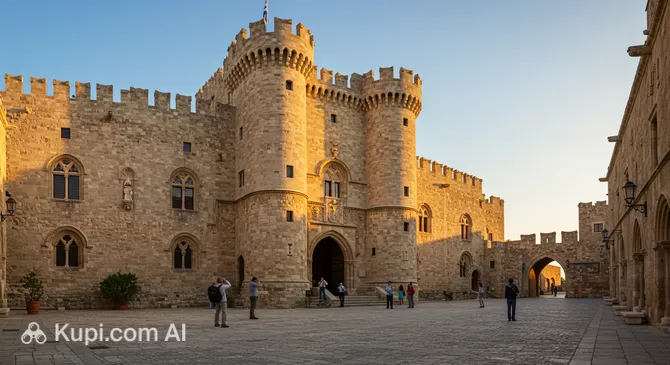
On the island of Rhodes, a dive into the era of knights awaits you at the Palace of the Grand Master of the Knights of Rhodes. This impressive medieval fortress, once the residence of the governors of the Order of Hospitallers, is today a museum preserving secrets of the past and magnificent mosaics.

Illustration.
Source: Kupi.com AI

Traveller photos:

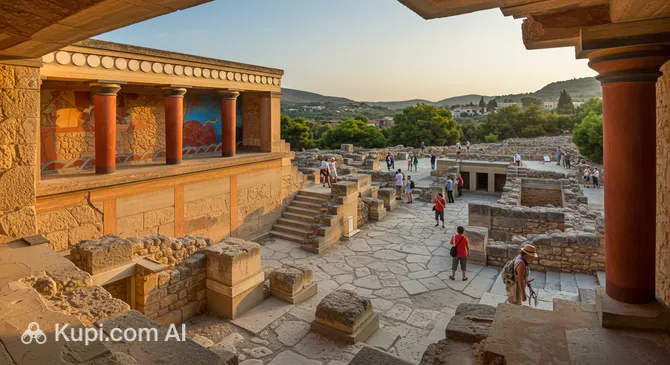
Head to Crete to explore the legendary Knossos Palace—the center of the ancient Minoan civilization. Wandering through its intricate corridors and viewing its vivid frescoes, it is easy to imagine the myths of King Minos and the Minotaur coming to life right before your eyes.

Illustration.
Source: Kupi.com AI

Traveller photos:

The symbol of Greece's northern capital, the city of Thessaloniki, is the White Tower of Thessaloniki. This historical structure on the waterfront was once part of the city's fortifications and a prison, but today it houses a museum telling the city's history and an observation deck with a panoramic view.

Best Time to Visit

Greece beckons travelers with its classic Mediterranean climate, offering excellent conditions for vacation almost year-round. However, to ensure your trip meets all expectations, it is important to choose the right season. High season traditionally spans from June to August. During this time, you can expect hot, sunny weather, perfect for beach relaxation and swimming in the crystal-clear waters of the Aegean and Ionian Seas. Air temperatures often rise above +30°C. The main advantages are maximum sunny days, warm sea, and a lively atmosphere at the resorts. On the other hand, be prepared for the peak of tourist activity, which means higher prices for hotels and services, as well as crowded beaches and popular attractions.

For those who prefer a more relaxed vacation and moderate temperatures, the shoulder seasons are ideal: spring (April-May) and autumn (September-October). In spring, Greece literally blooms, delighting visitors with a riot of colors and comfortably warm weather that is not yet exhausting. This is a wonderful time for exploring ancient ruins, for instance in legendary Athens, or walking through picturesque islands. In autumn, the summer heat subsides, but the sea remains very warm, especially in September. There are noticeably fewer tourists, and prices become more attractive. Possible downsides include shorter daylight hours in autumn and the possibility of rain, especially towards the end of October. Some establishments on the islands may reduce their operating hours. A special flavor can be added to your trip by celebrating Easter — the main Greek holiday, which usually falls in the spring and is celebrated on a grand scale, offering a unique cultural experience.

Despite the general climatic picture, there are regional peculiarities in Greece. For instance, in the northern mainland territories, winter can be significantly cooler, while on the southern islands, such as Crete (for example, in the Heraklion area) or on sunny Rhodes, the swimming season lasts much longer. Therefore, when planning a trip, especially in the spring-autumn period, it would be useful to check the weather forecast for your chosen corner of Greece. Regardless of the season, this country will provide you with unforgettable impressions: from immersion in ancient history to serene rest on the beaches and an introduction to a unique culture and delicious cuisine.

Traditions

Greece is famous for its rich culture and traditions, and knowing them will make your trip even more pleasant. Greeks are very sociable and hospitable. When meeting, a warm handshake accompanied by eye contact is customary; close friends may exchange kisses on the cheek. Interestingly, a traditional upward nod of the head means "no," while a downward nod means "yes." Hospitality (philoxenia) is one of the most important traits of the Greek character. If you are invited to someone's home, it is a great honor. It is customary to bring a small gift for the hosts, such as sweets or a bottle of wine, and refusing offered food can be perceived as impolite.

When visiting the numerous monasteries and churches in Greece, it is important to follow a dress code: shoulders and knees must be covered. In some holy places, women may be offered special wraps or skirts. In everyday life, especially in tourist zones, there are no strict rules, but excessively revealing clothing away from the beach may be inappropriate. At the table, Greeks value company and a leisurely meal. Don't be surprised if dishes are served on shared plates for all guests. Tipping in restaurants is usually 5-10% of the bill and is a sign of gratitude for good service.

One of the most significant holidays for Greeks is Orthodox Easter, which is celebrated on a grand scale, including midnight services and traditional family feasts. Another important national holiday is Independence Day, celebrated on March 25. To show respect to the locals, try not to criticize their country or customs. Avoid the gesture with an open palm and outstretched fingers (known as the "mountza"), as it is considered extremely offensive. Remember the Greek principle of "siga-siga" (slowly, slowly)—taking things easy and enjoying the moment is highly valued here.

Entertainment

Greece is a country where everyone will find entertainment to their liking, as it offers an incredible variety of leisure activities. Lovers of active pastimes can enjoy hiking along picturesque mountain trails, explore the underwater world through diving in the crystal-clear waters of the Aegean and Ionian Seas, or go windsurfing or kitesurfing at numerous beaches. In winter, ski resorts are even available in some regions. The opportunities for active recreation here are virtually limitless, thanks to the unique combination of mountain landscapes and an extensive coastline.

In addition to its natural beauty, Greece is rich in cultural entertainment. The country that gave the world theater still offers performances today in both modern and ancient amphitheaters. Numerous museums and galleries house priceless artifacts and works of art that tell of a thousand-year history. As evening falls, especially in large cities like Athens and on popular islands, the nightlife comes alive. Cozy tavernas with live music, stylish bars with sea views, and high-energy clubs offer entertainment for every taste, creating a unique atmosphere of southern hospitality.

Shopping in Greece is a pleasure in its own right. Tourists enjoy bringing home olive oil, local wines, cheeses, handmade ceramics, jewelry with traditional ornaments, and, of course, icons. Main shopping streets can be found in the centers of large cities and on the embankments of resort towns. There are also many options for family vacations: from water parks and theme parks to calm beaches with shallow entries into the sea, where children can safely play and swim. Greece offers an amazing combination of ancient history, natural beauty, and modern entertainment, making a holiday here truly unforgettable.

Currency rates

Planning a trip? Wonderful! To make sure the financial side of your journey holds no surprises, it's worth remembering that exchange rates are constantly changing. That's why we strongly recommend keeping an eye on current rates both before departure and throughout your trip. To help with that, you can use the data provided below — we monitor exchange rates 24/7 and strive to provide the most up-to-date information.

EUR exchange rate for 13/08/2026

4.26 AED
~ 1 EUR
424.12 AMD
~ 1 EUR
1.64 AUD
~ 1 EUR
1.97 AZN
~ 1 EUR
3.45 BYN
~ 1 EUR
1.62 CAD
~ 1 EUR
1 GBP
~ 1.17 EUR
366.40 HUF
~ 1 EUR
110.58 INR
~ 1 EUR
101.38 KGS
~ 1 EUR
1642.09 KRW
~ 1 EUR
539.99 KZT
~ 1 EUR
4.33 PLN
~ 1 EUR
95.92 RUB
~ 1 EUR
4.35 SAR
~ 1 EUR
1.48 SGD
~ 1 EUR
55.36 TRY
~ 1 EUR
51.91 UAH
~ 1 EUR
1.16 USD
~ 1 EUR
13823.98 UZS
~ 1 EUR

Reached the bottom of the page?

Looks like you know this route inside out

We use cookies and services to collect user information. This is essential for the functioning of the site and for marketing purposes. You can find out more in .