Austria

About

Austria is a country in the heart of Europe, enchanting with its alpine landscapes, rich imperial heritage, and unique atmosphere of hospitality. Despite its relatively small size, it offers an amazing variety of experiences, from majestic mountain peaks to crystal-clear lakes and ancient cities, each holding its own unique history.

The cultural and historical grandeur of Austria is particularly evident in its capital, the magnificent Vienna. This city of music, art, and refined architecture invites you to discover the Habsburg heritage, stroll through luxurious palace complexes, and enjoy world-famous coffee houses. No less attractive is Salzburg, the birthplace of Mozart, charming visitors with its Baroque streets and picturesque views.
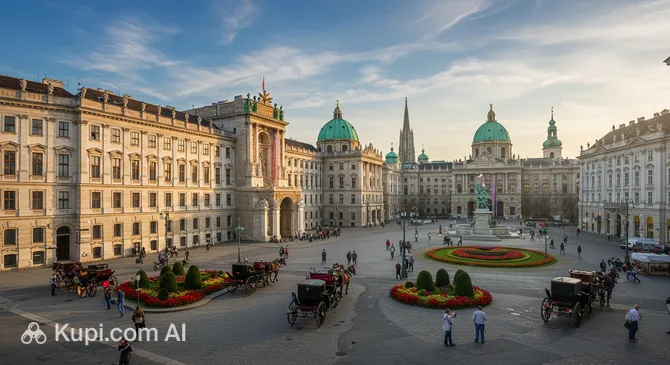
Illustration.
Source: Kupi.com AI

Austria's natural beauty is its calling card. The mighty Alps provide endless opportunities for outdoor activities year-round: from world-class ski resorts in winter to breathtaking hiking and cycling routes in summer. Iconic sites like the magnificent Schönbrunn Palace allow you to touch the imperial past against a backdrop of scenic parks. The temperate climate makes traveling through Austria pleasant at any time of year, leaving every tourist with a desire to return again.

Currency

The national currency of Austria is the Euro (international code: EUR). Banknotes in denominations ranging from 5 to 500 euros are in circulation, which are uniform for all Eurozone countries and decorated with images of architectural styles from different eras. Euro coins have one common side and one national side. Austrian euro coins are notable for depicting symbols and personalities iconic to the country, such as the edelweiss flower, Mozart, or the golden eagle. You can exchange currency at banks and licensed exchange offices; it is recommended to compare rates and commissions, avoiding exchanges at airports or hotels where conditions may be less favorable.

Credit cards, especially Visa and Mastercard, are widely accepted in most shops, restaurants, and hotels throughout Austria. However, it is always useful to carry some cash, especially for small purchases, visiting markets, or small establishments in remote areas where card payments may be difficult.

Visa Requirements

When planning a trip to Austria, it is important to familiarize yourself with the current visa requirements in advance. Citizens of European Union and European Economic Area countries do not need a visa to enter Austria. For citizens of many other states, such as the USA, Canada, and Australia, visa-free entry for short-term tourist trips is also usually provided. However, citizens of a number of countries, including some CIS countries, must obtain a Schengen visa to visit Austria. This visa is generally obtained in advance at the Austrian embassy or consulate in your country of residence.

In any case, you will need a valid passport to enter the country. It is also recommended to carry a standard set of documents: return tickets, confirmation of accommodation booking, and a medical insurance policy, as these may be required. Visa rules tend to change, so we strongly recommend checking the latest information on the official websites of the Austrian embassy or visa center before your trip.

We'll let you know if you need a visa

Enter your destination or
Your nationality
Destination

Timezones

When planning a trip to Austria, you don't need to worry about time zone changes within the country. The entire territory of Austria is in a single time zone. Central European Time (CET) is used here, which corresponds to UTC+1. Like most European countries, Austria switches to Daylight Saving Time (CEST), corresponding to UTC+2, from the last Sunday in March to the last Sunday in October. Therefore, whether you are traveling from Vienna to Salzburg or Innsbruck, the time will be the same.

Getting There

Austria, located in the heart of Europe, is perfectly connected to the world by air. The main air gateway to the country is Vienna International Airport, located near the capital, Vienna. This airport receives flights from most European capitals, as well as from North America, Asia, and the Middle East. Additionally, there are international airports in other major Austrian cities such as Salzburg, Innsbruck, Graz, and Linz, providing convenient access to various regions of the country. Many airlines offer both direct flights and convenient connections through major European hubs.

Due to its central location, Austria is also easy to reach by land. The country has a developed railway network integrated into the European system, making train travel from neighboring countries (such as Germany, Switzerland, Italy, the Czech Republic, Slovakia, Hungary, and Slovenia) fast and comfortable. International bus routes also connect Austria with many European cities, offering a more budget-friendly travel option. Since Austria is landlocked, sea transport is not a primary way of arriving in the country. Regardless of the chosen method, it is recommended to book tickets in advance, especially if your trip falls during peak tourist season or holidays, to ensure the best prices and availability.

AirportCityIATA
Vienna International AirportViennaVIE
W. A. Mozart Salzburg AirportSalzburgSZG
Innsbruck AirportInnsbruckINN
Graz AirportGrazGRZ
Linz AirportLinzLNZ

Austria is a country that enchants with its diversity: from majestic imperial cities to picturesque Alpine resorts. Everyone will find something here, whether they are a connoisseur of art and architecture, an outdoor enthusiast, or simply someone wanting to enjoy stunning landscapes. Naturally, you should start your acquaintance with the country in its capital — the magnificent Vienna. This city impresses with its luxurious architecture, rich history, countless museums, and cozy coffee houses where you can try the famous apple strudel.

Illustration.
Source: Kupi.com AI

Beyond the capital, Austria takes pride in other gems. Salzburg, the birthplace of Mozart, captivates with its Baroque buildings, the medieval Hohensalzburg Fortress, and a unique atmosphere that feels like it stepped out of a fairy tale. Innsbruck, the capital of Tyrol surrounded by the mighty Alps, attracts history buffs with its famous "Golden Roof" and winter sports fans alike. Meanwhile, Graz, the country's second-largest city, will surprise you with its harmonious blend of historic architecture listed as a UNESCO World Heritage site and modern design.

For those seeking active outdoor recreation, Austria offers many world-famous resorts. In winter, skiers and snowboarders head to places like Ischgl or St. Anton am Arlberg, known for their excellent slopes and lively après-ski atmosphere. In summer, resorts like Zell am See, located on the shore of a picturesque lake surrounded by mountains, or Sölden, offer endless opportunities for hiking, cycling, mountaineering, and simply enjoying the pure mountain air.

Top Attractions

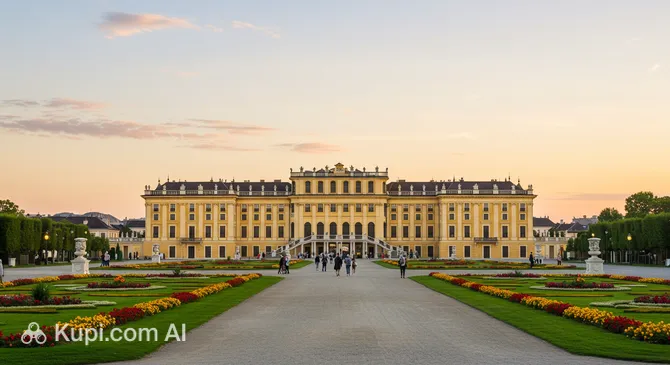
One of the main gems of Austria is Schönbrunn Palace in Vienna. This former summer residence of the Habsburg emperors impresses with its grandeur, vast park with fountains and sculptures, the Palm House, the Gloriette, and the world's oldest zoo. A stroll through its luxurious halls and picturesque gardens is a true immersion into the country's imperial past.

Illustration.
Source: Kupi.com AI

Traveller photos:

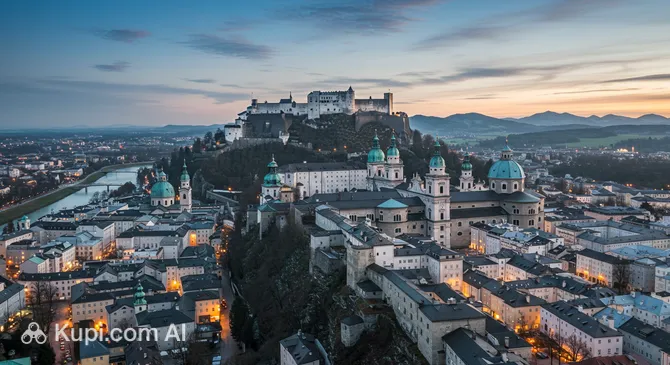
In Salzburg, the Hohensalzburg Fortress rises majestically above the city, being one of the largest and best-preserved medieval fortresses in Europe. From its mighty walls, breathtaking panoramic views of Salzburg's historic center and the surrounding Alpine peaks open up. Inside the fortress, you can explore princely chambers, museums, and learn about its centuries-old history.

Illustration.
Source: Kupi.com AI

Traveller photos:

The symbol of Innsbruck, the famous Golden Roof, also cannot be overlooked. This richly decorated bay window in the heart of the Old Town, covered with 2,657 fire-gilded copper tiles, was built by order of Emperor Maximilian I. It served as an imperial box for watching tournaments and performances in the square, and today it is one of the most photographed attractions in Austria.

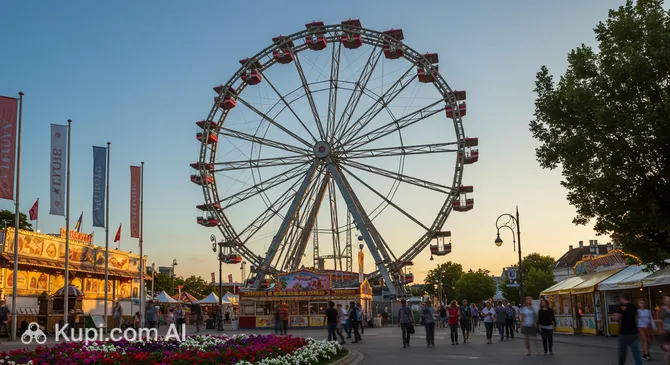
For those looking for entertainment and fun in Vienna, the famous Prater park is a must-see. Its trademark is the historic giant Riesenrad Ferris wheel, which offers a magnificent view of the city. In addition to numerous attractions for all ages, the Prater has vast green areas, ideal for relaxation and walks.

Illustration.
Source: Kupi.com AI

Traveller photos:

Best Time to Visit

Austria is beautiful at any time of year, but the best season to visit depends on your plans. High season traditionally falls in the summer (June-August) and winter (December-February). In summer, you will find warm, sunny weather, perfect for exploring cities like Vienna or Salzburg, relaxing by the lakes, and hiking in the mountains. In winter, Alpine resorts such as Ischgl or St. Anton am Arlberg attract ski enthusiasts from all over the world. However, during these periods, you should expect more tourists and higher prices for accommodation and services.

The shoulder seasons — spring (April-May) and autumn (September-October) — offer their own advantages. During these times, there are significantly fewer tourists, and prices are more attractive. In spring, nature comes alive with bright colors, while in autumn, the mountains and valleys are painted in golden-crimson tones, creating magnificent landscapes for hiking, for example, around Zell am See. The weather in the shoulder seasons can be changeable, so it's worth bringing clothes for different conditions. Numerous wine festivals also take place in autumn, especially in the eastern regions. In summer, cultural life is in full swing: the famous Salzburg Festival attracts art connoisseurs, and in winter, Christmas markets create a magical atmosphere throughout the country. Given Austria's diverse landscapes, from Alpine peaks to plains, it is recommended to check the weather forecast for the specific region before your trip.

Traditions

Austria is a country with rich cultural traditions, and showing respect for local customs will make your trip more pleasant. When meeting and communicating, Austrians value politeness and a degree of formality. The standard greeting is a handshake, accompanied by the words "Grüß Gott" (especially in rural areas) or "Guten Tag." Eye contact is important. If you are invited to a home, it is good form to bring a small gift for the hosts, such as flowers (an odd number, avoiding red roses unless it is a romantic gesture) or high-quality chocolate. Punctuality is highly valued, so try not to be late for meetings.

In terms of clothing, Austrians are quite conservative. Smart casual is suitable for everyday life, but more formal attire may be required for visits to theaters, operas, or certain restaurants. When visiting churches and other religious sites, modest clothing covering the shoulders and knees is expected. At the table, it is customary to keep hands on the table (but not elbows) and start eating only after the host or oldest person at the table begins the meal or says "Mahlzeit" or "Guten Appetit." Among the significant holidays deeply rooted in the culture are Christmas (Weihnachten) with its magical markets and Easter (Ostern), celebrated with particular scale.

To avoid awkward situations, try not to be excessively noisy in public places, especially on transport. Austrians value personal space. Do not forget to use the words "bitte" (please) and "danke" (thank you) — these are the basics of polite communication. It is also worth remembering that discussing personal finances or overly personal topics with acquaintances is considered impolite. In general, Austrians are hospitable and helpful, and showing interest in their culture and language will be received with gratitude.

Entertainment

Austria offers travelers an incredible variety of entertainment for every taste and season. Fans of active recreation will be thrilled by the majestic Alps, which beckon with picturesque hiking and mountain biking trails in summer and transform into a paradise for skiers and snowboarders in winter. Crystal-clear lakes provide excellent opportunities for swimming, sailing, and simply relaxing in nature.

The cultural life of Austria is rich and multifaceted. The country is famous for its magnificent opera houses, concert halls where you can enjoy world-class classical music, and numerous museums and art galleries housing priceless collections. Cities like Vienna boast a particularly dense cultural program. As evening falls, Austrian cities come alive: the doors of cozy cafes, traditional wine taverns (heurigers), restaurants offering both local and international cuisine, as well as stylish bars and nightclubs, open to offer fun until dawn.

For those who cannot imagine a trip without shopping, Austria offers many options — from luxury boutiques on central streets to small shops with authentic souvenirs. Popular purchases include crystal products, traditional costumes, jewelry, and, of course, the famous Austrian sweets like chocolate and Mozartkugel candies. Families with children will also find plenty of exciting activities in Austria: from visiting theme parks and modern interactive museums to meeting the inhabitants of Alpine zoos. Everyone will find something to their liking here, making for an unforgettable family vacation.

Currency rates

Planning a trip? Wonderful! To make sure the financial side of your journey holds no surprises, it's worth remembering that exchange rates are constantly changing. That's why we strongly recommend keeping an eye on current rates both before departure and throughout your trip. To help with that, you can use the data provided below — we monitor exchange rates 24/7 and strive to provide the most up-to-date information.

EUR exchange rate for 14/08/2026

4.26 AED
~ 1 EUR
424.01 AMD
~ 1 EUR
1.64 AUD
~ 1 EUR
1.97 AZN
~ 1 EUR
3.47 BYN
~ 1 EUR
1.62 CAD
~ 1 EUR
1 GBP
~ 1.16 EUR
365.46 HUF
~ 1 EUR
110.54 INR
~ 1 EUR
101.33 KGS
~ 1 EUR
1643.50 KRW
~ 1 EUR
539.54 KZT
~ 1 EUR
4.33 PLN
~ 1 EUR
96.56 RUB
~ 1 EUR
4.36 SAR
~ 1 EUR
1.48 SGD
~ 1 EUR
55.35 TRY
~ 1 EUR
51.83 UAH
~ 1 EUR
1.16 USD
~ 1 EUR
13853.12 UZS
~ 1 EUR

Reached the bottom of the page?

Looks like you know this route inside out

We use cookies and services to collect user information. This is essential for the functioning of the site and for marketing purposes. You can find out more in .