Support

Montenegro

About

Montenegro, snugly nestled on the Balkan Peninsula by the Adriatic Sea, is a country of amazing contrasts and incredible natural beauty. Despite its modest size, it can charm any traveler with its diverse landscapes: from the picturesque coastline with pristine beaches to majestic mountain ranges covered in dense forests. This country offers a unique blend of relaxing vacations and active adventures.

Montenegro's cultural heritage is as rich and multifaceted as its nature. Influences from various civilizations intertwine here, leaving their mark on architecture, traditions, and art. The capital, Podgorica, serves as the administrative and economic center, offering a glimpse into modern Montenegrin life, while ancient cities preserve the spirit of antiquity and numerous historical monuments.
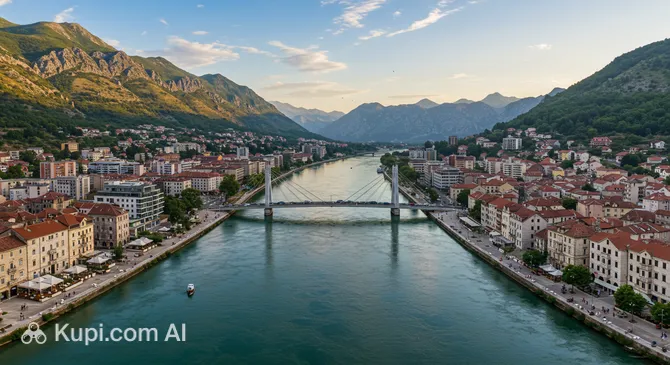
Illustration.
Source: Kupi.com AI

Natural attractions are Montenegro's greatest treasure. The azure waters of the Adriatic wash popular resorts like Budva, known for its beaches and nightlife, and charming Kotor with its famous Kotor Fortress, a UNESCO World Heritage site. Further inland, national parks stretch out with canyons, glacial lakes, and mountain peaks. The coastal climate is Mediterranean, with hot summers and mild winters, making Montenegro attractive for vacations almost year-round. The atmosphere here invites you to relax and enjoy every moment, whether it's watching the sunset over the sea or hiking along mountain trails.

Currency

The official currency of Montenegro is the Euro (EUR). Interestingly, the country adopted the Euro unilaterally and is not a member of the Eurozone, so it does not issue its own Euro coins with a national design. Standard Euro banknotes of various denominations (from €5 to €500) and coins (from 1 cent to €2) are in circulation, identical to those used in European Union countries. This significantly simplifies payments for tourists from the eurozone.

If you are arriving from outside the eurozone, you can exchange your currency for Euros at banks or official exchange offices, which are easy to find in cities and tourist areas. It is recommended to avoid currency exchange offers from private individuals or in questionable locations. Credit and debit cards (mainly Visa and Mastercard) are widely accepted in most hotels, restaurants, and large stores, especially in popular tourist centers. However, it is always useful to carry some cash for small expenses, payments at markets, in small cafes, or in more remote areas of the country.

Visa Requirements

For citizens of many countries, including the European Union, the USA, and some CIS countries, a visa is usually not required for short-term tourist trips to Montenegro. However, to enter the country, you must have a valid passport, the expiration date of which should exceed the intended period of stay. It is also recommended to have return tickets, proof of accommodation booking, and medical insurance, although checking them is not always mandatory.

If a visa is required for your country of citizenship, it is typically a tourist visa that should be applied for in advance at the embassy or consulate of Montenegro in your country of residence. Since visa regulations can change, it is strongly recommended to check current information on the official website of the Ministry of Foreign Affairs of Montenegro or at the relevant diplomatic mission before your trip.

We'll let you know if you need a visa

Enter your destination or
Your nationality
Destination

Timezones

Montenegro is located within a single time zone. The country follows Central European Time (CET), which corresponds to UTC+1. In summer, Montenegro switches to Daylight Saving Time (CEST), moving to UTC+2.

For tourists, this means that you won't have to change your clocks while traveling through the country. All of Montenegro lives according to a single time, which simplifies the planning of trips and events.

Getting There

When planning a trip to Montenegro, you will find that reaching this picturesque country on the Adriatic coast can be done in several convenient ways. The most popular and fastest option is air travel. Montenegro has two international airports — in Podgorica (the capital) and Tivat, which receive flights from many European cities, especially during the tourist season. Direct flights or convenient connections are available from most major European hubs, as well as from some Middle Eastern countries.

For those who prefer land travel or want to combine a visit to Montenegro with a trip through neighboring countries, there is the possibility of traveling by car or bus. The country has well-developed bus connections with states such as Serbia, Croatia, Bosnia and Herzegovina, and Albania. Traveling in your own or a rented car will give you the freedom to explore Montenegro's numerous beauties. Railway connections also exist, notably the scenic route from Belgrade (Serbia) to Bar.

Given Montenegro's location on the Adriatic coast, maritime transport is also a way to enter the country. Regular ferry lines connect Montenegrin ports, such as Bar, with Italian cities. Additionally, many cruise ships include stops in the famous Kotor in their Mediterranean itineraries. Regardless of the chosen method, we advise booking tickets in advance, especially if your trip falls during the peak tourist season (summer months), to ensure the best prices and availability.

AirportCityIATA
Podgorica AirportPodgoricaTGD
Tivat AirportTivatTIV

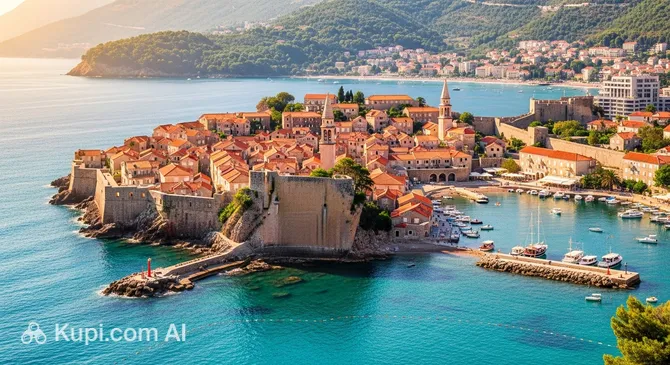
Montenegro is famous for its diversity: everyone will find a corner to their liking here, whether it's bustling seaside resorts, ancient cities with a rich history, or secluded mountain villages. One of the most popular destinations is Budva, the true tourist capital of the country, known for its magnificent beaches, lively promenade, and charming Old Town surrounded by medieval walls.

Illustration.
Source: Kupi.com AI

History and architecture lovers should definitely visit Kotor, a fortress city located deep within the picturesque Bay of Kotor and protected by UNESCO. Its narrow cobblestone streets, ancient churches, and powerful fortifications create a unique atmosphere. The capital, Podgorica, offers a different experience — it is a modern city with parks, bridges over the Moraca River, museums, and galleries, reflecting Montenegro's dynamic development.

In the south of the country lies Ulcinj, attracting tourists with its long sandy beaches, including the famous Long Beach (Velika Plaza), and its oriental flair. For those who prefer mountains and active holidays, Zabljak is the ideal choice — a center for mountain tourism located within the Durmitor National Park, offering breathtaking landscapes and many routes for hiking and rafting. Each of these places is charming in its own way and awaits its explorers.

Top Attractions

Montenegro, the pearl of the Adriatic, is famous not only for its picturesque beaches but also for its rich historical heritage, which is reflected in its numerous attractions. Ancient cities, majestic fortresses, and natural beauty await travelers, capable of enchanting everyone.

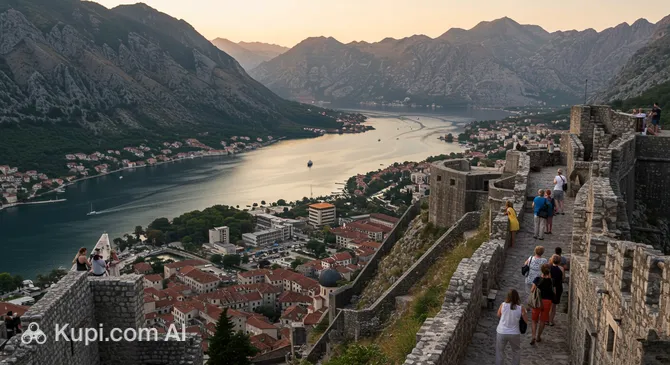
One of the most impressive sites is the Kotor Fortress, also known as the Fortress of St. John. Climbing its walls will reward you with breathtaking panoramic views of the Bay of Kotor and the old town of Kotor, a UNESCO World Heritage site. This is a journey through history where every stone holds centuries-old secrets.

Illustration.
Source: Kupi.com AI

Traveller photos:

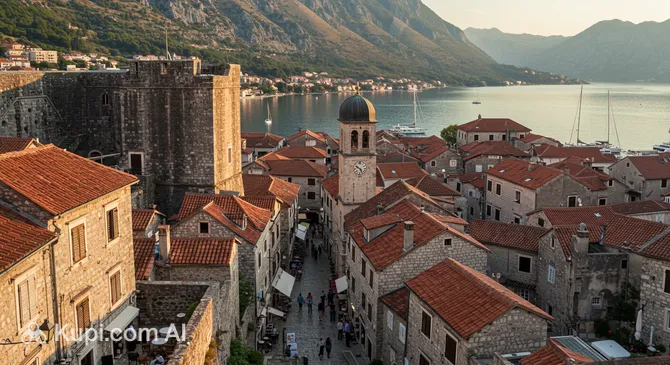
No less alluring is the Old Town of Herceg Novi, situated at the entrance to the Bay of Kotor. Its narrow cobblestone streets, ancient churches, numerous staircases, and powerful fortress walls create a unique atmosphere. A stroll through this fortress city will give you a sense of immersion in the Middle Ages.

Illustration.
Source: Kupi.com AI

Traveller photos:

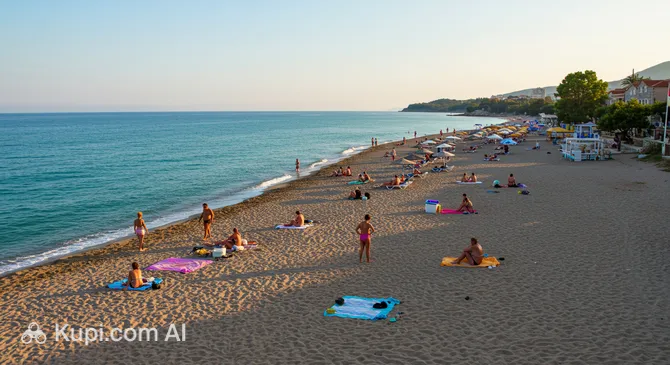
For beach holiday enthusiasts, Jaz Beach is a true find. It is one of the largest and most popular beaches in Montenegro, known for its clean sand, transparent water, and well-developed infrastructure. Here you can not only sunbathe and swim but also enjoy various water sports.

Illustration.
Source: Kupi.com AI

Traveller photos:

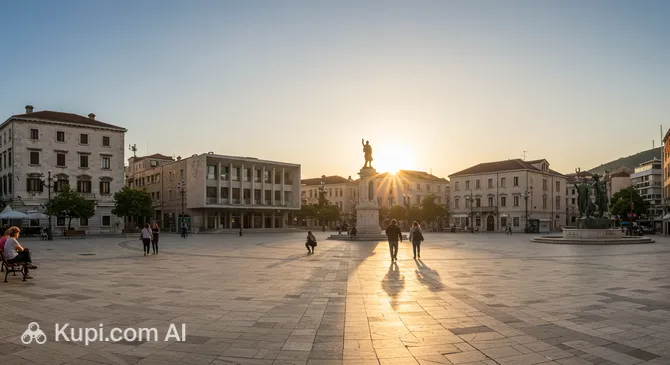
In the capital city, Podgorica, it is worth visiting Independence Square. This is the central square of the city, serving as a place for meetings, walks, and various events. Surrounded by modern buildings and fountains, it reflects the dynamic development of the capital.

Illustration.
Source: Kupi.com AI

Traveller photos:

Best Time to Visit

Choosing the best time to visit Montenegro largely depends on your plans and preferences. High season traditionally lasts from June to August. During this period, the Adriatic coast enjoys hot, sunny weather, perfect for beach holidays, swimming, and water sports. Popular resorts like Budva and Kotor come alive, offering plenty of entertainment. However, keep in mind that this is the time of the greatest tourist influx, and prices for accommodation and services may be higher.

If you prefer a more tranquil vacation, sightseeing, and active tourism, consider the shoulder season — spring (April-May) and autumn (September-October). The weather during these months is usually very comfortable and warm, but without the sweltering heat. There are significantly fewer tourists, and prices are more affordable. This is a wonderful time for exploring historical sites, such as in the ancient capital of Cetinje, hiking through picturesque national parks like Durmitor (near the town of Zabljak), or cycling along the coast. Winter months (November-March) attract skiing enthusiasts to Montenegro, for instance, to the resorts of Kolasin or Zabljak. On the coast, it is quiet during this time, some tourist facilities may be closed, and the weather can be rainy and windy.

When planning your trip, it's also worth paying attention to cultural events. For example, the famous Mimosa Festival takes place in Herceg Novi in February-March, and in summer, numerous music and theater festivals liven up coastal towns. Keep in mind that the climate in Montenegro is diverse: it is Mediterranean on the coast and more continental in the mountainous regions. Therefore, it's always useful to check the weather forecast for the specific region you intend to visit before your trip.

Traditions

Montenegrins are famous for their hospitality and openness. When meeting, it is customary to exchange a handshake while maintaining eye contact, which is considered a sign of respect. Addressing people informally is quite common here, but it is better to use formal addresses for older people until you are invited to do otherwise. If you are invited to a home, bring a small gift for the hosts — such as a bottle of wine, coffee, or something sweet. Refusing an offering, especially a homemade one, is considered impolite, as hosts put their heart into welcoming guests. Montenegrins highly value communication, so do not be surprised if someone easily strikes up a conversation with you on the street or in a cafe.

When visiting religious sites, such as monasteries and churches, it is important to follow a dress code: shoulders and knees must be covered. In everyday life, there are no strict rules, especially in tourist areas. At the table, Montenegrins enjoy hearty feasts and leisurely conversations; large portions are a sign of generosity. To show respect for local culture, try to avoid discussing sensitive political topics. Important holidays reflecting Montenegro's culture are Orthodox Christmas (Bozic) and Easter (Vaskrs), as well as Independence Day (May 21st), when celebrations take place throughout the country. In general, Montenegrins are very friendly, and a simple show of interest in their traditions will be highly appreciated.

Entertainment

Montenegro is a country where everyone will find entertainment to their liking, especially if you appreciate active recreation. Water sports enthusiasts can enjoy diving, kayaking, or simply relaxing on the many beaches of the Adriatic coast. The country's mountainous regions offer magnificent routes for hiking and mountaineering, and in winter, they transform into popular ski resorts. Don't forget about rafting, for example, along the Tara River Canyon, which will provide unforgettable impressions.

Montenegro's cultural life is concentrated in its historical cities. Here you will find ancient fortresses, museums with rich collections, and art galleries. In summer, many cities such as Kotor or Budva host open-air music and theater festivals. As evening falls, coastal towns come alive: numerous bars, restaurants serving local cuisine, and clubs offer entertainment for every taste, creating a vibrant atmosphere, especially during the resort season.

For those who love shopping, Montenegro offers both traditional souvenirs — products of local artisans, olive oil, prosciutto (prsut), and local wine — and modern shopping centers, for example, in the capital Podgorica. Families with children will also find plenty to do: although there are few large theme parks here, many resorts offer a variety of beach activities, playgrounds, and small water parks that will make a holiday with little ones comfortable and fun.

Currency rates

Planning a trip? Wonderful! To make sure the financial side of your journey holds no surprises, it's worth remembering that exchange rates are constantly changing. That's why we strongly recommend keeping an eye on current rates both before departure and throughout your trip. To help with that, you can use the data provided below — we monitor exchange rates 24/7 and strive to provide the most up-to-date information.

EUR exchange rate for 18/07/2026

4.22 AED
~ 1 EUR
421.28 AMD
~ 1 EUR
1.65 AUD
~ 1 EUR
1.95 AZN
~ 1 EUR
3.33 BYN
~ 1 EUR
1.61 CAD
~ 1 EUR
1 GBP
~ 1.17 EUR
364.66 HUF
~ 1 EUR
110.78 INR
~ 1 EUR
100.53 KGS
~ 1 EUR
1707.17 KRW
~ 1 EUR
542.12 KZT
~ 1 EUR
4.36 PLN
~ 1 EUR
90.00 RUB
~ 1 EUR
4.32 SAR
~ 1 EUR
1.48 SGD
~ 1 EUR
54.19 TRY
~ 1 EUR
51.39 UAH
~ 1 EUR
1.15 USD
~ 1 EUR
13854.33 UZS
~ 1 EUR

Reached the bottom of the page?

Looks like you know this route inside out

We use cookies for your convenience.