Support

Pont de Fragnée

About

The majestic Pont de Fragnée is a true architectural gem adorning Liège. Spanning the Meuse River at its confluence with the Ourthe, it is rightfully considered one of the most beautiful bridges Belgium takes pride in. Built in the early 20th century as a grand entrance for the 1905 World's Fair, this steel arch giant embodies the elegance of the Belle Époque style.
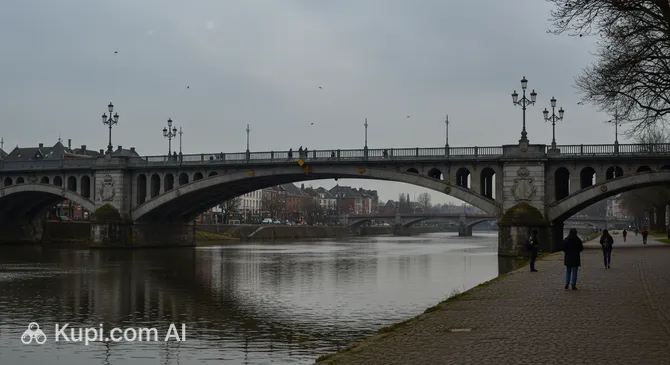
Fragnée Bridge
Fragnée Bridge. Иллюстрация. Источник: Kupi.com AI

The structure owes its exquisite appearance to architect Paul Demany, who was inspired by the famous Pont Alexandre III in Paris. Extending over 177 meters, the design is adorned with rich stone and bronze decor. Of particular artistic value are the sculptures of nereids and tritons, as well as the ornate candelabras that give the bridge an aristocratic and solemn look.

Today, the Pont de Fragnée is recognized as a Walloon heritage monument. Among locals, it is known as the "Angel Bridge" due to its abundance of decorative elements. It is not just an important transport artery, but also a popular spot for walks, offering tourists magnificent panoramic views of the water and the city landscapes.

Contacts

To find out more about events or tourist routes passing through the bridge, you can contact the local tourist office.

How to contactContact
AddressN633, 4020 Liège, Belgium
Websitewww.liegetourisme.be

What to Do

The main pleasure of visiting the Pont de Fragnée is a leisurely stroll. As you walk along its sidewalks, be sure to notice the bronze railings and the detailed sculptures by Victor Rousseau. The meticulously crafted figures of sea creatures and allegorical statues turn an ordinary crossing into a veritable open-air gallery. It is an ideal spot for architectural photography: the graceful curves of the steel arches and the rich decor look magnificent in photos.

The bridge offers breathtaking views of the spot where the Ourthe River flows into the Meuse. Visitors enjoy stopping here to watch the pleasure boats and barges passing below. In the evening, when the artistic lighting is turned on, the atmosphere becomes truly romantic, making the bridge a popular location for wedding photo shoots and evening dates.

You can include a visit to the bridge in your cycling or walking tour of Liège. After seeing the bridge, it is pleasant to walk along the embankments or relax in the nearby Gramme square. During the summer, the area has a lively atmosphere, and many travelers use this spot as a starting point for exploring the Vennes district or the historic city center.

Getting There

Reaching this architectural landmark is easy. The Pont de Fragnée is located at N633, 4020 Liège. If you are driving from the city center, the journey will take about 10–15 minutes. Parking can usually be found near the site, around Place Gramme.

For those who prefer public transport, TEC bus routes heading to the Outremeuse or Vennes districts are suitable. From the Liège-Palais railway station, the bridge is about 2 kilometers away, a pleasant distance to cover on foot or by rented bicycle along the scenic embankment.

If you are in the very heart of the city, a walk to the bridge will take about 30 minutes. The path follows the river, allowing you to enjoy the cityscape before reaching your destination. You can also use a local taxi; a ride from Liège-Guillemins station will be quick and comfortable.

Ближайший город: Liege

History & Facts

The history of this structure is inextricably linked with the triumph of engineering at the beginning of the 20th century. Construction of the Pont de Fragnée began in 1901 to coincide with a landmark event—the 1905 World's Fair in Liège. The metal structure, weighing over 1,800 tons, was manufactured by the famous John Cockerill company, and the grand opening took place in 1904, marking the ceremonial entrance to the exhibition grounds.

The bridge's architectural design was created by Paul Demany, who drew inspiration from the elegant Pont Alexandre III in Paris. Its refined classical style was highlighted by rich decoration, including the famous bronze figures of nereids and tritons by sculptor Victor Rousseau. At the time, the bridge served as a symbol of the region's prosperity and industrial power.

The original structure suffered significant damage in 1940. However, between 1946 and 1948, the bridge was carefully restored according to the original blueprints, while being slightly widened to accommodate modern traffic. The unique sculptures that were saved returned to their rightful places in 1959, preserving the site's historical continuity.

In 1993, the Pont de Fragnée was designated a Walloon Cultural Heritage Monument. A large-scale restoration completed in 2001 returned the bridge to its former glory, making it one of the city's most recognizable and cherished symbols.

Time Needed

For a leisurely exploration of the Pont de Fragnée, taking beautiful photos of its decorative elements, and admiring the panoramas of the Meuse River, 30–45 minutes is sufficient for most travelers. This is enough time to cross the bridge on foot and closely examine the bronze sculptures.

If you decide to combine your visit with a walk along the embankments or a break in the nearby Gramme square, we recommend allowing about one hour. The bridge is particularly beautiful in the rays of the setting sun, so an evening visit might require a bit more time for contemplation.

Working Hours

As the Pont de Fragnée is an essential part of the city's road network and a public space, it is open to visitors daily and around the clock.

You can admire its architecture at any time that is convenient for you:

  • Monday — Sunday: 24 hours a day

Круглосуточно

Nearby

The location of the Pont de Fragnée allows tourists to see more than just one landmark. A stroll through the surrounding neighborhoods and embankments will reveal many interesting spots reflecting the cultural and historical diversity of Liège.

Within a radius of a few kilometers, you can find cozy park areas and majestic architectural monuments worth adding to your itinerary.

NameDistance
La Boverie0.7 km
Museum of Public Transport of Wallonia0.9 km
La Boverie Park0.9 km
Belle-Île Shopping Center1.1 km
Cointe Park1.1 km
Avroy Park1.5 km

Reached the end of the page?

That means the route is fully explored