Support

Palais Provincial

About

In the heart of the historic center of Liège stands one of Europe's most monumental civil buildings—the Provincial Palace, also known as the Palace of the Prince-Bishops. This grandiose building in Belgium impresses with its scale and unusual combination of austere Gothic and the elegance of the Italian Renaissance. Today, it houses the provincial administration and the Palace of Justice, but for tourists, it remains first and foremost an outstanding architectural monument.
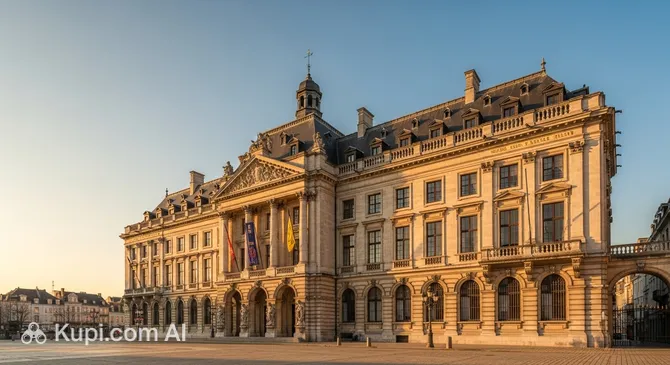
Provincial Palace
Provincial Palace. Иллюстрация. Источник: Kupi.com AI

The main highlight of the palace is its inner courtyards. The first courtyard, open to the public, is framed by vaulted galleries supported by 60 unique columns. Examining their capitals, one can discover an amazing variety of subjects: from grotesque masks and mythical creatures to exotic motifs inspired by the discovery of the New World. The architectural look is completed by the austere southern facade, rebuilt in the 18th century in the elegant Regency style.

As a witness to centuries of history, the Provincial Palace embodies the former power of the region's ecclesiastical rulers. It is a must-visit for everyone who appreciates a historic atmosphere and wants to see firsthand how art, religion, and politics were intertwined in medieval Europe.

Contacts

To confirm visiting information or plan group tours, you can use the institution's official contact details. Please note that the palace is an active administrative center.

How to contactContact
AddressPl. Saint-Lambert 18A, 4000 Liège, Бельгия
Phone+32 4 232 32 00
Websitewww.provincedeliege.be

What to Do

The main thing every visitor should do is step into the palace's first inner courtyard. This space is open to the public and allows for a close look at the famous galleries. Be sure to spend time studying the capitals of the 60 columns: stone carvers displayed incredible imagination, depicting fantastical characters, human figures, and even elements inspired by the works of the humanist Erasmus of Rotterdam.

Viewing the building from the outside also offers aesthetic pleasure. The massive southern facade, dominating Place Saint-Lambert, is a fine example of the classical style. This spot is perfect for atmospheric photos, especially in the rays of the setting sun when the stone takes on a warm hue. The palace is located in a lively part of the city, so a visit can be combined with a stroll through the nearby shopping streets.

If your trip coincides with Heritage Days, try to get on a rare tour of the second inner courtyard and the closed halls. On such days, you can see private apartments and interiors that have preserved the spirit of the era when major political decisions were made here. On regular days, visiting is limited to the public areas, as the building is actively used by government services.

Getting There

The palace is located in the very heart of the city, on Place Saint-Lambert, making it easily accessible for tourists. If you arrive at the main Liège-Guillemins station, the walk to the landmark takes about 15–20 minutes. The route passes through scenic central streets, such as Rue des Guillemins, leading you straight to the city's historic core.

For those who prefer public transport, TEC buses are ideal. Numerous routes (for example, No. 1, 4, 9, 30) stop directly at the square or within walking distance. From other cities in Belgium, it is most convenient to arrive via InterCity trains, which run regularly to Liège.

If you are traveling by car, it is recommended to leave your vehicle in one of the underground parking lots near the square (such as P+R Liège Gare), as street parking in the center can be limited. You can also always use taxi services or city car-sharing to reach the spot quickly from any part of the city.

Ближайший город: Liege

History & Facts

The history of this site began at the turn of the millennium. The first episcopal palace was founded around the year 1000 by the legendary Notger. This structure was part of the city's fortifications, but unfortunately, it burned down completely in 1185. A second building, erected later, was also not spared by time: it was seriously damaged during Burgundian raids and a subsequent major fire in the early 16th century.

The majestic appearance we see today began to take shape in 1526. Prince-Bishop Erard de La Marck commissioned the construction to master Arnold van Mulken. It was then that the building acquired its unique features, blending Late Gothic with Early Italian Renaissance. The southern facade facing the square had to be rebuilt in the Louis XIV Regency style after another devastating fire in 1734.

For a long time, the palace served not just as a residence but as a symbol of the absolute power of the Prince-Bishops of Liège, who ruled these lands as independent sovereigns. Later, in the mid-19th century, a west wing in the Neo-Gothic style was added to the architectural ensemble, harmoniously complementing the historic look and becoming the seat of the provincial government.

Time Needed

For a quick glance at the main facade of the palace and a walk through its famous first inner courtyard, you will need about 30–60 minutes. This is enough time to admire the unique carvings on the columns and take beautiful photos of the architectural details.

If you are lucky enough to join an organized tour or visit the palace during "Heritage Days" when the inner halls and the second courtyard are opened, you should plan for at least 1.5–2 hours. Also, account for time to walk around Place Saint-Lambert itself, which is a key tourist hub in the city.

Working Hours

Since the building houses active judicial and administrative services of the province, access inside is subject to the offices' working schedule. Usually, the first courtyard is open to visitors from Monday to Friday: from 10:00 to 12:00 and from 13:30 to 15:00. On Saturdays and Sundays, the palace is generally closed to the public.

The interior rooms and the second courtyard open to the general public very rarely, mostly during special cultural events or official holidays. It is recommended to check the current schedule on the official website of the Province of Liège in advance to avoid any issues, especially if you are planning a trip during the holidays.

DayWorking hours
понедельник10:00–12:00, 13:30–15:00
вторник10:00–12:00, 13:30–15:00
среда10:00–12:00, 13:30–15:00
четверг10:00–12:00, 13:30–15:00
пятница10:00–12:00, 13:30–15:00
субботаЗакрыто
воскресеньеЗакрыто

Nearby

A walk around the Provincial Palace is an excellent way to discover the city's rich architectural heritage. Its location in the historic center allows you to reach other significant monuments and museums within minutes, each revealing a unique chapter of the region's history.

Below are interesting sites located in the immediate vicinity that are worth including in your walking tour of Liège:

NameDistance
Archéoforum of Liège0.1 km
Place Saint-Lambert0.1 km
Museum of Walloon Life0.2 km
Le Cadran0.2 km
La Bodega0.2 km
Royal Opera of Wallonia-Liège0.3 km
Yaka - Afrotoria0.3 km

Reached the end of the page?

That means the route is fully explored