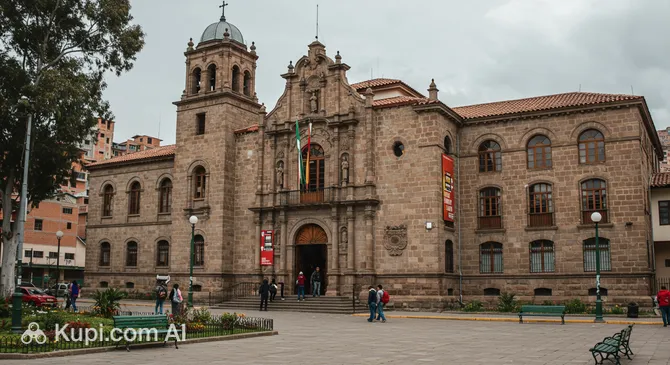
In the heart of the historical center of La Paz lies the National Art Museum — one of the primary cultural treasures that Bolivia is proud of. It is not just a gallery, but a magnificent architectural ensemble housed in the former Palacio Diez de Medina. Its carved Baroque facade and elegant inner courtyards with arcades create a colonial-era atmosphere, transporting visitors back several centuries.
National Museum of Art. Illustration.
Source: Kupi.com AI
Traveler photos:
The museum is rightfully considered a key institution for discovering Bolivian art. A unique feature of the collection is its incredible scope: here you can see everything from pre-Hispanic painted ceramics to the solemn colonial paintings of the 16th–19th centuries, as well as bold works by modern artists. Aesthetic pleasure from the visit is guaranteed both for history buffs and fans of beautiful architecture.
Thanks to its high rating and unique location near the main square, the museum has become a must-visit point on any traveler's itinerary. This is a place where tradition and modernity meet within one of the most beautiful buildings in La Paz.
Contacts
To confirm current information about special exhibitions or entrance fees, you can contact the administration directly. It is recommended to check in advance for any public holidays that might affect access to the galleries.
Below are the main contact details for reaching the museum:
A visit to the National Art Museum promises to be a true journey through time. It is worth starting with the colonial painting galleries, which feature works by famous Bolivian masters. Pay particular attention to the detailing and religious themes that reflect the spirit of the era. No less interesting is the collection of pre-Hispanic ceramics, which impresses with the complexity of its patterns and the brightness of preserved pigments.
In addition to admiring the canvases, be sure to dedicate time to the museum's architecture itself. A stroll through the inner courtyards with their three-story arched galleries is a pleasure in its own right. Here you can appreciate the craftsmanship of 18th-century stonemasons and take striking photos against the backdrop of Baroque elements. The museum regularly hosts temporary exhibitions, presenting works by contemporary Bolivian artists, which allows you to see the current state of the country's cultural scene.
The museum's proximity to historical quarters allows you to combine your cultural program with a walk to Plaza Murillo. This is a great opportunity to see the city's main administrative buildings immediately after immersing yourself in the world of art. The atmosphere of tranquility within the museum walls serves as a wonderful contrast to the bustling streets of central La Paz.
Getting There
Finding the National Art Museum is easy, as it is located in the very heart of the city, at the corner of Calle Comercio and Socabaya. A great landmark for tourists is the famous Plaza Murillo, from which the museum entrance is just a 5–10 minute leisurely walk. A stroll through this area allows you to simultaneously enjoy the colonial architecture of the central districts.
If you plan to use public transport, choose the minibuses ("micros") that pass through the city center and stop near the main government buildings. Taxis are also a convenient and affordable option, especially if you are coming from more distant neighborhoods or Teleférico (cable car) stations. Simply give the driver the name of the museum or the intersection mentioned above.
Given that La Paz is situated at a significant altitude, try not to rush while moving around the city. Comfortable acclimatization will make your introduction to the museum's cultural treasures much more pleasant and easy.
Nearest city: La Paz
History & Facts
The building that houses the collection today is a valuable historical exhibit in its own right. It is the former Palacio Diez de Medina, built in 1775. It is considered one of the finest examples of colonial civic architecture in the city of La Paz. The uniqueness of the structure lies in the harmonious combination of Baroque forms with local stone-carving traditions.
The National Art Museum itself was officially opened in 1964 following an extensive renovation of the palace. The initiative to create such an institution was driven by the need to preserve and categorize the rich artistic heritage that had accumulated in the country over centuries. Interestingly, the restoration managed to completely preserve the authentic facade and the three-story arched galleries of the interior courtyards.
Over the decades, the museum's collection has grown, turning it into a vital repository of Bolivia's memory. Today, the museum's holdings span a vast timeframe — from artifacts of pre-Hispanic cultures to works by contemporary 21st-century artists, reflecting the complex and multifaceted history of Bolivian identity formation.
Time Needed
To leisurely explore all the main galleries and enjoy the architectural details of the building, most visitors need about 1.5–2 hours. This is sufficient time to get acquainted with the permanent collection of colonial paintings and visit the temporary contemporary art exhibitions. A steady pace will also allow you to take beautiful photos in the inner courtyard.
If you are a passionate art lover or enjoy studying explanatory materials in detail, your visit may last until midday. The museum is not overly large, but its exhibits possess a high concentration of historical significance that requires thoughtful contemplation.
Working Hours
The museum doors are open to visitors throughout the week, though operating hours vary by day. From Monday to Friday, the institution welcomes guests from 08:30 to 16:30. On Saturday, hours are slightly extended from 09:00 to 17:00, while Sunday features a shorter day from 09:00 to 13:00.
As the schedule may change due to public holidays or special events, it is advisable for tourists to verify current opening hours on the museum's official website before their visit.
Day
Working hours
Monday
08:30–16:30
Tuesday
08:30–16:30
Wednesday
08:30–16:30
Thursday
08:30–16:30
Friday
08:30–16:30
Saturday
09:00–17:00
Sunday
09:00–13:00
Nearby
The museum's location in the historical center makes it an ideal starting point for further exploration of the city. Its proximity to the government quarter and popular park areas allows travelers to create a packed itinerary for the whole day. Exploring the surroundings will help you better feel the contrasting rhythm of the Bolivian capital.
Within a few kilometers, you can find small specialized exhibitions as well as places for family recreation. Please note the following sites located nearby: