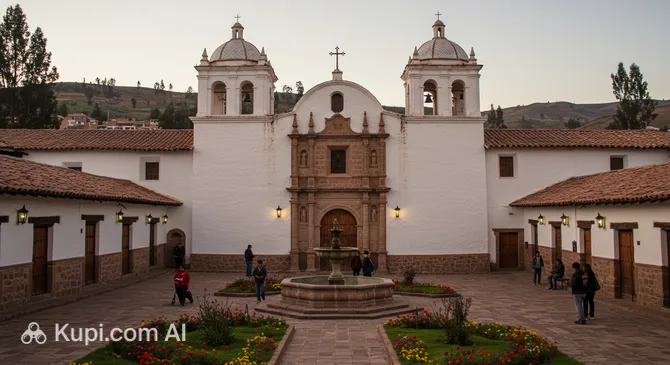
Enveloped in silence and centuries of history, the Santa Teresa Museum and Convent is one of the oldest religious monuments preserved by Cochabamba. Founded in 1760, this majestic Discalced Carmelite monastery is considered a true gem of Baroque architecture in Bolivia.
Santa Teresa Convent Museum. Illustration.
Source: Kupi.com AI
Traveler photos:
The complex is striking for its unusual semi-lobulated church and elegant cloister featuring a massive stone arcade. Within the monastery walls are unique halls adorned with ancient frescoes and priceless pieces of sacred art, including a gilded altar that leaves an indelible impression on every visitor.
Today, it is more than just a religious building; it is a recognized national monument that reveals the secrets of life within closed cloisters. Located on the charming Plaza del Granado, the convent serves as a living testament to the region's colonial past and cultural wealth.
Contacts
To ensure your visit to the monastery goes smoothly, it is a good idea to check its contact details and location in advance. You can contact the administration by phone or find the latest news on cultural events on their official social media page.
Below is the basic contact information for the site:
A visit to the museum offers a unique opportunity to peek behind the closed doors of monastic life. The highlight of the program is a tour of the church, where you can spend hours admiring the intricately detailed sacred art on the high altar and the masterfully executed frescoes decorating the walls of the ancient halls.
A walk through the cloister—an inner courtyard surrounded by an elegant stone arcade where an atmosphere of tranquility and solemnity still reigns—is particularly enjoyable. The museum halls display antique utensils, paintings, and the personal belongings of the nuns, helping visitors understand the strict routine of their daily lives.
To ensure you don't miss any important details, be sure to take a guided tour. Professional guides lead tours lasting about 1 hour and 45 minutes in Spanish and English, sharing fascinating facts about architectural secrets and the hidden meanings behind the exhibits.
Getting There
The museum-convent is located in the heart of the city's historic center, on the picturesque Plaza del Granado, in close proximity to Baptista Street. Thanks to its central location, it is very easy to reach on foot from the popular Plaza de Colón, where tour groups and public transport often arrive; the walk takes only a few minutes.
If you are coming from more distant areas, it is most convenient to take a taxi or local buses heading to the center. Since parking is very limited on the narrow colonial streets, walking is the preferred option for tourists.
For those who prefer self-navigation, the coordinates POINT(-66.1580801 -17.3898763) will help you find your way to this architectural monument without any trouble.
Nearest city: Cochabamba
History & Facts
The history of this site began back in 1726, when Don Juan Salvador Crespo and Melchora Macías donated their land and significant funds for the construction of the cloister. It wasn't until 1753 that the Spanish monarch officially approved the founding of the monastery, marking a major event in the religious life of the colonial era.
In the autumn of 1760, four nuns of the Discalced Carmelite order arrived from the city of Sucre in what was then Villa de Oropesa. While construction was underway, the sisters lived in a temporary house on the city's main square for seven years. The design for the future monastery was developed by the talented architect Pedro Nogales along with engineer Martínez Cáceres.
The grand opening and the move into the new walls took place on August 24, 1767. The event was accompanied by a lavish religious procession and a solemn mass, marking the birth of a Baroque architectural masterpiece. In 1967, the complex was rightfully designated a National Monument of History and Culture.
Time Needed
To fully explore the monastery's exhibition and architecture, it is recommended to set aside about 1.5–2 hours. This is plenty of time to leisurely see all the halls, peek into the church, and enjoy the peaceful atmosphere of the inner courtyard.
If you plan to join a detailed guided tour that covers the most hidden corners of the cloister, it's better to allow a little more time in your schedule to ask the guide questions and take commemorative photos.
Working Hours
The Santa Teresa Museum and Convent welcomes visitors from Monday to Saturday. The opening hours are divided into two blocks: morning from 09:00 to 11:00 and afternoon from 14:30 to 16:30. Please note that the museum is closed on Sundays.
Operating hours may change on holidays, so we recommend checking the current information on the establishment's official Facebook page or directly on-site before your visit.
Day
Working hours
Monday
09:00–11:00, 14:30–16:30
Tuesday
09:00–11:00, 14:30–16:30
Wednesday
09:00–11:00, 14:30–16:30
Thursday
09:00–11:00, 14:30–16:30
Friday
09:00–11:00, 14:30–16:30
Saturday
09:00–11:00, 14:30–16:30
Sunday
Закрыто
Nearby
The museum's location in the historic center makes it an ideal starting point for further exploration of the city. A walk through the surrounding area will allow you to feel the rhythm of local life and see modern park areas.
The following interesting sites are located within a few kilometers of the monastery: