Support

Casona Santivañez Museum

About

The Casona Santiváñez Museum is a magnificent example of colonial architecture, located in the heart of Cochabamba. A former private mansion, it has been transformed into a cultural space where every corner breathes history. The building is famous for its elegant stone facades and cozy inner courtyards (patios) that transport visitors back to the era of Spanish rule.
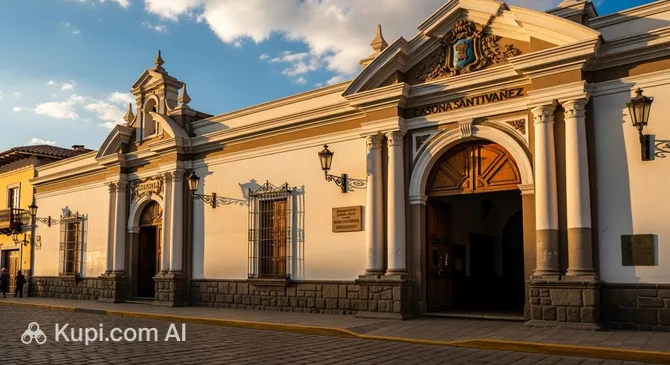
Casona Santivañez Museum
Casona Santivañez Museum. Иллюстрация. Источник: Kupi.com AI

In a country like Bolivia, you cannot miss this place if you want to understand the origins of local culture. The museum houses unique collections covering a vast time span: from pre-Columbian artifacts of ancient peoples to items from the republican period. It is considered one of the most significant cultural venues in the region, holding a high rating among travelers.

The exhibitions highlight the city's rich heritage, which is often called the "breadbasket of the country" and the "city of eternal spring." A visit to the museum offers a chance to see how the traditions of the indigenous Quechua and Aymara peoples intertwined with European influences, creating the unique character of modern Cochabamba.

Contacts

To plan your visit to this historic mansion, it is helpful to check the contact details in advance. As the site is an important cultural center for the city, information about its operation can also be confirmed at municipal tourist offices. Please note that the museum does not have an official website, so it is best to track current news through social media or by phone.

How to contactContact
AddressCalle Santivañez entre Av. Ayacucho y Junín, JR4R+48Q, Santivañez, Cochabamba, Боливия

What to Do

Within the walls of the Casona Santiváñez museum, a fascinating plunge into the past awaits you. The main reason tourists come here is to explore the rich archaeological collection. Here, you can see rare finds from Inca settlements and other pre-Columbian cultures that once flourished in the Cochabamba valleys. Religious artifacts and old documents complete the overall picture of the region's development.

Be sure to take time to walk through the mansion's inner courtyards. Its architecture, with massive stone porticos and graceful 17th-century arcades, provides the perfect backdrop for atmospheric photos. Inside, colonial-era interiors have been recreated, allowing you to literally glimpse the daily life of noble families from the past and feel the aesthetics of that time.

The museum also frequently hosts educational programs. If you're lucky enough to join a guided tour, you'll learn many interesting facts about the city's strategic role in the grain trade and how its unique cultural code was formed. The museum's calm and measured atmosphere is ideal for thoughtful relaxation after the bustling city streets.

Getting There

The museum is located in the heart of the historic district, at Calle Santivañez entre Av. Ayacucho y Junín. Thanks to this central location, it is easy to find. The simplest way to get there is to take a walk from the central Plaza 14 de Septiembre (14th of September Square). The walk will take no more than 10–15 minutes, allowing you to enjoy the atmosphere of the old city along the way.

If you are in more distant areas, it is most convenient to use a taxi. A ride from El Prado boulevard or major hotels will take about 10–20 minutes depending on traffic. The city also has a developed public transport network—numerous minibuses (trufis) pass through neighboring streets, such as Av. Ayacucho.

For those who prefer modern solutions, a tram system has been operating in the city since 2022, connecting the center with the outskirts. However, to reach the museum doors directly, it is still better to take a taxi or walk from the nearest stops in the center. Rental car owners can find parking on adjacent streets, although spaces can be scarce during peak hours.

Ближайший город: Cochabamba

History & Facts

The history of this magnificent building dates back to the colonial era. The main features of its architectural appearance and stone facades were designed as early as 1630. The mansion serves as a living reminder of the time when the city, founded in 1571 under the name Villa de Oropesa, began its transformation into a key economic center for the region.

For a long time, Cochabamba held the status of the country's "breadbasket." Thanks to its fertile soils and mild climate, the region provided food even to distant mining towns like Potosí. The Casona Santiváñez museum reflects this period of prosperity, showcasing the lifestyle and luxury that wealthy city residents could afford in the 17th–19th centuries. Following the country's declaration of independence in 1825, the building retained its significance as an architectural monument.

Interestingly, the city's name comes from a Quechua word meaning "marshy area." Despite this name, the architecture of the Santiváñez mansion emphasizes the grace and rigor of the Spanish colonial style, which harmoniously intertwined with local traditions. Today, the museum carefully preserves this cultural heritage, allowing visitors to trace the city's journey from a small settlement to a modern metropolis.

Time Needed

To leisurely explore the exhibition and examine all the architectural details of this old mansion, most visitors need from 1.5 to 2 hours. This time is quite sufficient to walk through the inner courtyards, study the collection of artifacts, and take commemorative photos against the backdrop of colonial interiors.

If you plan to use the services of a guide or study historical documents in detail, your visit may take longer. If you decide to combine your museum visit with a walk through the surrounding Santiváñez district, we recommend setting aside an additional hour in your schedule to fully experience the rhythm of life in this historic quarter.

Working Hours

The Casona Santiváñez Museum is open to visitors during the work week. You can visit from Monday to Friday; the doors are open from 08:30 to 18:30. It's worth noting that Saturday and Sunday are weekend days, and the museum is closed at these times.

As the operating schedule may change depending on public holidays or special events, it is recommended to check for up-to-date information on official municipal pages or confirm the details on-site before your visit.

DayWorking hours
понедельник08:30–18:30
вторник08:30–18:30
среда08:30–18:30
четверг08:30–18:30
пятница08:30–18:30
субботаЗакрыто
воскресеньеЗакрыто

Nearby

Exploring the museum's surroundings will allow you to immerse yourself even deeper into the atmosphere of this amazing region. Cochabamba offers many green zones and cultural sites located in the immediate vicinity of the historic center.

A walk through nearby parks and boulevards will be an excellent addition to viewing the museum exhibits. Below is a list of interesting places you can visit nearby:

NameDistance
September 14 Square0.3 km
Santa Teresa Convent Museum0.5 km
Plaza Cobija0.6 km
mARTadero Project0.9 km
Familia Park1 km
Plaza de las Banderas1.4 km
Traffic Education Park1.6 km

Reached the end of the page?

That means the route is fully explored