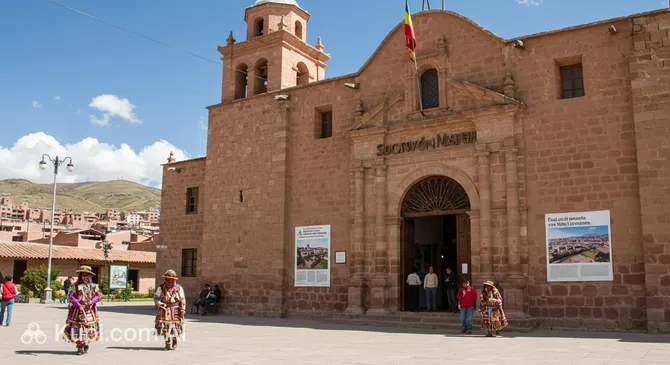
Imagine a place where the boundaries between a deep dungeon and a vibrant celebration blur — that is exactly what the Socavón Museum (or the Miners' Ethnographic Museum) is like. Located in the city of Oruro, this unique complex is situated right at the legendary Sanctuary of the Virgin of Socavón. It is not just a museum, but a living history of Bolivia, dedicated to the hard labor of the miners who extracted silver and tin from the depths of the Andes.
Socavón Museum. Illustration.
Source: Kupi.com AI
Traveler photos:
The museum's uniqueness lies in its dual structure: it consists of a surface exhibition and a real underground mine. The museum halls house an impressive collection of carnival masks and costumes for the famous Diablada dance. These artifacts are part of the Oruro Carnival, recognized by UNESCO as a heritage of humanity. Visitors can see how the ethnic traditions of indigenous peoples are intertwined with the daily life of miners.
The main highlight awaits guests underground. Descending into a reconstructed gallery, you enter a world of old mining equipment and narrow tunnels. This is where the statue of El Tío is located — the mystical spirit-master of the mines, to whom Bolivian miners have brought offerings for centuries in hopes of safety and good luck. This place is steeped in the atmosphere of authentic mining culture that made Oruro world-famous.
Contacts
For those planning a visit to the Socavón Museum, it's helpful to have the exact coordinates of this cultural center at hand. The museum is located in the city's historic district and is easy to find thanks to its proximity to the main sanctuary.
A visit to the Socavón Museum is a thrilling journey in two dimensions. Start with the surface section, where you can examine in great detail the fantastic masks and gold-embroidered costumes of the Diablada dancers. This is a great opportunity to take vibrant photos and understand the symbolism of the country's most famous carnival.
The most exciting part of the visit is the descent into the underground mine. Walking through narrow corridors, you will see original ore carts, rail tracks, and tools used to mine ore in past centuries. Be sure to stop at the altar of El Tío. Here you can observe an authentic ritual: locals and workers still leave coca leaves, cigarettes, and drinks for the spirit of the mine to appease the underground master.
After returning to the surface, it's worth lingering at Folklore Square (Plaza del Folklore). It offers a beautiful view of the "Rooster's Foot" mountain and the sanctuary itself. If your visit coincides with the February holidays, you will witness museum exhibits literally coming to life in the hands of dancers during ceremonial processions.
Getting There
Getting to the Socavón Museum in Oruro is quite simple, as it is located at Linares 1377, right on Plaza del Folklore (Folklore Square). This area is the heart of the city and is situated at the foot of the "Rooster's Foot" mountain (Pie de Gallo).
If you are in the city center, for example, near 10 de Febrero Square, the walk to the museum will take only 10–15 minutes. For those who prefer comfort, city taxis and minibuses are always available and regularly run to Folklore Square. A taxi ride from the local airport takes about 20–30 minutes.
During the famous carnival in February, keep in mind that many central streets become pedestrian-only. In this case, your best landmark will be the building of the Sanctuary of the Virgin of Socavón — the entrance to the museum is located in the annex on the right side of the church.
Nearest city: Oruro
History & Facts
The history of this unique site is inextricably linked with the Sanctuary of the Virgin of Socavón, which dates back to the 18th century. Legend has it that a miraculous statue of the Virgin Mary was found in an abandoned mine shaft (in Spanish — socavón), and she became the patroness of the local miners. The modern church building was erected in the 19th century directly over the entrance to the old mines.
Oruro itself was founded in 1606 as an important silver mining center and later, in the late 19th century, became the "tin capital" of the region. Mining labor formed a unique cultural layer where Catholic traditions became intricately intertwined with ancient indigenous beliefs. In 2001, the Oruro Carnival, centered around this sanctuary, was recognized by UNESCO as a Masterpiece of the Oral and Intangible Heritage of Humanity.
The museum was created to preserve the memory of the miners' hard work and the evolution of the mining industry — from colonial silver mines to the tin empires of magnates like Simón Patiño. The exhibition vividly demonstrates how the harsh reality of underground life gave birth to the bright folkloric images known to the world today.
Time Needed
To explore both the surface and underground sections of the Socavón Museum without rushing, a typical visitor will need 1.5 to 2 hours. This is enough time to examine the details of the carnival costumes and feel the atmosphere of a real mine.
We recommend spending about 40 minutes viewing the ethnographic collection of masks and artwork, and the remaining hour descending into the underground tunnels. If you also plan to visit the Sanctuary of the Virgin of Socavón itself or enjoy the view from the square, you should add another 30 minutes to your visit.
Working Hours
The museum welcomes guests daily, which is very convenient for tourists with a tight schedule. According to official data, the complex's doors are open for visitors from 8:00 to 18:00 without breaks.
Please note that during public holidays, especially during the Oruro Carnival, the opening hours may change due to ceremonial events at the sanctuary. It is recommended to come in the morning to have time to see both the museum exhibition and the church itself in daylight.
8:00 – 18:00
Nearby
Exploring the surroundings of the Socavón Museum will allow you to dive deeper into the atmosphere of the "folklore capital" and see the city from different perspectives. Several iconic squares and parks are located nearby, perfectly complementing your walk.