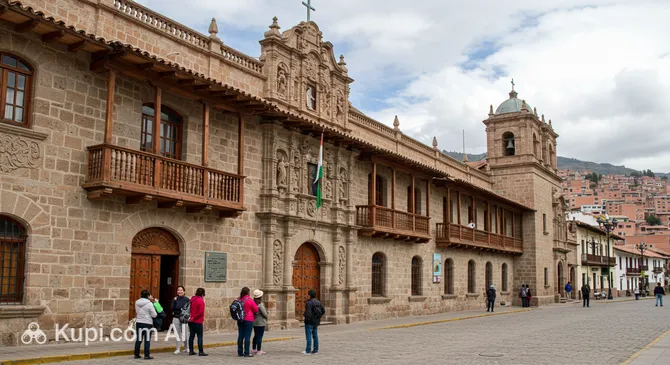
In the heart of the historic district lies a space where time seems to slow down, revealing the incredible ethnic diversity of South America to its guests. We are talking about an essential cultural landmark housed in a majestic 18th-century palace. This building is an architectural gem in itself, setting a solemn tone for your introduction to the region's heritage.
National Museum of Ethnography and Folklore. Illustration.
Source: Kupi.com AI
Traveler photos:
This unique center, known as the National Museum of Ethnography and Folklore, is rightfully considered one of the main treasures that La Paz is proud of. It houses thousands of artifacts telling the story of the daily life, beliefs, and art of the numerous peoples inhabiting modern Bolivia. The museum serves as a bridge between ancient traditions and modernity, allowing every visitor to touch living history.
The significance of this place is hard to overstate: it is not just an exhibition of antiquities, but a dynamic cultural institution. Visitors come here to see rare collections that cannot be found anywhere else in the world and to feel the special atmosphere of authenticity that permeates every corner of the old mansion.
Contacts
To contact the museum administration or find out about current information on special exhibitions, you can use the following details:
Visitors can expect a fascinating journey through halls filled with vibrant colors and unusual forms. One of the most impressive parts of the exhibition is the collection of carnival masks and costumes, decorated with feathers and intricate embroidery. These items offer a first-hand look at how rich and unique the country's festive culture is.
Special attention should be paid to the halls featuring samples of traditional weaving. The craftsmanship of Bolivian artisans, passed down from generation to generation, is reflected in complex patterns and natural dyes. For those who want to do more than just look, the museum often organizes dance and folk art courses, as well as educational guided tours in English.
The elegant design of the exhibitions makes them clear and interesting even for those who were not previously familiar with ethnography. Here, you can spend hours examining the details of the daily life of ancient civilizations or observing how indigenous traditions have transformed over time, evolving into the folklore we see today.
Getting There
Finding your way to this cultural treasure is easy, as it is located at Ingavi 916, in the city's most vibrant district. Its central location makes it a convenient stop for those exploring the historic core of La Paz on foot.
If you are in another part of the city, it is most convenient to take a taxi or one of the many minibuses headed toward the main square. A taxi ride from the main tourist quarters will take very little time and is quite affordable by local standards.
A visit here is easy to combine with other important sites. The National Museum of Archaeology and the Cathedral are located very close by, allowing you to create a rich full-day cultural program with only short walks between attractions.
Nearest city: La Paz
History & Facts
The walls that house today's exhibitions are themselves a valuable artifact. The museum occupies a magnificent 18th-century palace, recognized as an important architectural monument of the colonial era. The ancient halls and courtyards create an atmosphere of complete immersion into the region's past.
The museum's collections cover a vast time span, starting from the pre-Hispanic period. Here, evidence of magical rituals and beliefs that existed on this land long before the arrival of Europeans is carefully preserved. Special attention in research and exhibitions is given to the Aymara culture — a people who created one of the most developed civilizations in the Andean highlands.
Over the years, this institution has transformed from a small storehouse into one of the leading scientific centers in South America. It plays a key role in preserving folk traditions, which in Bolivia still remain a living part of daily life rather than just museum exhibits.
Time Needed
To leisurely explore all the halls and delve into the details of the rich collection, we recommend setting aside from 1.5 to 2.5 hours. This is plenty of time to get acquainted with the main collections of masks, textiles, and archaeological finds without feeling rushed.
If you plan to study the information stands in detail or if you happen to catch a temporary themed exhibition, your visit may last half a day. In any case, thanks to the clever layout and cozy atmosphere of the historic building, time here flies by unnoticed.
Working Hours
When planning your visit, please note the museum's schedule, which allows you to visit on both weekdays and weekends:
Monday — Friday: 08:30 to 16:30
Saturday: 08:30 to 16:00
Sunday: 08:30 to 13:30
It is recommended to arrive at least one hour before closing to have enough time to explore the main exhibits comfortably.
Day
Working hours
Monday
8:30 – 16:30
Tuesday
8:30 – 16:30
Wednesday
8:30 – 16:30
Thursday
8:30 – 16:30
Friday
8:30 – 16:30
Saturday
8:30 – 16:00
Sunday
8:30 – 13:30
Nearby
A walk around the neighborhood will allow you to feel the local flavor even more deeply and find interesting places to relax. Within walking distance or a short distance from the museum are various entertainment and educational sites that may interest both adults and children.