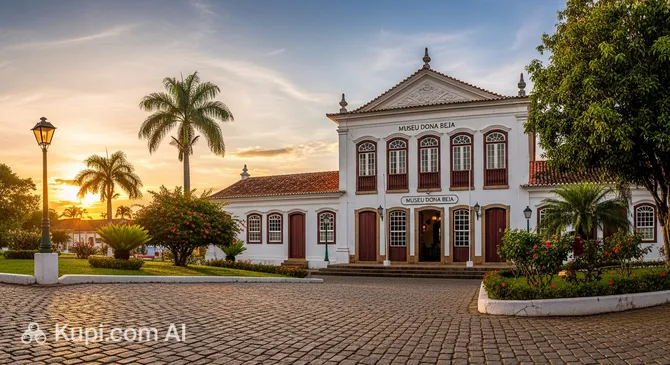
In the heart of the colorful city of Araxá stands one of the region's most remarkable historical buildings — the Dona Beja Museum. It is housed in a charming mansion built in 1815, which is itself a valuable architectural monument. This museum is considered the soul of the city, carefully preserving the memory of the past of the state of Minas Gerais and the entire country of Brazil.
Dona Beja Museum. Illustration.
Source: Kupi.com AI
Traveler photos:
The exhibition is dedicated to the life of an extraordinary woman — Ana Jacinta de São José, better known as Dona Beja. Her story, shrouded in legends and folklore, has become an integral part of the local identity. Visitors can see a rich collection including original 19th-century furniture, antique tools, and everyday items that allow them to literally touch the history of two centuries ago.
The museum serves not only as a tribute to its famous resident but also as an important research center. It houses artifacts illustrating the social and cultural evolution of the region, making it a must-visit for anyone interested in authentic Brazilian heritage.
Contacts
To plan your visit to the Dona Beja Museum, it is helpful to have current contact information at hand. The museum is managed by the Fundação Calmon Barreto, which is dedicated to preserving the region's cultural heritage.
The main reason to visit the Dona Beja Museum is the opportunity to see the authentic setting of a 19th-century Brazilian mansion. Visitors can freely explore the exhibition halls, where every piece of furniture and interior decor tells its own story. Special attention should be paid to the displays dedicated to daily life in that era, featuring rare tools and household utensils.
An interesting part of the experience is exploring the rooms that recount the region's mining past and the traditions of the indigenous peoples who inhabited these lands. One of the museum's most memorable exhibits is the unique namoradeiras — special "courting chairs" for couples. These pieces of furniture served as an important social tool in the 19th century, allowing young people to talk under the supervision of elders while observing the strict etiquette rules of the time.
Getting There
Located at Praça Cel. Adolfo, 98, the museum is situated in the very heart of the historic center, making it easily accessible for tourists. If you are staying in the central part of the city, a walk to the old mansion is a pleasant addition to your excursion, allowing you to admire the architecture of old Araxá along the way.
For those who prefer comfort, the best option is a taxi or using ride-sharing apps. The journey from most key points in the city to the central square takes no more than 10–15 minutes. Public transport is also well-developed in this area, with routes passing through the city's main thoroughfares.
Travelers in rental cars can use GPS coordinates, which lead directly to the museum building. Parking is usually available around the square, allowing you to continue exploring the city's sights on foot.
Nearest city: Araxá
History & Facts
The establishment of this cultural space in 1965 was made possible by the initiative of Assis Chateaubriand, a well-known patron of the arts and journalist. The museum was conceived as a tribute to Ana Jacinta de São José, who went down in history as Dona Beja. Living in the 19th century, she became a true legend and a symbol of resilience, and her life and estate were long at the center of attention for the local elite.
The museum's collection allows visitors to trace the region's development starting from the late 18th century. A significant historical milestone is 1791, when the São Domingos de Araxá Parish Church was founded, marking the beginning of the active settlement of these lands. Archaeological artifacts and documents on display detail how the modern appearance of the region was formed from a small settlement.
The mansion itself, built in 1815, holds a special place in the museum's history. This building is a rare example of early 19th-century architecture that has preserved its authentic layout. Over the decades of its existence, the museum has become more than just a storehouse of objects; it is an important cultural center where the legends and folklore of the state of Minas Gerais come to life.
Time Needed
A thoughtful visit to the Dona Beja Museum typically takes between 1 and 2 hours. During this time, visitors can explore all the main halls, examine the collection of antique furniture, and immerse themselves in the history of the mansion's legendary owner.
If you are a fan of Brazilian history or plan to study the archival documents and photographs in detail, your visit may take a bit longer. However, thanks to the well-organized space, even a short visit will leave a complete impression of the era and the region's cultural heritage.
Working Hours
The museum is open to visitors throughout the week, though the schedule varies by day. From Monday to Friday, you can plan your visit between 12:00 PM and 6:00 PM. On Saturday, the doors are open from 9:00 AM to 3:00 PM, and on Sunday from 8:00 AM to 12:00 PM. A key highlight is that admission is traditionally free for all visitors.
Since the schedule may change due to public holidays or special cultural events, it is recommended to check the official Calmon Barreto Foundation website or call ahead for information before your visit.
Day
Working hours
Monday
12:00–18:00
Tuesday
12:00–18:00
Wednesday
12:00–18:00
Thursday
12:00–18:00
Friday
12:00–18:00
Saturday
09:00–15:00
Sunday
08:00–12:00
Nearby
Exploring the surroundings of the Dona Beja Museum allows tourists to fully experience the welcoming atmosphere of the historic center and get acquainted with the lifestyle of modern residents. The compact location of interesting sites makes this area ideal for leisurely walks.
Near the museum, you will find both historic buildings and cozy establishments where you can relax after your tour. Below is a list of some notable places in the immediate vicinity: