Support

Rideau Canal National Historic Site

About

The Rideau Canal National Historic Site is an impressive 19th-century engineering feat spanning 202 kilometers across Canada, from the city of Ottawa to Kingston in Ontario. This historic waterway was built to connect the Ottawa River with Lake Ontario, using the beds of the Rideau and Cataraqui Rivers. It remains an active canal to this day, playing an important role in the history and culture of the region.
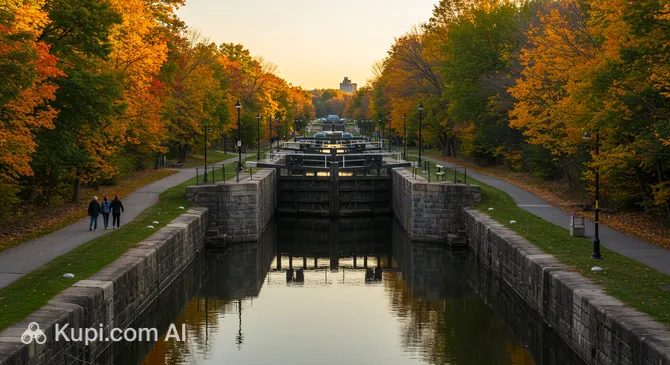
Rideau Canal National Historic Site. Illustration.
Source: Kupi.com AI

Traveler photos:

The Rideau Canal is not just a transport artery, but also a significant monument of history and engineering. Since 1925, it has held the status of a National Historic Site of Canada, and in 2007, it was included in the UNESCO World Heritage List. This recognition highlights its uniqueness as an outstanding example of European engineering technology skillfully adapted to the challenging North American conditions of the time.

Today, the Rideau Canal attracts tourists from all over the world. In summer, it becomes a popular spot for boating, kayaking, and relaxing on its picturesque shores. In winter, the section of the canal in Ottawa transforms into the world's longest natural skating rink—the Rideau Canal Skateway—offering unique opportunities for active recreation. A visit to this site allows you to touch history and enjoy the beauty of Canadian nature.

Contacts

To obtain up-to-date information about the operation of the Rideau Canal National Historic Site, including visiting hours, available tours, or special events, it is recommended to contact the site administration. You can also visit the official website for all the details regarding your visit.

How to contactContact
Address1 Second Ave, Ottawa, ON K1S 2H2, Canada
Phone number+1 613-283-5170
Websitewww.pc.gc.ca

What to Do

Visitors to the Rideau Canal National Historic Site can enjoy a variety of activities year-round. In summer, the canal becomes a hub for water enthusiasts: here you can rent a boat or canoe to glide leisurely across the water, or join one of the tour boats cruising the canal. A point of special interest is watching the historical locks in operation, many of which are still operated by hand—a true spectacle of past engineering artistry.

Picturesque walking and cycling routes run along the banks of the canal, perfect for leisurely strolls or active recreation. These paths allow you to fully appreciate the beauty of the surrounding nature and the architectural ensembles of Ottawa and its environs. Numerous parks, viewing platforms, and cozy cafes located nearby offer excellent opportunities for relaxation and contemplation.

With the onset of winter, the section of the canal in Ottawa transforms into the Rideau Canal Skateway—the world's largest natural outdoor skating rink. This unique location attracts both locals and tourists wishing to skate along the frozen waterway. Regardless of the season, guests can take a guided tour to dive deeper into the history of the canal's construction and learn about its significance for the region's development. Various museums are also located along the canal, complementing the experience of visiting this iconic site.

Getting There

The Rideau Canal National Historic Site is conveniently located in the heart of Ottawa, making it easily accessible for visitors. You can reach the canal on foot if you are staying in the city center or use the well-developed public transport system. Major tourist routes pass in the immediate vicinity, and there are numerous bus stops and taxi stands, allowing you to easily plan your trip to this iconic landmark.

If you are arriving in Ottawa via Ottawa International Airport (YOW), the trip to the Rideau Canal will take approximately 20-30 minutes by taxi or by the special shuttle bus running between the airport and the city center. For those who prefer to travel by private car, convenient parking spaces are provided along the canal. They are located near the main locks and popular visitor centers, ensuring easy access to the attraction.

Nearest city: Ottawa

History & Facts

The history of the Rideau Canal National Historic Site is inextricably linked to the formation of Canada. Its construction began in 1826 and, remarkably for such a large-scale project of that era, was completed in record time—by 1832. The chief engineer of this ambitious project was Lieutenant-Colonel John By, whose name was later immortalized in Bytown—the original settlement that grew into the modern capital, Ottawa. Initially, the canal was created as a strategic military route designed for safe communication between Montreal and Kingston, bypassing a potentially dangerous section of the US border along the St. Lawrence River.

The Rideau Canal became one of the first waterways in the world designed specifically for steam-powered vessels, which was a significant engineering achievement for its time. A system of fortifications was also erected along its course, emphasizing its original defensive purpose. However, over time, as the geopolitical situation changed and transport infrastructure developed, the military significance of the canal faded into the background. It began to be used actively for commercial shipping, and then, from the 20th century onwards, increasingly for recreational purposes and tourism, becoming a popular spot for boating and leisure.

The uniqueness of the Rideau Canal lies in the fact that it is the only major canal from North America's great canal-building era (early 19th century) that still functions along its entire length in its original form and for its original purpose, albeit with an emphasis on tourism. This preservation and historical significance were recognized internationally: in 2007, the Rideau Canal was added to the UNESCO World Heritage List. It is not just a waterway, but a living monument to engineering thought and an important milestone in the history of Canadian land development.

Time Needed

When planning a visit to the Rideau Canal National Historic Site in Ottawa, you should allow a few hours for a basic introduction. To see key sections of the canal within the city, such as the famous locks, and immerse yourself in its rich history, 2 to 4 hours is usually sufficient. During this time, you can walk along the banks, watch the locks in operation, and perhaps visit an information center.

If you want to get a more complete picture of the canal and enjoy its beauty from the water, you should plan for more time. For example, a boat or cruise trip along the canal can take from half a day to a full day, depending on the chosen route and the duration of the tour. This will allow you to see the canal from a different perspective and appreciate the scale of this historical structure. For those particularly passionate about water travel, there is the possibility of traveling the entire 202-kilometer length of the canal, but such an expedition would take several days and goes beyond a regular sightseeing visit in Ottawa.

Working Hours

Operating hours for the Rideau Canal National Historic Site depend on the season and the type of activity. The canal locks are typically open for navigation during the warmer months, usually from mid-May to early October. During this period, they operate from early morning until evening, although the exact schedule may vary.

In winter, weather permitting, the section of the canal in Ottawa turns into the famous Rideau Canal Skateway, available for skating. As operating hours can change depending on the season, weather conditions, and specific sections of the canal, it is highly recommended to check current information on the official Rideau Canal National Historic Site website or contact local tourist information centers before planning your visit. Advance booking for regular visits or walks along the canal is generally not required, but it may be necessary for special tours or events.

Nearby

A visit to the Rideau Canal National Historic Site will undoubtedly be a highlight of your trip to Ottawa. However, to make your experience even more complete and multifaceted, it is worth paying attention to other attractions located nearby. Exploring the surroundings will allow you to dive deeper into the city's atmosphere, discover interesting new places, and get a more holistic view of the cultural and historical heritage of Canada's capital.

Many of Ottawa's iconic landmarks are within walking distance or a short distance from the Rideau Canal, making them convenient for a combined visit. These include museums and galleries, as well as parks and architectural monuments, each adding its own touch to your travel itinerary.

NameDistance
Canadian Museum of Nature0.8 km
Lansdowne Arena1 km
Art House1.7 km
Ottawa Art Gallery2.1 km
Rideau Centre2.2 km
Bank of Canada Museum2.3 km
Giovanni's2.3 km

Have you reached the end of the page?

So the route has been studied inside and out