Support

Rocky Mountain House

Attractions

About

Rocky Mountain House is a picturesque town in the province of Alberta, often referred to as the "gateway to the Rocky Mountains." Located at the confluence of the North Saskatchewan and Clearwater Rivers, it attracts travelers with its unique blend of rich cultural heritage and stunning natural landscapes. If you are planning a journey through such an amazing country as Canada, this cozy corner with a population of about 7,000 people is definitely worth your attention.

The town plays an important role in the annals of Western exploration. The fascinating history of Rocky Mountain House is inextricably linked to the fur trade era and legendary explorers like David Thompson. It was here that trading posts once bustled with life, competing for influence in the region and leaving an indelible mark on the local culture.
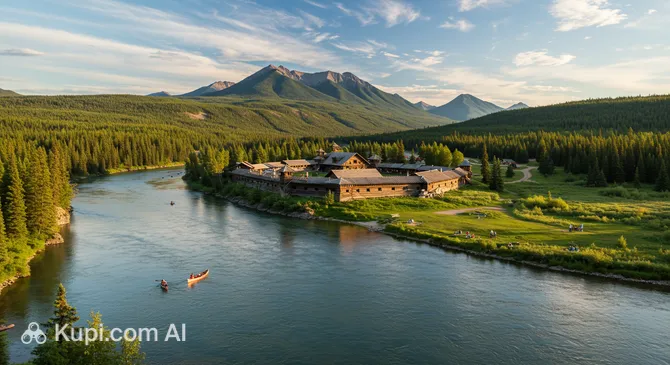
Rocky Mountain House. Illustration.
Source: Kupi.com AI

The main point of attraction for tourists is the Rocky Mountain House National Historic Site. Here, you can see the archaeological remains of four forts and immerse yourself in the atmosphere of the past through interactive exhibits. Additionally, the town serves as an excellent starting point for outdoor enthusiasts: the surroundings are ideal for camping, fishing, and hiking along the scenic trails of the foothills.

A visit to Rocky Mountain House will give you the opportunity to enjoy the tranquility of the wilderness and touch the living history of the region. It is a place where centuries-old traditions meet the hospitality of modern Alberta.

Weather Overview

The climate in this region is characterized by distinct seasonality, offering tourists different conditions for relaxation depending on the time of year. Summer in Rocky Mountain House is usually comfortable and mild: in July, the warmest month, daytime temperatures average 23°C. However, it is also the wettest period—the number of days with precipitation can reach 18 per month, so a raincoat in your luggage won't be extra.

Winters here are frosty and dry. In January and February, the mercury often drops to -15°C at night, though average figures hover around -8 to -9°C. If you plan to visit the town during the shoulder seasons, look at May and September: these times offer pleasant coolness with highs around 17–18°C. A detailed weather in Rocky Mountain House forecast will help you check the latest conditions for your trip dates.

Overall, when planning your trip, expect moderately warm summers with occasional rain and cold but primarily dry winters. Due to the proximity to the mountains, conditions can change quite rapidly, so layered clothing is the best choice for any season.

Average monthly temperature

Average monthly precipitation

Interesting Facts

Beyond the official history of the fur trade, Rocky Mountain House holds many fascinating secrets and unexpected details that often escape the attention of standard guidebooks. This town is not just a point on the map, but a place where the fates of great explorers, the rivalry of trading empires, and unique artifacts of the past are intertwined.

  • Four forts instead of one. Many tourists assume they are visiting the ruins of one specific structure. In fact, archaeologists have discovered traces of four different forts here, built at different times between 1799 and 1875. Interestingly, rival companies—the Hudson's Bay Company and the North West Company—built their posts literally side by side, much like modern competing fast-food chains, to intercept trade from one another.

  • An unsung hero of expeditions. Although David Thompson's name is known to every schoolchild in Canada, few know about the colossal role of his Métis wife, Charlotte Small. Research shows she traveled over 20,000 kilometers with her husband—3.5 times further than the famous American Lewis and Clark expedition. A separate memorial is dedicated to her at the national historic site, highlighting her contribution to the survival and success of mapping missions.

  • Canoe of the century. Walking along the David Thompson trail, you might come across an unusual exhibit—an actual racing canoe from 1967. It participated in the grand Centennial Canoe Pageant, where teams traveled from the Rockies to Montreal in over 100 days. This vessel serves as a reminder of the incredible endurance of past voyageurs and modern enthusiasts.

  • Stone sentinels. The most recognizable symbol of the historic park is the two massive stone chimneys standing alone in the middle of a field. These are the only remaining above-ground parts of the last fort that operated here until 1875. They have become a sort of "calling card" for the site and a landmark for the start of the "Chimney Trail."

How to Get There

Since Rocky Mountain House is a small town, there are no direct international flights. Travelers will need to take a combined route: a flight to one of Alberta's major cities followed by a transfer to ground transport. You can find out more about how to get to Rocky Mountain House to choose the most convenient option for you.

The nearest major air hub is Edmonton International Airport (IATA: YEG). It is located in the city of Edmonton, about 137 km from Rocky Mountain House. It is a large, modern airport serving many flights. The journey from here by rental car or taxi will take about 1.5–2 hours, depending on road conditions.

Another popular option is Calgary International Airport (IATA: YYC), located in the city of Calgary. The distance to Rocky Mountain House is about 152 km. This is a very large transport hub with a massive passenger flow, offering a wide choice of international connections. The driving time is approximately 2 hours.

For clarity, here is a summary of the main airports:

AirportPassenger trafficDistance
Red Deer Regional Airport17 00073 km
Edmonton International Airport7.9 mln137 km
Calgary International Airport18.9 mln152 km

Railway communication in this region is less developed, and you cannot reach the town directly by train. The nearest significant station is Edmonton Railway Station (IATA: XZL), located in the city of Edmonton. It is about 163 km from Rocky Mountain House. From the station, travelers will need to take a bus or taxi, which will take about 2–2.5 hours.

Below is information about the nearest railway station:

StationPassenger trafficDistance
Edmonton Railway Station163 km

Main Attractions

Although Rocky Mountain House is a small town, it serves as an excellent base for exploring the history of the Canadian West and Alberta's wilderness. Here, educational tourism and active recreation combine harmoniously. Here are the main places to visit during your stay.

Rocky Mountain House National Historic Site
This is undoubtedly the main gem of the region. While its historical significance is vital, as a tourist attraction, it is primarily interesting for its interactivity. Visitors can do more than just tour the grounds; they can stay overnight in an authentic Indigenous tipi or a trapper's tent on the banks of the North Saskatchewan River. In the summer, costumed guides demonstrate the art of fire-making, blacksmithing, and canoe-building, literally transporting you back to 1799.

Crimson Lake Provincial Park
Located just a 15-minute drive from town, this park is a favorite getaway for locals and tourists alike. The centerpiece is the picturesque lake, perfect for swimming and boating. A popular 10-kilometer trail, the Amerada Trail, circles the water and is suitable for both hiking and cycling. In winter, the park transforms into a hub for cross-country skiing and ice fishing.

Rocky Museum
To learn how the town lived after the fur trade era ended, stop by this cozy museum. The exhibits are dedicated to the early settlers and the development of logging and agriculture in the region. Of particular interest are the historical buildings on the museum grounds, including the old Meadows Schoolhouse from the early 20th century and a forest ranger's log cabin. It is a great place to understand the daily lives and hardships of Alberta's pioneers.

Twin Lakes Provincial Park
A bit further from town lies another natural attraction—Twin Lakes. This spot is especially valued by anglers for the chance to catch rainbow trout. Additionally, thanks to its clear, transparent water, the lakes are popular with scuba divers, which is quite unusual for freshwater bodies in the prairies. The area is equipped with convenient picnic spots and walking paths that allow you to enjoy the silence of the forest.

Local Cuisine

The culinary scene in Rocky Mountain House perfectly reflects the character of Alberta: simple, hearty, and high-quality food is valued here, ideal for restoring energy after an active day in nature. Since this region is famous for its livestock farming, meat dishes form the basis of the local menu. The main delicacy is undoubtedly the famous Alberta beef. In local steakhouses and family restaurants, you will be offered juicy grilled steaks or impressive-sized burgers, which are considered among the best in the entire country of Canada.

Given the town's historical past related to the fur trade, game dishes are also popular here. Tourists should try bison meat—it is leaner than beef and has a rich flavor. It is often served as burgers, stews, or jerky. For dessert, be sure to order a Saskatoon berry pie. This sweet berry with a nutty undertone is a true culinary symbol of the prairies, and local pastries featuring it leave an unforgettable impression.

Speaking of drinks, one cannot fail to mention the "Caesar" cocktail. This is a Canadian classic, invented in Calgary but popular everywhere. The drink is made with vodka, a mixture of tomato juice and clam broth (Clamato), hot sauce, and spices, and garnished with a celery stalk. Beer lovers should pay attention to the products of Alberta's craft breweries: in local pubs, you can always find a decent selection of pale ale or stout brewed in neighboring towns.

The food culture in Rocky Mountain House is devoid of pretension. Cozy diners, pubs, and cafes with a homey atmosphere prevail, where owners often greet guests themselves. In summer, the Rocky Mountain House Farmers' Market becomes a hub of activity, where you can buy fresh pastries, homemade jams, and local products for a picnic. This is a great place to meet locals and taste the authentic flavors of the region firsthand.

Travel Tips

A journey to Rocky Mountain House promises to be an unforgettable immersion into history and nature, where the spirit of the pioneers meets the majesty of the mountains. To make your trip to this picturesque corner of Canada as comfortable and smooth as possible, we have prepared several proven practical recommendations.

  1. Clothing and gear. The weather in the foothills is changeable, so layering is your best friend in any season. Even in summer, evenings can be cool, so a fleece and a windbreaker are essential. If you plan on hiking, bring comfortable, broken-in trekking shoes. In winter, a warm parka and thermal underwear are necessary, as the frost can be severe.

  2. Transport. Rocky Mountain House is a small town, and public transport is poorly developed. For a full exploration of the surroundings, parks, and lakes, it is strongly recommended to rent a car. This will give you freedom of movement and the ability to reach remote natural attractions not served by buses.

  3. Finances. The official currency is the Canadian dollar (CAD). Visa and Mastercard are accepted everywhere: in hotels, restaurants, supermarkets, and gas stations. However, it is worth carrying a small amount of cash (5, 10, 20 dollar bills) for purchases at the farmers' market or for small souvenirs. Tipping in cafes and restaurants is part of the culture, usually 15–20% of the bill.

  4. Health and safety. The town is very peaceful and safe, but remember the proximity to wilderness. The surrounding forests are home to bears, deer, and cougars. When walking on trails, make noise to alert animals to your presence, and never leave food out in the open. Pharmacies are located in large chain stores, but check their hours—there may not be any 24-hour ones. The emergency services number is 911.

  5. Communication. The primary language is English. Locals speak it everywhere. Free Wi-Fi is available in most hotels, fast-food cafes, and the public library. Mobile reception is stable within the town but can drop in lowlands or dense forests outside the community, so download offline maps in advance.

  6. Local etiquette. In Alberta, it is customary to be friendly and open. Don't be surprised if strangers greet you on the street or talk about the weather in a queue—respond with a smile and a short greeting ("Hello" or "Hi"). Also, people here are very protective of the environment: littering in nature is considered very rude.

  7. What to avoid. Categorically avoid entering fenced private property without permission—property rights and privacy are highly valued here. Also, do not head into the forest or go river rafting without preparation and proper equipment: the nature here is wild and demands respect.

  8. Additional tip. If you are traveling by car, be especially careful on the roads at dusk and dawn—there is a high risk of wildlife crossing the highway. And if you want to experience the local flavor, visit the town during a rodeo or National Heritage Days—they are a vibrant part of the region's culture.

Rocky Mountain House is a place where you can slow down and escape the city bustle. By following these simple tips, you can focus on the main thing: enjoying the magnificent landscapes and the unique atmosphere of the Canadian West.

Entertainment & Nightlife

The nightlife in the town of Rocky Mountain House has a calm and cozy character, which is quite expected for a small community with a rich history. You won't find noisy metropolitan clubs with neon signs and entrance queues here. Instead, evening leisure is focused on atmospheric pubs, family restaurants, and places for friendly gatherings where the spirit of the real Canadian West prevails. It is the perfect place to relax after a day spent in nature and chat with hospitable locals.

A hub for lovers of quality drinks and local flavor is the Rival Trade Brewing Co craft brewery. This establishment is the true pride of the town. They brew unique beers with names referencing the history of the fur trade and local legends. The atmosphere in the taproom is very friendly and casual; groups come here to try seasonal ales, listen to live music, or participate in themed nights. It is a great place to get a taste of modern Alberta culture.

If you are looking for a more active form of evening recreation, check out the Rocky Lanes bowling center. This is a classic entertainment spot popular with both young people and families. Here you can not only bowl a few strikes but also have a fun time in a relaxed setting. For those who prefer a classic dinner with drinks, Grillers Kitchen & Bar opens its doors—a popular steakhouse where you can enjoy excellent meat and linger at the bar late into the evening.

When planning an evening out, there are a few practical points to consider:

  • Operating hours: Most establishments close quite early by big-city standards—around 10:00 PM to 12:00 AM, especially on weekdays. Plan your dinner and entertainment in advance.
  • Dress code: The style here is very relaxed and casual. Jeans, plaid shirts, and comfortable shoes are appropriate in any bar or restaurant.
  • Transport: Services like Uber are not common in Rocky Mountain House. If you plan to consume alcohol, write down the numbers for local taxi services in advance—this is the most reliable way to get to your hotel at night.

In terms of safety, the town is very peaceful. The areas around the main street (50 Avenue) and major establishments are well-lit and safe for walking. However, as with anywhere, it is better to stick to populated areas at night and avoid unlit alleys or forested park zones.

Daytime entertainment programs in the town can also transition smoothly into the evening. After visiting museums or walking through parks, many tourists head to the local cinema to watch the latest releases. This measured pace of life allows you to fully recharge and enjoy the moment in the heart of Alberta.

Parks & Museums

The green zones and public spaces of Rocky Mountain House create ideal conditions for those who want to combine studying urban culture with outdoor relaxation. Unlike formal museum exhibits, local parks and streets offer a more relaxed format for getting to know the region, where history intertwines with modern art and natural beauty.

Helen Hunley Memorial Park
This park, named after Alberta's first female Lieutenant Governor, is a landmark spot for residents. It is located in a picturesque area and serves as a kind of green gateway to the foothills. Tourists appreciate this place for its well-maintained paths and calm atmosphere, ideal for leisurely strolls or reading a book outdoors. A monument is installed here, commemorating Helen Hunley's contribution to the development of the province, adding an educational element to the walk.

Curtis Park
If you are traveling with family, be sure to stop by this cozy corner. Curtis Park is a classic example of a comfortable urban environment oriented toward families with children. It features modern playgrounds and spacious lawns where you can have a picnic or play frisbee. It is an excellent location to take a break during your trip across Canada and let the children burn off some energy in a safe setting.

City Murals and Art Routes
Special attention should be paid to the Downtown area, which is effectively an open-air art gallery. Walking along the main streets, you will see an impressive collection of wall paintings—murals. These large-scale paintings don't just decorate the building facades; they tell the visual history of the region: from scenes of Indigenous life and early fur traders to depictions of local flora and fauna. This "art walk" format allows you to learn about the town's past without visiting indoor galleries.

River Flats Nature Area and Walking Trails
For fans of long walks, the town offers an extensive network of pedestrian routes linking the urban part with the wilderness. The River Flats area, located in the lowlands by the river, is a realm of silence and cool air. The trails here run along the banks of the North Saskatchewan, offering views of the water and dense forests. This is a popular spot for birdwatchers and photographers wishing to capture the changing seasons, especially Alberta's golden autumn.

Centennial Park
One cannot fail to mention this central park, which often becomes a venue for city festivals. Thanks to its proximity to the river and the presence of a skate park, it attracts both youth and outdoor enthusiasts. It is a convenient place to start hiking trails that lead outside the town, smoothly transitioning from civilization to the scenic landscapes of the river valley.

Getting Around

The public transportation system in Rocky Mountain House has its own specific features due to the town's small size. It is important for travelers to know that the types of transport common in large metropolises are completely absent here: you will not find subways, trams, or an extensive network of city buses with fixed schedules. The urban infrastructure is primarily oriented toward motorists, so public transport in the classic sense is not developed here.

The main alternative to a private car for getting around town is local taxi services. This is the most reliable way to get from point A to point B if you haven't rented a car. It is important to consider that hailing a taxi on the street is almost impossible here. A car must be called in advance by phone, especially in the evenings or on weekends. Popular international ride-hailing apps and taxi aggregators may not operate in the town or may have a very limited number of cars, so it is better to rely on local dispatch services.

Taxi fares are usually calculated by meter. Most drivers accept credit cards; however, it is recommended to always carry a small amount of cash, as terminals may malfunction in areas with poor network coverage. The cost of trips around town is generally moderate due to the short distances, but travel outside the city limits to natural attractions will cost significantly more.

For those who prefer independence, renting a car is the best solution. This is the most practical option for the region, allowing you to freely visit remote parks and lakes. Car-sharing is not available in the town, so you should arrange for a rental in advance, either at the arrival airport or in large neighboring cities. During the warm season, walking or cycling are great alternatives for moving around the town center. Downtown Rocky Mountain House is compact, and many shops, cafes, and historical sites are within walking distance of each other.

Accommodation

Accommodation options in Rocky Mountain House are fully in line with the spirit of the place—they are practical, cozy, and oriented toward travelers who appreciate proximity to nature. You won't find flashy five-star resorts or luxury high-rise hotels here. The bulk of the lodging options consist of reliable mid-range hotels, classic roadside motels, and bed and breakfasts (B&Bs) offering home comfort and hearty breakfasts.

A special niche is occupied by options for lovers of authentic stays. Since the region is famous for its landscapes, campgrounds and RV parks are extremely popular. For those who want full immersion in the Wild West atmosphere, overnight stays in equipped trapper tents or tipis are even available on the grounds of historic parks, turning a stay into a standalone adventure.

Where best to stay

The geography of accommodation in the town is quite simple and convenient for transit tourists. Most hotels and motels are concentrated along the main transport artery—Highway 11 (David Thompson Highway). Staying here provides easy access to gas stations, restaurants, and the exit from town toward the mountains. It is an ideal choice if you plan an early start the next day.

If your goal is peace and quiet by the water, consider campgrounds and cottages outside the town limits, for example, in the Crimson Lake area or along the banks of the North Saskatchewan River. These locations allow you to wake up to birdsong while being only a 10–15 minute drive from urban infrastructure.

Booking tips and prices

The price range in Rocky Mountain House can be described as budget and mid-range. The cost of a room in a standard hotel or motel is usually quite affordable compared to popular Rocky Mountain resorts like Banff or Jasper. You can book a room through popular online aggregators or directly by phone—many small motel owners appreciate personal contact.

The main tip for travelers concerns the summer season (June to August). While finding a hotel room usually isn't a problem (except for holiday weekends), spots at popular campgrounds and glamping sites disappear instantly. If you dream of living in a tent at the National Historic Site or in Crimson Lake Park, you must book your spot several months before your trip, as soon as seasonal booking opens.

Nearby Cities

For those who want to explore the surroundings, Rocky Mountain House serves as an excellent starting point for day trips to several interesting nearby places.

Closest to the town is Red Deer—a vibrant hub in Central Alberta that can be reached in less than an hour. This is a wonderful option for a short trip: here you can walk through the picturesque Waskasoo Park system, visit the local market, or enjoy shopping and dining in one of the many restaurants. The city successfully combines comfort with access to nature.

If you are up for a longer journey, it is worth visiting Calgary or Edmonton. Both metropolises are roughly the same distance away and offer a wealth of world-class entertainment. In the former, tourists are attracted by the famous tower, the zoo, and the Western spirit, while the provincial capital is famous for its giant shopping and entertainment center and rich festival life. A trip to either of these cities will take the whole day but will provide bright big-city impressions.

CityPopulationDistance
Sylvan Lake14 81656 km
Blackfalds9 32876 km
Red Deer100 41876 km
Lacombe13 05781 km
Olds9 18485 km

These nearby destinations provide an insight into the diverse culture and landscapes of the region.

Shopping & Souvenirs

Shopping:

Overview
Shopping in Rocky Mountain House is more practical and local in character than recreational. You won't find the huge multi-story malls or high-fashion boutiques that Canada is known for in its metropolises. However, the town offers an excellent selection of shops for travelers: from supermarkets and pharmacies to cozy stores with unique goods. Of particular interest are shops specializing in Western-style clothing, outdoor gear, and products by local artisans.

Main Shopping Districts and Streets
The heart of local trade is 50 Avenue, which serves as the Main Street. It is an ideal place for a leisurely stroll: small private shops, bookstores, souvenir departments, and cozy cafes are concentrated here. If you need major chain stores or service centers for road travelers, head toward the area along Highway 11 (David Thompson Highway)—the town's main transit artery.

Shopping Centers
There are no classic indoor shopping malls in the town. Trade is organized in the format of open plazas and standalone buildings. A key point for restocking supplies is the Co-op Shopping Centre area. A large grocery supermarket, a home goods store, and various domestic services are located here. This is the most convenient place to buy everything you need before a trip to the mountains or camping.

Markets
A true local attraction is the Rocky Mountain House Farmers' Market. It operates seasonally and gathers the best producers in the region. You can find fresh vegetables, homemade pastries, honey, and jams on the stalls. The market also serves as a platform for artisans offering handmade jewelry, knitted items, and woodwork. It is the best place to feel the community atmosphere and chat with residents.

Souvenirs
Given the town's history as a fur trade center, it is worth bringing back items related to Indigenous and pioneer culture. Look for moccasins made of genuine leather, dreamcatchers, and beadwork. Cowboy-style clothing is equally popular: hats, belts with massive buckles, and jeans. For a tasty gift, Saskatoon berry jam or syrup, as well as bison jerky, are excellent choices.

Opening Hours and Payment
Standard operating hours for small shops are from 9:00 or 10:00 AM to 6:00 PM, Monday through Saturday. Large supermarkets are often open until 9:00 or 10:00 PM. On Sundays, many shops downtown may be closed or work shortened hours (from 12:00 to 5:00 PM). Canadian dollars and credit cards (Visa, Mastercard) are accepted everywhere, and contactless payment is widespread.

Taxes
Although there is no Tax-Free system for tourists on most goods, shopping in the province of Alberta has a significant advantage. There is no Provincial Sales Tax (PST) here. Shoppers only pay the federal tax (GST) of 5%, whereas in other regions the total rate can reach 13–15%. This makes shopping in Rocky Mountain House more cost-effective compared to Vancouver or Toronto.

Reached the end of the page?

That means the route is fully explored