Support

National Zoo of Chile

About

The National Zoo of Chile is the country's primary zoological park, nestled in the capital, Santiago, on the scenic slopes of San Cristóbal Hill. As a significant part of the vast Metropolitan Park (Parquemet), it serves not only as a home to hundreds of animal species but also as a popular destination for family recreation and education. Founded in 1925, this zoo is considered one of the oldest on the continent and plays a key role in wildlife conservation.
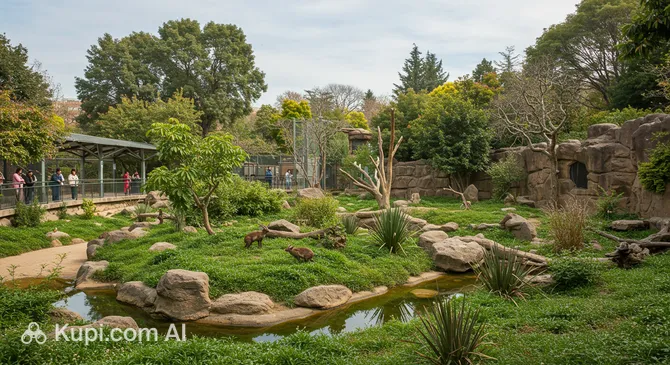
National Zoo of Chile. Illustration.
Source: Kupi.com AI

Traveler photos:

The zoo covers an area of 4.8 hectares and is harmoniously integrated into the hill's natural landscape, allowing visitors to both encounter fauna and enjoy magnificent panoramic views of the city. It is home to about a thousand animals representing more than 150 species, both local and exotic from other continents. Residents include pumas, Andean condors, Humboldt penguins, and many others.

Beyond displaying animals, the National Zoo actively participates in conservation and breeding programs for rare and endangered species. Its mission is not just to entertain, but to raise awareness about the importance of wildlife protection. Thanks to its convenient location, well-designed enclosures, and educational programs, a visit to the zoo becomes an engaging and informative adventure for visitors of all ages.

Contacts

The National Zoo of Chile is located within the Metropolitan Park (Parquemet) on San Cristóbal Hill, at Pío Nono 450. For the most accurate and up-to-date information regarding opening hours, ticket prices, and contact details, it is recommended to visit the official Parquemet website or the zoo's dedicated page. News about special events and programs is also typically posted there.

How to contactContact
AddressPío Nono 450, Recoleta, Providencia, Región Metropolitana, Chile
Phone number+56 2 2730 1368
Websitewww.parquemet.cl

What to Do

A visit to the National Zoo of Chile is an opportunity to discover the incredible diversity of the animal world. It is home to more than a thousand animals representing about 158 species from all corners of the planet. Guests can see rare representatives of local fauna, such as the Andean condor and the puma, as well as exotic animals including giraffes, elephants, and monkeys. Particularly popular are the enclosures with the black-and-white penguins, whose underwater life can be observed through the transparent walls of their pool, and the spacious aviary where birds are at eye level with visitors.

Walking through the zoo in Santiago is not just about animal watching, but also a pleasant way to spend time outdoors. The park's territory is situated on hill slopes, and paths are laid out in terraces, allowing you to enjoy both the enclosures and the surrounding nature. Visitors can watch feeding sessions for some residents and learn more about their habits. For the youngest guests, there are play areas and interactive exhibits that make the visit even more exciting.

The National Zoo also fulfills an important educational and conservation mission. It actively participates in conservation programs and the breeding of rare and endangered species, striving to increase public awareness of wildlife protection. Visitors can take part in various educational programs and tours that explain the zoo's work and the unique ecosystems of Chile. Thus, a visit here becomes more than just entertainment—it's an enlightening experience for the whole family.

Getting There

Getting to the National Zoo of Chile is quite simple, as it is conveniently located in the central part of Santiago, on the slopes of San Cristóbal Hill. One of the most convenient ways is by metro. You need to reach Baquedano station, which serves as an interchange for lines 1 and 5. From there, you can either walk or take the famous funicular, which will take you directly to the zoo entrance, offering picturesque views of the city along the way.

For those who prefer surface transport, the zoo can be reached by city buses. Numerous routes head towards the Metropolitan Park, where the zoo is located. This is a great option for combining your trip with a bit of sightseeing. The zoo entrance is near the park's main avenue, making it easily accessible for all visitors.

If you are traveling by car, there are dedicated parking areas at the foot of San Cristóbal Hill. You can also use taxis or ride-sharing apps—this is a fast and comfortable way to reach your destination directly from your hotel or any point in the city.

Nearest city: Santiago

History & Facts

The history of the National Zoo of Chile dates back to the early 20th century and is closely linked to several enthusiasts. The idea for its creation was actively promoted from 1921, and the official opening took place on December 12, 1925, with the participation of Vice President Luis Barros Borgoño. A key role in the zoo's establishment and development was played by its first director, scientist Charles Reed, who laid the foundation for scientific and educational activities and put significant effort into forming the initial animal collection.

The creation of the zoo was part of a large-scale urban initiative to develop public spaces and popularize science among the people of Santiago. From the beginning, it was intended not just as a place to exhibit animals, but as an important educational center designed to introduce Chileans to the diversity of wildlife. Its first residents were animals moved from a temporary menagerie in Quinta Normal Park, as well as 70 individuals brought from zoos in Argentina.

One of the zoo's most remarkable features is its unique architectural design. The project was developed to accommodate the challenging terrain of San Cristóbal Hill, resulting in an original terraced structure. Enclosures and paths are situated on different levels, blending harmoniously with the environment. This design not only created more natural conditions for the animals but also gave visitors the opportunity to enjoy magnificent panoramic views of the city during their walk.

Time Needed

To fully enjoy your visit to the National Zoo of Chile, you should plan for 2 to 4 hours. This is generally enough time to leisurely walk through the main exhibits, observe animal behavior, and meet the park's most interesting inhabitants. By planning for this timeframe, you can stroll through all the terraces of the zoo, located on the slopes of the hill in Santiago, without rushing.

If you are traveling with children or want to dive deeper into zoo life, it’s better to set aside half a day. This will give you the chance not only to see all the animals, from Andean condors to Humboldt penguins, but also to attend feeding demonstrations, listen to staff talks, and relax in designated areas. Since the zoo is located on a fairly steep hill, extra time will allow for breaks and let you enjoy the views without getting tired.

Working Hours

The National Zoo of Chile is open to visitors year-round. It typically operates daily, approximately from 10:00 AM to 6:00 PM. However, it is important to remember that opening hours may change depending on the season or due to holidays. Therefore, before planning your visit, it is highly recommended to check the current schedule on the official website of the Metropolitan Park (Parquemet), where the zoo is located.

To make your visit as comfortable as possible and avoid queues, especially on weekends, it is recommended to purchase tickets in advance online. This will not only save you time but also guarantee entry, as the number of visitors may be limited during certain periods. The best time to visit is in the morning when the animals are most active.

Nearby

Visiting the National Zoo of Chile is an exciting adventure in itself, but exploring its surroundings can make your day even more fulfilling and interesting. The zoo is located in the heart of Santiago, on San Cristóbal Hill, surrounded by numerous cultural and entertainment attractions. By dedicating some time to exploring nearby spots, you can better experience the city's atmosphere and discover something new.

Thanks to the zoo's convenient location, reaching other iconic landmarks of the capital is easy. Historical monuments, museums, and colorful neighborhoods are all within walking distance. This is an excellent opportunity to combine an encounter with nature and an introduction to the cultural life of the Chilean capital.

NameDistance
Club Ámbar0.4 km
Virgin Mary Immaculate Conception Statue0.5 km
National Museum of Fine Arts1 km
Gabriela Mistral Cultural Centre1.1 km
Amistar Apart Hotel1.3 km
Backroom Bar1.4 km
Neptune Fountain1.5 km

Have you reached the end of the page?

So the route has been studied inside and out