Support

Museum of Memory and Human Rights

About

The Museum of Memory and Human Rights (Spanish: Museo de la Memoria y los Derechos Humanos), located in Santiago, Chile, is a landmark historical institution. Its primary mission is to commemorate the victims of human rights violations that occurred in the country during the period of military dictatorship under Augusto Pinochet, from 1973 to 1990. This site serves as a vital reminder of the past and a call to protect human dignity.
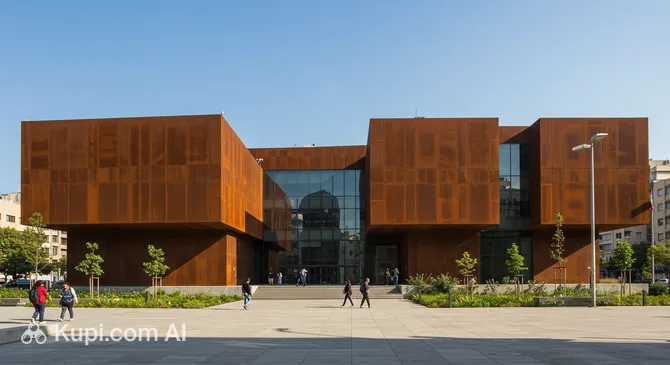
Museum of Memory and Human Rights. Illustration.
Source: Kupi.com AI

Traveler photos:

The museum is housed in an impressive modern building, with spaces designed for deep immersion into history. Inside, visitors will find an extensive collection of exhibits, including photographs, personal belongings, newspaper clippings, and documentary materials from that era. Every detail of the exhibition is carefully curated to tell the stories of people and events that should never be forgotten.

Beyond its memorial function, the Museum of Memory and Human Rights plays a key role in education and awareness. Its exhibitions and programs are aimed at preserving the historical memory of the Chilean people and fostering respect for human rights in new generations. A visit to the museum leaves a deep impression and encourages reflection on the importance of democracy, justice, and freedom.

Contacts

For the most up-to-date information on opening hours, temporary exhibitions, and potential schedule changes at the Museum of Memory and Human Rights, we recommend visiting its official website or contacting the administration directly. This will help you plan your visit as effectively as possible.

How to contactContact
AddressAv. Matucana 501, 8500000 Santiago, Región Metropolitana, Chile
Phone number+56 2 2597 9600
Websitemuseodelamemoria.cl

What to Do

At the Museum of Memory and Human Rights, visitors can immerse themselves deeply in a complex period of Chilean history through its extensive and carefully curated exhibition. You can examine numerous historical documents, authentic photographs, and video materials that tell the story of the military dictatorship in Chile. Special attention is given to personal stories: display cases feature period newspaper clippings and personal belongings of victims, making the experience particularly poignant.

Documentary films and other testimonies from the era take center stage, allowing visitors to gain a fuller understanding of the scale of the events and the struggle for human rights. These materials serve not only as a source of information but also as a powerful emotional component that encourages reflection on the value of human life and freedom.

For international visitors who do not speak Spanish (the language in which most information is presented), audio guides in English are available. These provide a deeper understanding of the context and details of the exhibition. Additionally, Portuguese-speaking visitors can access audio guides in Portuguese (with an accent) for an additional fee of 2,000 Chilean pesos. This makes the museum visit more accessible and informative for a broad international audience.

Getting There

The Museum of Memory and Human Rights is located at Matucana 501 in Santiago, Chile. Thanks to its central location, reaching it is quite simple using various modes of transport.

One of the most convenient ways is to use Santiago's public transport system. The city's metro system and bus routes are well-developed and pass near the museum. The closest metro station is Quinta Normal (Line 5, green line), which is just a few minutes' walk from the museum. You can also take buses that run along the neighboring streets.

For those who prefer more comfort or are traveling with luggage, taxis or ride-sharing services are an excellent option. A taxi ride from central Santiago to the museum doesn't take much time and is moderately priced. This is especially convenient if you are not very familiar with the city's public transport system or value your time.

Nearest city: Santiago

History & Facts

The Museum of Memory and Human Rights in Santiago was officially opened on January 11, 2010. The opening ceremony was led by the former President of Chile, Michelle Bachelet. This landmark event was not only the establishment of a new cultural institution but also an important part of the bicentennial celebrations of the Chilean state, highlighting the nation's commitment to reflecting on its past and building a future based on respect for human rights.

The initiative to create this significant memorial complex came from the government of Chile. The main goal was to preserve the historical memory of the tragic events during the period of human rights violations and to prevent their recurrence. Thus, the Museum of Memory and Human Rights became a powerful symbol of recognition for the victims' suffering and an embodiment of Chilean society's quest for justice, healing, and the affirmation of the unshakeable values of human dignity.

The museum's exhibition, dedicated to complex and painful chapters of Chilean history, leaves a deep and lasting impression on visitors. Some note that its approach to presenting tragic events and its emotional impact are reminiscent of museums dedicated to the memory of concentration camp victims in Europe, such as those in Germany or Poland. This comparison highlights the universality of the themes of memory and the global importance of preserving evidence of crimes against humanity as a warning to future generations.

Time Needed

To fully explore the exhibitions at the Museum of Memory and Human Rights in Santiago, it is recommended to set aside approximately 2–3 hours. This time is usually sufficient to carefully browse the main exhibition halls, study the documents and photographs, and watch the documentary materials that form an essential part of the narrative.

If you plan to use an audio guide for a deeper immersion into the context and to understand the details of the exhibition, you should aim for the upper end of this time range—about three hours. Of course, the duration of a visit is very individual: some may prefer a quicker look, while others might want to stay at every display and thoughtfully study all the materials, which may require more time.

In any case, even if you have limited time, a visit to the Museum of Memory and Human Rights will leave a strong impression and provide much food for thought. However, for a truly reflective experience at this important site, it is better not to rush and to schedule at least a couple of hours.

Working Hours

To get the most up-to-date information on the opening hours of the Museum of Memory and Human Rights in Santiago, we strongly recommend visiting the museum's official website (mmdh.cl) or checking the details by phone shortly before your planned visit. This is particularly important as the schedule may change due to holidays or special events in Chile.

Regarding the need for advance booking, it is usually not required for individual visitors, but this option may be available for group visits or special exhibitions. The Museum of Memory and Human Rights is generally open to visitors throughout the year. Nevertheless, checking the current schedule will help you plan your visit effectively and avoid any potential inconvenience.

DayOpening hours
MondayClosed
Tuesday10:00 – 18:00
Wednesday10:00 – 18:00
Thursday10:00 – 18:00
Friday10:00 – 18:00
Saturday10:00 – 18:00
Sunday10:00 – 18:00

Nearby

A visit to the Museum of Memory and Human Rights in Santiago undoubtedly leaves a profound impression. However, to make your experience even more rewarding and complete, it is worth spending some time exploring its surroundings. The district where the museum is located and the nearby neighborhoods of Santiago offer many interesting sites that can complement your cultural program for the day.

Discovering other attractions nearby will help you better feel the atmosphere of the city, see its different facets, and perhaps discover something unexpected. From historic buildings to vibrant cultural spaces, the museum's surroundings can be a pleasant addition to your visit, broadening your horizons and enriching your experience of traveling in Chile. Below is a list of some interesting places located nearby.

NameDistance
Fuente Mardoqueo0.5 km
Matucana 100 Cultural Center0.6 km
Cousiño Palace2.5 km
Santiago's Plaza de Armas2.7 km
Fantasilandia2.8 km
Amistar Apart Hotel3.2 km
Neptune Fountain3.3 km

Have you reached the end of the page?

So the route has been studied inside and out