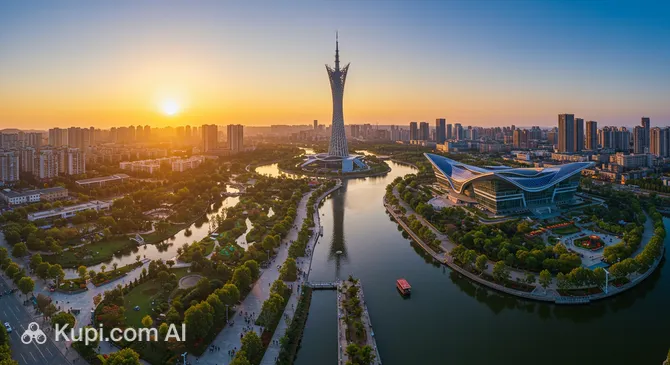
Dezhou is a fascinating prefecture-level city in the northwestern part of Shandong Province, which for centuries has served as an important bridge between the north and south of great China. The city possesses a unique atmosphere where the tranquility of provincial life harmoniously coexists with large-scale industrial achievements. With a population of over 5.6 million people, Dezhou remains a vital economic hub while preserving its rich cultural identity.
Dezhou. Illustration.
Source: Kupi.com AI
The city's geographical location defined its destiny: it is situated in a valley where the ancient bed of the Yellow River once flowed. The city's name translates as "Virtuous Prefecture" or "Bountiful River," emphasizing the deep connection of local residents with the region's water arteries. Anyone wishing to understand the origins of Chinese civilization should learn more about the city's centuries-old history, as settlements have existed here since the Han and Sui dynasties.
Dezhou's main pride is the Grand Canal—a legendary transport artery recognized as a UNESCO World Heritage site. Strolling along its banks allows you to touch the living heritage of the past. Furthermore, modern Dezhou is known as a global center for "green" energy, giving it a truly futuristic appearance. We invite you to discover this hidden gem of the Middle Kingdom, where authentic traditions meet the technologies of the future.
Weather Overview
The weather in Dezhou is distinctly continental, with a clear change of four seasons. Travelers should keep in mind that the region's climate largely depends on its proximity to the Yellow River and the influence of monsoons. You can study current conditions and the forecast for your trip in detail by visiting the page about Dezhou's climate.
Winters in the city are usually cold and dry, with temperatures dropping in January to -5°C and below. Summer, on the other hand, brings heat and high humidity: in July and August, the thermometer often stays at +30–33°C. The summer months account for the majority of precipitation—up to 150–260 mm per month—which should be considered when planning long walks.
The most favorable times to visit are considered spring and autumn. In April and May, comfortably warm weather sets in (averaging +16–22°C), and nature delights with fresh greenery. September and October also offer mild sun and moderate humidity, creating ideal conditions for sightseeing along the Grand Canal in the open air.
Average monthly temperature
Average monthly precipitation
Interesting Facts
The city was named after the ancient name of the Yellow River — Deshui, which translates as "Virtuous Water" or "Bountiful River."
Dezhou has been one of the key hubs of the Grand Canal of China since the 7th century, serving as a vital port for transporting grain to the imperial capital.
The city officially holds twin-city status with the Russian city of Pyatigorsk, promoting active cultural and educational exchange.
In the modern world, Dezhou is called the "Solar City" for its active implementation of solar energy: even street lighting and many buildings here run on solar power.
The city's historical roots go back centuries—it received official prefecture status during the Sui Dynasty more than 1,400 years ago.
How to Get There
Dezhou is an important transport hub in the east of the country, making it easily accessible for travelers. Thanks to the development of the high-speed rail network, the city is connected to major metropolises. If you are planning a trip, be sure to check the detailed information on how to get to the city using the optimal route.
The city does not have its own civil airport, but this is not an issue. Most tourists fly into the international airports of neighboring cities—Jinan or Qingdao. From there, you can comfortably reach Dezhou by high-speed train in just 1–2 hours. Another popular option is flying to Beijing, from where the train journey takes about two hours.
Railway transport is the most convenient way to travel. Dezhou Railway Station receives trains from all over Shandong Province and the capital. High-speed trains run regularly, providing a high level of comfort. For those who prefer road trips, major G2 and G3 expressways pass through the city.
The crown jewel of Dezhou is undoubtedly the Grand Canal. This grandiose engineering project of antiquity still impresses with its scale. Tourists are offered not only walks along well-maintained embankments but also the opportunity to see historical locks that for centuries ensured the uninterrupted movement of merchant ships. The atmosphere of this place literally transports you back to the era of the waterway's prosperity.
For those seeking historical authenticity, the Decheng district is a must-visit. This is the historical heart of the city, where architectural elements from different eras have been preserved. Walking through its streets, you can find traditional Chinese buildings and cozy courtyards that stand in sharp contrast to modern skyscrapers. Small museums and shops that preserve the spirit of old China are concentrated here.
Picturesque views of the Yellow River also attract many travelers. The great river in the Dezhou area is majestic and calm, offering excellent locations for panoramic photos and thoughtful contemplation. The combination of historical relics and modern park zones stretching along the waterfront makes the city an ideal place for leisurely cultural tourism.
Local Cuisine
Dezhou cuisine is a vibrant embodiment of the traditions of Shandong Province, one of the eight great culinary schools of China. The focus here is on the freshness of ingredients and simplicity of preparation. The main gastronomic symbol of the city is Dezhou tofu. This incredibly delicate product is served with various sauces and spices, and its taste is strikingly different from what you might try in other regions.
Pastry lovers must try luobowosikui—crispy fried pies filled with juicy radish. Also popular are jiezi mian noodles, which locals often eat for breakfast. Due to the proximity to the river, restaurant menus always feature freshwater fish and seafood dishes prepared with the famous Shandong vinegar and ginger.
The city's gastronomic life hums in the street markets and small restaurants along the Grand Canal. Here you can try baijin (spiced fried meat) and wash it down with local green tea or traditional rice wine. The food culture in Dezhou is very accessible: the best flavor discoveries are often made in modest-looking establishments where the city's residents themselves dine.
Travel Tips
Dezhou is a hospitable city; however, knowing some local specifics will make your trip much more pleasant and predictable.
Clothing and Essentials: The best time to visit is April-May or September-October. In summer, it can be very hot and humid, so bring light clothing and sunscreen. In winter, it is windy and cold, so you will need a warm jacket. Don't forget comfortable shoes for walks along the canal.
Transport: Actively use high-speed trains to move between cities. It is better to book tickets in advance through Trip.com, especially during holidays.
Finances: Cash and international Visa/Mastercard cards are rarely used in ordinary shops in China. Be sure to install Alipay or WeChat Pay and link your card—this is the primary method of payment.
Communication: English is not widely spoken in Dezhou. Download an offline translator and a city map (such as Baidu Maps or Amap) in advance, and save your hotel address in Chinese.
Connectivity: To access familiar services, you will need a VPN or an international eSIM. A local SIM card can be purchased at the airport or official mobile provider offices by presenting your passport.
Local Etiquette: Chinese people value politeness. Greet people with a slight nod, and give or receive money or business cards with both hands—this is a sign of special respect.
What to Avoid: Do not engage in political discussions and try not to photograph military sites or people in uniform without their permission.
Drinking Water: Never drink tap water. Hotels always provide bottled water or a kettle for boiling.
By following these simple rules, you will be able to fully immerse yourself in exploring Dezhou and have only the most positive impressions of visiting Shandong Province!
Entertainment & Nightlife
The entertainment program in Dezhou is geared toward those who appreciate a quiet getaway and cultural enrichment. The city's evening life is centered mainly along the Grand Canal and the embankments of the Yellow River. Here you can take a romantic boat ride under the city lights or visit one of the traditional tea houses, where live folk music often plays in the evenings.
For fans of active leisure, the city has modern cycling routes passing through park zones. On weekends, street performances and small local festivals reflecting the unique culture of Shandong Province are often held on the embankments. This is a great time to mingle with the locals and feel the rhythm of life in provincial China.
Nightlife in the traditional Western sense—with loud clubs and bars—is moderately developed in Dezhou. Most venues are concentrated in the central Decheng district, where you can find karaoke bars (KTV) and cozy restaurants open until late. The city is considered very safe for night walks, and calling a taxi through mobile apps is easy at any time of day.
Parks & Museums
The city's cultural heritage is carefully preserved in the Dezhou Museum. Its exhibitions cover a period of more than two thousand years, presenting unique artifacts from the Han and Sui dynasties. Special attention is paid to the history of the Grand Canal: here you can see detailed models of ancient ships and authentic everyday objects of sailors and merchants who once moored in the local port.
For those who prefer outdoor recreation, Decheng Park is a true oasis. It is a classical Chinese garden with picturesque pavilions, winding paths, and ponds where lotuses bloom. The park is especially beautiful at dawn, when locals gather here for Tai Chi exercises, creating a unique atmosphere of tranquility.
An unusual attraction is the Solar Park. It reflects Dezhou's status as a world leader in alternative energy. Here you will find futuristic installations, exhibition halls dedicated to eco-technologies, and green zones harmoniously integrated into the industrial landscape. This place is interesting for both adults and children, offering a glimpse into what the cities of the future might look like.
Getting Around
Dezhou's transport system is simple and efficient, allowing tourists to navigate the city with ease. The main form of public transport is the bus. The route network covers all key points, including the Decheng district and attractions along the canal. Buses run frequently, at intervals of about 10–15 minutes, and fares are extremely affordable.
There is currently no metro in Dezhou, so for quick trips, guests of the city most often choose taxis. It is most convenient to use the Didi app (similar to Uber), which allows you to book a car online and see the cost of the trip immediately. Taxi drivers are polite, and cars are kept in good condition, making this the most comfortable way to travel for foreign guests.
For short trips around the center and along the embankments, bicycles and electric scooters are ideal. Dezhou has a developed city rental system accessible through mobile apps. This is not only an eco-friendly but also a very pleasant way to see the city's landscapes at your own pace. Keep in mind that to pay for most types of transport in China, you will need a smartphone with a configured e-wallet.
Accommodation
For most tourists, the most convenient area to stay is Decheng. This is the historical and administrative center of Dezhou, where the main infrastructure, restaurants, and transport links are concentrated. Here you can find both modern hotel chains, such as Holiday Inn, and colorful Chinese hotels offering a decent level of service.
If your budget is limited, the city offers a wide choice of inexpensive guesthouses and hostels, especially in the Grand Canal embankment area. Prices for standard rooms in mid-range hotels usually range from 200 to 400 yuan per night. Recently, small boutique hotels decorated in traditional styles have been gaining popularity, allowing for a deeper immersion into the local atmosphere.
Travelers who prefer peace and proximity to nature should consider resort complexes on the outskirts of the city or near the Yellow River. When planning a trip, it is recommended to book accommodation in advance through international services like Trip.com, as demand for hotels increases significantly during Chinese national holidays. In large hotels, staff usually speak basic English.
Nearby Cities
Dezhou is an excellent starting point for exploring the surroundings of Shandong Province and neighboring Hebei Province. The region around the city is rich in small settlements, each preserving its own unique traditions and ancient monuments.
Just a few dozen kilometers away is the city of Lingcheng, which is easy to reach for a quick introductory trip. You should also pay attention to Encheng and Yucheng, which offer a peaceful getaway far from noisy metropolises. If you have a whole day at your disposal, a high-speed train will whisk you to majestic Jinan—the provincial capital famous for its springs and Daming Lake.
Exploring nearby towns will allow you to see the real, non-touristy China. Each such trip is a chance to get acquainted with local crafts, try local delicacies, and enjoy the rural landscapes that have inspired Chinese poets for many centuries.
Shopping & Souvenirs
Shopping in Dezhou is primarily an opportunity to purchase unique goods with local flavor. The main commercial activity is concentrated in the Decheng district, where modern shopping centers sit alongside colorful street stalls. There are no pretentious boutiques here, but there is an abundance of high-quality silk products and traditional Chinese tea grown in Shandong Province.
If you are looking for a unique gift, check out the souvenir markets near the Grand Canal. Here you can find skillfully made models of ancient ships and products by local craftsmen. Additionally, Dezhou is famous for its spices and traditional sauces, which make excellent gastronomic souvenirs for fans of Oriental cuisine.
Shops in the city usually operate from 09:00 to 21:00. Payment in most places is made through the mobile apps WeChat Pay or Alipay, which have become the standard in China. Large shopping complexes accept bank cards, but when visiting small markets, it's better to have some cash yuan for convenience when dealing with private sellers.