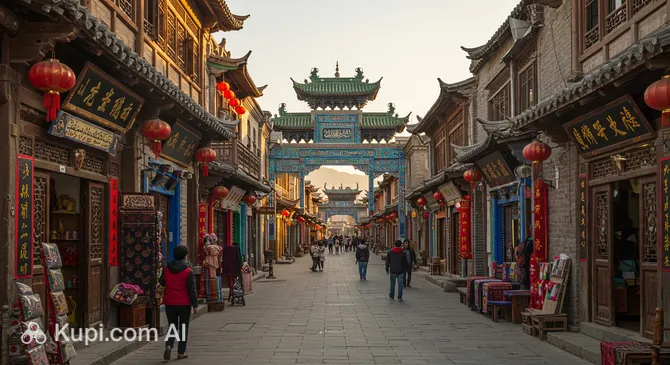
Sibeijie is a dynamically developing urban district located in Shandong Province, in the eastern part of China. The city's name literally translates from Chinese as "Northwest Street," highlighting its historical position as an important landmark in the region's toponymy. Today, it is a major settlement with a population of over 1 million people, harmoniously combining features of a modern metropolis with traditional Chinese character.
Xibeijie. Illustration.
Source: Kupi.com AI
Geographically, Sibeijie is located in a zone with a pronounced continental climate, making it interesting to visit at any time of year. The city is surrounded by the picturesque landscapes of Shandong Province, known for its sacred mountains and fertile plains. The rich historical heritage of this place can be traced in the architecture of the old quarters and local customs, which have been carefully preserved by residents for centuries.
For tourists, Sibeijie is attractive for its authentic atmosphere, bustling street markets, and proximity to the region's major cultural centers. Here, you can see how rapid technological progress exists alongside ancient traditions. We invite you to journey through this amazing corner of the Middle Kingdom to personally experience the rhythm of life in real China.
Weather Overview
The weather in Sibeijie is characterized by a humid continental climate with four distinct seasons. Winters here are cool and dry: in January, the average temperature is around -0.9°C, and at night, the thermometer can drop to -6°C. Precipitation in winter is minimal, creating excellent conditions for walks if you pack warm clothes.
Summer in the city is warm and humid, with peak rainfall occurring in July and August. In the hottest months, the average temperature reaches +27°C, and daytime highs often exceed +31°C. Spring and autumn are considered the most comfortable periods to visit — during this time, the weather is mild and sunny, ideal for outdoor sightseeing.
If you are planning a trip, we recommend checking the detailed city climate in advance to choose your wardrobe correctly. In the summer months, it is always a good idea to have an umbrella with you, as rainstorms can start suddenly, while in the spring, windbreakers will come in handy to protect against the cool winds typical of this region.
Average monthly temperature
Average monthly precipitation
Interesting Facts
A telling name: The name of the city Sibeijie consists of three characters that translate as "West" (西 - xī), "North" (北 - běi), and "Street" (街 - jiē), which literally means "Northwest Street."
Million-plus status: Although the city may not be widely known outside the country, its population is an impressive 1,095,947 people, making it a major economic center of the region.
Geographical crossroads: The city is located in Shandong Province, which has historically played a key role in cultural exchange and trade due to its access to the sea and proximity to the North China Plain.
A link between eras: In Sibeijie, you can see a unique combination of ultra-modern infrastructure and preserved elements of traditional Chinese buildings, reflecting the stages of China's rapid development in recent decades.
How to Get There
Sibeijie is an important transport hub in Shandong Province, ensuring excellent accessibility for domestic and foreign tourists. Thanks to a developed network of expressways and railways, getting here from China's major metropolises is easy. To plan the optimal route, we recommend reviewing detailed information on how to get to the city by various means of transport.
The nearest major air hub is Jinan Yaoqiang International Airport, from where Sibeijie can be reached by high-speed train, bus, or taxi. The airport handles flights from most major Chinese cities as well as international flights, making it the main gateway for travelers heading to this region.
Railway communication in this region of China is among the most efficient in the world. Modern stations receive high-speed trains connecting Sibeijie with Beijing, Shanghai, and other key centers. Traveling by train is not only fast but also a very comfortable way to get around, allowing you to see the picturesque landscapes of Shandong Province from the carriage window.
Station
Passenger traffic
Distance
Jinan railway station
8
18 km
Jining Railway Station
3
146 km
Dongying South Railway Station
3
173 km
Heze Railway Station
3
200 km
Weifang railway station
4
206 km
Main Attractions
Although Sibeijie is often perceived as a modern urbanized center, it hides many interesting spots for the discerning traveler. The primary interest lies in walking through the old districts, where the street layout has been preserved according to ancient canons. Here, you can find traditional Chinese buildings and small temples tucked away among modern high-rises.
The cultural heritage of the Shandong region is reflected in local art spaces and cultural centers, where exhibitions of calligraphy and traditional painting are regularly held. Tourists are encouraged to visit the local markets, which are attractions in their own right: they are the perfect place to observe the daily life of citizens and purchase unique handicrafts.
Due to its location, the city serves as an excellent base for exploring the more famous monuments of the province. Proximity to major transport arteries makes it easy to plan routes to the sacred sites and historical ruins for which this part of the country is so famous. Exploring Sibeijie is, above all, an introduction to the real, non-touristy China, its rhythm, and its hospitality.
Local Cuisine
The gastronomic scene of Sibeijie is a paradise for lovers of authentic Shandong cuisine (Lu), which is considered one of the four great culinary traditions of China. Local food is characterized by a richness of flavors, an emphasis on fresh seafood and vegetables, and the masterful use of grains. Be sure to try dishes cooked in a wok over high heat, which gives them a characteristic aroma and texture.
Among the signature delicacies, seafood dumplings and various fish dishes caught in the coastal areas of the province stand out. No less popular are wheat flour products: flatbreads, handmade noodles, and steamed mantou buns. Street food is also widely represented in the city — from fried chuanr skewers to aromatic tofu, prepared right before your eyes.
The food culture here is very well-developed: residents prefer to dine in large groups in bustling restaurants. For drinks, you should try the local green tea and the famous Chinese beer, which is produced in Shandong Province according to traditional recipes. Visiting local eateries is the best way to get to know the gastronomic soul of the city and the hospitality of its residents.
Travel Tips
A trip to Sibeijie promises to be an exciting experience, and to make your journey as comfortable as possible, we have prepared a list of practical tips.
Clothing for the season: The climate in Shandong has four distinct seasons. Bring light cotton clothing for the hot summer and a warm jacket for the windy winter. Don't forget comfortable shoes — you'll be doing a lot of walking.
Transport apps: Be sure to install the Didi app for hailing taxis. This will save time and help avoid difficulties translating addresses to the driver.
Finances and payment: Cashless payments via Alipay or WeChat Pay dominate in China. Link your card to these services in advance. Cash is accepted, but finding change can be difficult.
Connectivity: Buy a local SIM card at the airport or official mobile stores. To access your usual social networks and services, arrange for a reliable VPN client in advance.
Language barrier: English is not widely spoken. Download an offline translator and save your hotel address in Chinese (characters) on your phone or paper.
Etiquette and communication: Politeness is valued in China. Greet people with a slight nod. Remember the concept of "losing face" — avoid open conflicts and excessively loud arguments in public places.
What to avoid: Do not engage in political discussions and try not to photograph military or government facilities without permission.
Drinking water: Do not drink tap water. Buy bottled water; it is available everywhere in small shops and supermarkets.
By following these simple recommendations, you can focus entirely on exploring the culture and atmosphere of this amazing city. Enjoy your trip to Sibeijie!
Entertainment & Nightlife
Entertainment in Sibeijie is geared toward those who want to immerse themselves in the buzzing life of a modern Chinese city. At dusk, the streets are transformed by bright neon signs, and locals head to numerous establishments. Night markets are especially popular, where you can not only shop but also try various street food delicacies in a lively and friendly atmosphere.
For those who enjoy evening leisure, it's worth checking out local karaoke clubs (KTV) — one of the most popular forms of entertainment in China, where you can spend time in a private room with a large group. In the city center, you can also find modern bars and restaurants offering both local beer and international cocktails. For a quieter evening, modern cinemas and shopping and entertainment complexes are suitable.
During the day, the city offers walks along well-maintained embankments or visits to cultural centers. Safety in the city is high, allowing tourists to feel comfortable during night walks. For late-night travel, it is best to use official taxi apps, which operate 24/7 and provide quick vehicle dispatch to any point in the city.
Parks & Museums
For those seeking tranquility amidst the urban rhythm, Sibeijie offers visits to modern urban parks. These green zones are a favorite leisure spot for citizens: in the mornings, you can see people practicing tai chi, and in the evening, families strolling along well-kept alleys. Urban greening is actively developing, creating pleasant spaces for outdoor relaxation.
The cultural life of the city is reflected in local exhibition halls and museums. While there are no world-famous galleries here, local history exhibits allow for a deeper understanding of the development of Shandong Province and Sibeijie itself. Special attention is paid to industrial achievements and traditional crafts, which have played an important role in the region's life for centuries.
Travelers are recommended to check out contemporary art centers, often located in renovated industrial buildings. This is a great opportunity to see works by local artists and feel the creative energy of modern China. Visiting such places will help you discover Sibeijie from an unexpected side — as a city that values its history and is open to new cultural trends.
Getting Around
The public transport system in Sibeijie is oriented toward the rapidly growing needs of a city of over a million. The backbone of movement is the numerous bus routes covering all districts — from the center to the outskirts. Buses run regularly, and fares are paid either in cash (it's better to have small bills) or via universal transport cards and mobile apps.
Taxis in the city are an affordable and convenient way to get around. You can hail a car on the street or use popular smartphone hailing services (such as Didi). This is particularly convenient for tourists, as the app allows you to set the destination in advance, removing the language barrier. The cost of city trips remains low compared to European standards.
For those who prefer eco-friendly ways of getting around, bike rentals are actively developing in Sibeijie. Bike stations can be found at almost every intersection, and dedicated lanes make riding safe and pleasant. Pedestrian zones in the central quarters are also well-equipped, allowing you to comfortably explore the city at your own pace.
Accommodation
For travelers planning a visit to Sibeijie, the city offers a diverse range of accommodation options. Both modern business hotels from major Chinese and international chains and more budget-friendly guesthouses are available. Most high-end hotels are concentrated in the central districts, providing guests with easy access to transport hubs and shopping areas.
If you're looking for a more authentic experience, consider small private hotels decorated in a traditional style or modern apartments in new residential complexes. The choice of accommodation largely depends on the purpose of the trip: for business travelers, it's more convenient to stay near administrative quarters, while tourists are better off choosing areas with well-developed public transport infrastructure.
We recommend booking accommodation in advance, especially during China's national holidays (such as "Golden Week" in October or Chinese New Year), when demand for rooms increases significantly. For booking, it is best to use trusted international platforms where you can check guest reviews and current prices for your dates.
Nearby Cities
Thanks to its convenient location in Shandong Province, Sibeijie serves as an excellent starting point for exploring nearby attractions and major cities. Just thirty kilometers away is Jinan — the provincial capital, famous for its numerous springs and the picturesque Daming Lake. A trip there takes less than an hour and offers plenty of impressions from walking through the historical center.
Another interesting destination for a day trip is the city of Yucheng, located to the northwest. It attracts tourists with its calm pace of life and the chance to see real industrial and agricultural China. It's also worth considering a trip to Ihezhuang or Feicheng, each of which has its own unique charm and local character.
Exploring the surroundings of Sibeijie allows tourists to gain a more complete picture of life in Eastern China. A developed network of suburban buses and high-speed trains makes such trips easy and accessible, opening up endless opportunities for new discoveries in this historical region.
Shopping & Souvenirs
Shopping in Sibeijie is an exciting blend of modern shopping centers and traditional street bazaars. In the city center, there are large malls featuring both well-known international brands and popular Chinese electronics and clothing labels. You can find everything from the latest smartphones to stylish accessories at very reasonable prices.
To find authentic items, it's better to head to the local markets. Shandong is famous for its handicrafts, including ceramics and textiles. As a souvenir from Sibeijie, you should bring back famous Shandong tea, traditional Chinese fans, or calligraphy sets. Haggling is common in the markets — it's not just a way to save money but also an element of the local communication culture.
Shops usually operate from 10:00 to 21:00 or 22:00, including weekends. Payment in most places is made via mobile apps (Alipay, WeChat Pay), but large shopping centers also accept international bank cards. Don't forget to check out the food sections for local sweets and spices, which make excellent gifts for loved ones.