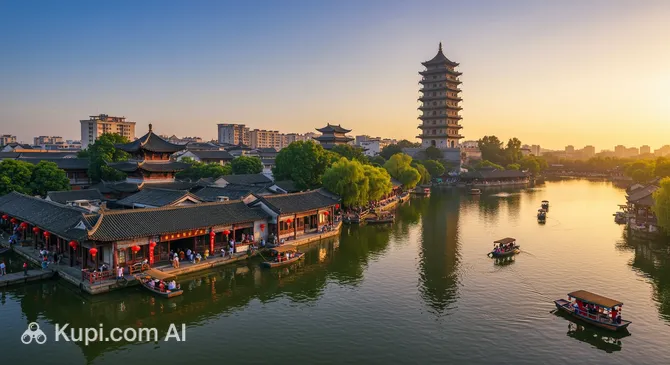
Liaocheng is a charming city in Shandong Province in northeastern China, which has rightfully earned the title of "City on the Water." Thanks to its unique network of canals and picturesque lakes, it possesses an atmosphere of tranquility rarely found in major industrial centers. With a population of approximately 5.95 million people, Liaocheng harmoniously combines a rich cultural heritage with a modern rhythm of life, while remaining a cozy place for leisurely strolls.
Liaocheng. Illustration.
Source: Kupi.com AI
The city is proud of its rich history, dating back more than 2,700 years. Here, the ancient traditions of Confucius intertwine with watery landscapes, creating a unique character for the region. Liaocheng is considered an important transport hub and agricultural center, but for travelers, it primarily reveals itself as a city of bridges, parks, and traditional architecture.
The atmosphere of Liaocheng is ideal for those who want to escape the hustle and bustle of megacities and immerse themselves in authentic Chinese life. We invite you to discover this "Venice of China," where every turn of a canal reveals a new view of ancient gates or blooming lotus gardens. This is a place where time slows down, allowing you to fully enjoy the cultural wealth of Shandong Province.
Weather Overview
Liaocheng is characterized by a typical moderate continental climate with clearly defined seasons. Summer here is long, quite hot, and humid; in July and August, the average temperature reaches +28...+32°C, and this period also accounts for the main volume of precipitation. Winters, on the other hand, are short but frosty and dry, with the thermometer often dropping to -5°C in January.
The transitional seasons are considered the most favorable times to visit. In spring, especially in April and May, comfortable weather sets in with temperatures around +16...+22°C, when nature comes alive and Lake Baiyang is covered with its first greenery. In autumn, in September and October, a pleasant coolness reigns (+15...+23°C) with clear skies, which is ideal for long excursions.
When planning a trip, it is worth considering that the city's climate can present surprises in the form of sudden rains in summer or strong winds in spring. Overall, we recommend choosing May or September to catch Liaocheng in its most blooming and hospitable state, avoiding extreme heat or winter cold.
Average monthly temperature
Average monthly precipitation
Interesting Facts
Liaocheng is often called the "City of 9 Lakes and 3 Gardens" due to its unique hydrographic system and magnificent classical gardens.
The city is the birthplace of Sima Qian — an outstanding philosopher and historian who created the "Shiji" (Records of the Grand Historian), the first general history of China.
It is home to the Zhaoyan Bridge, built in 1289, which is considered one of the longest ancient stone bridges in the country.
Liaocheng has an impressive history spanning over 2,700 years and preserves traces of fortifications from the Spring and Autumn period.
The city is recognized as an important center for the production of high-quality silk and traditional embroidery in Shandong Province.
How to Get There
Liaocheng is conveniently located within the transport network of Shandong Province, making it accessible for travelers. The main and most comfortable way to get here is by rail. The city's railway station receives trains from many key points in the country, making it easy to plan how to get to the city.
High-speed trains connect Liaocheng with Beijing (travel time about 3 hours), Shanghai (5–6 hours), and the provincial capital, Jinan (only 1 hour). The daily schedule allows you to choose a convenient time for your trip, and modern trains provide a high level of comfort.
Station
Passenger traffic
Distance
Jinan railway station
8
93 km
Jining Railway Station
3
130 km
Handan railway station
5
137 km
Heze Railway Station
3
143 km
Anyang East railway station
4
144 km
For those who prefer air travel, Liaocheng Airport (LCX) operates domestic flights from megacities such as Beijing, Shanghai, and Guangzhou. However, it is often more convenient for international tourists to fly into the major airports of Beijing or Qingdao and then transfer to a high-speed train. The city is also easy to reach by car via the modern G2 and G35 expressways.
The main attractions of Liaocheng are inextricably linked with the element of water. The true pearl of the city is Lake Baiyang — an ideal place for boat trips and relaxing in the shade of riverside gardens. The lake is especially beautiful in summer when thousands of lotuses bloom, becoming the center of vibrant festivals.
Among the architectural monuments, the Bright Tower (Mingzhuta) stands out. This ancient 12th-century pagoda rises 46 meters high and serves as a symbol of the region's resilience and history. Equally interesting is the Confucius Palace and its adjacent temple, which house unique relics from the Han Dynasty and stone steles with ancient texts, immersing visitors in the foundations of Chinese philosophy.
For those who appreciate a historical atmosphere, the Ancient City of Liaocheng is a must-visit. Restored fortress walls and massive gates allow you to imagine what this important hub of the Grand Canal looked like centuries ago. You can complete your introduction to the city with a cruise along the canals, passing under numerous bridges, including the famous stone Zhaoyan Bridge, and admiring the facades of traditional houses.
Local Cuisine
Liaocheng's cuisine is a prominent representative of the Shandong culinary school, one of the four great gastronomic traditions of China. The gifts of Lake Baiyang hold a special place on the menu: be sure to try the tender fried fish in a thick sauce and aromatic soups with the addition of lotus root. A local specialty is huimian — hearty dumplings filled with juicy beef and green onions.
For a quick street snack, jiaoqingbing are perfect — crispy fried flatbreads generously sprinkled with sesame seeds, with a meat filling hidden inside. It is also worth paying attention to poultry dishes in the region's classic sweet and sour sauce. It is customary to accompany the meal with local green tea or traditional rice wine, which is valued here for its mild taste.
The city's gastronomic scene is diverse: from authentic lakeside restaurants like "Baiyang Lotus" to bustling night markets where food is prepared right in front of you. Street markets are the best place to try a variety of skewers and traditional soups, immersing yourself in the true atmosphere of Chinese hospitality.
Travel Tips
Preparing for a trip to Liaocheng will help you fully enjoy the beauty of this "water city" and avoid minor inconveniences. We have gathered several practical recommendations to make your journey comfortable and fulfilling.
Clothing and Seasonality: The best time to visit is spring and autumn. In summer, bring light cotton clothing and an umbrella, and in winter, a warm jacket, as frosts are possible. Be sure to wear comfortable shoes for walking along the embankments.
Getting Around Town: It is most convenient to travel by bus or taxi using the Didi app. For romantic rides along the canals, rent a bicycle.
Finances: The main currency is the yuan. International cards are only accepted in major hotels, so be sure to set up WeChat Pay or Alipay and carry some cash.
Health: Drink only bottled water. Pharmacies are frequent, but medicine names are in Chinese, so carry a basic first-aid kit.
Communication: English is not widely spoken. We recommend downloading an offline translator and saving your hotel address and attractions in Chinese (characters) beforehand.
Etiquette: In temples and at Confucius monuments, observe silence and behave modestly. Greet locals with a slight bow or a nod of the head.
What to Avoid: Do not engage in political discussions and try not to show excessive emotionality in public places — this can be perceived as disrespectful.
Train Tickets: If you plan trips to neighboring cities, book high-speed train tickets in advance (1-2 weeks ahead) through services like Trip.com.
By following these simple tips, you can focus on the main thing — the amazing atmosphere and hospitality of this ancient city on the water.
Entertainment & Nightlife
Entertainment in Liaocheng is predominantly calm and contemplative, focused on natural beauty. Daytime is best spent on boat trips across Lake Baiyang or participating in quests through the ancient city territory, which are very popular among young people. In summer, cultural life comes alive thanks to lotus festivals, where you can see performances by folk groups and listen to traditional music.
The city's nightlife is concentrated in small bars by the water's edge, where live music is often played, and in numerous karaoke clubs (KTV), which are a favorite leisure spot for locals. The atmosphere here is friendly and relaxed, without a strict dress code, and prices in these establishments remain quite affordable for tourists.
For lovers of classical art, the doors of theaters are open, performing traditional Shandong operas. If you prefer active outdoor recreation, it is worth checking out the parks with amusement rides and catamaran rental points. Overall, Liaocheng is a city for relaxation and cultural enrichment, rather than for loud parties until dawn.
Parks & Museums
The main place for outdoor recreation is the park by Lake Baiyang. It is a vast green area with elegant pavilions, classical Chinese gazebos, and well-maintained trails that meander along the water. Another outstanding example of landscape art is the Shanshan Garden — a cozy historical corner from the 18th century that has preserved the spirit of antiquity and a silence ideal for contemplation.
For those who want to study the region's heritage more deeply, the doors of the Liaocheng Museum are open. Its exposition covers a vast period — from Bronze Age artifacts to documentation of the development of the Grand Canal. Art lovers will be interested in the local Art Museum, where the focus is on unique Shandong painting and fine embroidery.
Of particular significance is the Confucius Museum, which houses ancient scrolls and steles. A visit to this place allows you to touch the origins of philosophical thought that shaped the culture of the East. Families with children will enjoy Dongchang Park, where areas for quiet walks coexist with modern amusement rides.
Getting Around
Liaocheng's public transport system is oriented toward accessibility and convenience of movement between key points of the city. The fleet consists of modern buses and trolleybuses, whose routes cover both the center and the suburbs. Fares are extremely affordable, usually costing 1–2 yuan, and can be paid in cash or via mobile apps.
Although the metro in the city is currently in the design stage, the bus network handles the load well, providing regular connections between Lake Baiyang, the ancient city, and the railway station. A convenient hub has been formed at the station square, where almost all types of urban transport intersect.
As a convenient alternative, tourists often choose taxis or call a car through the Didi service. A short ride around the center will cost 10–20 yuan. For those who prefer active sightseeing along the canals, bicycle rentals (e.g., Mobike) or electric scooter rentals are perfect. Also, special trams run along tourist routes near the embankments, offering picturesque views of the city.
Accommodation
Accommodation options in Liaocheng can satisfy the needs of both budget travelers and comfort seekers. The most popular area to find housing is the shores of Lake Baiyang, where hotels with picturesque water views are concentrated. It is also convenient to stay in the immediate vicinity of the railway station, which facilitates travel between cities.
The city features international chains, such as Holiday Inn, as well as high-quality local four-star hotels. The price range for a standard room in such hotels usually varies from 300 to 600 yuan per night. For those looking for more economical options, hostels and guesthouses are available, with prices starting from 100 yuan.
During peak tourist seasons, especially during the summer lotus festivals, it is recommended to book accommodation in advance. Most hotels can be booked through international systems or popular Chinese services. Staying in the city center will place you within walking distance of the main historical monuments and shopping areas.
Nearby Cities
Liaocheng serves as an excellent starting point for exploring the cultural and natural riches of Shandong Province. Just an hour's train ride away is the provincial capital — Jinan, famous for its numerous springs and the majestic Mount Taishan, which is of great importance to Chinese culture.
For a short day trip, the town of Douzhuang, located just 30 kilometers away, is perfect. Also noteworthy are Yihezhuang and the larger settlement of Songandiancun, each offering its own glimpse into the region's provincial life.
Flower enthusiasts should plan a visit to Heze (about 1.5–2 hours away), which is famous for its large-scale peony festivals. The region around Liaocheng is rich in small historical settlements and natural parks, making exploration of the surroundings an exciting addition to the main travel itinerary.
Shopping & Souvenirs
Shopping in Liaocheng is a blend of modern retail spaces and colorful markets. For branded clothing and familiar comfort, head to the large Wanda Plaza shopping center, which offers a wide selection of international and local brands. You can also find food courts and entertainment zones here.
If you are looking for something unique, head to the shopping streets in the ancient city district and the markets near Lake Baiyang. Liaocheng is famous for its handicrafts: the finest silk, traditional embroidery, and exquisite porcelain. Specialized shops often sell local delicacies such as dried lotus seeds and rare spices, which make excellent gifts.
The market in the railway station area attracts lovers of street hustle and small souvenirs. Most shops are open from 9:00 to 21:00. Large centers accept international cards, but in markets and small shops, it is preferable to use WeChat Pay or cash yuan. The Tax Free system in the city is not well-developed, so it is better to clarify the possibility of a tax refund directly when purchasing expensive goods.