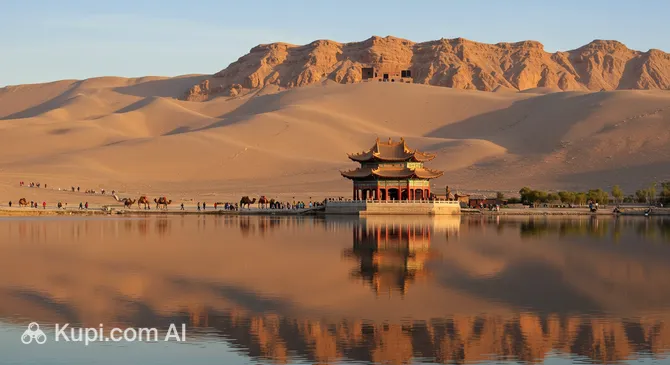
While the ancient caves are the crown jewels of the region, Dunhuang offers a surprising variety of green spaces and cultural institutions that provide deeper insight into its heritage. The city seamlessly blends its arid desert surroundings with lush, man-made oases and well-curated museums that narrate the story of the Silk Road.
For nature lovers, the most iconic outdoor destination is undoubtedly Mingsha Mountain and Crescent Moon Spring. This natural park is a stunning geomorphological wonder where vast, rolling sand dunes encircle a crystal-clear, crescent-shaped spring. Visitors can hike up the ridges for panoramic views of the golden sands or relax by the water's edge in the pavilion, enjoying the miraculous coexistence of desert and water. It serves not just as a scenic spot but as a playground for sand sledding and camel riding.
Another spectacular natural area is the Dunhuang Yardang National Geopark, located about 180 kilometers northwest of the city. Known locally as "Devil City," this park features a unique landscape formed by wind erosion over thousands of years. The geological formations rise from the flat desert floor in bizarre shapes resembling castles, animals, and fleets of ships. It is a photographer's paradise, especially at sunset when the shadows lengthen and the rocks glow with a reddish hue.
Closer to the city center, the Dang River Scenic Belt offers a refreshing contrast to the surrounding desert. This linear park runs along the banks of the Dang River and acts as the green lung of Dunhuang. It is a popular spot for locals to take evening strolls, featuring landscaped gardens, water features, and illuminated bridges that create a relaxing atmosphere after a day of sightseeing.
To truly understand the historical magnitude of the region, a visit to the Dunhuang Museum is essential. Located downtown, this facility houses over 13,000 cultural relics, including Han Dynasty bamboo slips, silk brocades, and pottery found along the Silk Road. The museum’s architecture itself is designed to resemble a Great Wall beacon tower, and its exhibits provide excellent context for the art seen in the Mogao Caves, offering a comprehensive timeline of the city's development.
Another significant cultural venue is the Yangguan Museum, situated near the ancient Yangguan Pass. This museum focuses on the military and defensive history of the frontier. It displays ancient weaponry, tools, and historical documents that illustrate the life of soldiers stationed at this remote outpost. Walking through the exhibits gives visitors a tangible sense of the isolation and strategic importance of this gateway to the West.
Among the city's architectural landmarks, the White Horse Pagoda (Baima Pagoda) stands out for its historical resonance. Built to honor the faithful white horse of the famous Buddhist translator Kumarajiva, this nine-story pagoda dates back to the 4th century. Its unique architecture, influenced by Lamaist styles, and its touching backstory make it a serene and poignant site for those interested in Buddhist history.
For an authentic and less crowded experience, consider visiting the West Thousand Buddha Caves. Located along the Dang River, these grottoes are older than many of the Mogao Caves and offer a more intimate look at Buddhist art without the heavy tourist traffic. The setting is dramatic, carved into a steep cliff overlooking the riverbed, providing a quiet space to contemplate the artistic devotion of the ancients.