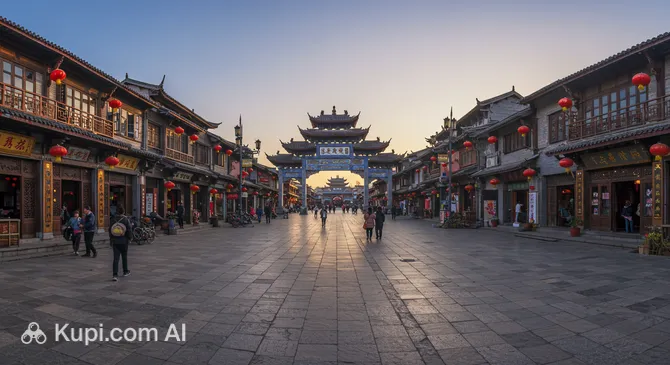
Nestled in the heart of picturesque Fujian Province, the city of Nanping (also known as Zhufeng) is a stunning blend of natural harmony and dynamic development. Located in China, this city serves as an important "gateway" to the famous Wuyishan Mountains. Nanping enchants travelers with its misty mountain peaks, deep rivers, and profound cultural traditions carefully preserved by the local people.
Geographically, the city occupies a strategic position at the confluence of several major rivers, which historically made it a significant trade and transport hub. With a population of over 1 million people, Nanping maintains the atmosphere of a cozy regional center where the rhythm of life is inextricably linked to nature. The climate here is subtropical, which promotes the lush growth of forests and the famous tea plantations spread across the surrounding hills.
Nanping. Illustration.
Source: Kupi.com AI
The city's rich history is reflected in the architecture of its old quarters and traditional crafts, such as bamboo product manufacturing and the cultivation of elite tea varieties. Tourists are drawn here not only by opportunities for ecotourism and trekking but also by the authentic atmosphere of a Chinese province not yet overwhelmed by mass tourism. A visit to Nanping is an invitation to a world of tranquility, where you can enjoy the finest examples of tea art and breathtaking river landscapes.
Weather Overview
The city of Nanping is located in a humid subtropical climate zone, which results in a clear change of seasons and an abundance of greenery all year round. If you are planning a trip, it is worth considering that the city's climate is characterized by hot, humid summers and fairly mild but cool winters.
Expect a warm summer with periodic heavy rain showers, especially in June, which is considered the wettest month (averaging about 275 mm of rainfall). Winters here are dry and moderately cold: in January, the average temperature is about 8-9°C, although at night it can drop to 4-5°C. The best times to visit are considered spring (March-May) and autumn (October-November), when the most comfortable temperatures for mountain walks and sightseeing are established.
Average monthly temperature
Average monthly precipitation
Interesting Facts
Tea Capital: Nanping and its surroundings are the birthplace of the famous "Da Hong Pao" (Big Red Robe) tea, which is considered one of the most expensive and prestigious varieties in the world.
Bamboo Kingdom: The prefecture-level city leads China in the reserves and production of bamboo products—from construction materials to elegant interior items and paper.
River Hub: Nanping is located in a unique spot where three large rivers—the Xixi, Jianxi, and Futunxi—converge to form the beginning of the province's main waterway, the Minjiang River.
Ecological Oasis: The region is considered one of the "greenest" in China thanks to the vast area of forests, which cover more than 70% of the prefecture's territory.
How to Get There
The city of Nanping is an important transport hub in northern Fujian Province, making it easily accessible for travelers. Thanks to a well-developed network of transport links, it is convenient to get here from both coastal metropolises and the interior of the country.
Although the city itself does not have a major international airport, most tourists use the air harbors of neighboring cities. The nearest major airport is in the Wuyishan area, which receives regular flights from Beijing, Shanghai, Guangzhou, and other key Chinese cities. From the airport, you can reach the city center by intercity buses or taxis.
Rail travel is the most convenient way to reach Nanping. Modern high-speed railway lines pass through the city, connecting it with Fuzhou, Xiamen, and more distant regions. Modern stations provide a high level of comfort, and high-speed trains allow you to cover significant distances in just a few hours.
Station
Passenger traffic
Distance
Sanyuanqu Railway Station
3
25 km
Longyan Railway Station
3
117 km
Quanzhou railway station
5
153 km
Fuzhou railway station
8
175 km
Xiamen railway station
7
180 km
Main Attractions
The main gem of the region, for which many travelers come to Nanping, is the Wuyishan National Park. This UNESCO World Heritage site is famous for its sheer cliffs, misty forests, and the winding Nine-Bend River. Here, you can take a trip on traditional bamboo rafts, admiring ancient rock inscriptions and unique "hanging coffins" on the cliffs.
For those interested in culture and history, a visit to the ancient village of Xiamei is a must. This place has preserved its appearance from the Ming and Qing dynasties: here you can see old residential houses with exquisite wood and brick carvings, and learn about the history of the Great Tea Road, which once began right here.
In the city itself, it is worth taking a walk along the embankment of the Minjiang River. This is a favorite vacation spot for locals, especially beautiful in the evening when the city lights reflect in the water. Local temple complexes also deserve attention; despite the modern buildings around them, they remain islands of silence and traditional Chinese architecture.
Local Cuisine
The cuisine of Nanping is a prominent representative of the Fujian culinary tradition (Min cuisine), which is famous for its delicate flavors, masterful ingredient slicing, and an abundance of soups. As the city is surrounded by mountains and rivers, the local menu is dominated by dishes made from freshwater fish, seafood, and forest delicacies such as fresh bamboo shoots and mushrooms.
One of the signature dishes worth trying is the various variations of noodle soup, which is prepared here with great care. Steamed dishes are also popular, as they preserve the natural taste and nutritional properties of the products. Local restaurants often serve braised pork with bamboo—a fragrant and hearty dish that has become a hallmark of the region.
It is impossible to imagine a gastronomic experience in Nanping without tea. Tea here is not just a drink but also an ingredient for cooking—for example, the famous tea eggs or shrimp stir-fried with tea leaves. To get to know the real local food, we recommend looking into small family establishments where recipes are passed down from generation to generation and the atmosphere is as authentic as possible.
Travel Tips
Preparing for a trip to Nanping requires attention to detail to ensure your journey goes as smoothly as possible and leaves only pleasant impressions. Here are some practical recommendations from experienced travelers:
Clothing and Gear: Since you will likely head into the mountains, bring layered clothing and comfortable shoes with good grip. In summer, sunscreen will come in handy, and in spring and autumn—a light windbreaker and an umbrella.
Transport: Install the Didi app for calling taxis. This will save you from translation difficulties and the need to explain the route to the driver in Chinese.
Finances: Mobile payments (Alipay, WeChat Pay) dominate in China. Link your card to Alipay in advance. It is worth having cash Yuan (CNY) with you for small purchases in remote villages.
Health and Safety: Drink only bottled water. Nanping is a safe city, but it is always useful to have a hotel business card with the address in Chinese.
Communication: English is not widely spoken here. Download an offline translator and a map that works without the internet or via VPN.
Local Etiquette: Greet people with a slight nod. In tea houses, do not rush—the tea ceremony requires calmness and respect for the process.
What to Avoid: Do not try to photograph people without their consent, especially in temples or private courtyards of old villages. Avoid discussing political topics.
Connectivity: Buy a local SIM card at the airport upon arrival or set up an eSIM. Keep in mind that many familiar Western services are only accessible via VPN.
May your acquaintance with this amazing land be filled with harmony and discovery. Nanping knows how to surprise those who are ready to step off the beaten path.
Entertainment & Nightlife
Entertainment in Nanping is geared towards lovers of relaxing holidays and immersion in local culture. The city's nightlife is concentrated mainly along the embankment and in the central squares, where numerous tea houses open at dusk. You can spend several hours here tasting famous oolongs and watching traditional ceremonies, which is the main form of leisure for the city's residents.
For those seeking more active pastimes, there are modern cinemas and numerous karaoke bars (KTV) in the city center—one of the most popular forms of entertainment in modern China. Here you can rent a private room for a group and enjoy singing and snacks. There are also several nightclubs and bars with live music in the city where local youth gather, though the atmosphere is usually calmer than in megacities like Shanghai.
Don't forget to visit the night food markets, which become a center of attraction after sunset. This is not just a place for dinner but also a kind of social hub where you can feel the true rhythm of the city. Safety in Nanping is at a high level, so evening walks along the central illuminated streets are perfectly comfortable. For getting around at night, it's best to use official taxis or popular mobile ride-hailing apps.
Parks & Museums
Despite its status as a modern industrial center, Nanping offers many places for outdoor recreation. City parks laid out along the rivers serve as true oases of silence. One such park often becomes a center for morning Tai Chi classes for local residents, and in the evening, traditional dances can be seen here. Walking areas overlooking the confluence of the rivers allow you to fully enjoy the city's landscape.
For a deeper immersion into the culture of the region, it is worth visiting local museums. Although they may not be as large-scale as those in the capital, their exhibits give an excellent idea of the unique history of northern Fujian. Special attention in the collections is paid to the history of Jianzhan porcelain production (the famous black tea bowls) and the development of the tea trade, which for centuries was the basis of the city's economy.
If you are interested in art and traditional crafts, look for small private galleries specializing in bamboo carving and root art. These unique types of creativity flourish in Nanping thanks to the abundance of natural material and centuries-old traditions of craftsmanship passed down in local art collectives.
Getting Around
Public transport in Nanping is represented by an extensive network of bus routes covering all major districts of the city and its suburbs. Buses are the most budget-friendly way to get around; tickets are very inexpensive, and payment is usually made in cash to the driver or via mobile apps. Routes at stops are often listed only in Chinese, so it is helpful for tourists to have a map with place names in characters.
Taxis in the city are available and relatively cheap compared to major metropolises. You can hail a car on the street or use the Didi Chuxing app (the Chinese equivalent of Uber), which has an English version and allows you to link an international card. This is the most comfortable option for trips to railway stations or remote attractions.
For short trips around the city center, many locals and tourists use bicycle and e-scooter rental services. The city is also actively developing modern transport solutions, including new bridges and overpasses that help avoid traffic jams during rush hours. Remember that city traffic can be heavy, so plan your trips to the station with extra time.
Accommodation
The choice of accommodation in Nanping is quite wide and can satisfy the needs of both budget travelers and those who prefer comfort. In the central part of the city, middle and high-class business hotels predominate, offering modern service and convenient access to administrative facilities and shopping areas.
A particularly popular accommodation option is hotels located along the banks of the Minjiang River, which offer picturesque views of the water and city bridges. For those who plan to spend most of their time traveling to natural attractions, it is worth considering options near railway stations, which will significantly simplify logistics.
Prices for accommodation in Nanping are usually significantly lower than in coastal tourist centers like Xiamen. It is recommended to book hotels in advance, especially during Chinese national holidays (early May and the first week of October), when the demand for housing increases manifold. For booking, it is best to use trusted international or large Chinese platforms.
Nearby Cities
Thanks to its location, Nanping serves as an excellent starting point for exploring the central part of Fujian Province. The region is rich in small but colorful cities, each with its own unique character and history.
Just a few dozen kilometers away is the city of Yong'an, famous for its karst landscape and the renowned "Scaly Cave." A trip there would be an excellent addition to a nature route. It is also worth paying attention to Sanming—a large center offering interesting opportunities for walking in parks and learning about the industrial history of the region. If you have time, visit Nanping (a neighboring district with the same name), where even more cultural monuments can be found.
Travel to neighboring cities is most convenient by high-speed trains or intercity buses that run regularly. Exploring the surroundings will allow you to see the real, non-tourist China with its quiet temples, endless tea plantations, and the warm hospitality of the locals.
Shopping & Souvenirs
Shopping in Nanping is primarily a hunt for unique local goods that are difficult to find in other parts of China in the same quality. The main object of interest for tourists is, undoubtedly, tea. In specialized shops and city markets, you can find elite varieties of oolongs straight "from the garden," as well as professional utensils for tea ceremonies.
Another symbol of the city is bamboo products. Local markets and souvenir shops feature both practical items (mats, tableware, furniture) and true works of art—the finest carvings on bamboo stems. It is also worth paying attention to Jianzhan ceramics—traditional bowls with a "hare's fur" glaze effect, which were highly valued as far back as the Song Dynasty.
The main shopping centers and chain stores are located in the central district, along the main streets. Here you can buy modern clothing, electronics, and daily necessities. Shop opening hours are usually standard: from 9:00 or 10:00 AM to 9:00–10:00 PM. For payment, it is most convenient to use mobile systems like Alipay or WeChat Pay, although cash (Yuan) is still accepted everywhere.