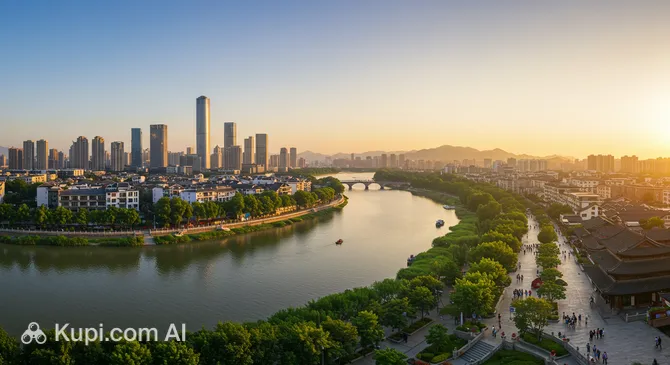
Zhangzhou is a picturesque city with centuries of history, located in the southern part of Fujian Province in southeast China. Founded in the 7th century during the Tang Dynasty, it retains an atmosphere of authenticity where ancient Minnan traditions harmoniously blend with the modern rhythm of life. The city is nestled on the coast of the Taiwan Strait, serving as an important cultural and economic center for the region.
With a population of over 5 million, Zhangzhou surprises tourists with its tranquility and abundance of greenery. It is often called the "floral capital" of the country, as thousands of plant species are grown here, filling the air with sweet scents. Its subtropical geographical location provides the city with a mild climate, favoring the flourishing gardens and plantations that have become the hallmark of this area.
Zhangzhou. Illustration.
Source: Kupi.com AI
Travelers are drawn here by the chance to touch the rich historical heritage embodied in ancient temples, carved gates, and the traditional architecture of the "old town." Among the main treasures are the Nanshan Temple and unique bridges preserved from medieval times. A visit to Zhangzhou is an invitation to a world where time slows down, allowing one to enjoy the beauty of nature and the elegance of ancient Confucian art.
Weather Overview
Zhangzhou is located in a subtropical climate zone, which defines its mild winters and hot, humid summers. If you are planning a trip, it is worth noting that the most pleasant weather in the city is usually during spring (March–May) and autumn (October–November), when temperatures stay at comfortable levels of +18°C to +25°C, and nature delights with lush blooms.
Summers here are long and sweltering: from June to August, the thermometer often rises above +30°C, while high humidity and frequent monsoon rains create a greenhouse effect. Winters, by contrast, are dry and cool. In January and February, the average temperature is around +14°C, with daytime highs reaching +19°C and nighttime lows dropping to +10°C. Precipitation in the winter months is minimal, making this a suitable time for leisurely walks through historical sites without the tourist crowds.
Average monthly temperature
Average monthly precipitation
Interesting Facts
Floral Paradise: Zhangzhou is officially recognized as one of China's largest floriculture centers; more than 20,000 species of flowers are grown here and exported worldwide.
Home of the Philosopher: In the 12th century, the famous Neo-Confucian thinker Zhu Xi lived and worked in the city, and his ideas defined the region's cultural code for centuries.
Puppetry Traditions: The local glove puppet theater is one of the oldest in the world, preserving unique puppet-handling techniques that originated as far back as the 3rd century.
Sporting Pride: The city features a monument dedicated to the Chinese women's national volleyball team, honoring their legendary streak of three consecutive victories in the early 1980s.
Centuries-Old Bridge: The Jiangdong Stone Bridge, spanning 240 meters, has stood for over 800 years as a living monument to Song Dynasty engineering.
How to Get There
Zhangzhou's accessibility makes it a convenient stop on a route through southeastern China. The city is connected to neighboring metropolises by a modern network of roads and railways. Detailed information on routes and tickets can be found on the page dedicated to how to get to the city.
Although the city has its own Zhangzhou Longhai Airport, it mainly caters to domestic flights from centers like Beijing, Shanghai, and Guangzhou. Most international tourists prefer arriving at Xiamen Gaoqi International Airport, located just 50 kilometers away. The trip from there to central Zhangzhou by taxi or bus takes about an hour.
Rail travel is perhaps the most efficient way to get around. The Fuzhou–Xiamen–Zhangzhou high-speed line passes through Zhangzhou. High-speed trains allow you to reach the city from Xiamen in just 30–40 minutes, and from the provincial capital, Fuzhou, in about an hour and a half. The city's main station accepts trains from almost all key provinces in the country.
Zhangzhou offers travelers a unique blend of ancient architecture and natural beauty. One of the most significant sights is the Buddhist Nanshan Temple, considered the spiritual heart of the city, which impresses with its tranquility. In the historical center, look out for the ancient city gates and the Zhangzhou Confucian Temple, where every element of stone and wood carving tells the story of the region's centuries-old traditions.
For those who appreciate the engineering of the past, the Jiangdong Stone Bridge (also known as Qiangtong Bridge), built in the 12th century, is a must-visit. Its massive slabs and elegant forms have survived to this day, making it one of the oldest bridges in Fujian Province. Equally interesting is a walk through the "old town," whose narrow streets resemble a living historical scroll adorned with colorful details and traditional window lattices.
If you're willing to venture outside the center, be sure to visit the suburban Daimei Village, which has a history spanning over 500 years. This place is famous for its authentic layout and architectural unity. Among natural sites, Yundong Cave stands out, offering magnificent views, along with the picturesque mountains topped with pagodas on the outskirts, perfect for leisurely contemplation of the Zhangzhou landscape.
Local Cuisine
Zhangzhou gastronomy is based on the rich traditions of Minnan cuisine, typical of Fujian Province. The main emphasis here is on the freshness of ingredients, moderate use of spices, and an abundance of seafood. Be sure to try Zhangzhou-style fried noodles, as well as various rice flour and seafood soups prepared in small family-run shops.
The city's street food culture thrives: for the tastiest dishes, head to the gastronomic complexes of TianXia MeiShiJie or XinRong MeiShiJie. Here you can find everything from exotic seafood snacks to traditional glutinous rice desserts. Locals often spend their evenings here, enjoying meals in the open air.
As for drinks, Zhangzhou is famous for its tea traditions. Floral infusions and local varieties of oolong, grown on plantations around the city, hold a special place. A tea ceremony here is not just about drinking; it's a way of communicating and demonstrating hospitality. For a taste of modern cuisine and a more formal dinner, restaurants in the MinNan ShangYeCheng area are excellent choices.
Travel Tips
Preparing for your trip to Zhangzhou will be easier with these practical tips to help you settle into this colorful corner of China more quickly.
Clothing and Season: The best time to visit is spring or autumn when the weather is comfortable. In summer, don't forget light, breathable clothing and an umbrella for sun or rain, while a light jacket is needed for winter evenings. Comfortable shoes are a must for walking the cobbled streets of the old town.
Transport: The Didi app is the most convenient way to move around the city. If you plan to use buses, carry small bills or set up payment via Alipay.
Finances: The currency is the Chinese Yuan. International payment cards are rarely accepted, so be sure to install Alipay or WeChat Pay and link your card—this is the primary payment method everywhere.
Connectivity: Buy a local SIM card at the airport or official mobile provider offices. To access your usual services, take care of a VPN in advance, as many Western resources are blocked in China.
Language: English is not widely spoken in Zhangzhou. Download an offline translator and save the names of your hotel and attractions in Chinese (characters).
Etiquette: Be quiet in temples and dress modestly. When entering private homes or some small shops, it is customary to remove your shoes if the hosts do.
What to Avoid: Do not engage in political discussions and respect local customs. Avoid drinking tap water—always buy bottled water.
Extra Tip: Visit the flower farms on the outskirts of the city, but it's best to organize such an excursion through a hotel or guide to gain access to the most interesting private gardens.
May your introduction to this "city of flowers" be filled with only pleasant discoveries and vivid impressions!
Entertainment & Nightlife
Entertainment in Zhangzhou is geared toward those who enjoy cultural enrichment and quiet evening relaxation. The city is famous for its unique Glove Puppet Theater, whose traditions date back to the Jin Dynasty. These performances are not just a spectacle but a deep dive into folklore and ancient craftsmanship that will interest both children and adults.
The city's evening life is concentrated on bustling food streets and markets. A popular place for a stroll is NvRen Jie (Women's Street), where you can combine some light shopping with tasting local snacks. The atmosphere here is friendly and relaxed, and the lack of noisy nightclubs is compensated for by cozy cafes and the evening lights of the old town.
For those seeking relaxation, a visit to the Longjia Ecological Hot Spring Villa complex is an excellent choice. This is an ideal place for spa treatments and soaking in hot springs after a long day of sightseeing. Walks in Jiulong Park are also popular, where locals gather in the evenings, creating a warm and authentic atmosphere in welcoming Zhangzhou.
Parks & Museums
Zhangzhou's natural wealth is best revealed in its well-maintained park areas. Zhangzhou Jiulong Park is a favorite spot for residents, where one can escape the summer heat amidst lush greenery and canals. For lovers of wilder nature and picturesque landscapes, the Yundong Cave area is ideal, where rocky outcrops are paired with ancient inscriptions and panoramic views of the city.
The city's cultural program is incomplete without a visit to the Lin Yutang Memorial Hall, dedicated to the famous writer and philosopher who was born in these parts. Equally significant is the Zhangzhou Confucian Temple, which is not only an architectural monument but also an important educational center preserving the spirit of ancient teachings. These places allow for a deeper understanding of the region's intellectual heritage.
Another interesting location is the monument to the volleyball team, symbolizing the city's sporting spirit and achievements. If you're looking for a combination of relaxation and culture, it's worth checking out the Longjia ecological villa, where natural landscapes are complemented by comfortable leisure facilities. Each of these places reflects a different facet of Zhangzhou's character—from philosophical silence to sporting passion.
Getting Around
The Zhangzhou transport system is well-organized, allowing tourists to move easily between key districts such as Xiangcheng and Longwen. Public transport is primarily based on buses, with routes covering both central streets and outlying attractions. Bus fares are fixed and very affordable, with payment usually made via QR codes or cash upon entry.
Taxis are the most comfortable way to get around, especially for long distances or trips to natural sites. The Didi app (the Chinese equivalent of Uber) is popular in the city, allowing you to call a car and pay for the trip with a linked card or electronic wallet. Taxi drivers in Zhangzhou are polite, and fares remain quite budget-friendly compared to major metropolises.
For short trips around the center, many prefer using bike-sharing services. Bicycles can be found at special parking spots throughout the city, which is convenient for exploring parks and the "old town." Intercity connections are provided by high-speed trains and buses linking the port and railway stations with the airport and neighboring provinces.
Accommodation
Zhangzhou offers a wide choice of accommodation to suit the needs of any traveler. Most hotels are concentrated in the Xiangcheng and Longwen districts, which is convenient for those who want to be within walking distance of historical sites and central parks. Here you can find both modern hotel complexes from international chains and cozy guest houses in a traditional style.
For those who enjoy luxury and wellness, specialized spa resorts are located in the suburbs. One of the most famous is Longjia Villa, offering guests thermal springs and a peaceful atmosphere surrounded by nature. Budget travelers can count on a large selection of hostels and inexpensive business hotels, which are known for their cleanliness and hospitality.
Planning a trip, especially during traditional Chinese holidays or flower festivals, it is recommended to book accommodation in advance. The price range in the city is very democratic: standard rooms in high-quality mid-range hotels cost significantly less than in neighboring Xiamen, while the level of service remains high.
Nearby Cities
Zhangzhou serves as an excellent starting point for exploring the southeastern coast of Fujian due to its proximity to other interesting cities. Just 45 kilometers away is the famous Xiamen—a modern metropolis with beautiful beaches, the colonial architecture of Gulangyu Island, and a lively waterfront. You can get there by high-speed train in less than half an hour.
For those interested in the culture and history of the region, a trip to Longyan is a great option. This city is the gateway to the famous tulou—unique circular fortress-houses of the Hakka people, which are UNESCO World Heritage sites. Also, you can visit Xindian or head to Fuzhou, the provincial capital, to see ancient quarters and try the local cuisine.
Exploring the surroundings of Zhangzhou will allow you to see the contrast between quiet flower plantations and dynamic coastal centers. The developed railway network makes day trips extremely comfortable, opening up the full diversity of Southern China to travelers.
Shopping & Souvenirs
Shopping in Zhangzhou offers a pleasant mix of traditional markets and modern shopping centers. As the city is a recognized horticultural center, the main souvenirs here are decorative plants, seeds, and the famous daffodils, which are prized throughout China. It is also worth looking for items made by local artisans, including traditional puppets and delicate wood carvings.
The main places for buying clothes and everyday goods are the MinNan ShangYeCheng districts and the specialized LiDu FuZhuang ShiChang market. Here you can find both high-quality locally produced goods and popular Chinese brands. For more colorful strolls, NvRen Jie (RuiJing Lu) is ideal, where small shops sell jewelry, accessories, and souvenirs.
Shops are generally open from morning until late evening (around 9:00 PM – 10:00 PM). For payment, it is most convenient to use the apps popular in China (Alipay, WeChat Pay), though large shopping centers also accept bank cards. Don't forget to visit the food markets for fresh tea and local sweets—it's the best way to take a piece of the Zhangzhou atmosphere home with you.