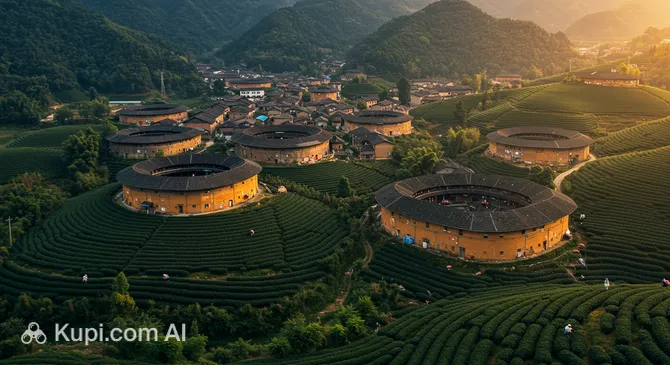
Zhangping is a charming county-level city located in Fujian Province, China. It is imbued with an atmosphere of peace and natural harmony rarely found in major metropolises. The city is nestled among picturesque mountain landscapes, and its character is inextricably linked to endless tea plantations and gardens, creating a unique rural charm.
The city's geographical location in a mountainous area defines its climate and ecological purity. With a population of about 242,000 people, Zhangping maintains its status as a cozy provincial center. The city's historical heritage adds a special charm, being closely interwoven with tea-growing traditions passed down through generations.
Zhangping. Illustration.
Source: Kupi.com AI
The main pride and magnet for travelers are the high-altitude tea gardens in the Yongfu township area, where thousands of cherry blossom trees bloom in the spring. This unique combination of emerald tea terraces and soft pink clouds of flowers makes the city one of the most photogenic locations in the region. Additionally, Zhangping is famous for its tranquil atmosphere, perfect for those seeking a break from the urban bustle.
A visit to Zhangping will be a true discovery for fans of ecotourism and tea culture. We invite you to embark on this journey to see the "Mainland Alishan" with your own eyes and enjoy the hospitality of this green corner of Fujian.
Weather Overview
The climate of Zhangping belongs to the subtropical monsoon type, making it favorable for year-round cultivation of tea and ornamental plants. The weather here depends heavily on the season: summers are usually hot and humid, while winters are mild, though it can be quite cool in the mountains. The hottest month is considered to be August, when daytime temperatures often reach +33°C, and the coldest is January, with average daytime figures around +17°C and nighttime drops to +4°C.
Precipitation in the region is unevenly distributed. June is considered the wettest month: rains are frequent at this time, and air humidity creates a muggy effect. Conversely, December is the driest month, when rain is rare and the sky more often remains clear. When planning a trip, it is worth noting that the city's climate contributes to frequent morning fogs, which give the tea plantations a special mystery.
For tourists, the most comfortable time for a visit is spring (February-March), when pleasant warmth sets in and the mass flowering of cherry blossoms begins, as well as autumn (October-November). During these periods, you will find moderate temperatures and minimal precipitation, which is ideal for long walks along mountain trails.
Average monthly temperature
Average monthly precipitation
Interesting Facts
Zhangping is officially recognized as the "Sacred Place of Cherry Blossoms in China" due to its unique ecosystem, where tens of thousands of blooming cherry trees harmoniously coexist with 55,000 mu of tea plantations.
Due to the striking similarity of its landscapes to the famous mountain resorts of Taiwan, the city is often called "Mainland Alishan."
The picturesque Jiupengxi area was visited twice by the great Ming Dynasty traveler Xu Xiake, who left enthusiastic descriptions of the local tea aromas and water landscapes.
The famous Shili Flower Street is located in the Yongfu township area; it is a practically endless flower market that creates the effect of a true sea of flowers.
Despite the county's industrial status, Zhangping is considered a model for niche ecotourism thanks to its signature combination of "green tea and red cherry blossoms."
How to Get There
The transport accessibility of Zhangping largely depends on the major hubs of Fujian Province. The city is an important transit point, and it is easiest to reach from metropolises like Longyan or Xiamen. A bus journey from Longyan takes about an hour, while the road from Xiamen can take 3–4 hours due to the mountainous terrain and potential traffic on the expressways. Detailed route information can be found in the section on how to get to the city.
The nearest major air hub is Xiamen Gaoqi International Airport (XMN). From there, Zhangping can be reached by taxi or intercity bus. While there are no direct flights to Zhangping itself, the developed ground transport network makes the transfer quite comfortable. Please note that mountain roads require caution, especially in rainy weather.
Rail travel is one of the most convenient ways to visit. Zhangping railway station is part of the high-speed rail network, allowing for a quick trip to Fuzhou (the provincial capital) in just 2–3 hours. Trains run regularly, connecting the city with key points on the East Coast.
Station
Passenger traffic
Distance
Longyan Railway Station
3
47 km
Sanyuanqu Railway Station
3
107 km
Xiamen railway station
7
115 km
Quanzhou railway station
5
120 km
Meizhou West Railway Station
3
180 km
To move around within the county, especially to the popular tea gardens in Yongfu, tourists most often use local buses or taxis. In Yongfu village itself, many attractions are within walking distance, allowing you to enjoy the mountain air without being tied to transport.
Main Attractions
Although Zhangping is not a typical tourist hub with bustling avenues, it hides true natural treasures. The primary pilgrimage site for travelers is the Yongfu Cherry Blossom Tea Garden. This unique space features over 100,000 cherry trees planted against a backdrop of emerald tea plantations. During the peak bloom, which usually occurs in February and March, the gardens transform into a fairytale landscape attracting photographers from all over the world.
For those who appreciate history and traditional architecture, the villages of Longche and Lizhuan in Yongfu Township are of great interest. These places are known not only for their revolutionary past but also for their preserved ancient buildings, which offer a glimpse into the past and the authentic lifestyle of Fujian Province.
Another gem of the region is the picturesque Jiupengxi area, often called the "tea village on the water." This place so impressed the famous ancient traveler and poet Xu Xiake that he returned here twice. A boat trip along the river, whose banks are enveloped in the aroma of fresh tea and lush greenery, gives a sense of absolute harmony with nature.
In the city itself and its surroundings, it is worth visiting Shili Flower Street and Aotou Ancient Street. These locations are ideal for leisurely strolls where you can observe the daily lives of local residents and purchase seedlings or flowers for which this region is so famous. For family vacations, Chuanye Park is an excellent choice, offering well-maintained walking areas among blooming plants.
Local Cuisine
The gastronomic culture of Zhangping is inextricably linked to its greatest treasure—tea. Local high-altitude tea from the Yongfu plantations is not just a beverage, but the foundation of many local traditions. The tea here possesses a unique mountain freshness aroma that is especially valued by connoisseurs. Be sure to attend a tea ceremony in the Jiupengxi area to experience the authentic taste of the region.
The city's cuisine is typical of Fujian Province, which is famous for the lightness of its dishes and the use of fresh seasonal ingredients. In local restaurants, it is worth trying dishes made from river fish, seafood, and vegetables grown on the mountain slopes. Tea leaves are often used in cooking, giving the food a subtle, barely perceptible aroma.
Farmers' markets and small village cafes in the settlements of Longche and Yongfu deserve special attention. Here you can taste simple but hearty homemade dishes: rice noodles, steamed dumplings, and various tofu snacks. Street food is represented by seasonal fruits and sweets, often sold right at the park entrances. The food culture here is simple and unpretentious—locals value the freshness of ingredients over restaurant flair.
Travel Tips
Preparing for your trip to Zhangping will help you fully enjoy the beauty of this tea-growing region. We have gathered several practical recommendations to ensure your journey is comfortable and leaves only pleasant impressions.
Clothing and Footwear: Since the city is located in a mountainous area, the weather can be changeable. Even in spring, bring a light jacket and definitely comfortable shoes with good grip for walking on tea terraces and through parks.
Transport: Within the county, it is most convenient to move around by taxi via the DiDi app. For trips to remote tea plantations, it is better to agree on a return time with the driver, as catching a car on the spot can be difficult.
Finances: Contactless payments via Alipay or WeChat Pay dominate in China. International Visa and Mastercard cards are rarely accepted, so link your card to Chinese wallets in advance or carry a supply of cash in yuan for small expenses.
Health: The mountain air is very clean, but due to the abundance of blooming plants, allergy sufferers should take care of antihistamines in advance. Pharmacies are easy to find in the city center, but medicine names will be in Chinese.
Connectivity: To use the internet and maps, it is better to buy a local SIM card. Remember that many familiar Western services and messengers may be blocked without the use of special bypass tools.
Etiquette: Residents of Zhangping are friendly but rarely speak English. Download an offline translator. When entering private homes or small family tea houses, it is customary to greet politely with a nod of the head to express respect.
What to Avoid: You should not plan a trip in June if you do not tolerate humidity and frequent rains well. Also, avoid late walks in very remote villages—there may be insufficient lighting and a lack of infrastructure.
Seasonal Tip: The main reason to visit is the cherry blossoms. Visit Yongfu parks on weekdays early in the morning to avoid the huge crowds of tourists who flock here from all over the country on weekends.
Following these simple rules will make your holiday in Zhangping peaceful and fulfilling. Enjoy your journey to the heart of the tea province!
Entertainment & Nightlife
Zhangping is a city that lives to the rhythm of nature, so do not expect a wild nightlife with neon club signs or noisy bars. The main entertainment is daytime-oriented and contemplative. Life quiets down after sunset, giving way to the tranquility of the countryside. Locals and the occasional tourist prefer to spend their evenings enjoying traditional tea ceremonies or taking leisurely walks through the central squares of Yongfu village.
For those seeking classic urban entertainment, such as cinemas, large shopping malls, or concert venues, the best solution is a trip to nearby Longyan or the further city of Xiamen. These are the centers of major cultural and nightlife activity in the region. In Zhangping itself, the entertainment program revolves around seasonal events, the highlight of which is the cherry blossom festival in Yongfu parks.
Daytime leisure in the city is perfect for families and photography enthusiasts. Picnics by the tea plantations, photoshoots in blooming gardens, and visiting local markets are the main activities the city offers. Safety for walking is very high, and the absence of noisy establishments guarantees a sound sleep in the quiet mountain air.
Parks & Museums
The main natural pride and the actual open-air "park" in Zhangping is the Yongfu Cherry Blossom Tea Garden. This is a space covering thousands of mu, where green waves of tea bushes are intersected by rows of bright pink trees. This place is ideal for long walks and meditative relaxation in the heart of nature. The ecology here is considered one of the best in the province due to the abundance of greenery and mountain air.
For family vacations within the city limits, Chuanye Park, located in the Huangpu district, is popular. This is a well-maintained recreation area with convenient paths along which red varieties of Chinese cherry blossom in the spring. The park is very popular with locals for morning exercises and evening walks, offering a peaceful atmosphere away from industrial zones.
Although there are practically no classic historical or art museums in Zhangping, traditional villages such as Longche and Lizhuan fulfill this role. They serve as a kind of open-air museum where the architecture and the lifestyle of the residents tell the history of the region better than any exhibits. The focus of the city's cultural life is shifted toward natural sites and ecological education through the demonstration of tea-growing traditions.
Getting Around
The public transport system in Zhangping is mainly represented by bus routes and taxi services. Within the city and Yongfu Township, buses run connecting residential areas with major attractions and markets. However, keep in mind that during the peak cherry blossom season, buses on popular routes can be overcrowded, and traffic on mountain roads slows down due to the influx of tourists.
Taxis are the most convenient and relatively inexpensive way to travel short distances. To call a car, it is best to use popular mobile apps in China, such as DiDi. This eliminates the need to explain the route to the driver, which is especially helpful given the language barrier. In central areas of the city, taxis can be hailed directly on the street.
For long-distance trips, for example, to neighboring Longyan or Xiamen, residents and visitors actively use the railway station. High-speed trains provide a reliable connection to key cities in the province. Fares for urban transport are most often paid via mobile wallets, and train tickets are recommended to be purchased in advance through official online platforms, especially during holidays.
Accommodation
Accommodation options in Zhangping are primarily oriented toward local travelers, tea tour participants, and business visitors. Most hotels belong to the budget and mid-range price segments. It is difficult to find luxury five-star resorts from international chains here, but it is easy to find a cozy guesthouse or a standard city hotel with basic services.
The most convenient area for tourists to stay is Yongfu village and the territories directly adjacent to the tea gardens. Staying here puts you right in the center of the action during the cherry blossom season. There are also several hotels in the center of Zhangping itself, which are convenient due to their proximity to transport hubs and local markets.
When planning a trip for February or March—the peak of the cherry blossom season—it is crucial to book accommodation in advance. During this short period, demand increases many times over, and vacancies in high-quality guesthouses fill up very quickly. For searching and booking, it is best to use popular Chinese services or international aggregators focused on the Asian market.
Nearby Cities
Zhangping serves as an excellent starting point for exploring the picturesque surroundings of Fujian Province. Thanks to the developed transport connections, you can easily take several fascinating day trips from the city to see the contrasts between quiet rural life and dynamic urban centers.
The most popular destination is the city of Longyan, located just an hour's drive away. It is a large administrative center where you can find modern shopping complexes, a variety of restaurants, and cultural sites. Longyan is also famous for its unique Tulou earthen fortresses, which are UNESCO World Heritage sites and within reach for a day trip.
Another interesting option is a trip to Zhangzhou, a city with a rich history and beautiful parks. The distance to it is about 89 kilometers, allowing you to comfortably return to Zhangping by evening. For those who prefer natural attractions, nearby Yong'an is suitable, famous for its karst caves and scenic parks.
Exploring nearby cities will allow you to get a more complete picture of the diversity of southern China. Whether it's historical monuments or modern waterfronts, the surroundings of Zhangping offer routes for every taste.
Shopping & Souvenirs
Shopping in Zhangping has a pronounced local character. You won't find huge shopping malls with global brands here, but you can purchase unique goods for which this region is famous. The main shopping magnet is Shili Flower Street in Yongfu Township. This is a place where you can find not only seedlings and rare flowers but also a variety of gardening supplies.
The main souvenir to bring back from Zhangping is, undoubtedly, high-altitude tea. It is best to purchase it directly from tea farms or in specialized shops at the Yongfu plantations. Here you will be offered a tasting and help in choosing a variety that best reveals the taste of the Fujian mountain air. Seeds and cherry blossom-related souvenirs, sold during the spring festival, are also popular.
For daily needs, local markets and small supermarkets operate in the city center. At the markets, you can find the freshest fruits and local food products at very affordable prices. Shops usually open from early morning until late evening. For payments, it is recommended to use the Alipay or WeChat Pay apps, as they are accepted everywhere, including the smallest stalls, while international bank cards may not work.