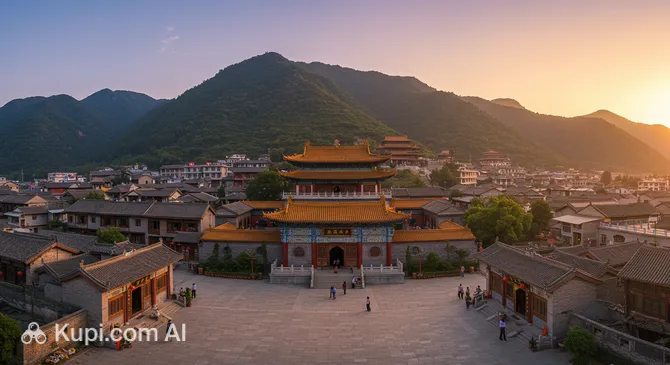
Rucheng County, located in Hunan Province, is an amazing corner of China, often called the "kingdom of hot springs." The town and its surroundings are steeped in an atmosphere of tranquility, where ancient traditions harmoniously coexist with the majestic nature of the southern mountains. This place is ideal for those seeking a break from the city bustle and wanting to touch the authentic cultural heritage of the Celestial Empire.
Rucheng. Illustration.
Source: Kupi.com AI
Geographically, Rucheng is located in a mountainous area, which defines its picturesque landscapes with rivers and dense forests. With a population of over 1.2 million people, the county maintains a cozy, almost rural atmosphere in its historical districts. The history of this region dates back centuries, which is reflected in the unique architecture of ancestral halls and the ancient pavements of Reshui town.
The main magnets for travelers here are the thermal springs, where the water reaches record temperatures, and the magnificent complexes of ancient buildings from the Ming and Qing dynasties. We invite you to visit Rucheng to plunge into the healing waters, stroll through the "jade talisman" of Hunan Province, and experience the true hospitality of the Hakka people.
Weather Overview
Rucheng is located in a humid subtropical climate zone, characterized by distinct seasons. Summers in the region are hot and quite humid, creating excellent conditions for water activities and rafting. Winters, on the other hand, are surprisingly mild, making a visit to thermal resorts especially pleasant: bathing in hot springs surrounded by light winter mist gives an unforgettable experience.
Analyzing the city's climate, one can highlight the most contrasting periods. In January, the average temperature is about 7.4°C, and in the hottest month, July, the air warms up to an average of 27°C, often reaching the 30°C mark. Spring (April-May) and early summer bring heavy rainfall, which makes the local vegetation emerald green but requires an umbrella or raincoat.
The most comfortable time for walking through ancient villages and mountain trails is considered to be spring and autumn. During these periods, pleasant moderate temperatures are established, and humidity decreases. If your main goal is health improvement in the thermal baths, Rucheng is beautiful all year round; however, it is in the cool months (from November to March) that the contrast between air temperature and the hot spring water is felt most vividly.
Average monthly temperature
Average monthly precipitation
Interesting Facts
Boiling Nature: Rucheng possesses the largest natural hot spring in Hunan Province — Fuquan Tanggu, where the water temperature reaches an incredible 98°C.
Hakka Architectural Heritage: It is home to one of the largest complexes of ancestral halls in South China, known as the "nine halls and eighteen courtyards," built of traditional blue brick.
Triple Border: The famous Feishuizhai Waterfall is unique because it is located exactly at the point where the borders of three Chinese provinces meet.
Philosophical Center: The Lianxi Academy is located in the town, where Zhou Dunyi — one of the founders of Neo-Confucianism — once taught.
Living History: Banliang Village is officially recognized as the oldest surviving settlement in the southern part of the province, with hundreds of houses dating back to Imperial China.
How to Get There
Rucheng's transport accessibility is largely tied to the neighboring large city of Chenzhou, which serves as the main gateway to this region. The county is connected to major centers by a network of high-quality roads, making travel by bus or car quite comfortable. If you are planning a trip, be sure to study the detailed information on how to get to the city.
Although Rucheng itself does not have its own airport, the nearest air hub is Chenzhou Beihu Airport. From there, the county can be reached by taxi or intercity bus in about 1.5–2 hours. Most tourists fly into larger airports in the province (such as Changsha) and continue their journey by land transport.
Railway communication is the most popular way to get around this part of China. The nearest high-speed train station is also located in Chenzhou. From here, buses regularly depart for the Reshui hot springs and Banliang village. A train trip from Guangzhou or Changsha takes only a few hours, making Rucheng a great option for a weekend getaway.
For greater flexibility in moving between remote waterfalls and mountain meadows, experienced travelers recommend renting a car or using the services of private drivers directly in Chenzhou or in the center of Rucheng.
Main Attractions
The main treasures of Rucheng are its unique natural and historical sites. First and foremost, it is worth visiting the Fuquan Tanggu and Guanxi hot springs. These are real open-air natural health centers surrounded by mountain slopes. The water here is not only healing but also incredibly hot, allowing for the creation of unique thermal complexes for relaxation.
History buffs should definitely head to the ancient village of Banliang. It is called the "number one oldest village in Southern Hunan." More than 600 houses built during the Ming and Qing dynasties have been preserved here. A walk through its narrow cobblestone streets among ancient ancestral halls, such as "Dezhengfang," allows you to literally travel back several centuries.
The region's natural diversity is complemented by the majestic Feishuizhai Waterfall, located at the junction of three provinces. Its powerful streams of water cascading from the cliffs are a breathtaking sight. For those who prefer active recreation, rafting on the Rushuihe River is an excellent option, where you can combine sightseeing of coastal landscapes with a dose of adrenaline.
An equally significant site is the Lianxi Academy. This place is inextricably linked with the name of the great philosopher Zhou Dunyi and is considered the cradle of Neo-Confucianism in this region. The academy's architecture and its calm atmosphere encourage reflection and study of China's rich intellectual heritage.
Local Cuisine
Rucheng's cuisine is a vivid representative of Hunan traditions, known for its bold and spicy flavors. The main emphasis here is on hearty dishes made from local products. Be sure to try the braised pork with taro—tender meat that is slow-cooked with root vegetables until it acquires a creamy texture. Rice cooked with sweet potato is also considered a local specialty, giving the side dish an unusual sweetish note.
An interesting gastronomic feature of the region is the "Red Army Canteen" in Shazhou village, which serves dishes recreating the historical diet of the Long March era. This is not just a meal, but an immersion into history through simple but very tasty peasant dishes. Restaurants at thermal complexes often offer free light snacks, fresh fruit, and local tea right while you relax by the pools.
Among drinks, local varieties of mountain tea with a delicate aroma are worth mentioning. On hot days, refreshing juices made from seasonal fruits are popular, which are great for cooling off after mountain walks. The food culture here is simple and hospitable: most establishments are small family restaurants where product quality and loyalty to traditions come first.
Travel Tips
Preparing for your trip to Rucheng will help you make your vacation as comfortable and rewarding as possible. Use these practical tips to ensure your journey through the "kingdom of springs" goes perfectly.
Clothing and Essentials: When packing your suitcase, be sure to bring swimwear—you will need it daily. Clothing should be light and breathable for summer, but bring a windbreaker for mountain walks. In winter, Hunan can be humid and cool, so layering is useful. Don't forget comfortable shoes with good grip for hiking.
Transport: The best way to get to Rucheng is by high-speed train to Chenzhou, then by bus or taxi. In the county itself, for freedom of movement, it is recommended to rent a car or hire a driver for the day.
Finances: The main currency is the Chinese Yuan (CNY). Alipay and WeChat Pay are accepted everywhere; international cards rarely work. Keep a small supply of cash on hand for paying in small village shops. A daily budget will be about 300–500 yuan per person (including tickets to the springs).
Health and Safety: Pharmacies can be found in the center of Rucheng, but it's better to bring specific medications with you. Bathing in hot springs with a temperature of 98°C is prohibited (this is only for viewing or boiling eggs!); use only specially equipped pools.
Communication: English is not widely spoken. Install an offline translator and download Baidu Maps. It is useful to have a printout of the hotel address in Chinese.
Local Etiquette: When visiting ancestral halls, observe silence and do not touch the altars. Residents of Rucheng are very friendly; greet them with a simple "Ni hao."
What to Avoid: Do not plan a trip during Golden Week (early October) or Chinese New Year, as the hot springs will be too crowded. Avoid spontaneous trips to waterfalls at dusk—mountain roads can be dangerous.
Extra Tip: Students should bring an international student ID—at places like Banliang village, discounts of up to 50% on entrance tickets are often provided.
Rucheng is a place where time slows down and nature provides healing. By following these tips, you will be able to fully immerse yourself in the atmosphere of this unique region and bring home only the warmest memories.
Entertainment & Nightlife
Entertainment in Rucheng is predominantly quiet and contemplative, making it an ideal place for ecotourism. The main focus is on active outdoor recreation: rafting along the Rushuihe River and walking across the alpine meadows of the Southern Tian Shan. These are places where you can enjoy the silence of the mountains and crystal clear air.
Traditional nightlife in the form of noisy clubs or bars is practically non-existent here. Instead, Rucheng offers guests cozy evenings in local villages. Popular pastimes among tourists include family dinners in guesthouses or participating in traditional tea ceremonies. In the villages near the hot springs, life quiets down at dusk, providing an opportunity to fully relax in outdoor thermal pools.
For cultural leisure during the day, you can visit local parks and exhibition halls in ancestral complexes, where lectures on the region's history or demonstrations of folk crafts are often held. Safety in the city is at a very high level, so evening walks along the lit streets of old villages will be absolutely calm and pleasant.
Parks & Museums
Rucheng's natural majesty is best revealed in its national parks. Jiulong River Forest Park is a true gem of the region. There are picturesque hiking trails here leading through dense forests to panoramic platforms offering breathtaking views of the mountain ranges. The parks around the Feishuizhai waterfall also offer excellent routes for outdoor hiking enthusiasts.
The role of museums in Rucheng is fulfilled by its open-air historical monuments. Lianxi Academy is an important cultural center where you can learn about the birth of Neo-Confucianism and see architectural forms characteristic of old China's educational institutions. No less interesting is the memorial hall in Shazhou village, which is dedicated to local traditions and important pages of the region's history.
Complexes of ancient ancestral halls can also be viewed as interactive museums of Hakka culture. These buildings preserve unique wood and stone carvings, ancient household items, and genealogical trees that tell the history of the families that inhabited these lands for centuries. The combination of natural parks and such "living" museums makes a holiday in Rucheng rich and informative.
Getting Around
The public transport system in Rucheng is oriented toward connecting the county center with its main natural and historical attractions. The primary mode of transport for tourists is local buses. There are regular bus routes from Chenzhou city that take travelers to the Reshui thermal springs in just an hour. Within the county itself, routes run connecting central streets with remote villages.
In rural areas and historical settlements such as Shazhou, electric bicycles are particularly popular. This is a convenient and environmentally friendly way to get around, allowing you to easily maneuver through narrow streets. For trips to remote sites, such as the Feishuizhai Waterfall, it is best to use a taxi or rent a car, as public transport goes there less frequently.
Bus fares are usually paid in cash or via QR codes of payment systems. Roads in the region are kept in good condition, but in mountainous areas they can be winding, which should be taken into account when driving yourself. Tourists are advised to always have the name of the desired stop or the hotel address written in Chinese characters to simplify communication with drivers.
Accommodation
Rucheng offers tourists a unique accommodation experience focused on wellness and historical immersion. The most popular lodging options are resort hotels at the hot springs, such as the complexes in Guanxi or Fuquan Tanggu. Here, guests are offered comfortable rooms with access to thermal pools, making them ideal for family vacations.
For those looking for authenticity, it is worth paying attention to guesthouses (minsu) in ancient villages such as Reshui or Banliang. Many of them are located in restored historical buildings, allowing you to literally live in Ming or Qing dynasty interiors while maintaining basic modern comfort.
If you plan to visit Rucheng while passing through, you can stay in larger hotels in Chenzhou, where the choice of mid-range accommodation is much wider. During peak season and Chinese holidays, it is recommended to book accommodation in advance, as thermal resorts are in huge demand among domestic tourists. Prices range from budget options in village houses to premium spa resorts.
Nearby Cities
Rucheng is a magnificent starting point for exploring the southern part of Hunan province and adjacent regions. Thanks to a developed road network, it is easy to get from here to several interesting settlements, each with its own unique character.
The most significant neighbor is the city of Chenzhou. It is a large transport and trade hub where you can enjoy shopping or visit the famous Dongjiang Lake. It is also worth paying attention to the small town of Yongbei, which is located very close by and offers the peaceful atmosphere of provincial China. For those ready to drive a little further, Lechang, known for its mountain landscapes, is of interest.
Exploring the surroundings of Rucheng will allow you to see the diversity of the Chinese province—from modern metropolises to villages lost in the mountains. Each such trip will add new colors to your journey through Hunan.
Shopping & Souvenirs
Shopping in Rucheng is primarily an opportunity to purchase unique folk crafts and environmentally friendly products. You won't find huge shopping malls with global brands in this region, but you will be able to take home a piece of authentic Chinese culture. Most purchases are made in small shops in ancient villages and near main attractions.
Special attention should be paid to souvenirs from Shazhou village and areas inhabited by the Yao people. Local artisans are famous for their handmade embroidered products, which feature complex patterns and bright colors. Local mountain tea, grown on plantations near hot springs, and traditional Chinese sweets also make great gifts.
In the markets near the ancestral halls, you can find bamboo products and ceramics made in the traditional style. Shops usually operate from morning until late evening, and in small stores, payment is most often accepted via popular Chinese payment systems (Alipay, WeChat Pay), so tourists should take care to have electronic wallets or cash yuan in advance.