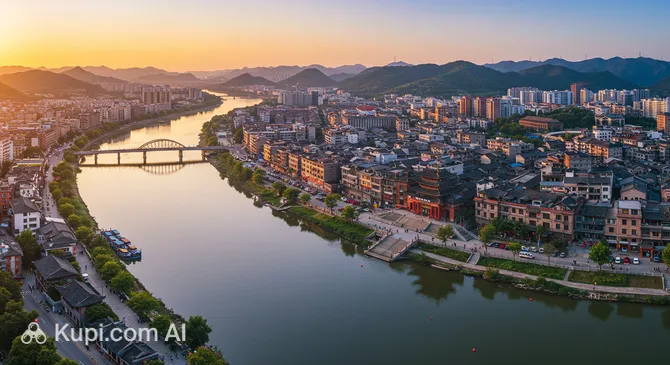
Located in the picturesque Hunan Province, on the banks of the winding Leishui River, Leiyang is a fascinating blend of ancient heritage and a modern industrial rhythm. With a history spanning over 2,200 years, this city in China is rightfully proud of its past while remaining an important economic and transport hub for the region. With a population of about 1.15 million, it maintains the atmosphere of a cozy yet dynamically developing county center.
Leiyang. Illustration.
Source: Kupi.com AI
Leiyang's geographical location in the south of the country has defined its mild subtropical climate and rich natural resources. The city's rich historical heritage dates back to the Qin Dynasty, when Leixian County was established here. Today, travelers come here to see the harmony of ancient architecture and modern high-rises reflected in the river waters.
The city's main pride is its connection to Cai Lun, the legendary inventor of paper, whose name is honored here at every turn. Additionally, Leiyang is famous for its "Bamboo Sea"—a vast nature reserve considered one of the most impressive in the province. We invite you to discover this unique corner of the Middle Kingdom, where ancestral traditions come to life in the shade of bamboo groves.
Weather Overview
Leiyang features a typical subtropical monsoon climate, which brings a clearly defined change of seasons to the region. Summer here is long, hot, and quite humid: in July and August, the average temperature reaches +31°C, and on some days it can rise above +35°C. Winters, on the other hand, are short and mild, although in January the thermometer can drop to +4°C, creating a refreshing chill.
Precipitation is unevenly distributed, peaking from May to August when heavy monsoon rains cover the city. The driest and sunniest month is December. For more details, check the current weather in the city before your trip.
The best time to visit Leiyang is considered spring (March–April) and autumn (September–October). During these periods, the most comfortable temperatures are established (from +15°C to +25°C), and the number of rainy days is significantly reduced. These are ideal conditions for enjoying long walks in nature parks and exploring open-air historical monuments.
Average monthly temperature
Average monthly precipitation
Interesting Facts
Did you know that in Leiyang you can literally touch the origins of world civilization? This city holds secrets of ancient technologies and natural records that will surprise even the most experienced traveler.
Cradle of Papermaking: Leiyang is the birthplace of Cai Lun (50–121 AD), to whom humanity owes the invention of technology for producing paper from bamboo fiber.
Ancient Status: The city was officially founded back in 221 BC as Leixian County during the great Qin Empire.
Giant Forest: The famous "Bamboo Sea" covers an area of 160,000 acres and hides hundreds of ancient craft workshops within its territory.
Coal Heart: In the 20th century, Leiyang became one of the largest centers of the coal industry in the entire Hunan Province, thanks to its rich mineral deposits.
How to Get There
Leiyang has excellent transport accessibility, making it an attractive destination for travelers exploring Southern China. The primary way to get here is via the modern high-speed rail network connecting the city with the region's largest metropolises. Air travel is also available through neighboring transport hubs. To better plan your route, you can study detailed information on how to get to the city.
The nearest major air hub is Hengyang Nanyue Airport (HNY). It receives flights from Guangzhou, Beijing, Shanghai, and other major Chinese cities. After arriving in Hengyang, tourists usually use a bus transfer or a high-speed train to cover the remaining distance to Leiyang, which takes very little time.
In the city itself, there are two important stations. Leiyang Railway Station serves regular trains, while Leiyang West Station specializes in high-speed trains. A trip on a high-speed train from the provincial capital, Changsha, takes only about 40 minutes. Convenient connections are also established with Guangzhou and Wuhan.
One of the most exciting attractions is the Cai Lun Bamboo Sea, located in Huangshi Town. This is a colossal area of 160,000 acres, where endless bamboo groves alternate with mysterious stone forests, natural fountains, and deep caves. Tourists can visit more than 200 ancient workshops where ancient paper production methods are still demonstrated.
Equally significant is the Cai Lun Memorial Complex. This site is dedicated to the man whose invention changed world culture forever. Here, you can not only learn details of the biography of the great Han Dynasty official but also see historical artifacts related to the development of papermaking in ancient China.
For those who appreciate panoramic views, a climb to the local hill at the confluence of three rivers—the Xiangjiang, Zhengshui, and Leishui—is a must. A short twenty-minute ascent will reward you with a stunning view of the city. The landscape looks especially impressive in the evening when the illumination of bridges and old buildings along the embankment is turned on.
Local Cuisine
The culinary face of Leiyang is the bright and fiery Hunan cuisine (Xiang-cai). Local dishes are famous for their abundance of chili peppers, garlic, and smoked ingredients. Given the city's riverfront location, it is definitely worth trying fish from the Leishui River, which is often prepared with pickled vegetables and spicy seasonings.
A unique feature of the local cuisine is the use of bamboo in various forms. You will find tender bamboo shoots in soups, stir-fries, and even as standalone snacks. The general character of the food in Leiyang can be described as "fragrant and spicy," which perfectly warms during the cool winter months and invigorates during the humid summers.
As for drinks, local green tea varieties and traditional rice wine are popular in Leiyang. Street food is an integral part of the culture: in small villages around the city, you can try authentic flatbreads and noodles with recipes that haven't changed for decades. The best culinary experiences usually await guests in small family establishments where the locals themselves dine.
Travel Tips
Preparation for a trip to Leiyang will be easier if you consider a few important nuances of life in southern China. These tips will help you feel confident and avoid minor frustrations.
Clothing and gear: Choose light, breathable cotton clothing for summer and layered options for cool winters. Be sure to bring comfortable shoes with non-slip soles for walks in the "Bamboo Sea" and an umbrella, as rains in Hunan can be sudden.
Transport: The most convenient way to travel between cities is by high-speed train. Within the city, use the Didi app to order a taxi; this will eliminate the difficulties of translating the address to the driver.
Finance: Mobile payments dominate in China (Alipay, WeChat Pay). Link your card in advance. It is worth having cash yuan for small markets, but international Visa/Mastercard cards are rarely accepted, mostly only in large hotels.
Health: During the summer, there are many insects in the bamboo groves, so repellents are a must-have in your first aid kit. Drink only bottled water.
Connectivity: Buy a local SIM card at the airport or China Unicom offices. Remember that you will need a VPN to access familiar Western services in China.
Etiquette: Chinese people are very friendly but value politeness. A small bow or nod when greeting is appropriate. In temples and memorials, try to keep quiet and avoid wearing overly revealing clothing.
What to avoid: Do not attempt to argue about politics and avoid displays of strong emotions (shouting) in public places—it is considered a "loss of face" here.
Specific tip: Try to visit the Bamboo Sea early in the morning (by 8:00 AM) to enjoy the silence and misty landscapes without crowds of tourists.
May your journey to Leiyang be filled with amazing discoveries and the tranquility of ancient groves!
Entertainment & Nightlife
Nightlife in Leiyang is characterized by a calm and measured pace, typical of China's historic cities. The main center of attraction in the evening is the Leishui River embankment. Walking along the water allows you to enjoy the impressive lighting of architectural sites and bridges, creating a romantic and peaceful atmosphere.
In the city center, you can find local bars and restaurants where residents gather in the evenings. There are no noisy mega-clubs here, but the culture of night markets and street cafes offering freshly prepared snacks thrives. Safety in the city is high, so evening walks through the central illuminated streets are quite comfortable.
Daytime entertainment focuses on outdoor activities and cultural enlightenment. For nature lovers, hiking trails in the "Bamboo Sea" are an ideal option, while for those who prefer history, visiting themed pavilions and museums is recommended. To get around the city late at night, it is most convenient to use taxi-hailing apps.
Parks & Museums
The city's main natural asset is undoubtedly the Cai Lun Bamboo Sea. This is not just a park, but a giant ecosystem perfectly suited for long walks. Here you can see not only rare types of bamboo but also a unique "stone forest" created by nature thousands of years ago. The park area is so vast that it's easy to find secluded paths for meditative relaxation.
For those interested in the history of technology, the Cai Lun Memorial Museum is a must-visit. The museum's exhibition details the process of making paper—from raw material collection to the finished sheet. Visitors can see working models of ancient machines and learn how this invention changed the course of world history. This is one of the most significant themed museums in the region.
In Leiyang itself and along the banks of the Leishui River, cozy city parks and squares are laid out. They serve as a place for residents to relax, where Tai Chi is practiced in the mornings and dancing takes place in the evenings. These green zones offer beautiful views of the river and are a great place to observe the daily life of locals away from the noisy tourist trails.
Getting Around
Leiyang's transport system is well-adapted to the needs of both locals and tourists. The core of the urban public transport is bus routes. The bus network covers not only the central districts but also connects the city with remote villages and key attractions, such as the Bamboo Sea.
Bus fares are usually paid in cash (coins) upon entry or through mobile apps. The fare is fixed and very low. Operating hours for city transport are approximately from 6 am to 9 or 10 pm, depending on the route.
For maximum comfort, tourists are recommended to use taxis or the Didi service (the Chinese equivalent of Uber). This is a fast and reliable way to get anywhere in the city at any time of day. Additionally, bicycles can be rented in popular tourist areas and parks, providing an excellent way to explore the picturesque embankments and forest trails at your own pace.
Accommodation
Accommodation options in Leiyang range from classic city hotels to charming guesthouses. The majority of modern hotels are concentrated in the center of the city district, which is convenient for those who want quick access to shopping centers and restaurants. Both mid-range Chinese hotel chains and budget-friendly options with a basic set of services are represented here.
For a deeper immersion in the region's atmosphere, consider staying in the area of the Cai Lun Bamboo Sea or near the memorial complex. In these zones, you can often find small guesthouses and eco-hotels offering traditional comfort and proximity to nature. This is an excellent choice for those planning to spend several days exploring the bamboo groves.
Housing prices in Leiyang remain quite affordable compared to megacities. It is recommended to book rooms in advance through major international services such as Trip.com, especially if your trip coincides with Chinese public holidays. During peak season, the best options near attractions may be fully booked.
Nearby Cities
Thanks to its developed transport network, Leiyang serves as an excellent starting point for exploring the central part of Hunan Province. Many interesting locations are within an hour's drive, making it easy to plan rich radial routes.
Just 60 kilometers away is Hengyang—a large cultural center and the administrative capital of the district. The main magnet for tourists here is the sacred Nanyue Hengshan mountain, one of the five great mountains of China. A high-speed train ride to Hengyang takes less than half an hour. It is also worth paying attention to the city of Chenzhou, known for its picturesque lakes and thermal springs.
Moreover, the provincial capital, the huge metropolis of Changsha, can be reached in just 40 minutes by high-speed express. Exploring the surroundings of Leiyang will allow you to see the contrast between the calm county pace and the energy of big cities, making your trip through China as diverse as possible.
Shopping & Souvenirs
Shopping in Leiyang is primarily a hunt for unique folk crafts. The main souvenir to bring from here is handmade paper, produced according to the ancient technologies of Cai Lun. It can be purchased in specialized shops at the memorial complex or in the workshops of the Bamboo Sea. This paper is distinguished by its special texture and durability.
Bamboo products are equally popular: from elegant carved fans and tea sets to interior items. Trading rows in tourist zones offer a wide selection of woven baskets and souvenirs made by local craftsmen. We also recommend looking at local tea varieties and dried delicacies, which make excellent gourmet gifts.
For more conventional shopping, shopping centers and supermarkets are located in the city center. Most stores are open from 9:00 AM to 9:00 PM. Large outlets accept UnionPay cards, but for small purchases and payments at markets, it's best to have cash yuan or set up mobile payment systems like WeChat Pay or Alipay.