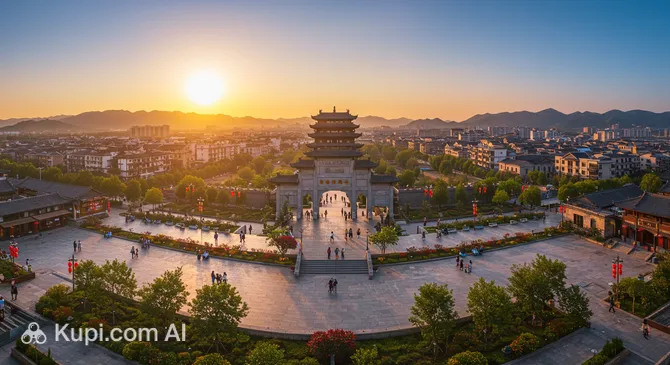
Xiangxiang is a charming county-level city located in the heart of Hunan Province, China. While it is not a major global tourist hub, the city possesses its own unique atmosphere of tranquil provincial China, where modern urban life harmoniously intertwines with traditional ways. The city's population is around 800,000, making it lively enough while remaining comfortably removed from the hustle and bustle of massive megapolises.
Xiangxiang. Illustration.
Source: Kupi.com AI
Geographically, the city stretches across hilly terrain surrounded by the picturesque plains of central Hunan. A rich cultural heritage and the history of Xiangxiang are closely linked to the development of regional administration and agriculture. There are no pretentious skyscrapers here; instead, you can witness the authentic life of ordinary Chinese people, stroll along shady streets, and feel the rhythm of the real, not "postcard," China.
For the traveler, Xiangxiang can be an excellent stop on the way to more famous regional attractions. The city appeals with its sincerity, local markets, and the opportunity to see the country from the inside. We invite you to get to know this hospitable land and discover the charm of the Chinese province.
Weather Overview
Xiangxiang is characterized by a humid subtropical climate typical of central China. This means travelers can expect clearly defined seasons: hot, humid summers and fairly mild but damp winters. The weather in Xiangxiang is largely determined by its proximity to rivers and the hilly landscape of Hunan Province.
Summer months, especially July and August, can be very hot, with temperatures reaching up to +34°C and high humidity creating a sauna-like effect. In winter, during January, the thermometer rarely drops below 0°C, averaging around +6...+8°C; however, the cold can feel sharper due to the high humidity. Rainfall is quite frequent, especially during the spring and summer, so an umbrella will be your faithful companion.
The best time to visit the city is considered to be autumn (September-October) and mid-spring, when pleasant warm weather sets in and nature delights with vibrant colors. Expect warm summers with occasional downpours and cool, dry winters with variable cloud cover.
Average monthly temperature
Average monthly precipitation
Interesting Facts
Xiangxiang is one of the largest county-level cities in Hunan Province by land area, covering over 1,900 square kilometers.
The city's administrative center is Wangchunmen Street, where major government institutions and offices are located.
The city has a complex administrative structure, including 4 subdistricts, 15 towns, and 3 townships.
Xiangxiang is situated at a strategically important transport hub connecting the eastern and western parts of Hunan Province.
Despite the region's industrial development, the surroundings of Xiangxiang maintain a hilly terrain, which promotes the city's natural greenery.
How to Get There
Xiangxiang enjoys good transport links with key cities in Hunan Province, making it accessible to travelers. If you are planning a trip, research in advance how to get there in the most convenient way, considering your time preferences and budget.
The nearest major air hub is Changsha Huanghua International Airport (CSX), located approximately 70-100 kilometers away. From there, Xiangxiang can be reached by taxi or intercity bus, with the journey taking between 1 to 1.5 hours. High-speed trains, which regularly depart from Changsha and neighboring Xiangtan, are also convenient to use.
Rail transport is one of the most reliable ways to move around the region. Xiangxiang Railway Station serves trains running on lines that connect major industrial and cultural centers. A train journey from Xiangtan takes very little time, and regional routes allow you to enjoy views of the Hunan countryside.
Although Xiangxiang does not abound with world-famous architectural monuments, it offers travelers a unique opportunity to immerse themselves in everyday China. The main interest for visitors is Wangchunmen Street—the administrative and cultural core where city life is concentrated. Strolling here, you can observe the rhythm of life for locals, browse small shops, and feel the pulse of a provincial center.
For those who value authenticity, Xiangxiang is interesting for its traditional residential neighborhoods. These are places where time seems to slow down: typical southern Chinese architecture, spontaneous markets, and cozy courtyards allow you to see genuine daily life without the tourist gloss. In the city's surroundings, you can also find small temples and natural areas that are popular with locals for outdoor recreation.
Many tourists use the city as a convenient base for visiting iconic sites in the province. Very close by is Shaoshan—the birthplace of Mao Zedong, which is easily accessible for a deep dive into the country's political history. Xiangxiang itself remains a quiet haven where you can relax away from the crowds and enjoy peaceful walks along the river or across green hills.
Local Cuisine
The culinary traditions of Xiangxiang are inextricably linked to the legendary Hunan cuisine, known for its love of spiciness and bold flavors. The main feature of local gastronomy is the generous use of fresh and dried chili peppers, garlic, and smoked ingredients. "Smoky" dishes are popular here, providing warmth and unforgettable taste sensations.
Be sure to try twice-cooked pork with peppers (hui guo rou) or braised fish under a thick layer of spicy sauce—these dishes are the region's signature. It's also worth trying the sauerkraut with pork, where the spiciness is perfectly balanced by the acidity. White rice is most often served as a side dish, helping to temper the heat of the main courses.
The food culture in the city revolves around small family restaurants and street markets. Locals prefer to dine in establishments in the central district, where freshly prepared food from local ingredients is served. Among drinks, fresh green tea and traditional rice wine are particularly popular, perfectly complementing a rich Hunan-style meal.
Travel Tips
A trip to Xiangxiang will give you a unique experience of life in the real China, and to ensure your trip goes smoothly, we have prepared some practical tips.
Payment and Finances: Cash is practically not used in China. Be sure to install and link a card to the Alipay or WeChat Pay apps—this is the primary method of payment everywhere, from markets to taxis.
Communication: English is almost non-existent in Xiangxiang. Download an offline translator in advance and carry a card with the hotel's address in Chinese.
Transport: Use the Didi app (similar to Uber) to get around the city. It is safer and more convenient since the destination is entered in the app, and you don't need to explain yourself to the driver.
Clothing: The climate in Hunan is humid. In summer, bring light clothing made from natural fabrics, and in winter, wear things that protect against the damp cold. Comfortable shoes are essential for walking in the hilly terrain.
Health: Always drink only bottled water. Pharmacies are common, but medicine names will be in Chinese, so it's better to bring a basic first-aid kit with you.
Etiquette: Chinese people are very hospitable. Greet locals with a slight nod, be polite, and remember that in the province, you may arouse genuine curiosity in those around you.
What to Avoid: You should not discuss political topics or criticize local customs. Also, avoid walking alone in remote industrial zones at night.
Connectivity: To access your usual services (Google, social media), you will need a VPN installed before crossing the Chinese border. A local SIM card can be purchased with a foreign passport.
Xiangxiang will reveal its best side to you if you show a little patience and openness to the local culture. Enjoy your trip!
Entertainment & Nightlife
Leisure in Xiangxiang is primarily focused on local traditions and quiet pastimes. You won't find world-famous, noisy nightclubs here; however, the city offers many options for evening relaxation with friends. One of the most popular forms of entertainment remains karaoke bars (KTV), where residents spend evenings singing their favorite hits in cozy private rooms.
In the evening, activity concentrates around central squares and restaurants. Locals enjoy gathering in tea houses or small cafes for a game of board games like mahjong. After sunset, many take to the streets to enjoy the cool air and dine at outdoor eateries, where a lively and friendly atmosphere prevails.
For those looking for larger-scale cultural experiences, a day trip to neighboring Xiangtan or the provincial capital is recommended. In Xiangxiang itself, life winds down fairly early; usually, after 10:00 PM, the streets empty, making the city an ideal place for those who prefer an early rest and a peaceful sleep. Safety in the city is high, so evening walks through central districts are quite comfortable.
Parks & Museums
The parks of Xiangxiang are, first and foremost, places for quiet relaxation and the daily rituals of local residents. While there are no giant botanical gardens, the city's green zones attract visitors with their cozy atmosphere. In the mornings, in small squares, you can see people practicing qigong breathing exercises or dancing, which is an interesting cultural sight for a tourist in itself.
The natural landscape around the city, with its gentle hills, creates excellent conditions for outdoor walks. Small alleys are laid out along rivers and main streets, where it is pleasant to hide from the summer heat in the shade of trees. These places are perfect for observing the slow pace of provincial life or having a small Chinese-style picnic.
Regarding museums, they are modestly represented in the city itself, as Xiangxiang is not a specialized tourist hub. However, for those interested in culture, the uniqueness of the city streets and local markets replaces any exhibition. For a deeper study of the region's history, travelers usually head to neighboring cultural centers, returning to quiet Xiangxiang for rest.
Getting Around
The public transport system in Xiangxiang is organized quite simply and clearly. The main means of getting around the city are buses, whose routes connect the center with the outskirts and the railway station. Fares are inexpensive, and the bus fleet is regularly updated, making trips quite comfortable for tourists.
One of the main features of moving around Xiangxiang is the popularity of electric bikes and scooters. In the city center, this is the fastest way to get to your destination, bypassing minor traffic jams. Many residents use their own e-bikes, and taxis are available for tourists, which can be easily called through the Didi app—this is the most convenient option for those who do not speak the local language.
Mobile payments are often used to pay bus fares, but it's best to have a few cash coins with you just in case. Rail links connect the city with regional centers, allowing you to plan trips to neighboring cities. Overall, Xiangxiang is a fairly compact city, and many interesting locations in the center can easily be explored on foot.
Accommodation
The hotel stock in Xiangxiang consists mainly of budget and mid-range hotels, which cater to business travelers and local tourists. Most establishments offer a standard range of services, cleanliness, and hospitality. There are virtually no luxury five-star complexes here, which is compensated for by affordable prices and proximity to the city center.
The most convenient area to stay is the center, particularly around Wangchunmen Street. By staying here, you will be within walking distance of major shops, government offices, and transport hubs. Popular chain options, such as the Xiangxiang Orange Hotel, provide comfortable conditions for a short-term stay.
If you plan a visit during Chinese public holidays, it is recommended to book accommodation in advance through popular platforms like Trip.com. Also, apartment rentals are common in residential areas of the city, which can be a convenient option for those planning to stay in Xiangxiang for a longer period.
Nearby Cities
Thanks to its location in the central part of Hunan Province, Xiangxiang serves as an excellent starting point for exploring the surroundings. The region is rich in historical sites and major industrial centers, which can be easily reached as part of a day trip.
Just 20 kilometers away is Shaoshan—a city of immense significance in Chinese history. This is a pilgrimage site for tourists from all over the country wishing to visit the Mao Zedong house-museum. A bit further away is the major city of Xiangtan, which offers a wider selection of entertainment, shopping centers, and museums. Also of interest is Loudi, famous for its natural parks and hilly landscapes.
We recommend not limiting yourself to city walks and venturing to neighboring settlements to fully appreciate the diversity and hospitality of this part of China. A well-developed network of bus services and regional trains makes such trips simple and comfortable.
Shopping & Souvenirs
Shopping in Xiangxiang is primarily an opportunity to purchase everyday goods and get acquainted with the assortment of local markets. The main shopping activity is concentrated in the central part of the city, especially around the administrative center on Wangchunmen Street. Here you will find small shopping centers and clothing stores featuring popular Chinese brands and home goods.
The most interesting thing for tourists awaits at the local food markets. These are ideal places to buy fresh spices, the famous Hunan dried pepper, and various types of tea. Despite the absence of specialized souvenir shops, quality local tea or folk crafts sold in ordinary stores for city residents can be brought back as gifts.
Shops in Xiangxiang usually stay open until late evening, and payment is most often made through mobile apps like Alipay or WeChat Pay. Cash can still be found in markets, but digital payments have become the standard even in the province. If you need large-scale shopping with international brands, it is best to plan a trip to neighboring Xiangtan.