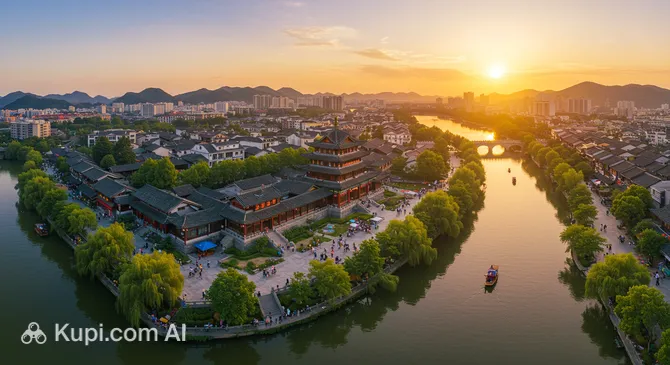
Wuzhong is a vibrant city in China, located in the heart of the Ningxia Hui Autonomous Region. Known for its calm provincial atmosphere and rich cultural heritage, it attracts those seeking an authentic experience away from the bustling metropolises of the East Coast. Home to approximately 1,382,713 people, the city is nestled comfortably on the banks of the great Yellow River.
Geographically, Wuzhong occupies a strategically important place in the northwest of the country. The climate here is continental and arid, which largely defined the city's character as an important agricultural hub. The region's main pride is its ancient irrigation system, thanks to which arid lands have been transformed into fertile oases. If you are interested in the rich past of this region, you will find that the city served as an important crossroads on the Silk Road for centuries.
Wuzhong. Illustration.
Source: Kupi.com AI
For tourists, Wuzhong is primarily interesting for its unique Qingtongxia hydraulic structures and the deep traditions of the Hui people, which are evident in the architecture and daily way of life. The city invites travelers to enjoy leisurely walks along the embankments, get acquainted with local folklore, and feel the true rhythm of life in northwestern China.
Weather Overview
Wuzhong's climate is characterized as sharply continental and arid, which is typical for the northwestern regions of the country. The city is influenced by dry air masses, so there is little precipitation here. To plan your trip, it is useful to study the weather in the city by month to choose the most comfortable time.
Expect a truly hot summer, when in July and August the average maximum reaches +29°C...+32°C, and the sun can be very active. Winters, on the other hand, are quite harsh and dry: in January, the temperature often drops to -10°C or lower at night. Spring and autumn are transitional periods when the weather is most pleasant for walking, although strong winds are possible in March and April.
Most precipitation falls between June and September, with August traditionally considered the wettest month (about 61 mm of precipitation). Nevertheless, even at this time, sunny days prevail, and rains are more often short-lived. When packing for your trip, remember the significant temperature fluctuations between day and night, which are characteristic of this area.
Average monthly temperature
Average monthly precipitation
Interesting Facts
Wuzhong hides many amazing details that make it unlike other Chinese cities. Here are a few facts that will help you look at it from a new perspective:
City of a thousand canals: Wuzhong is famous for its unique Qingtongxia irrigation system, which has been functioning since the Han Dynasty, turning the arid steppe into a blooming land.
Ethnic kaleidoscope: This is one of the most important cultural centers of the Hui people (Chinese Muslims) in the country, giving the city a unique architectural and gastronomic character.
Grape paradise: Despite the harsh climate, the region is rich in vineyards and famous for its winemaking, offering tourists the chance to try local varieties of wine that are valued throughout China.
Traces of the Silk Road: Historically, the city served as a vital transport hub where trade routes connecting the inner provinces of China with Central Asia intersected.
How to Get There
Wuzhong's transport accessibility allows tourists to comfortably reach the city using the developed infrastructure of neighboring large hubs. Although there is no large international airport in the city itself, the proximity to the regional capital makes the journey easy and pleasant. A trip to this region usually begins with arrival at one of the transport hubs of Ningxia province, from where the city can be reached in a matter of hours. You can find more details on the page dedicated to how to get to Wuzhong.
For those who prefer air travel, the main point of arrival will be Yinchuan Hedong International Airport (INC). It is located about 60 kilometers from the center of Wuzhong. Upon arrival, you can take a shuttle bus or a taxi, which will take about an hour. The airport accepts many domestic flights from major Chinese cities such as Beijing, Shanghai, and Guangzhou.
Rail travel is also a popular option. The nearest major station is in the city of Yinchuan, which is connected by high-speed lines to many regions of the country. After arriving by train, tourists usually transfer to an intercity bus that will take you to Wuzhong in 1-2 hours. If you are traveling by car, the city is easily accessible via the G109 expressway, connecting it with the main cities of the region.
Station
Passenger traffic
Distance
Yinchuan Railway Station
7
55 km
Zhongwei Railway Station
3
104 km
Wuhai East Railway Station
2
193 km
Nianlipu Railway Station
1
229 km
Qingyang railway station
3
285 km
Main Attractions
The crown jewel of the city is undoubtedly the ancient Qingtongxia irrigation system. This unique network of canals, with a history of more than 2,000 years, still serves the local residents today. Tourists can see impressive hydraulic structures and appreciate the scale of engineering thought of the ancient masters who managed to tame the waters of the Yellow River.
For those seeking spiritual peace, the Yuhuagong Temple is a must-visit. This complex is famous for its Buddhist relics and the picturesque landscapes that surround it. Here, you can not only learn about the religious traditions of the region but also enjoy the silence away from the city bustle.
The city's natural beauty is represented by Sanhuaikou Lake—a favorite spot for locals for walks and picnics. The picturesque shoreline and calm water surface create ideal conditions for outdoor relaxation. It is also worth spending time walking through the numerous parks located along the banks of the Yellow River, where local folklore festivals are often held.
Local Cuisine
Wuzhong's cuisine is an exciting mix of Hui traditions and northern Chinese culinary customs. The main ingredient here is lamb. Be sure to try yangrou (lamb skewers), which is prepared here with special skill using aromatic spices and an open fire. Another dish without which it is impossible to imagine a local meal is hand-pulled noodles, served in a rich broth with herbs and spicy sauces.
Thanks to developed agriculture and viticulture, Wuzhong boasts an abundance of fresh fruits and local grape wines. Winemaking in this region is actively developing, and a tasting of local orchard products will be a great addition to dinner. Among non-alcoholic drinks, strong green tea is the most popular, as it perfectly quenches thirst and helps in the digestion of hearty meat dishes.
The city's gastronomic life hums in the street markets and in small authentic restaurants in the center. Here it is customary to eat simply but with taste. Locals value fresh products and traditional recipes. For a tourist, visiting such a market is not only an opportunity to try food but also a chance to see the process of making the famous noodles or traditional Hui sweets right before your eyes.
Travel Tips
Wuzhong is a welcoming city; however, knowing certain features will make your trip across northwestern China much more comfortable and rewarding.
Clothing and Season: The best time to visit is spring (April-May) or autumn (September-October). It can be very hot here in summer and freezing in winter. Don't forget comfortable walking shoes for strolling along the canals and sunglasses.
Respect for Traditions: Wuzhong is a center of Hui culture. When visiting mosques or religious quarters, choose modest clothing that covers your shoulders and knees.
Finance: Be sure to carry cash yuan. While mobile payments are ubiquitous, foreign bank cards are not accepted everywhere, and ATMs may not be found at every turn.
Language Barrier: English is a rarity here. Be sure to download an offline translator and have a card with your hotel's address in Chinese characters.
Connectivity: For access to maps and translators, buy a local SIM card at Yinchuan Airport or a large communications office in the center. Remember the need for a VPN for the Western services you are accustomed to.
Health: Drink only bottled water. Local food can be quite spicy, so always clarify the spice level when ordering in restaurants.
Etiquette: Chinese people greatly value politeness. A simple smile and knowing a couple of phrases in Chinese (e.g., "Ni Hao" — hello) will help you quickly win over the locals.
What to Avoid: You should not publicly discuss sensitive political or religious topics. Also, try not to photograph people without their consent, especially in places of prayer.
By following these simple tips, you can fully immerse yourself in the atmosphere of this unique region and bring home only the warmest memories.
Entertainment & Nightlife
Wuzhong is primarily a city for a quiet and measured holiday, so you should not expect a boisterous nightlife in the Western sense here. Most activity after sunset is concentrated in cozy local tea houses and small restaurants, where residents gather for long conversations over a cup of aromatic beverage. This is the perfect time to feel the real atmosphere of the city, observing the daily life of its inhabitants.
The evening program for most tourists includes walks along the illuminated embankments of the Yellow River or around Sanhuaikou Lake. In the warm season, you can often find street musicians and spontaneous dance floors here. Safety in the city is at a high level, so even late walks in central areas are not a cause for concern. For moving around at night, it is best to use official taxi apps, as public transport finishes work quite early.
Daytime entertainment in the city is oriented towards cultural education and family leisure. You can visit local folklore museums or spend time in one of the city parks. Although Wuzhong does not have huge amusement parks or famous nightclubs, its charm lies in the opportunity to slow down and enjoy simple pleasures—from tasting local wine to participating in a traditional tea ceremony.
Parks & Museums
One of the most popular places for outdoor relaxation in the city is Sanhuai Park. This extensive green zone with a central lake offers residents and guests of the city quiet alleys for walks and modern recreation areas. The park is especially beautiful at sunset, when the city lights are reflected in the water, creating a peaceful atmosphere.
For those who want to delve deeper into the cultural code of the region, the Wuzhong Museum is a must-visit. Its exhibitions are dedicated to two pillars of local life: the history of ancient irrigation on the Yellow River and the unique culture of the Hui people. Here you can see old tools, national costumes, and documents telling how the city developed over the centuries.
Flora lovers should check out the local Botanical Garden, which is famous for its experimental vineyards. This is not just a place for walking, but a living laboratory where the best grape varieties in the region are grown. Although the city's museums are small in size, they possess a special charm and allow tourists to touch history without the crowds and queues typical of large metropolises.
Getting Around
The public transport system in Wuzhong is quite simple and oriented towards the needs of local residents. The basis of intra-city transport is buses and shuttle taxis. The route network covers all the main areas of the center and suburbs. The fare is extremely affordable and usually costs only 1–2 yuan. Tickets are paid in cash upon entry or via mobile applications if you have a local payment system.
For tourists, the most convenient way to move around is often taxi or using the Didi service (the Chinese equivalent of Uber). Taxis are plentiful in the city, inexpensive, and allow you to quickly reach any point without delving into bus route maps. Electric bicycles and scooters are also very popular in Wuzhong and can be found at every turn, though short-term rental systems for foreigners can be difficult to use due to registration requirements.
There is no metro or tram system in the city, so for long-distance trips (for example, to neighboring Yinchuan), it is best to use intercity buses that depart from the central bus station. If you plan to walk a lot, keep in mind that the city is fairly compact, and a stroll through its central part can be very pleasant, especially along the embankments.
Accommodation
Accommodation options in Wuzhong are mainly represented by middle-class hotels and budget guesthouses, making the city accessible for budget travelers. A typical price range for a night in a decent guesthouse is 100–200 yuan. If you prefer a higher level of service, it is worth looking at chain hotels such as the Wuzhong Hotel, which offer comfortable rooms and a standard set of services for tourists.
The city center is considered the most convenient area to stay, especially the blocks along the main street. Staying here, you will be within walking distance of local markets, cafes, and major transport stops. This significantly simplifies logistics and allows for a deeper immersion into local life.
Since the tourist flow to Wuzhong is mainly focused on the domestic market, the choice of accommodation on international booking sites may be limited. It is recommended to use popular Chinese travel apps or book accommodation in advance, especially during national holidays when demand rises sharply. Do not forget to clarify whether the hotel accepts foreign citizens, as some small hotels may not have the appropriate license.
Nearby Cities
Wuzhong serves as an excellent starting point for exploring the surroundings of the central part of Ningxia province, offering travelers interesting routes for short trips. Thanks to the compactness of the region, many iconic places can be visited in one day, returning to the cozy atmosphere of the city by evening.
Just 11 kilometers away is the city of Qingtongxia, which is effectively the gateway to the famous irrigation works and scenic views of the Yellow River. Another important destination is the regional capital—the city of Yinchuan. Located about an hour's drive away, it offers a wide range of attractions, from world-class museums to modern shopping centers, making it a must-visit for any tourist in this region.
Exploring nearby settlements will allow you to see a variety of landscapes—from endless vineyards to industrial sceneries. Traveling around the outskirts of Wuzhong is the best way to understand the soul of this region and see how ancient traditions coexist with modern achievements.
Shopping & Souvenirs
Shopping in Wuzhong is primarily a hunt for the fresh gifts of the land and unique items from local artisans. The city cannot boast an abundance of giant shopping centers, but it more than compensates for this with its colorful markets. This is the place to buy the famous local grapes, sweet melons, and traditional Hui sweets, which make excellent gifts for loved ones.
As souvenirs from Wuzhong, products from local wineries, high-quality tea, and silk items are most often brought back. The city's central streets are dotted with small shops where you can find daily necessities and locally produced textiles. Special attention should be paid to handicraft shops selling unique decorative items reflecting Islamic motifs in Chinese execution.
Shops usually operate from morning until late evening (roughly until 21:00 or 22:00). Regarding payment, popular mobile payment systems (Alipay, WeChat Pay) are accepted at large outlets and chain stores, but at markets and in small shops, it is always better to have cash yuan with you. The Tax Free system is practically not represented in the city, as it is focused on the domestic market.