Support

Yining

About

Welcome to Yining, a vibrant oasis often referred to as the "Garden City" due to its lush greenery, poplar-lined streets, and abundance of fruit orchards. Located in the picturesque Ili River Valley, this city offers a refreshing contrast to the arid landscapes typically associated with the region. It serves as a cultural melting pot where diverse traditions blend harmoniously, creating a unique atmosphere that captivates visitors.

Geographically, Yining is situated in the far northwest of China, near the border with Kazakhstan. The city benefits from a relatively mild and humid climate compared to its neighbors, fostering the growth of its famous apple and apricot trees. With a population of over 540,000 residents, it is a bustling hub that maintains a relaxed and welcoming charm, making it an excellent base for exploring the surrounding natural beauty.

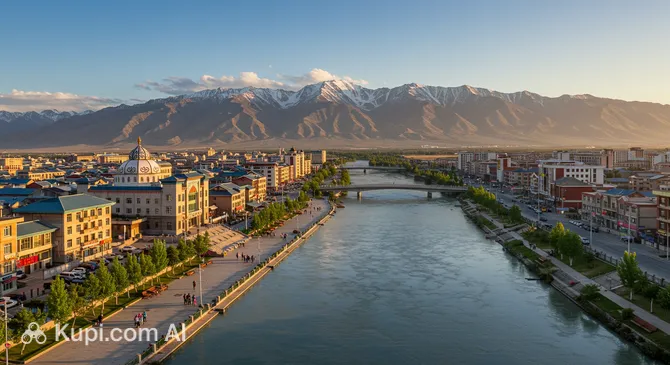
Yining. Source: Kupi.Binoculars

The history of Yining is deeply intertwined with the ancient Silk Road, as the city served as a vital commercial center for centuries. Today, visitors can still feel the echoes of the past while exploring the city's unique architecture. One of the absolute highlights is the Kazanqi Folk Village, renowned for its charming traditional houses painted in various shades of blue, horse-drawn carriages, and lively local handicrafts.

Nature lovers will appreciate the city's proximity to the majestic Ili River, which offers beautiful sunset views and scenic promenades, particularly around the Ili River Bridge. Whether you are strolling through its colorful lanes, tasting the sweet local fruits, or using the city as a gateway to the stunning Narat Grassland nearby, Yining promises an unforgettable travel experience.

Weather Overview

Yining enjoys a semi-arid climate that is noticeably milder and more humid than much of the surrounding region, thanks to its location in the Ili River Valley. The weather in Yining features four distinct seasons, offering a comfortable atmosphere for exploration throughout most of the year.

Winters, spanning from December to February, are cold and dry. Average temperatures hover between -5.7°C and -2.5°C, with nighttime lows occasionally dropping to around -10.7°C. Snowfall and precipitation are minimal during this time, resulting in crisp, clear winter days.

Spring brings a refreshing change as the city warms up rapidly. By May, the average temperature reaches a pleasant 17.0°C. This season sees the highest frequency of wet days, particularly in March, which helps nourish the area's famous orchards and gardens.

Summer is generally the most popular time to visit, characterized by warm and sunny days. July is the warmest month, with an average temperature of 23.9°C and highs peaking around 30.5°C. Autumn follows with a gradual cooling trend, offering comfortable temperatures in September before dropping significantly by November. Overall, you can expect warm summers with occasional rain and cold, dry winters.

Interesting Facts

Beyond the well-known scenic spots, Yining holds several fascinating secrets that set it apart from other cities in the region. Digging a little deeper reveals a destination full of cultural surprises and geographical anomalies.
  • The Hometown of Accordions: Yining is famously known as the "City of Accordions." Due to historical trade and cultural exchanges along the border, the instrument became deeply embedded in local life. Today, the city boasts a dedicated accordion museum and holds the record for some of the largest accordion ensembles, with the instrument being a staple at local gatherings and weddings.

  • A River That Flows West: While the vast majority of major rivers in China flow eastward toward the Pacific Ocean, the Ili River is a rare exception. It flows westward, crossing the border into Kazakhstan and eventually draining into Lake Balkhash, a geographical quirk that locals are quite proud of.

  • China's Version of Provence: The Ili Valley surrounding the city is the largest lavender production base in the country. Producing over 95% of the nation's lavender, the region transforms into a stunning sea of purple every June, rivaling the famous fields of France in both beauty and fragrance.

  • A "Wet Island" in the Desert: In a region typically associated with arid deserts and dry landscapes, Yining is a climatic anomaly known as a "Wet Island." Its unique topography traps moist air currents from the Atlantic, creating a lush, humid microclimate often described as "Jiangnan beyond the Great Wall," referencing the fertile, green lands of southern China.

How to Get There

Reaching the scenic city of Yining in the Ili River Valley involves a journey through some of the most captivating landscapes in the Xinjiang region. The city is accessible via a network of transport hubs in neighboring areas, offering travelers a chance to experience the diverse geography of the frontier. To help plan the most convenient route, visitors are encouraged to explore all ways to reach the city and select the option that best fits their itinerary.

For those traveling by air, several regional airports serve as gateways to the area. The closest facility in the vicinity is Bole Airport (IATA: BPL), located approximately 119 km from Yining. A transfer from Bole allows for a scenic drive into the valley. Another vital hub is Kuqa Airport (IATA: KCA), situated roughly 278 km away, which connects travelers from various parts of the country. International travelers or those crossing borders might also consider regional airports in neighboring Kazakhstan, such as Usharal, depending on their travel documents and route.

Below is a summary of the nearby airports serving the region:

Airport Name City Approx. Annual Tourists Km from City
Bole Airport Bole 500,000 119.2
Kuqa Airport Kuqa 636,000 277.9
Usharal Usharal 35,000 252.0
Taldykorgan Taldykorgan 35,000 276.0

Rail travel is another popular method for approaching the region, particularly through key border cities that function as major logistics and transport nodes. Altynkol Station in Khorgos is a significant hub located just 101 km from Yining, making it a convenient point for rail-to-road transfers. Additionally, Dostyk Railway Station in Alashankou offers another route, situated approximately 161 km away. These stations are integral parts of the transport network connecting the Ili Valley with the broader railway system.

Detailed information for the nearby railway stations is provided below:

Station City Approx. Annual Tourists Km to Center
Altynkol Station Khorgos N/A 101.0
Dostyk Railway Station Alashankou 216,000 160.7
Beskol Station Usharal 100,000 246.3
Aina-Bulak Station Karabulak N/A 290.9

Main Attractions

Yining is a city where cultural heritage and natural beauty converge, offering travelers a delightful mix of architectural marvels, bustling markets, and scenic river views. The city's attractions are deeply rooted in its history as a Silk Road trading hub, allowing visitors to experience a unique blend of traditions and lifestyles. Below are some of the most captivating places to visit during your stay.

Kazanqi Folk Tourism District is arguably the most iconic spot in the city, offering an immersive dive into the local culture. This historic neighborhood is famous for its vibrant, colorfully painted traditional houses—most notably in shades of azure blue—which have earned it the nickname "The Blue Town." Tourists love exploring the winding lanes by horse-drawn carriage, visiting traditional courtyards to see local handicrafts, and tasting the district's famous homemade ice cream. It is a living museum where the daily rhythm of life continues amidst the stunning architecture.

For a serene escape, the Ili River Scenic Area provides a picturesque setting, particularly around the famous Ili River Bridge. Known as the "Mother River" of the valley, it is a favorite spot for both locals and visitors to witness spectacular sunsets that paint the water in hues of gold and crimson. The riverside promenade is perfect for leisurely walks, and it is a popular location for traditional weddings, giving tourists a glimpse into the joyful celebrations of the local community.

The Shaanxi Grand Mosque stands as a magnificent testament to the city's architectural diversity. Built in the 18th century, this structure is unique because it blends traditional Chinese palace-style architecture with Islamic decorative elements. Unlike typical Middle Eastern-style mosques with domes and minarets, this complex features flying eaves, timber beams, and intricate Chinese brick carvings, making it a fascinating subject for photography and architectural appreciation.

Han Family Street, locally known as Hanjie, is a bustling market area that offers a sensory overload of sights, sounds, and smells. It was historically a commercial center for merchants from inland China and remains a lively hub today. Visitors flock here to browse through stalls selling everything from spices and dried fruits to local fabrics and souvenirs. It is also an excellent place to sample authentic street food, offering a true taste of the city's culinary landscape.

Local Cuisine

The culinary landscape of Yining is a delightful reflection of its multicultural heritage, blending the rich flavors of Uyghur, Kazakh, and Hui traditions with a hint of Russian influence. Situated in the fertile Ili River Valley, the city has access to fresh, high-quality ingredients that elevate its local cuisine. Food here is hearty, aromatic, and often communal, making dining a central part of the travel experience.

Meat and wheat are the staples of the local diet. One dish you simply must try is Laghman, a savory plate of hand-pulled noodles topped with a stir-fry of mutton, peppers, tomatoes, and onions. Another favorite is Polu (pilaf), a fragrant rice dish cooked with tender lamb, carrots, and onions, often served at large gatherings. For meat lovers, the scent of roasting lamb kebabs seasoned with cumin and chili powder is omnipresent in the streets, offering a smoky and spicy treat that pairs perfectly with flatbreads fresh from the tandoor oven.

Yining is famous for a unique sweet treat known simply as handmade ice cream (often associated with the Kazanqi district). Unlike modern factory-produced varieties, this traditional ice cream is churned manually using fresh milk, eggs, and sugar. It has a dense, creamy texture and a rich, natural flavor that has become a signature of the city. Locals and tourists alike can be seen enjoying bowls of this yellow-hued dessert, sometimes topped with crushed nuts or fruit jam.

When it comes to beverages, the city offers a distinct local drink called Kvas (often referred to locally as "Gevas"). Introduced by Russian traders long ago and adapted by the local population, this fermented drink is made from honey, hops, and sometimes raisins. It is non-alcoholic or has a negligible alcohol content, offering a fizzy, tangy, and sweet refreshment that is incredibly popular during the warm summer months. You will also find traditional salty milk tea, a staple in many local households.

The food culture in Yining is best experienced in its bustling night markets and street stalls. In areas like the Kazanqi Folk Tourism District or Han Family Street, the atmosphere comes alive in the evenings. Rows of vendors display steaming dumplings, grilled fish, and piles of seasonal fruits like the region's famous apricots and apples. Dining here is casual and social, with long tables often shared by strangers who bond over the shared love of the valley's exceptional flavors.

Travel Tips

To ensure your journey to the "Garden City" is as smooth and enjoyable as possible, a little preparation goes a long way. Yining is a welcoming destination with a distinct cultural rhythm, and keeping these practical tips in mind will help you navigate the local lifestyle with ease.

  1. Clothing and Gear: The climate in the Ili Valley is generally milder than the rest of the region, but temperatures can fluctuate. In summer, light and breathable fabrics are best, but bring a light jacket for cooler evenings. If visiting in winter, heavy coats and thermal layers are essential. Since you will likely visit religious sites like the Shaanxi Grand Mosque, pack clothing that covers your shoulders and knees to respect modesty norms. Comfortable walking shoes are a must for exploring the cobbled streets of Kazanqi.

  2. Transportation: Yining does not have a metro system, but getting around is easy and affordable. Taxis are the most convenient option for tourists; they are plentiful and can be hailed on the street. Public buses are also available and cover most major attractions, costing very little. Ride-hailing apps are widely used, but you may need a Chinese interface; asking your hotel to help book a car is often the simplest solution.

  3. Finances: Digital payments are king in China. While cash (Renminbi/CNY) is accepted, the vast majority of transactions—from buying fruit at a stall to paying for a taxi—are done via Alipay or WeChat Pay. It is highly recommended to set up the international version of these apps on your phone before arrival. ATMs accepting international cards are available at major bank branches, but carrying a small amount of cash is wise for backup.

  4. Health and Safety: Yining is a safe city for travelers. Pharmacies are marked with a green cross, but it is advisable to bring your own basic medical kit and prescription meds, as specific brands may be hard to find. The air can be quite dry, so keeping a lip balm and moisturizer handy is a good idea to prevent skin irritation. Drink bottled or boiled water rather than tap water.

  5. Communication: The primary languages are Mandarin Chinese and Uyghur. English is not widely spoken outside of high-end hotels, so having a translation app that works offline is crucial. Purchasing a local SIM card is possible at official provider stores (bring your passport), which will help you stay connected and use navigation maps.

  6. Local Etiquette: The local culture places high importance on hospitality and respect. When visiting a local home or entering a mosque, always remove your shoes unless told otherwise. It is polite to use your right hand when shaking hands, offering a gift, or receiving food, as the left hand is traditionally considered unclean in local customs. If invited to tea, accept it graciously.

  7. What to Avoid: Be mindful when taking photographs. Always ask for permission before photographing locals, especially elderly people, as some may be camera-shy or consider it intrusive. Additionally, avoid taking photos of government buildings or security personnel to prevent any misunderstandings.

  8. Local Time Awareness: Although the official time is Beijing Time (UTC+8), daily life in Yining often runs about two hours later due to its western geographical location. Locals may have lunch around 2:00 PM or 3:00 PM and dinner as late as 9:00 PM. When scheduling meetings or tours, it is helpful to clarify if the time stated is "Beijing Time" or "Local Time" to avoid confusion.

By embracing these local nuances, you will find it much easier to connect with the friendly residents of Yining and fully appreciate the city's charm. With your logistics sorted, you are free to focus on the stunning blue architecture, the scent of lavender, and the unique flavors that make this city so special.

Entertainment & Nightlife

Nightlife in Yining is a unique experience defined by the region's geography and culture. Due to its western location, the city operates on a natural timeline where the sun often doesn't set until after 10:00 PM in the summer. This "endless twilight" creates a vibrant late-night atmosphere where the streets truly come alive only after darkness finally falls. Unlike the high-energy clubbing scenes of coastal metropolises, evenings here are characterized by lively open-air markets, cultural performances, and relaxed garden gatherings that often stretch into the early morning hours.

The beating heart of the city's evening entertainment is undoubtedly Liuxing Street (Six Star Street). This historic district, designed with a unique hexagonal layout by a German engineer in the 1930s, transforms into a bustling social hub at night. The air here is filled with the sound of accordions—a local musical staple—and the aroma of charcoal-grilled lamb. It is a place where diverse cultures blend seamlessly; you might see impromptu dance circles breaking out in the plazas or locals enjoying "Kvas" (a fermented honey drink) in Russian-style garden courtyards. It is colorful, welcoming, and incredibly photogenic.

For those seeking a mix of history and entertainment, the Kazanqi Folk Tourism District offers a magical setting under the moonlight. Known as the "Blue Town" by day, at night the traditional azure houses are warmly lit, creating a romantic backdrop for evening strolls. Many traditional courtyards here host lively song and dance performances, where visitors can watch or even join in the traditional Uyghur dances. It is an immersive way to experience the local hospitality and artistic heritage in a festive environment.

If you are looking for a specific venue to soak up the atmosphere, the Anaerhan Tea Restaurant in Liuxing Street is a local favorite. It is renowned for its garden setting and authentic regional dishes, making it a perfect spot to relax with friends late into the night. Another popular option is simply walking along the Ili River Bridge. In the evenings, this area becomes a gathering point for locals to watch the spectacular sunset over the water, often accompanied by mobile food vendors and a refreshing river breeze.

Practical advice for enjoying Yining's nightlife revolves around local time habits. Dinner typically starts after 9:00 PM, and venues remain busy well past midnight. The city is very safe for night walks, even in quieter alleys. Taxis are plentiful and affordable, and ride-hailing apps are widely used, making it easy to hop between districts. There is no strict dress code; the vibe is casual and comfortable, though bringing a light jacket is wise as the semi-arid climate causes temperatures to drop pleasantly after dark.

While the nights are lively, daytime entertainment in Yining offers a more laid-back pace. Visitors can explore the rich collections at the Ili Kazak Autonomous Prefecture Museum to understand the region's history or enjoy a peaceful afternoon in People's Park. For families, the city's amusement parks and the nearby lavender fields (in season) provide excellent day-trip options before returning to the city for the evening festivities.

Parks & Museums

Yining is a city where natural beauty and cultural depth go hand in hand, offering visitors a refreshing mix of lush green spaces and insightful historical venues. Known as the "Garden City," it boasts well-maintained parks that serve as communal living rooms for the locals, while its museums provide a fascinating window into the diverse heritage of the Ili River Valley.

People's Park is the central green lung of the city and a perfect spot to witness the daily life of Yining's residents. Filled with ancient trees, flower beds, and shaded paths, it is a hub of activity where locals practice Tai Chi, play traditional instruments, or simply relax. It offers a peaceful retreat from the bustling streets and is often the venue for local festivals and community gatherings, making it a great place for people-watching.

Another significant natural area is Hanbin Park, located near the banks of the Ili River. This expansive park is designed with water features, winding walkways, and traditional pavilions that reflect the local architectural style. It is particularly popular in the summer when the lotus flowers are in bloom and the air is filled with the scent of vegetation. The park connects seamlessly with the riverside scenery, offering a tranquil environment for long walks and photography.

For those interested in the region's rich history, the Ili Kazak Autonomous Prefecture Museum is an essential stop. This comprehensive museum houses a vast collection of artifacts that trace the history of the Silk Road and the various ethnic groups that have called this valley home. Exhibits include traditional costumes, ancient tools, and historical documents that explain the cultural evolution of the area. It provides excellent context for understanding the unique blend of traditions visible in the city today.

A more specialized but equally captivating venue is the Lin Zexu Memorial Hall. Dedicated to the famous Qing Dynasty official who was exiled to Ili, this memorial highlights his contributions to the region, including water conservation projects and agricultural development. The hall is set within a traditional courtyard and offers a poignant look at a significant figure in Chinese history, showcasing his poetry, calligraphy, and personal items.

One of the most unique cultural experiences in Yining is visiting Alexander’s Accordion Museum. Reflecting the city's reputation as the "Hometown of Accordions," this private museum displays a stunning collection of instruments from around the world. The owner is often present to share stories about the exhibits and sometimes performs for visitors. It is a charming and intimate venue that celebrates the musical soul of the city.

For an authentic local experience, try visiting the Ili River Wetland Park just before sunset. While many tourists flock to the bridge, the wetland areas offer a quieter, more immersive nature experience with boardwalks that let you get close to the water and observe local birdlife in the golden hour light.

Getting Around

Navigating Yining is relatively straightforward and affordable, with a public transport system primarily reliant on a comprehensive network of buses and taxis. Unlike the country's mega-cities, Yining does not have a metro system, but the compact nature of the city center means that visitors can easily move between major attractions, hotels, and markets without much difficulty.

Public buses serve as the backbone of the city's transit, connecting all major districts, including the train station and the airport. The bus fleet is modern, with many vehicles being electric. Routes are numbered, and while stops are announced in Mandarin and sometimes Uyghur, they are rarely in English. For tourists, lines connecting the city center to the railway station or the Kazanqi district are the most useful. Fares are extremely low, typically costing a flat rate of 1 RMB per journey, regardless of the distance.

The payment system for public transport is heavily digitized. While you can still pay with cash by dropping the exact change (coins or small notes) into the fare box upon entry, drivers do not carry change. The most convenient method for travelers is to use the "Transport" feature within the Alipay or WeChat apps. You simply generate a transit QR code on your phone and scan it at the card reader near the bus entrance. Physical transport smart cards exist for locals but are generally not worth the hassle for short-term visitors.

Taxis are a very popular and convenient alternative, especially given the affordable rates compared to Western standards. You can hail them on the street; they are usually distinctively colored. All legal taxis use a meter, so ensure the driver turns it on when you enter. Ride-hailing apps, particularly Didi Chuxing (often integrated into Alipay), are widely available and help overcome language barriers since you can input your destination in English or pinpoint it on a map.

For a truly local and atmospheric mode of transport, specifically within the historic Kazanqi Folk Tourism District, visitors should try the traditional horse-drawn carriages (known locally as "Hadi"). While these are more of a sightseeing experience than a practical commuting tool, they are a regulated part of the district's transport heritage. They offer a leisurely way to explore the winding blue alleyways while listening to the rhythmic sound of bells and hooves.

Shared bicycles are scattered throughout the city and are an excellent way to cover short distances, such as riding from a hotel to the Ili River promenade. These bikes (often blue or yellow) can be unlocked by scanning the QR code on the frame using Alipay or WeChat. It is a flexible option that allows you to stop whenever something catches your eye, though you should park them in designated zones to avoid penalties.

Practical advice for tourists includes being mindful of operating hours. Buses generally run from around 8:00 AM to 9:00 PM or 10:00 PM (Beijing Time). However, due to the late sunsets in summer, evening services on popular routes may extend slightly later. Since English signage at bus stops is rare, it is highly recommended to have your destination written in Chinese characters on your phone to show the driver or to cross-reference with the route map.

Accommodation

Where to Stay:

Accommodation in Yining ranges from modern, high-rise hotels in the commercial center to charming, family-run guesthouses tucked away in historic neighborhoods. While the city may not have an extensive selection of international luxury chains, it offers a solid variety of comfortable mid-range hotels and budget-friendly options that reflect the local hospitality. Visitors can generally expect clean, well-equipped facilities, with many establishments incorporating the region's distinctive architectural style into their design.

For those seeking convenience and easy access to transport, the city center near the major commercial plazas is the best choice. Staying here puts you within walking distance of shopping malls, restaurants, and the main bus routes. However, for a more atmospheric experience, many travelers prefer finding accommodation near the Kazanqi Folk Tourism District or Liuxing Street (Six Star Street). These areas offer the unique opportunity to stay in or near traditional courtyard homes, surrounded by the city's famous blue walls, trellised grapevines, and vibrant street life.

A crucial tip for international travelers is to confirm booking requirements in advance. In this region, not all hotels are authorized to host non-mainland Chinese citizens. When searching for accommodation online, look for properties explicitly marked as "Accepting Foreign Guests" or contact the hotel directly to verify their policy. This is especially important to avoid any inconvenience upon arrival.

Prices in Yining are generally very reasonable compared to China's eastern metropolises. Budget travelers can find hostels and simple guesthouses for very low rates, while mid-range and upscale local hotels offer excellent value for money. Booking platforms are widely used and reliable. Since summer (particularly June and July) is the peak season due to the lavender bloom and favorable weather, it is highly recommended to reserve your room several weeks in advance to secure the best locations.

Nearby Cities

For those looking to explore the surroundings, Yining serves as an excellent base for journeys to several interesting nearby locations.

While the vast scale of the Xinjiang region often means that "nearby" cities are best visited as overnight trips or next stops on your itinerary, they offer incredible diversity just a few hours away. Kuqa is a destination steeped in history, located at the southern foot of the Tianshan Mountains. Once the center of the ancient Kingdom of Kucha, it is a treasure trove for history buffs, boasting the Subashi Ruins and the Kizil Grottoes. The city is also the gateway to the Tianshan Mysterious Grand Canyon, a stunning geological wonder of red sandstone that rivals any canyon landscape in the world.

For a completely different experience, travelers can head towards Karamay. Named after the "Black Oil" that fuels its economy, this modern city rises from the desert and offers access to some of the region's most surreal landscapes. The highlight for many visitors is the Urho Ghost City, a wind-eroded yardang landform where rocks have been sculpted into eerie shapes resembling castles and animals. It provides a rugged, dramatic contrast to the lush greenery of the Ili River Valley.

Another notable neighbor is Aksu, whose name translates to "White Water." Situated at the southern base of the Tianshan range, it is an oasis city famous for its high-quality apples and dates. Aksu serves as a base for mountaineers and nature lovers aiming to catch a glimpse of Tomur Peak, the highest peak in the Tianshan Mountains, offering a mix of agricultural charm and alpine grandeur.

City Population Distance (km)
Korla 770,000 455
Shihezi 717,000 366
Aksu 535,657 329
Kuqa 462,588 277
Karamay 391,008 320

These nearby destinations offer a glimpse into the diverse culture and landscapes of the region.

Shopping & Souvenirs

Shopping in Yining offers a delightful mix of modern convenience and traditional Silk Road charm. As a historic trading hub near the border, the city has long been a center for commerce, where diverse cultures converge to exchange goods. Visitors can expect to find everything from contemporary fashion in bustling department stores to unique ethnic handicrafts and locally grown produce in vibrant open-air markets. The experience is less about high-end luxury brands and more about discovering authentic local treasures, particularly those related to the region's agricultural abundance and artisan heritage.

For a blend of general shopping and local atmosphere, Jiefang Road serves as the city's commercial spine. This busy thoroughfare is lined with a variety of shops, banks, and restaurants, making it a convenient stop for everyday needs and clothing. For a more culturally immersive experience, Han Family Street (Hanjie) is a must-visit. While it is famous for its food, the area is also packed with stalls selling local specialties, textiles, and small trinkets, offering a bustling environment where you can haggle and interact with local merchants.

Travelers looking for a modern retail experience should head to the city's larger commercial centers. Tianbai Shopping Mall is one of the most prominent department stores in Yining, located centrally. It offers a wide range of goods including cosmetics, electronics, clothing, and jewelry, providing a familiar shopping environment with fixed prices and air conditioning. It is a reliable spot to stock up on travel essentials or browse for mid-range domestic brands.

The true soul of Yining's shopping scene, however, lies in its markets. The bazaars within the Kazanqi Folk Tourism District are excellent for finding handmade goods directly from artisans. Here, you can watch craftsmen at work and purchase items like leather boots, traditional musical instruments, and copperware. Given the region's reputation as the "Garden City," the local fruit markets are also a highlight. In late summer and autumn, these markets overflow with sweet apricots, grapes, and the region's famous apples, which are perfect for snacking.

When it comes to souvenirs, lavender products are the undisputed signature of Yining. Since the Ili Valley produces the vast majority of China's lavender, visitors can find high-quality essential oils, dried flower sachets, soaps, and pillows at very reasonable prices. Dried fruits and nuts are another popular choice, known for their intense sweetness and long shelf life. For something more durable, look for traditional leather goods or the intricately embroidered doppa hats, which are beautiful representations of the local Uyghur culture.

Store opening hours in Yining generally follow Beijing Time, but daily life often adheres to a local schedule that is about two hours behind. Most shops open around 10:00 AM or 11:00 AM and stay open late, often until 9:00 PM or 10:00 PM, especially in the summer. Mobile payments via Alipay and WeChat Pay are the standard and are accepted almost everywhere, from large malls to small street stalls. Cash is accepted but is becoming less common for small transactions.

Regarding tax refunds, Yining does not typically offer a specialized tax-free shopping scheme for international tourists comparable to what you might find in major coastal cities like Shanghai or Beijing. Visitors should assume that the listed price is final regarding taxes, although bargaining is expected and encouraged in markets and smaller independent shops.
Reached the end of the page?

That means the route is fully explored