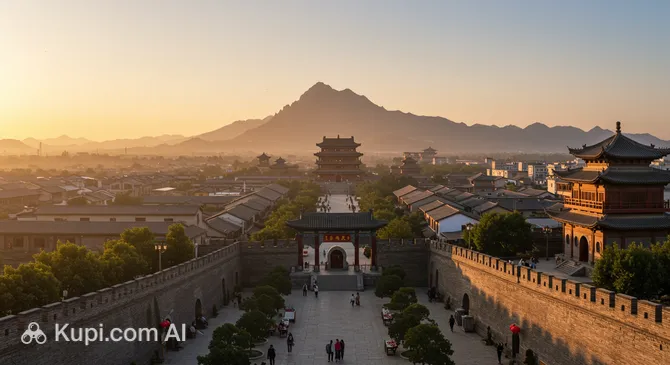
Yongcheng is a fascinating city in eastern Henan province, China, that harmoniously combines a deep historical heritage with a modern industrial rhythm. The city is known as one of the "cradles" of Chinese civilization, as key events related to the birth of the Han dynasty took place here. The atmosphere of the city is imbued with respect for tradition and the tranquility of an agricultural region.
Yongcheng. Illustration.
Source: Kupi.com AI
Located at the junction of four provinces (Henan, Anhui, Jiangsu, and Shandong), Yongcheng holds an important strategic position. According to data, the city's population exceeds 1.2 million people. Geographically, it is a flat area with fertile land, making the region an important agricultural center; however, rich coal reserves lie beneath the ground, which have defined the city's industrial development.
The main magnet for travelers is Mangdang Mountain — a unique cultural site where grand tombs of the Han rulers have been preserved. Exploring the history of this region allows you to touch the era of great emperors and see artifacts that are over two thousand years old. Yongcheng invites everyone who wants to see the "real" China, hidden from the mass tourist flow.
Weather Overview
Yongcheng is located in a humid continental monsoon climate zone, which ensures four distinct seasons. Travelers should expect warm, and sometimes quite hot, summers with occasional heavy rains in July and August, and cold, dry winters when temperatures can drop below freezing. Spring and autumn are considered the most comfortable times to visit.
According to statistical data, the average temperature in January is around 2.1°C, while in July the thermometer rises to 28.1°C or higher. Spring brings gradual warming: by April, the air warms up to a pleasant 16-20°C, which is ideal for walking through historical sites. More detailed information on the the city's climate can be studied before your trip to help you choose the right wardrobe.
Precipitation is unevenly distributed: most of it falls during the summer months, turning the surrounding plains into lush green lands. Winter in Yongcheng is windy with little snow; however, this time of year is excellent for visiting the underground tombs, where the temperature remains stable and comfortable regardless of the weather caprices on the surface.
Average monthly temperature
Average monthly precipitation
Interesting Facts
Yongcheng is a city where echoes of ancient legends and amazing modern achievements hide around every corner. Here are a few curious facts to help you get to know this region better:
Birthplace of the Han Dynasty: It was in the Mangdang Mountains that Liu Bang, the future first Han emperor, hid and gathered his forces before founding one of the most powerful empires in world history.
Underground Hermitage: The tombs of Mangdang Mountain are called "underground palaces"—they include banquet halls, bedrooms, and even bathrooms, all fully carved into the stone over 2,000 years ago.
Coal Capital: Yongcheng is one of the largest centers for anthracite mining in China; its reserves are so vast that the city plays a key role in the region's energy security.
Crossroads of Cultures: Due to its unique geographical position at the junction of four provinces, Yongcheng has absorbed the culinary and dialectal features of each, creating a unique local flavor.
How to Get There
Yongcheng is an important transport hub in eastern Henan, so getting here is quite simple. The city is integrated into a modern network of expressways and railways, making it accessible for both domestic and foreign travelers. More detailed information on routes can be found on the page how to get to Yongcheng.
There is no airport directly in the city; however, travelers usually use nearby aviation hubs. The most convenient options include Xuzhou Guanyin Airport and Zhengzhou Xinzheng Airport. From there, you can reach Yongcheng by intercity bus or high-speed train, which takes between one and three hours depending on the chosen hub.
Railway travel is the most popular and comfortable way to visit. Yongcheng North (Yongcheng Beizhan) station serves high-speed trains connecting the city with major Chinese metropolises such as Beijing, Shanghai, and Xi'an. The station is located outside the central district but is connected to it by regular bus routes and taxis.
Station
Passenger traffic
Distance
Bozhou Railway Station
4
61 km
Xuzhou railway station
9
79 km
Fuyang Railway Station
6
125 km
Jining Railway Station
3
163 km
Heze Railway Station
3
169 km
Main Attractions
The main jewel of Yongcheng is rightfully considered the Mangdang Mountain Cultural Tourism Area. This site is not just a natural object but a true open-air museum. It features unique rock-cut tombs of the princes of the Liang State from the Western Han era, which amaze with their scale and the skill of ancient builders. Tourists can descend into underground palaces carved directly into the mountainside.
Another iconic site is the statue of Liu Bang, the founder of the Han dynasty. According to legend, it was in these parts that the future emperor performed his famous feat of killing a massive white snake, which served as an omen of his ascension to the throne. The monument and its surrounding park are a pilgrimage site for history buffs and fans of Chinese folklore.
For those seeking inspiration in architecture and landscape design, the Dahan Tianyue complex is open. This is a modern interpretation of the Han style, where majestic pavilions and park areas allow visitors to feel the aesthetics of ancient China. It is also worth visiting the local museum, which houses rare burial masks, jade items, and ceramics found during excavations in the city's surroundings.
Local Cuisine
Yongcheng cuisine is the quintessence of Henan culinary traditions with a light influence from neighboring provinces. The basis of the diet here consists of wheat flour products, typical of northern China. The most popular dish that every guest should try is Henan Braised Noodles (Hui Mian). This is a rich lamb-based soup with wide hand-pulled noodles, fresh herbs, and medicinal roots.
The local food scene is also famous for its meat snacks. Try the braised pork with spices or stuffed flatbreads, which are often sold at street markets in the morning. Yongcheng is also known for its watermelons and other agricultural products, which, thanks to the fertile soil, have a particularly sweet and rich flavor.
Locals prefer to dine in cozy family restaurants where portions are traditionally large and the atmosphere is friendly. Typical drinks include famous local teas and various soy-based beverages. In the evening, it's worth heading to the food markets to sample "chuan" style skewers and other dishes cooked over an open fire, which is an important part of the local food culture.
Travel Tips
Preparing for your trip to Yongcheng will help you fully enjoy the hospitality of Henan and avoid minor difficulties. Use these practical tips for planning your ideal itinerary:
Clothing and gear: Choose clothing according to the season: summers here are hot and humid, while winters are cool. For visiting Mangdang Mountain, comfortable sports shoes are essential, as you will be doing a lot of walking on stairs and slopes.
Transport: The best way to get around the city is by taxi or bus. Install a map app (such as Amap or Baidu Maps), as Google Maps is unreliable in China.
Finances: The main currency is the yuan. International cards are rarely accepted in Yongcheng, so be sure to carry cash or set up Alipay/WeChat Pay linked to your card.
Connectivity: For stable internet, buy a local SIM card at your arrival airport. Keep in mind that a VPN is required to access familiar Western services.
Language: English is not widely spoken. It is recommended to have a card with the name of your hotel and attractions written in Chinese characters.
Etiquette: Be quiet when entering temples or tombs. Politeness and a smile are the best communication tools, even if you don't know the language.
What to avoid: Do not attempt to photograph military sites or government buildings, and always ask for permission before taking photos of local residents in rural areas.
Pro tip: Try to plan your visit to Mangdang Mountain on weekdays to avoid the crowds of domestic tourists and explore the ancient monuments in peace.
Yongcheng is a place where history comes alive in stone. Be open to new experiences, and this city will surely surprise you with its deep heritage and sincere hospitality.
Entertainment & Nightlife
Entertainment in Yongcheng is predominantly calm and contemplative, making it ideal for family vacations and cultural tourism enthusiasts. The city's evening life is concentrated in the central squares and embankments, where locals gather for traditional dancing and walks. One of the most popular locations after dark is the Mangdang Mountain area, where impressive light shows are sometimes held, highlighting the majesty of the ancient monuments.
During the day, travelers can spend time in city parks equipped with modern playgrounds and picnic areas. Small theaters are popular in Yongcheng, where you can see productions in the style of local Henan opera—a colorful spectacle with characteristic music and costumes. The city also offers modern cinemas and entertainment centers in the newer districts, featuring karaoke bars (KTV) which are popular across Asia.
Safety in the city is at a very high level, so evening walks along well-lit streets are perfectly comfortable. If you plan to move between venues at night, it is best to use an official taxi, which is easy to call through mobile apps. Entertainment prices in Yongcheng are significantly lower than in megacities like Shanghai or Beijing, making a holiday here affordable for any budget.
Parks & Museums
The main natural and historical park in the region is the Mangdang Mountain Tourism Zone. This is a vast territory combining mountain peaks, forests, and archaeological sites. Here, you can not only visit ancient tombs but also walk along well-maintained trails while enjoying panoramic views of the valley. The park is especially beautiful in spring when the slopes are covered in greenery and flowers.
History buffs should definitely visit the Museum of Han Tombs. This is a modern complex built directly on the excavation site. The museum halls display unique artifacts: from the famous "jade burial suits" sewn with gold thread to everyday items, weapons, and chariots. The exhibition vividly demonstrates the grandeur and luxury of the life of the Chinese aristocracy two millennia ago.
Within Yongcheng itself are cozy municipal parks, such as the People's Park. These are green oases amidst the urban development, featuring artificial lakes, boat stations, and shaded alleys. Such places are ideal for observing the daily life of the city's residents: here they practice Tai Chi, play chess in the open air, and spend time with their families.
Getting Around
The public transport system in Yongcheng is focused on providing comfortable movement for residents and guests between residential quarters and industrial zones. The main mode of transport is buses, which cover all key areas, including the route to the foot of Mangdang Mountain. Fares are fixed and very low, and intervals during the day are 10–15 minutes.
For quick trips around the city, tourists most often choose taxis. Metered cars are easy to find at special stands or by flagging them down on the street. Ride-hailing apps (similar to Uber) also operate actively in Yongcheng, which is convenient if you do not speak Chinese, as the destination can be indicated on the map. Bike rentals are another popular alternative; wide streets and flat terrain make cycling pleasant and safe.
Special attention should be paid to intercity buses departing from the central bus station. This is a reliable way to reach neighboring counties and cities in the province if train tickets are sold out. Public transport hours are usually limited until 22:00, so for later travel, it is best to arrange a taxi in advance.
Accommodation
Yongcheng offers a wide range of accommodation options catering to both business travelers and tourists. The main concentration of hotels is in the central part of the city and near the Yongcheng North railway station. Here you can find both modern mid-range chain hotels with a high level of service and more budget-friendly guesthouses.
For those who want to fully immerse themselves in the region's history, it is recommended to look at hotels located near Mangdang Mountain. This will allow you to be within walking distance of the main attractions and enjoy views of the picturesque hills. In this area, you can also find small boutique hotels decorated in a traditional Chinese style.
The price range in Yongcheng remains very affordable. A standard room in a good hotel will cost significantly less than in the provincial capital. During national holidays (early May and October), demand for accommodation increases sharply, so it is recommended to book rooms in advance through popular online services that support international cards or local payment systems.
Nearby Cities
Yongcheng serves as an excellent starting point for exploring the eastern borders of Henan province and neighboring regions. Thanks to developed rail and bus links, tourists can easily organize exciting trips to nearby cultural centers.
Just 32 kilometers away is the city of Huaibei, known for its picturesque lakes and parks. Another interesting destination is Bozhou — one of the main centers of traditional Chinese medicine, where you can visit a massive herbal medicine market and ancient temples. For those ready for a slightly longer trip, Xuzhou is accessible, offering a rich museum program and historical monuments from the Han era.
Exploring the surroundings of Yongcheng will allow you to see the diversity of China: from industrial giants to quiet farming counties. Each of these destinations holds its own unique history and offers guests the hospitality characteristic of the country's central plains.
Shopping & Souvenirs
Shopping in Yongcheng is primarily an opportunity to purchase unique local goods and agricultural products. The city is famous for its jade and stone crafts, which often replicate artifacts found in the Han tombs. In the souvenir shops at Mangdang Mountain, you can buy high-quality replicas of ancient jewelry and figurines, which will serve as excellent reminders of your trip.
The main shopping areas are located along the city's central streets. Large department stores and shopping centers are found here, featuring popular Chinese brands of clothing, electronics, and cosmetics. If you are looking for something more authentic, head to the local markets—these are noisy and colorful places where you can find everything from the freshest local fruits to traditional textiles and household items.
As an edible souvenir from Yongcheng, it is worth bringing back local flour or products made from it, as well as traditional Henan province sweets. Shops usually operate from 9:00 to 21:00, and payment is primarily accepted via mobile apps (WeChat Pay, Alipay), though bank cards can be used in large shopping malls. The Tax-Free system is extremely rare in such small cities, so you should not count on tax refunds.