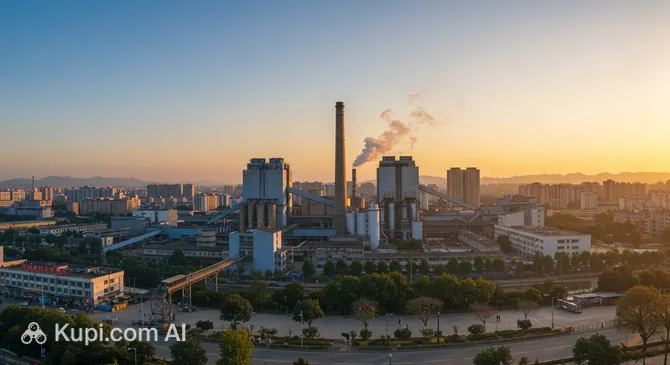
Zhangshu is a unique city in Jiangxi Province, located in the heart of China. It is nestled in the picturesque valley of the Gan River and has served for centuries as a vital trade hub connecting the Yangtze River basin with the country's southern regions. The city possesses the special energy of a vibrant commercial center, where ancient traditions blend harmoniously with a modern industrial rhythm.
Known as the "Medicine Capital," Zhangshu is the largest center for the production and trade of Traditional Chinese Medicine (TCM) products. The city's name itself translates to "camphor tree," highlighting its close connection to nature and pharmaceuticals. With a population of about 610,000, it is a significant economic player in the region.
Zhangshu. Illustration.
Source: Kupi.com AI
The rich historical heritage of these lands dates back to the Bronze Age, and the city's architectural appearance combines elements of the traditional Ming and Qing dynasty "Gan" style with functional modern high-rises. A visit to Zhangshu is an opportunity to see the life of authentic China from the inside, immerse yourself in the atmosphere of medicinal herb markets, and touch the secrets of Oriental longevity.
We invite you to journey through this dynamic city, where every block is permeated with the scent of camphor, and history literally comes alive in archaeological finds and the centuries-old traditions of local craftsmen.
Weather Overview
Zhangshu is dominated by a humid subtropical climate, typical of Jiangxi Province. Summers in the city are hot and rainy: in July and August, average daytime temperatures often exceed +34°C, and high humidity makes the heat feel more intense. Winters here are moderately cool and relatively dry, with average temperatures around +7°C...+9°C, though at night the thermometer can drop to +3°C.
The highest amount of precipitation occurs during the spring-summer period, especially in June, when monsoon rains can be quite intense. Autumn is considered the most comfortable time to visit: September and October bring pleasant warm weather with clear skies. When planning your trip, be sure to study the detailed city's climate to choose the right wardrobe and prepare for the specifics of the local season.
Average monthly temperature
Average monthly precipitation
Interesting Facts
Zhangshu officially holds the title of China's "Medicine Capital" thanks to the country's largest market for traditional medicine ingredients.
Archaeological finds in the Wucheng area prove that the first major settlements existed here as early as 1600–1046 BC, during the Shang Dynasty era.
The city's name is directly linked to the camphor tree ("Zhangshu"), which for centuries was the main source of income for local residents.
Until the 20th century, the city was known as Qingjiang, a name it received back in 938.
The city has preserved unique examples of the "Gan" architectural style, characteristic of Jiangxi Province during the Ming and Qing dynasties.
How to Get There
Zhangshu occupies a favorable position on the historical transport corridor of the Gan River, ensuring good accessibility. Most tourists and business travelers arrive here by rail or car from neighboring metropolises. Detailed information on routes and tickets is available in the how to get to Zhangshu section.
The city does not have its own airport, so the closest air harbors are the airports in Nanchang and Yichun. From Nanchang Changbei International Airport, located about 100 km away, the journey by taxi or bus takes about 2–2.5 hours. Yichun Airport is closer, at 60 km, and the trip from there to the center of Zhangshu takes about an hour and a half.
Rail travel is the most convenient and popular way to get around. Both regular and high-speed trains from major hubs like Nanjing or Changsha arrive at Zhangshu station. Travel time from the provincial capital ranges from 2 to 4 hours, depending on the type of train.
River transport, which was historically the main way Zhangshu connected with the outside world, is primarily used for freight today. Nevertheless, views of the Gan River remain an important part of the city landscape for everyone arriving by land.
Main Attractions
Despite its predominantly industrial status, Zhangshu offers travelers unique sites related to its role as the country's primary apothecary. The main point of interest is Qihuang Town—a large-scale cultural and tourist complex dedicated to traditional Chinese medicine. This site embodies five thousand years of healing history, where visitors can see rare ingredients and learn about ancient health preservation practices.
For fans of deep antiquity, the Wucheng Archaeological Site is a must-visit. Located near the city, this site contains relics from the Shang Dynasty. Here, you can see the remains of ancient city walls, house foundations, and unique pottery kilns, which are considered the first major evidence of Shang culture in Southern China.
A stroll along the banks of the Gan River allows you to appreciate the scale of the transport corridor that has sustained the city for centuries. The central trading districts, though lacking elaborate monuments, serve as a living museum of daily life, where the trade of medicinal herbs is elevated to an art form. It is the perfect place for those who want to see the real, non-touristic China in all its functional diversity.
Local Cuisine
The gastronomic character of Zhangshu is inextricably linked to the culinary traditions of Jiangxi Province and its status as the pharmaceutical capital. The main feature of the local cuisine is the use of medicinal herbs and roots in everyday cooking. Tonic soups with ginseng or camphor are popular, making the food not only delicious but also healthy.
Be sure to try the spicy braised river fish caught in the Gan River, as well as local noodles with spicy toppings. The local cuisine is generally quite pungent, so fans of mild flavors should warn the waiter in advance. For drinks, green teas with medicinal herbs or traditional rice wine with a mild aroma are frequently offered.
The dining culture in the city is centered around medicine markets and large commercial complexes. Locals prefer cozy restaurants in Qihuang Town, which serve authentic dishes prepared according to ancient recipes. Street food is also widely represented at evening markets, offering tourists the chance to try various dim sums and rice-based snacks in an informal atmosphere.
Travel Tips
A trip to Zhangshu promises to be an exciting immersion into Chinese culture. To ensure your trip is as comfortable as possible, we have prepared a few practical recommendations.
Clothing and Essentials: The climate in the region is subtropical and humid. In summer, bring light clothing made of natural fabrics; in winter, bring layered outfits, as it can be chilly. Comfortable shoes are essential for walking through markets, and a universal adapter for Type A, C, and I outlets will help you stay connected.
Transport: Within the city, it is most convenient to get around by taxi using the Didi app. Buses are a budget option, but they can be very crowded during peak hours. For trips to other cities, use high-speed trains.
Finance: The main currency is the Chinese Yuan (CNY). International cards are rarely accepted, so be sure to set up Alipay or WeChat Pay with a linked card. Cash will be useful for small purchases at markets.
Health and Safety: Zhangshu is a safe city with a low crime rate. Pharmacies are on every corner, but most specialize in traditional medicine. Drink only bottled water.
Communication: English is not widely spoken. Download an offline translator in advance and save the addresses of your hotel and attractions in Chinese. It is best to buy a SIM card upon arrival at a major airport.
Local Etiquette: Greet people with a slight nod of the head. In market stalls, polite persistence when bargaining is seen as normal, but always remain calm and smile.
What to Avoid: Do not discuss political topics and avoid walking in remote industrial zones at night due to poor lighting. Do not buy rare herbs without understanding the rules for taking them out of the country.
Extra Tip: Be sure to visit the markets early in the morning—that is when authentic life is in full swing, and you can see rare goods that wholesalers quickly snap up.
Following these simple rules will help you enjoy the hospitality of the "Medicine Capital" and bring home only pleasant impressions!
Entertainment & Nightlife
Leisure in Zhangshu is calm and measured, focused on cultural enrichment and traditional relaxation. The Qihuang World complex is considered the main entertainment hub, regularly hosting cultural shows and performances dedicated to medical history and health philosophy. This is an excellent spot for an evening visit, where you can combine a walk with immersion into national traditions.
Nightlife in the conventional sense, with noisy clubs and bars, is practically non-existent here—the city lives at the pace of a trading center that goes to bed quite early. The evening activity of locals is most often concentrated in tea houses by the Gan River. It is common to spend time here in leisurely conversation, tasting the best varieties of local tea and enjoying the coolness from the water.
For those seeking vibrant night entertainment or modern cinemas, the most convenient option is a trip to the nearby major centers of Yichun or Nanchang. Within Zhangshu itself, safety during night walks is high, though it is worth noting that lighting may be insufficient in industrial areas. For a comfortable return to your hotel late at night, it is best to use reliable taxi services.
Parks & Museums
The cultural life of Zhangshu is largely focused on its unique heritage in medicine and archaeology. The main museum site is the complex in Qihuang Town, which features exhibits covering five millennia of Traditional Chinese Medicine development. It is not just a museum, but an entire space where you can trace the path from ancient remedies to modern pharmaceutical achievements.
Another significant site is the Wucheng Archaeological Museum. Its walls house priceless Shang Dynasty artifacts found during excavations of the ancient settlement. Tourists can see samples of ancient ceramics, tools, and household items that shed light on the origins of civilization in the Gan River basin. These finds are of global significance and are a must-visit for anyone interested in Asian history.
Regarding park areas, the city is dominated by functional greenery. Small, cozy squares are located along the Gan River embankment and near major trading districts. While there are not many large-scale landscape parks within the city limits, the river's shoreline provides excellent opportunities for fresh-air walks and observing the slow flow of the water, creating a pleasant contrast to the bustle of the commercial streets.
Getting Around
The public transport system in Zhangshu is represented by an extensive network of bus routes and taxis. Since the city has county-level status, there is no metro, but buses cover all key areas, including the medicine markets and the railway station. Fares are inexpensive, and payment is usually made in cash or via popular mobile apps.
For faster and more comfortable travel, tourists often use taxis. The Didi service works stably here, allowing you to call a car to any point in the city. During peak hours, when central streets near trading hubs can be congested, a taxi remains the most reliable way to reach your destination on time. E-scooters and bicycles are also very popular in the city center, allowing for easy maneuvering through the narrow alleys of the old quarters.
If you are planning trips to neighboring settlements, it is most convenient to use suburban buses or regional trains. The railway station is the main transport hub connecting Zhangshu with the rest of the province. Tourists are recommended to download maps with Chinese language support in advance, such as Baidu Maps, to easily navigate public transport routes.
Accommodation
The hospitality market in Zhangshu is primarily oriented toward business travelers visiting the city for pharmaceutical exhibitions and wholesale medicine markets. Middle-class and budget hotels predominate here, offering a decent level of comfort at reasonable prices. Typical accommodation costs range between 200–500 yuan per night.
The most convenient area for accommodation is the central part of the city, located near the railway station and the main trading complexes. This allows for significant time savings on travel and keeps you in the thick of things. For those planning a long visit, for example, for training or business purposes, renting modern apartments in new residential quarters is a popular option.
When planning your trip, consider the calendar of pharmaceutical fairs, as hotels can be fully booked during these periods. It is recommended to book accommodation in advance through popular Chinese booking services, as the selection on international platforms may be limited. Also, remember that in county-level cities, not all hotels have a license to host foreign citizens, so it is worth clarifying this before payment.
Nearby Cities
Thanks to its location in the Gan River valley, Zhangshu serves as an excellent starting point for exploring the central part of Jiangxi Province. Just 25 kilometers away is the city of Fengcheng, known for its industrial traditions and picturesque surroundings. This destination is perfect for a short trip to see the life of a neighboring county.
For a larger-scale exploration of the region, it is worth heading to the provincial capital, Nanchang, located 100 kilometers away. There, tourists will find major museums, world-class shopping centers, and the famous Tengwang Pavilion. Also of interest is the city of Yichun, which is the administrative center of the prefecture and is famous for its hot springs and developed tourism infrastructure.
The region around the city offers many opportunities for discovery: from small settlements like Qiantancun and Yaofeng to larger hubs like Liangshi. We recommend not limiting yourself to the city center alone, but exploring surrounding attractions to fully experience the flavor of this part of China.
Shopping & Souvenirs
Shopping in Zhangshu is a unique experience that cannot be replicated in other cities. As the "Medicine Capital," the city offers an incredible selection of health products. The main shopping areas are the specialized medicinal herb markets, where you can find rare roots, herbal blends, and traditional Chinese remedies. This is the ideal place to find unusual and useful gifts.
The most common souvenirs brought from Zhangshu are camphor wood items and related products—from essential oils to carved figurines. It is also worth looking at local tea blends, which often include healing additives. In the central part of the city, shopping centers offer everyday goods, clothing, and electronics from local brands, though for luxury brands, it is better to go to Nanchang.
Most shops and markets operate from early morning until evening, usually from 9:00 to 19:00. Large retail outlets accept cards and mobile payments (Alipay, WeChat Pay), but at traditional medicine markets, it is still useful to have some cash in yuan. Bargaining at wholesale markets is appropriate, especially if you plan to purchase several items.