Support

Skagen

About

Skagen is an amazing town at the very northern tip of Denmark, a place where two seas, the Skagerrak and the Kattegat, meet in an eternal dance of waves and winds. The town is nestled on a picturesque sandy peninsula, and its main natural attraction is Cape Grenen. It is here that you can witness a unique phenomenon: the waters of the Baltic and North Seas converge, forming a distinct line on the surface but never mixing.

Skagen. Illustration.
Source: Kupi.com AI

Despite the fact that Skagen is home to only about 8,000 people, it is rightfully considered one of the most popular resorts in the country. Its charming streets are adorned with characteristic yellow houses with red tiled roofs, creating a unique atmosphere. The town is famous for having the highest number of sunny days per year in Denmark, making it particularly attractive for holidays.

Skagen has long been a real magnet for travelers, artists, and romantics. The unique "ocean of light," often spoken of by the creators inspired by it, endless sandy beaches, and fresh sea air create ideal conditions for creativity and tranquility. Here you can walk along the coast for hours, enjoying the beauty of nature and a special, luminous atmosphere.

If you are looking for communion with nature, want to touch history, and enjoy the slow pace of life in the Danish countryside, Skagen will be the perfect destination for you. This town will give you unforgettable impressions and allow you to take a new look at northern beauty.

You can find more interesting facts on the Skagen city history page
Weather Overview

The weather in Skagen is characterized by a temperate maritime climate, which provides relatively mild conditions year-round. Summer, lasting from June to August, is pleasantly warm here. The average temperature during this period ranges from 15.3°C in June to 16.9°C in August, with maximum daily temperatures reaching 17-18°C. Winters, from December to February, are cool in Skagen, but without severe frosts: average temperatures vary from 3.3°C in February to 4.6°C in December, while minimum values usually stay around 2-3°C.

Precipitation in Skagen falls quite evenly throughout the year, although the total amount is small – an average of 2-4 mm per month. However, it is worth paying attention to the number of days with precipitation: in autumn and winter, especially from October to January, it can reach 15-17 days per month. Overall, in Skagen, you can expect a moderately warm summer with occasional but not heavy precipitation, and cool, rather damp winters. For more detailed information on weather conditions by month, you can visit the Climate and weather in Skagen page.

Average monthly temperature

Average monthly precipitation

Interesting Facts

In addition to its famous beaches and the unique light so valued by artists, Skagen holds many fascinating stories and little-known details. This small town at the very north of Denmark can surprise even the most experienced traveler.

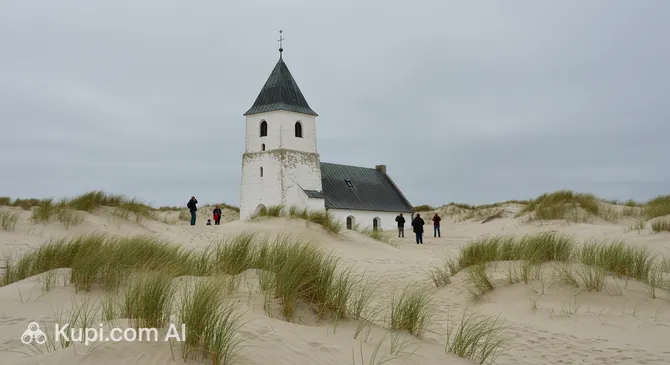
The Buried Church. Illustration.
Source: Kupi.com AI

Traveler photos:

  • One of the most unusual and photogenic attractions is The Buried Church (Den Tilsandede Kirke). In the late 18th century, this ancient structure was so covered by shifting sands that parishioners had to dig out the entrance before each service. Eventually, the church was abandoned, and today only its lonely white tower rises above the dunes, becoming a symbol of the struggle between man and nature.

  • Skagen is the birthplace of a unique artistic phenomenon known as the "Skagen School." In the late 19th and early 20th centuries, artists from all over Scandinavia flocked here to capture the special northern light and the lives of local fishermen. Their legacy can be explored at the Skagens Museum, as well as by visiting the house-museums of famous artists, such as Anchers Hus.

  • In the vicinity of Skagen lies one of Europe's largest migrating dunes – Råbjerg Mile. This giant sand mass, reaching up to 40 meters in height, moves approximately 15 meters northeast every year, gradually swallowing everything in its path.

  • Every year, on the first weekend of July, Skagen hosts one of Denmark's oldest music festivals – the Skagen Festival. It gathers thousands of fans of folk, country, and blues music from all over Scandinavia and other countries, turning the quiet resort town into a vibrant center of musical culture.

How to Get There

When planning a trip to the very north of Jutland, it is useful to find out all the ways to get to the town of Skagen in advance. This picturesque corner of Denmark, located on a narrow peninsula, has its own transport accessibility features that should be considered when planning your route.

The town of Skagen itself does not have its own airport, so travelers who prefer air travel should look to the nearest transport hubs. The most convenient and closest option is Aalborg Airport (AAL), located in the city of Aalborg, about 83 km from Skagen. This is the main regional hub, handling both domestic and international flights. The journey from the airport to Skagen by rental car or taxi will take about 1 hour and 15 minutes. You can also use public transport: a bus to Aalborg station and then a train.

Another option, especially convenient for those planning a combined route through Sweden, is Gothenburg Landvetter Airport (GOT). It is located in the Swedish city of Gothenburg, at a distance of about 102 km in a straight line. However, it should be noted that the cities are separated by the Kattegat strait, so the route will include a ferry crossing from Gothenburg to the Danish town of Frederikshavn, from where Skagen can be quickly reached by train or bus. This is a major international airport with a large number of flights.

You can also consider Aarhus Airport (AAR), located in the city of Aarhus, approximately 158 km south of Skagen. This is a less busy airport, but it can be convenient for certain connections. The journey time by car from here will be about 2 hours.

For clarity, here is summary information on the main airports through which you can reach the region:

AirportPassenger trafficDistance
Aalborg Airport1.4 mln83 km
Göteborg Landvetter Airport5.3 mln102 km
Kristiansand Airport1.1 mln157 km
Aarhus Airport542 958158 km
Torp Sandefjord Airport1.9 mln164 km

The rail network in Denmark is excellently developed, and a train journey is one of the most scenic ways to reach the north of the country. Although there is a railway station in Skagen itself, major lines lead to neighboring hub cities. The key transfer point for most tourists will be Aalborg Railway Station. It is located about 85 km from Skagen. InterCity trains from Copenhagen and other major cities arrive here. Regional trains regularly depart from Aalborg toward Frederikshavn, where a short transfer to the private Skagensbanen railway, which goes directly to the center of Skagen, is often required.

If you are traveling from southern Jutland, an important point on the route may be Aarhus H Station in the city of Aarhus (about 177 km from Skagen). This is a large transport hub with a high passenger flow, from where it is easy to reach Aalborg and continue the journey north.

Below is information about the nearest major railway hubs:

StationPassenger trafficDistance
Aalborg Railway Station2.2 mln86 km
Gothenburg Central Station27 mln102 km
Kristiansand Railway Station160 km
Aarhus H Station6.3 mln177 km
Ängelholm Railway Station215 km

Main Attractions

Skagen, a charming town at the northernmost tip of Denmark, is famous for its unique light, picturesque landscapes, and rich artistic heritage. Here, everyone will find something for themselves, from natural wonders to cultural treasures.

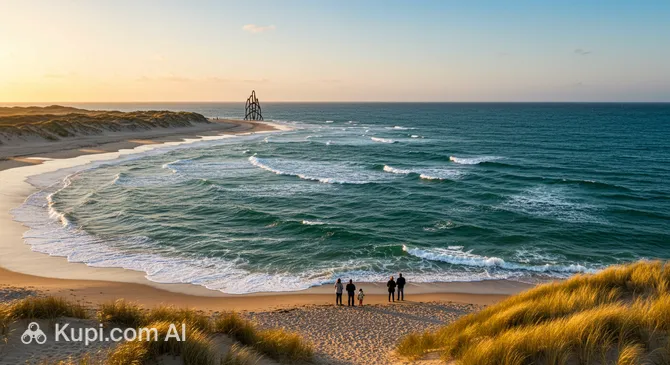
One of the main attractions that is definitely worth a visit is Grenen. This is an amazing place where two seas meet – the Skagerrak and the Kattegat. You can literally stand with one foot in one sea and the other in another. The sight of waves colliding with each other is truly mesmerizing and attracts thousands of tourists who want to witness this natural phenomenon.

Grenen. Illustration.
Source: Kupi.com AI

Traveler photos:

No less famous is The Buried Church (Den Tilsandede Kirke). It was once the main parish church of Saint Lawrence, but over the centuries, the sands relentlessly encroached, and today only its white tower rises above the dunes. This place is steeped in legends and serves as an impressive reminder of the power of nature. Visitors can climb the tower to enjoy the views.

The Buried Church. Illustration.
Source: Kupi.com AI

Traveler photos:

Art lovers should definitely visit the Skagens Museum. It houses a magnificent collection of works by the famous artists of the Skagen School, who were captivated by the special light and atmosphere of this region in the late 19th and early 20th centuries. Paintings by P.S. Krøyer, Anna and Michael Ancher, Christian Krohg, and other masters will immerse you in the world of Danish Impressionism.

Skagens Museum. Illustration.
Source: Kupi.com AI

Traveler photos:

Another symbol of the city is Skagen's Grey Lighthouse (Det Grå Fyr). It is the second tallest lighthouse in Denmark, and its top offers a breathtaking panoramic view of the surroundings, including Grenen and the town itself. The lighthouse also serves as a center for bird watching, making it a popular spot for ornithologists.

Skagen Grey Lighthouse. Illustration.
Source: Kupi.com AI

Traveler photos:

For those who want to dive deeper into the history of the Skagen painters, it is recommended to visit Anchers Hus (Ancher's House). This is the former home and studio of artists Anna and Michael Ancher, preserved as it was during their lifetime. Here you can see their personal belongings, furniture, and, of course, many of their paintings, allowing you to feel the atmosphere of creativity and family life of this famous couple.

Local Cuisine

The cuisine of Skagen is a real feast for seafood lovers. Thanks to its location at the junction of two seas, the town offers an abundance of seafood that forms the basis of the local gastronomic experience. The main hit that is definitely worth trying is the famous "Skagen shrimp bun" (Skagenröra) – an appetizing mixture of the freshest shrimp, mayonnaise, dill, and lemon, served on crispy bread or toast. This dish has become a true hallmark of the region.

In addition to the shrimp bun, the menu of local restaurants and cafes features many dishes made from smoked and pickled fish, especially herring and salmon. The traditional Danish "smørrebrød" – an open sandwich with various toppings where fish and seafood play a leading role – remains consistently popular. For those looking for more unusual flavors, some establishments may offer delicacies such as sea urchin soup or freshly caught fried sea bass.

Speaking of drinks, in Skagen you can enjoy both local beer and other traditional Danish drinks. An excellent place to get acquainted with local brewing is the Skagen Brewery, where you can try various types of craft beer. Among non-alcoholic drinks, fruit juices and lemonades are popular, often made from local berries and fruits. Of course, good coffee is always available to finish off a meal.

Skagen Brewery. Illustration.
Source: Kupi.com AI

Traveler photos:

The food culture in Skagen is closely tied to the sea and fresh produce. Locals and tourists love to visit cozy restaurants overlooking the harbor, where the catch of the day is served. Fish markets are another popular spot where you can not only buy the freshest fish and seafood but also try them on the spot in small eateries. It is also worth paying attention to farmers' markets offering fresh vegetables, local cheeses, and homemade pastries – perfect ingredients for a picnic on the picturesque coast. The gastronomic life of the town becomes particularly lively during summer festivals, when culinary fairs are held on the waterfront, offering a wide range of local specialties.

Travel Tips

Planning a trip to charming Skagen? Wonderful! To ensure your journey to this picturesque corner of Denmark goes smoothly and leaves only pleasant impressions, we have prepared some practical tips.

  1. Clothing and items for the weather: Skagen is known for its changeable coastal climate.

    Even in summer, evenings can be cool, so layering is your best friend. Be sure to bring a windproof and waterproof jacket, comfortable shoes for long walks on the beaches and in town, as well as sunglasses and sunscreen – the sun here can be very active. Don't forget a travel adapter (Type K in Denmark).

  2. Getting around town:

    Skagen is a compact town that is ideal to explore on foot or by bicycle (rentals are available in many places). Public transport is represented by local buses running along main routes and to nearby attractions. Taxis are available but can be expensive. Renting a car makes sense if you plan to explore the surrounding area of North Jutland.

  3. Financial matters:

    The official currency is the Danish Krone (DKK). Credit and debit cards (Visa, Mastercard) are accepted almost everywhere. ATMs are easy to find. You can exchange currency at banks or exchange offices, but the rate may be less favorable than withdrawing cash from an ATM. Tips are usually included in the bill in restaurants, but if the service was exceptional, you can leave 5-10%.

  4. Health and safety:

    Denmark is a very safe country, and Skagen is no exception. Standard precautions, such as keeping an eye on personal belongings, will be sufficient. Pharmacies (Apotek) are easy to find, but not all are open 24/7; check the location of the on-duty pharmacy. For emergency medical assistance, call 112. It is recommended to have travel insurance.

  5. Communication:

    The official language is Danish. However, most Danes, especially in the tourism sector, speak English excellently. Learning a few basic phrases in Danish (e.g., "Hej" – hi, "Tak" – thank you) will be a nice gesture. Wi-Fi is widely available in hotels, cafes, and public places. A local SIM card can be purchased in supermarkets or mobile phone shops.

  6. Local etiquette:

    Danes value politeness, punctuality, and personal space. It is customary to greet with a handshake when meeting. In public places, try not to be noisy. A smile and friendliness are always welcome. Using the informal "you" (du) is common, even with strangers, but if in doubt, start with the more formal "De" (You), although this is less common.

  7. What to avoid:

    Try not to litter, especially on beaches and in natural areas – Danes take great care of the environment. Also, avoid excessively loud behavior in public places, as it may be perceived as impolite.

  8. Special feature of Skagen:

    Don't miss the opportunity to visit Grenen – the place where two seas, the North and the Baltic, meet. This unique natural phenomenon is best observed during low tide. Also, keep in mind that the town is very popular in summer, so it's worth booking accommodation and some excursions in advance.

We hope these tips help you better prepare for your trip and get the most out of your visit to the unique Skagen. We wish you an unforgettable journey!

Entertainment & Nightlife

Despite its modest size, Skagen offers a surprisingly lively evening and nightlife, especially during the warm summer months when the town fills with tourists. The atmosphere here is usually relaxed and friendly, and the main center of attraction for evening entertainment is the harbor area and its adjacent central streets.

The heart of Skagen's nightlife beats around the port and on Havnevej. Here you will find many bars, pubs, and restaurants that turn into lively meeting places after dark. The crowd is diverse – from local residents to travelers from all over the world. The dress code in most establishments is quite casual, although some clubs may require a neater appearance. Most bars stay open until late at night, especially on weekends, while clubs can stay open until morning.

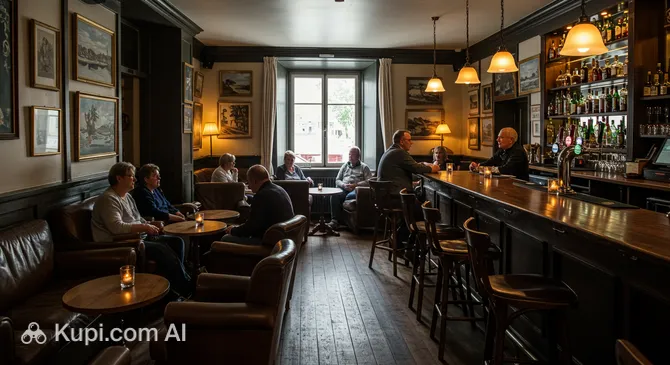
Green's Pub and Café. Illustration.
Source: Kupi.com AI

Traveler photos:

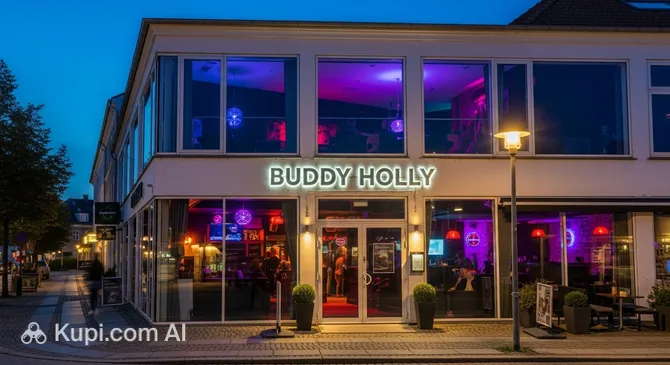
Among the popular places for evening relaxation is Green's Pub & Café, known for its cozy atmosphere and a good selection of drinks. Another establishment worth visiting is the Skagen 74 bar, which offers a lively setting. If you are looking for a place to dance, the Buddy Holly nightclub is one of the city's main dance spots. For a quieter evening with dinner and local beer, the Skagen Brewery is an excellent choice.

Buddy Holly. Illustration.
Source: Kupi.com AI

Traveler photos:

Practical Tips: The best time to experience Skagen's nightlife is during the summer season and on weekends. Prices in bars and clubs are comparable to other tourist cities in Denmark. You can get to your hotel at night by taxi, which is better to book in advance, especially during the peak season. The town is generally safe for night walks, especially in central areas, but standard precautions should always be taken.

During the day, Skagen also offers many interesting activities. You can visit the famous Skagens Museum to see the works of local artists, explore the unique natural phenomenon at Cape Grenen where two seas meet, or stroll through the picturesque Skagen Marina. Also worth visiting are The Buried Church and Skagen's Grey Lighthouse.

Parks & Museums

Skagen, a charming town at the northernmost tip of Denmark, offers visitors not only unique natural landscapes but also a rich cultural heritage reflected in its many museums and historical sites. Here, everyone will find something for themselves, whether it's walking through sandy dunes or immersing themselves in the world of art of the famous Skagen painters.

The main natural attraction of Skagen is undoubtedly Grenen – a sandbar where two seas, the Skagerrak and the Kattegat, meet. This unique place attracts tourists with the opportunity to literally stand with one foot in one sea and the other in another. A walk along the endless beaches and dunes around Grenen will provide unforgettable impressions and magnificent photos. The area is also known for its special light, which was so valued by artists.

The cultural life of Skagen is unthinkable without the Skagens Museum, which houses an impressive collection of works by the Skagen painters – a group of Scandinavian artists who worked here in the late 19th and early 20th centuries. Their canvases, depicting local life, landscapes, and portraits, are the city's hallmark. To dive deeper into the atmosphere of that time, it is worth visiting the artists' house-museums: Anchers Hus, which has preserved the setting in which the famous artist couple Anna and Michael Ancher lived and worked, and Drachmann's House, the home of poet and artist Holger Drachmann. Another interesting museum is the Skagen Coastal Museum, which tells the history of fishing and the life of the local population on this rugged coast.

Among the historical attractions, The Buried Church (Den Tilsandede Kirke) stands out – the tower of the ancient Saint Lawrence Church, most of which was buried under the advancing sands at the end of the 18th century. This lonely spire in the middle of the dunes has become one of Skagen's most recognizable symbols. No less famous are the town's lighthouses: the majestic Skagen's Grey Lighthouse, offering magnificent panoramic views from its top of the surrounding landscapes and the two seas, and the historical Lever Light (Vippefyret), a reconstructed ancient type of lighthouse with an open fire. For those interested in history, the Skagen Bunker Museum, located in an actual bunker from the 1940s, tells the story of the Atlantic Wall.

For an authentic experience, take a walk through the old Østerby district of the town with its characteristic yellow houses with red tiled roofs and white-trimmed gables, which are so often seen in the paintings of the Skagen artists. And if you want to see something less touristy but important to the locals, visit the modern Skagen Church, which is an active center for the local community and features interesting architecture.

Getting Around

Skagen is a small but charming town, and its transport system matches its size. The main types of public transport here are local buses, which connect key points of the town and its surroundings. Skagen also has a railway station, which is the terminus on the Frederikshavn–Skagen line, allowing you to reach neighboring settlements. Thanks to the town's compactness, many attractions are within walking distance, making strolling a pleasant way to get around.

For paying for bus fare, single tickets are usually used, which can typically be purchased directly from the driver when boarding. In Denmark, the Rejsekort transit card system is common, which may be convenient if you plan to travel a lot around the North Jutland region, but for short trips within Skagen itself, standard tickets are often sufficient. It is recommended to have Danish krone for payment, although the possibility of paying by bank card with the driver should be clarified. It is best to check the latest information on fares and ticket options on-site or on the websites of local transport operators.

Practical tips for tourists are simple: bus tickets are bought from the driver upon entry. Separate validation is usually not required; just presenting it to the driver is enough. Buses in Skagen run according to a schedule, which can be found at stops or on the official resources of transport companies. It is important to note that in the evenings, as well as on weekends and holidays, frequencies may be reduced, or some routes may not operate. Train tickets are purchased at the railway station or through the online services of the Danish State Railways (DSB).

In addition to public transport, there are other convenient ways to get around Skagen. One of the most popular and pleasant options is the bicycle. The town and its picturesque surroundings, including the famous Cape Grenen, are ideal for cycling. You can find several bicycle rental points in Skagen. Of course, taxi services are always available; they can be called by phone or found at special stands, although this will be a more expensive option. Given the town's small size, many tourists prefer to explore it on foot, enjoying the fresh sea air and unique atmosphere.

Accommodation

In Skagen, travelers will find a variety of accommodation options to suit different preferences and budgets. The town offers cozy hotels, guesthouses, self-catering apartments, as well as charming cottages, many of which reflect the unique local style.

Most accommodation options are concentrated in the central part of Skagen, providing easy access to shops, restaurants, and attractions such as the Skagens Museum. Areas closer to the picturesque harbor and beaches are also popular, making it convenient to reach places like Skagen Marina. The choice of area depends on your preferences: whether you are looking for a lively atmosphere or a secluded getaway.

Ruth's Hotel. Illustration.
Source: Kupi.com AI

Traveler photos:

Among the well-known hotels in Skagen, one can mention, for example, Ruths Hotel, which offers comfortable rooms and quality service. Overall, the town has both small family-run guesthouses and larger hotel complexes.

When planning a trip to Skagen, especially during the peak tourist season (summer months), it is highly recommended to book your accommodation in advance. The price range varies: you can find both budget-friendly options and mid-to-high-class hotels. Booking is convenient through popular international online platforms or directly on the websites of hotels and guesthouses.

Nearby Cities

For those who want to explore the surrounding area, Skagen serves as an excellent starting point for day trips to several interesting nearby places:

Among them, Aalborg stands out, one of the oldest cities in Denmark, which will enchant you with its historical architecture, lively waterfront, and the famous Jomfru Ane Gade street with its numerous restaurants and bars. It is also worth visiting Hjørring, a cozy market town where you can stroll through old streets, browse local shops, and visit, for example, the Vendsyssel Historical Museum or St. Catherine's Church.

CityPopulationDistance
Frederikshavn23 50132 km
Sindal3 00036 km
Hirtshals6 00040 km
Saeby8 84144 km
Hjorring25 76446 km

These nearby destinations provide an insight into the diverse culture and landscapes of the Denmark region.

Shopping & Souvenirs

Shopping in Skagen is a charming addition to your holiday, offering not so much large shopping centers as cozy little shops and art galleries. The town is famous for its goods related to art, maritime themes, and local crafts. Here you will find unique items that reflect the spirit of this picturesque corner of Denmark.

The main commercial life of Skagen is concentrated along the main street Sankt Laurentii Vej and its adjacent side streets. Numerous clothing boutiques, shops with Scandinavian-style interior items, jewelry stores where you can find amber products, and, of course, art galleries representing the works of local masters and reproductions of the famous Skagen painters are located here. A walk along this street is a pleasure in itself thanks to the beautiful houses and relaxed atmosphere.

In Skagen, you won't find large modern shopping malls. The town retains its authenticity, and shopping here is more about finding unique items in small independent shops. Instead of malls, look for specialized shops offering designer items, handmade ceramics, and other products from local artisans.

While there are no large permanent markets in Skagen like in big cities, in the Skagen Marina area or in the city center during the tourist season, you may come across small fairs or stalls selling fresh local produce, fish, as well as souvenirs and handmade crafts. This is a great place to feel the local flavor and perhaps buy something tasty or as a memento.

As souvenirs from Skagen, it is worth bringing back items related to its rich artistic heritage: reproductions of paintings by Skagen artists, art books, and postcards. Also popular are amber products, jewelry with maritime symbols, local ceramics, and textiles. Don't forget about Danish delicacies – for example, local snaps or confectionery.

Shops in Skagen are usually open Monday to Friday from about 10:00 to 17:30, and on Saturdays until 14:00 or 16:00. On Sunday, most shops are closed, although during the peak tourist season, some may be open. Bank cards (Visa, Mastercard) are accepted almost everywhere, but having some Danish krone in cash wouldn't hurt.

For tourists from non-EU countries, a Tax Free system is available in Denmark. This means that when purchasing goods for a certain amount in shops participating in the system, you can apply for a VAT refund. Look for the "Tax Free Shopping" logo in windows and don't forget to ask the seller for a special tax refund form, which you will need to present at customs when leaving the European Union.

Reached the end of the page?

That means the route is fully explored