Support

Grenen

About

Imagine a place where the waters of two seas meet, creating a visible line on the endless water surface. The Grenen sand spit is a unique natural wonder located at the northernmost tip of the Jutland peninsula in Denmark.
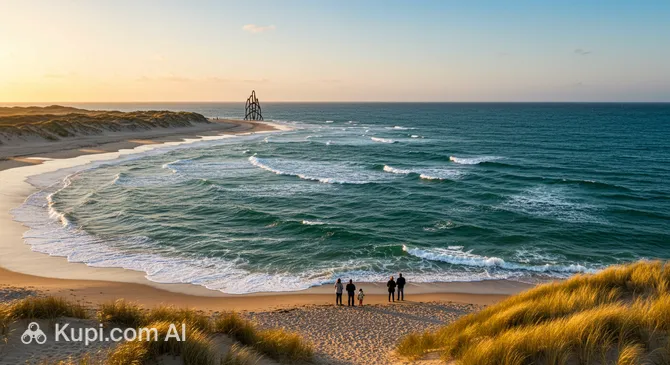
Grenen
Grenen. Иллюстрация. Источник: Kupi.com AI
This spectacular site is located just a few kilometers from the colorful town of Skagen and draws travelers with its vastness and pristine beauty.

The main feature of the spit is that two straits collide here — the Skagerrak (North Sea) and the Kattegat (Baltic Sea). Due to different density, salinity, and temperature, their waters do not mix immediately, forming a clear boundary that can be observed directly from the shore. The spit gets its name, which means "branch" in Danish, from its whimsical, winding shape, which waves have polished over millennia.

Today, Grenen is considered one of the most popular natural attractions in the region, with the highest ratings among tourists. It is an ideal location for those seeking inspiration in stunning sunsets, dreaming of seeing wild dunes overgrown with roses, or simply wanting to feel like they are at the edge of the world, surrounded by two elements.

Contacts

To plan your visit to this natural landmark, the following information may be useful:

How to contactContact
AddressSkagen, Denmark

What to Do

The main ritual for every guest is to reach the very tip of the spit to see the line where two seas meet with their own eyes. Standing on a narrow strip of sand, you will feel the power of nature as you watch the waves of the North and Baltic Seas collide. This is the perfect moment for meditation to the sound of the surf or for creating unique panoramic photographs.

For lovers of panoramic views, it is a must to climb the local lighthouse, which offers a breathtaking view of the winding spit and the endless blue. If you find yourself here in May, don't miss the birdwatching festival — Skagen is recognized as one of the best places in Europe for observing migratory birds.

For active tourists, there are trails for hiking and horseback riding through picturesque dunes and forests. In summer, you can enjoy relaxing under the soft northern sun on the snow-white beaches, and on the way to the sea, you can stop by the grave of the famous poet Holger Drachmann. These landscapes once inspired great artists, and today every visitor can feel like part of a living canvas.

Getting There

The spit is located approximately 3–4 kilometers north of the city center. The most convenient way to reach the start of the route is by Bus No. 99, which departs from the railway station and takes passengers directly to the parking lot at the entrance to the nature area in just 10–15 minutes.

If you prefer private transport, you can reach the parking lot by car or taxi. During the summer, many tourists choose to rent a bike — the path runs through picturesque dunes, past old lighthouses, and the grave of poet Holger Drachmann. From the parking lot to the "meeting of the seas," you will need to walk about 2–3 kilometers along the sandy shore or take the special "Sandormen" tractor-trailer, which operates during the tourist season.

Ближайший город: Skagen

History & Facts

The amazing landscape of this place has been forming over thousands of years. Under the influence of the currents of the North and Baltic Seas, sand was gradually washed up, forming a long spit whose shape resembles a tree branch — which is exactly what the Danish word "grenen" means. The first mentions of fishing settlements in these parts date back to 1299, and by 1413, Skagen had already received the status of a market town.

For a long time, the cape posed a serious danger to sailors due to treacherous shoals. To make the route safer, the first brick lighthouse, Det Hvide Fyr, was built here in 1747. Another silent witness to the power of nature is the famous 14th-century "Buried Church" (Den Tilsandede Kirke): the sand advanced so rapidly that parishioners had to dig out the entrance before every service, until the church was finally closed in 1795, leaving only the tower as a landmark.

In the late 19th century, the harsh and ever-changing beauty of these places attracted the attention of the famous artists of the Skagen School. Plein-air masters such as P.S. Krøyer and Holger Drachmann were captivated by the special northern light and the endless expanses, creating thousands of canvases here that are today recognized as world masterpieces of marine landscape painting.

Time Needed

To enjoy the walk and unique views at a leisurely pace, it is worth setting aside 2 to 4 hours for your visit. This time is enough for the walk to the very tip of the cape, a short photo session at the border of the two seas, and a visit to the old lighthouse.

If you plan to have a picnic among the dunes, go birdwatching, or explore the more remote trails in the nearby forests and fields, you could easily spend a full day here. Keep in mind that walking through deep sand can be tiring, so allow time for rest.

Working Hours

The Grenen nature area is open 24 hours a day (Open 24 hours) every day of the week. There are no gates or operating schedules, so you can come here at dawn to catch the first rays of sun over the two seas, or stay until late evening, enjoying the silence and the stars.

Круглосуточно

Nearby

The surroundings of the country's northernmost point offer many interesting locations to complement your trip. Exploring these places will allow you to better feel the maritime character of the region and its rich cultural history.

NameDistance
Skagen Coastal Battery1.6 km
Skagen Bunker Museum1.6 km
Skagen Grey Lighthouse1.9 km
The Tipping Lighthouse3.5 km
Anchers House4.1 km
Skagens Museum4.2 km
Buddy Holly4.8 km

Reached the end of the page?

That means the route is fully explored