Support

Natadola

About

Natadola is not a bustling metropolis with busy avenues, but a secluded paradise stretching along the southwestern coast of Viti Levu island. This place is rightfully considered the jewel of Fiji, where lush tropical landscapes merge with the turquoise waters of the Pacific Ocean. There are no administrative centers or densely populated residential quarters here; instead, travelers are greeted by an atmosphere of complete relaxation and harmonious union with pristine nature.

Geographically, the area is a picturesque bay protected by a coral reef, which creates magnificent conditions for a beach holiday. The climate here is warm and sunny all year round, and the fresh ocean breeze makes your stay comfortable even on the hottest days. Although there is no permanent urban population in the conventional sense, life is in full swing in the surrounding villages and on the hotel grounds. To learn more about how this shore turned into a prestigious resort area, explore the history of Natadola, which is inextricably linked with the development of tourism and the preservation of local traditions.
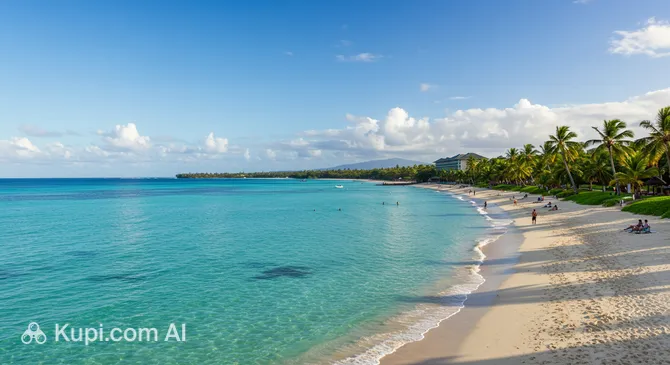
Natadola. Illustration.
Source: Kupi.com AI

The main point of attraction for tourists is undoubtedly the eponymous beach, which is regularly included in lists of the best in the entire archipelago. Snow-white sand gently sloping into crystal-clear water beckons lovers of sunbathing and aesthetic pleasure. Natadola offers a unique combination of tranquility and adventure: here you can not only lounge lazily in a deck chair but also conquer the waves on a surfboard or take an unforgettable horseback ride along the water's edge at sunset.

It is worth visiting Natadola to get a real taste of island life, where time flows at its own special rhythm. Famous Fijian hospitality, a high level of service, and the untouched beauty of the landscapes make this place an ideal choice for those seeking peace and wanting to take home a piece of the Pacific idyll.
Weather Overview

Weather:

The climate in Natadola can easily be called ideal for a tropical holiday, as eternal summer with mild temperature fluctuations reigns here. The year is conditionally divided into wet and dry seasons, but the warmth remains constant. The hottest months are January and February, when the average temperature stays at around 26.9°C, and during the day the air warms up to 28.7°C. This time is characterized by frequent precipitation: it can rain up to 24–26 days a month, bringing life-giving moisture to the lush vegetation.

From June to September, drier and fresher weather sets in on the coast. During this period, which is conditionally considered "winter," the average temperature is about 24°C, and in August it drops to 23.7°C. The number of rainy days sharply decreases to 6–8 per month, and the level of precipitation becomes minimal (about 2 mm), which guarantees many clear and sunny days for beach leisure.

Expect a warm and humid season at the beginning of the year with periodic rains, and dry, sunny months from June to October with a comfortable freshness. To accurately plan your wardrobe and activities, we recommend exploring what the weather in Natadola will be like by month on our special page.

Average monthly temperature

Average monthly precipitation

Interesting Facts

Besides being one of the most picturesque places in the archipelago, Natadola hides several curious features that make it unique even by the standards of a tropical paradise. Here are a few facts that will help you look at this corner of Fiji in a new way:
  • Swimming without a schedule. Natadola is one of the rare places on Viti Levu island that does not depend on the whims of the ocean. While at many other beaches the water recedes far during low tide, exposing the coral bottom and making swimming impossible, Natadola's deep-water lagoon allows for comfortable swimming at any time of day, keeping the water clear and warm.

  • Cinematic fame. The landscapes of this coast are so quintessential that they are often used as the "face" of tropical relaxation. The snow-white sand and the perfect curve of the bay have repeatedly served as natural sets for filming commercials for famous world brands seeking a flawless backdrop for their campaigns.

  • Surfing in the lagoon. Contrary to the stereotype of calm resort waters, Natadola offers unique conditions for catching waves. The bottom topography here forms soft but steady waves, which are considered among the best for learning to surf. This allows beginners to get on a board in safe conditions without going out to dangerous outer reefs.

  • Authentic service on the sand. Premium relaxation and local color harmoniously coexist here. Right on the beach, you can meet residents of nearby villages offering horseback rides along the surf or traditional massages in the open air — an experience that provides far more emotion than standard spa treatments.

How to Get There

A journey to this secluded corner of Fiji usually begins with a flight to the main island of the archipelago — Viti Levu. Since the resort area is located far from bustling cities, direct access is only possible by road. You can explore all the ways to get to the city and choose the most convenient route for your vacation.

The main air gateway for most travelers is Nadi International Airport (IATA: NAN). It is important to note that there is no airport in Natadola itself; this major aviation hub is located in the city of Nadi, about 40 km away. This is the most popular point of arrival for international tourists. The journey from the terminal to the beaches of Natadola by taxi or transfer will take approximately 1 hour 20 minutes.

Another option is to fly into Nausori Airport (IATA: SUV), which serves the country's capital and is located near the city of Suva. It is located much further away, about 131 km from Natadola, and is more often used for domestic flights or flights from neighboring island nations. The car journey from here will be long and will take roughly 3 hours 40 minutes.

For clarity, here is a summary of the main airports:

AirportPassenger trafficDistance
Nadi International Airport2.6 mln40 km
Nausori Airport366 506131 km
Kandavu Airport8 000138 km
Savusavu Airport2 000258 km
Labasa Airport32 000281 km

Rail service in this part of the country is not used for passenger transport, so it is impossible to get to Natadola by train. The main means of land transport remains motor vehicles. Tourists arriving at airports usually use official taxis, rent cars, or book transfers provided by hotels. The route to the resort lies along the scenic Queen's Road highway, and the trip itself becomes a small excursion with views of the coast.

Main Attractions

The main attraction and the heart of the region is undoubtedly Natadola Beach itself. This place is regularly recognized as one of the best beaches in the world thanks to its wide strip of soft white sand and azure waters. The uniqueness of the location lies in the fact that here, unlike many other Fiji resorts, swimming is comfortable at any time of day, regardless of the tides. The lagoon, protected by a coral reef, is ideal for snorkeling, allowing you to see the vibrant underwater world just a few meters from the shore.

For fans of elite sports, the Natadola Bay Championship Golf Course is a real magnet. This world-class golf course, designed by the famous Vijay Singh, offers players 18 holes of championship standard. However, it is worth visiting this place not only for the game: the course is located on picturesque hills that offer breathtaking panoramic views of the Pacific Ocean and coral reefs. The clubhouse is open to visitors who simply wish to enjoy the scenery over lunch or a drink.

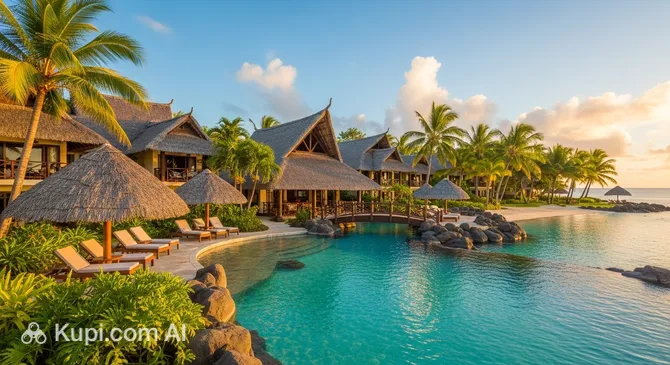
Yatule Resort and Spa. Illustration.
Source: Kupi.com AI

Traveler photos:

A significant infrastructure facility and center of attraction is the Yatule Resort and Spa. This complex, located on the first coastline, is interesting for its authentic architecture, harmoniously integrated into the tropical landscape. Even if you aren't staying here, the place attracts with its relaxed atmosphere: live music evenings and traditional Fijian shows are often held here, and the local restaurant offers excellent opportunities to get acquainted with island cuisine against the backdrop of the sunset.

Lovers of romance and nature should definitely pay attention to horseback riding along the coast. Locals offer tourists the opportunity to ride along the edge of the surf, which has become one of Natadola's signature activities. This pastime allows you to explore remote corners of the beach and take incredibly beautiful photos, especially during the pre-sunset hours when the sun paints the water in golden tones.

Local Cuisine

The Natadola culinary scene is a harmonious union of the generous gifts of the Pacific Ocean and tropical exoticism. Since this area is primarily a resort zone, the gastronomic experience here is inextricably linked with the relaxed atmosphere of the coast. The menu is based on the freshest seafood: from tuna and mahi-mahi to octopus and mussels, which local fishermen deliver to restaurant kitchens literally at dawn.

The main dish that every guest must try is kokoda. This is a true signature of Fijian cuisine, reminiscent of ceviche but with a special island character. Pieces of raw fish are marinated in lime juice and then mixed with thick coconut milk, fresh vegetables, onions, and chili. In Natadola establishments, kokoda is often served impressively in a coconut shell, which makes the tasting not only delicious but also aesthetic.

Hearty root vegetables such as taro (dalo) and yams, which are boiled or baked, are popular as side dishes. Those with a sweet tooth should pay attention to desserts made from local fruits: juicy papayas, mangoes, pineapples, and sweet Fijian bananas are available here in abundance. You can also find traditional sweet flatcakes with shredded coconut on the coast, which are perfect for a snack.

Yatule Resort and Spa. Illustration.
Source: Kupi.com AI

Traveler photos:

As for drinks, the best way to quench your thirst in the heat remains ice-cold coconut water straight from the nut or freshly squeezed tropical fruit juices. In the evening, tourists prefer to relax with a glass of local beer or exotic rum-based cocktails. The dining culture here is centered around hotel restaurants and beach bars. An excellent place to get acquainted with local culinary traditions is the restaurant of the Yatule Resort and Spa complex, where you can enjoy authentic flavors to the sound of the surf. Periodically, they host gastronomic evenings where dishes are cooked over an open fire according to ancient recipes.

Travel Tips

A trip to Natadola promises to be an unforgettable immersion into the world of tropical serenity, but even in paradise, it is useful to know the local nuances. We have collected practical recommendations for you that will help you avoid minor troubles, understand cultural characteristics, and focus on a quality holiday.

  1. Clothing and equipment. The climate here is hot and humid, so prioritize loose clothing made of natural fabrics (cotton, linen). For the beach, be sure to bring coral shoes (aqua shoes) to protect your feet from sharp corals during low tide. Don't forget powerful sunscreen (SPF 50+) and a hat. Remember: a beach style is acceptable within the hotel, but for trips to neighboring villages, you should dress modestly, covering your shoulders and knees.
  2. Transport. There is no public transport in the resort area itself. For trips to Nadi or Sigatoka, it is most convenient to book a taxi through the hotel reception. Apps like Uber are not common here, so it's better to agree on a fixed price for the trip in advance or ask the driver to turn on the meter. Renting a car only makes sense if you plan to travel actively throughout the island.
  3. Finances. The official currency is the Fijian dollar (FJD). International cards are accepted in resort hotels and restaurants without problems. However, if you want to buy souvenirs from locals on the beach, coconuts by the road, or pay for small services, you will definitely need cash. There are no ATMs directly on the beach (only in the lobbies of major hotels), so it's better to withdraw money in advance at the airport.
  4. Health and safety. Tap water in hotels is usually safe, but tourists are advised to drink bottled water to avoid acclimatization issues. Be sure to use repellents in the evening — tropical insects can be persistent. Natadola is a quiet place, but do not leave valuables unattended on the public beach and avoid walking alone in unlit areas outside of hotels at night.
  5. Communication and internet. Wi-Fi in hotels can be paid or work intermittently. For reliable communication, we recommend buying a SIM card from local operators (Vodafone or Digicel) immediately upon arrival at the airport. English is the official language and you will be understood everywhere, but learn the word "Bula!" (Hello!) — it will instantly win over the locals.
  6. Local etiquette. Fijians are very friendly and hospitable. If you are invited to a local village, be sure to remove your hat and sunglasses — wearing them is considered a sign of disrespect to the chief and the community. It is customary to take off your shoes when entering any house.
  7. What to avoid. Strictly avoid touching the heads of Fijians (including children). In local culture, the head is considered a sacred part of the body, and such a gesture is perceived as an insult. Also refrain from topless sunbathing on public beaches — local society is quite conservative.
  8. "Fiji Time". Be prepared for the phenomenon of "Fiji Time." Life here flows at a slow pace: a bus might be late, and an order in a restaurant might take a little longer than usual. Do not get annoyed and do not rush the staff — take it as part of the relaxing atmosphere of the island and a reason to slow down yourself.

By following these simple tips, you will be able to feel confident and comfortable in Natadola. Enjoy the gentle ocean, the sincere smiles of the locals, and allow yourself to completely dissolve in the magic of this amazing corner of Fiji.

Entertainment & Nightlife

Nightlife in Natadola has its own unique, relaxed rhythm, which is completely different from the noisy parties in major tourist hubs. Here you won't find districts with neon nightclub signs or streets crowded with discos. Evening entertainment in this part of Fiji is concentrated exclusively on the grounds of resort complexes, offering guests an atmosphere of "barefoot luxury," live acoustic music, and immersion in local culture under the starry sky.

The epicenter of evening activity is the coast, where the main bars and restaurants are located. One of the most popular places to watch the sunset and spend the evening is the Yatule Resort and Spa. The bar of this complex, located literally a few steps from the water's edge, is famous for its laid-back atmosphere. Local musical groups regularly perform here, playing both international hits and Fijian serenades. Themed evenings with traditional dances and fire shows, held right on the sand, are particularly popular.

Yatule Resort and Spa. Illustration.
Source: Kupi.com AI

Traveler photos:

If you are looking for a more refined setting, you should check out the venues at the neighboring InterContinental hotel (for example, Kama Lounge). Although this is a more premium level venue, it is open to visitors (prior reservation is recommended). A smart casual style prevails here: men often wear light trousers and shirts, and women wear cocktail dresses. It is an ideal location to enjoy signature cocktails with a view of the torches lighting up the lagoon and listen to jazz or light lounge music.

An important part of "nightlife" in the Fijian sense is the kava drinking ceremony. Almost every evening at Natadola hotels, guests are invited to sit around a large bowl (tanoa) to share this traditional drink, listen to the legends of the elders, and simply socialize. This is a great alternative to bars for those who want to better understand the soul of the islanders. Daytime activities, such as snorkeling or golf, smoothly transition into calm walks along the ocean in the evening, where the only source of light is often just the myriad stars of the Southern Hemisphere.

Practical tips and safety:

  • Transport: Since the venues are located on resort grounds, it is best to move between them on foot along the beach (while it's light) or by taxi. Under no circumstances should you walk along the main highway (Queen's Road) after dark — there is no lighting or sidewalks. You can call a taxi at the reception desk of any hotel.
  • Safety: The hotel grounds and adjacent beach areas are guarded and considered very safe. However, it is not recommended to go far into unlit parts of the beach or outside the resort area alone at night.
  • Prices: Be prepared for the fact that prices for drinks and food correspond to resort levels (cocktails can cost from 20 to 35 FJD).
  • Dress code: A relaxed style is welcome in most bars, but swimsuits and trunks are only appropriate by the pool during the day. In the evening, it is better to wear shorts and a T-shirt or a light dress.

Parks & Museums

Natadola is a unique place where nature itself acts as the main architect and artist. Unlike large cities with their fenced squares and classic museum halls, the boundaries between civilization and wild nature are blurred here. "Green zones" here are not man-made parks, but tropical forests and the coastline, while history and culture live not behind glass display cases, but in the traditions of local villages and sacred natural sites.

Although there are no official city parks directly in the resort area, the surroundings offer impressive natural locations to explore:

  • Navo Island. This small, picturesque island is located right opposite the southern tip of Natadola Beach. During low tide, it can be reached on foot across the exposed floor of the lagoon. The island is a true natural monument: coconut palms grow here, and small caves have been preserved. This place is ideal for a secluded walk and getting to know the untouched flora of the coast.

  • Sigatoka Sand Dunes National Park. Located just 20–30 minutes' drive from Natadola, this park is Fiji's first protected natural area and a site on the UNESCO tentative list. The dunes, reaching heights of up to 60 meters, create a surreal landscape that contrasts with the familiar tropical greenery. The park is interesting not only for its views but also for archaeological finds: traces of the ancient Lapita culture were discovered here.

  • Tropical resort gardens. The grounds of local hotels, such as the Yatule Resort and Spa, are well-tended botanical gardens. Landscape designers have created true oases here with rare species of orchids, hibiscus, and frangipani. A walk along these alleys allows you to enjoy the scents and colors of exotic plants without leaving your comfort zone.

There are no classic museums in Natadola Bay itself, but cultural hunger can be satisfied by visiting nearby ethnographic centers:

  • Kalevu Cultural Centre. Located in close proximity to the resort area (in the Coral Coast district). This is an open-air museum recreating a traditional Fijian village. Visitors can look into authentic "bure" huts, learn about the islanders' way of life, see ancient tools, and visit a historical gallery telling the story of the colonial past and the migration of Pacific peoples.

  • Sigatoka Museum. A small but informative museum in the nearby town of Sigatoka is dedicated to the archaeology and history of the region. The basis of the exposition consists of artifacts found in the sand dunes: ancient ceramics, stone tools, and jewelry that are over 3,000 years old. This is the best place to understand the deep historical roots of the Fijian people.

From a historical perspective, the aforementioned Navo Island is of particular interest. In the past, it was used by local tribes as a natural fortress and refuge during intertribal wars. The island's caves hold legends of defenders, and local guides can tell exciting stories of battles and ancestral spirits that, according to belief, still guard this place.

For those looking for unconventional experiences, we suggest an excursion to the pottery village of Nakabuta. This is not a museum, but a living settlement where the ancient art of creating ceramics without a potter's wheel is still preserved. You can not only watch the process but also try to create your own souvenir, touching a craft passed down from generation to generation.

Getting Around

Since Natadola is a secluded resort zone rather than a classic city, it lacks the municipal public transport system common in metropolises, such as subways, trams, or city trolleybuses. Main movement is carried out along motor roads, and it is important for tourists to take into account that getting directly to the beaches or hotels by public transport can be difficult without transfers.

The main artery connecting this area with the rest of the island is the Queen's Road highway. Intercity buses of the Sunbeam and Pacific Transport companies regularly run along it, following the Nadi — Suva route. An important nuance: these buses do not enter the resort area itself but drop off passengers at the turn-off from the main highway. The distance from the stop to the coast is about 4–5 kilometers. This part of the journey will have to be covered on foot (which is exhausting in the heat) or by a local taxi, which is usually waiting at the intersection.

A strict cashless system is in place for paying bus fares. Cash cannot be given to the driver — you must purchase and top up an eTransport card in advance (for example, from the operator Vodafone). You can buy such a card at the airport, in mobile operator offices, or in large stores. Tourists are recommended to purchase Disposable Cards of a certain denomination if only one or two trips are planned, as the procedure for returning the balance from a permanent card can be complicated.

The most popular and convenient form of transport for guests of Natadola remains the taxi. Cars can be found at special stands near hotels or called through reception. Unlike buses, a taxi will take you directly to the entrance of the hotel or the beach. Official taxis have meters installed, but for long-distance trips or when hiring private drivers, it is customary to agree on a fixed price in advance. Always clarify the cost of the trip before boarding to avoid misunderstandings.

As an alternative, many travelers choose car rental. This gives complete freedom of movement and allows you not to depend on bus schedules. Rental points are located mainly at Nadi Airport, but a car can also be ordered to the hotel. Remember that traffic here is left-handed, and the roads leading from the highway to the coast can be narrow, so drivers should exercise caution.

Rail transport in the region is represented only by a historical narrow-gauge railway once used to transport sugar cane. It does not function as public transport now, but in neighboring areas (for example, on the Coral Coast), sections have been preserved along which tourist draisines and trains run for sightseeing trips, which can be an interesting activity but not a way to get from point A to point B.

Accommodation

Natadola is not the kind of area where travelers will find endless blocks of hostels or budget city hotels. It is an exclusive resort zone focused on calm and respectable relaxation by the ocean. The main housing stock here is represented by resort hotels (resorts), ranging from cozy mid-level complexes to luxury world-class hotels. Private rental options or apartments are extremely rare here, as the territory is mainly divided between large hotel operators.

The most desirable and convenient place to stay is, of course, the first coastline of Natadola Beach. This is where the main hotels are located, offering guests direct access to the water and panoramic views of the lagoon. Staying in this zone allows you to fully immerse yourself in the atmosphere of a tropical paradise without wasting time on transfers to the sea. For those seeking privacy, there are bungalow options hidden in lush gardens a bit further from the main beach.

An excellent example of local hospitality is the Yatule Resort and Spa. This hotel is popular due to its successful location right opposite the famous white sand beach and its authentic architecture, which allows you to feel the true spirit of Fiji. This place is often chosen by couples and families wishing to combine comfort with the flavor of island life.

Yatule Resort and Spa. Illustration.
Source: Kupi.com AI

Traveler photos:

The price range for accommodation in Natadola varies from medium to high (luxury). There are practically no options for extremely budget tourism; for low prices, travelers usually head to neighboring cities or the backpacker zones of the Coral Coast. Booking is mainly done through major international online aggregators or directly on hotel websites, which often allows you to catch special package deals including breakfast or transfers.

Booking tip: Since the number of hotels in Natadola Bay itself is strictly limited, demand for rooms often exceeds supply. It is strongly recommended to book accommodation in advance, especially if your trip is planned for the "dry season" (from May to October) or the Christmas holiday period. The optimal booking period is 3–5 months before the check-in date.

Nearby Cities

For those who want to explore the surroundings, Natadola serves as an excellent starting point for day trips to several interesting nearby locations. The resort's location on the main island of Viti Levu allows for easy access to key cities, each of which has its own unique character.

Closest to the resort is Nadi — a bustling tourist center and the country's main gateway. It is worth coming here to see the majestic Sri Siva Subramaniya Temple, which impresses with its bright Dravidian architecture, or to stroll through the famous Garden of the Sleeping Giant, which houses an impressive collection of orchids. The region's best souvenir markets are also located here.

Slightly further north is Lautoka, known as the "Sugar City" due to its role as the center of Fiji's sugar industry. It is the country's second-largest city, with wide streets adorned with royal palms and a relaxed atmosphere. A trip here will be interesting for those who want to see the non-tourist life of the island, visit the botanical garden, and the colorful local market.

For those ready for a longer journey, the capital Suva is of interest. This is the cultural and political heart of the archipelago, where you can immerse yourself in history at the Fiji Museum, stroll through Thurston Park, and appreciate the colonial architecture. The city offers a contrast between modernity and tradition, being the most cosmopolitan place in the country.

CityPopulationDistance
Sigatoka9 62220 km
Nadi71 04837 km
Malololailai38 km
Castaway Island45 km
Mana Island53 km

These nearby destinations allow you to get an idea of the diverse culture and landscapes of the region, complementing a beach holiday with vivid impressions.

Shopping & Souvenirs

Shopping in Natadola is fundamentally different from the usual shopping trips in big cities. Since it is a secluded resort area, you won't find multi-story shopping centers or noisy shopping streets with world brands here. The shopping process here is more of a relaxed addition to a beach holiday, an opportunity to purchase unique handmade souvenirs or beach accessories without leaving the tropical paradise atmosphere.

The main trade is concentrated on the hotel grounds and directly on the beach. In the boutiques at resorts such as the Yatule Resort and Spa or the neighboring InterContinental, you can find quality summer clothes, swimwear, jewelry, and essentials. If you are interested in larger-scale shopping with a visit to supermarkets and various shops, it is worth heading to the nearest town, Sigatoka, located about 30 minutes away by taxi.

There are no major shopping centers in Natadola itself. For serious purchases, tourists usually go to Nadi or Sigatoka, where chain department stores such as Tappoo or Jack’s of Fiji are represented. In these centers, the range is significantly wider: from electronics and cosmetics to branded clothing and jewelry.

Yatule Resort and Spa. Illustration.
Source: Kupi.com AI

Traveler photos:

Improvised open-air markets add a special flavor to local shopping. Locals often set up small stalls right at the entrance to the beach or along the road leading to the resorts. Here you can buy fresh tropical fruits (mangoes, papayas, coconuts) as well as chat with artisans. This is a great opportunity to support the local community and purchase goods first-hand.

As souvenirs from Natadola, it is worth bringing back items that reflect Fijian culture. Pay attention to:

  • Wood products: kava bowls (tanoa), carved turtle figurines, and masks.
  • Fabrics: traditional sulu (pareo) clothing with bright Polynesian patterns or items made from mulberry bark (masi).
  • Cosmetics: natural coconut oil, handmade soaps, and lotions with the scent of frangipani.
  • Jewelry: black pearl or mother-of-pearl items.

Hotel shops usually operate from early morning until late evening, adjusting to the tourists' schedule. Small private shops may close earlier, around 17:00–18:00. Regarding payment, hotel boutiques accept credit cards without any problems. However, if you plan to buy souvenirs from beach vendors or fruit on the road, be sure to have Fijian dollars in cash with you, as they do not have terminals.

Fiji has a Tourist VAT Refund Scheme. If you make purchases in licensed stores (usually in large cities like Nadi or Sigatoka) for a total amount of more than 500 Fijian dollars, you can get a refund of part of the funds spent when leaving the country. Be sure to keep your receipts and present them along with the goods at customs at the airport before departure.

Reached the end of the page?

That means the route is fully explored