Support

Océanopolis

About

Océanopolis is not just an aquarium, but a true scientific research center and one of the main attractions of Brest, located in a picturesque region of France. This unique complex, considered one of the largest in Europe, invites visitors on an exciting journey through the depths of the world's oceans, showcasing all its diversity and splendor.
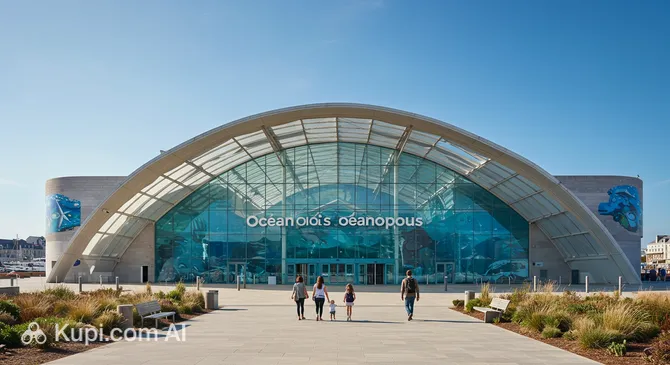
Océanopolis. Illustration.
Source: Kupi.com AI

Traveller photos:

The main feature of Océanopolis is its division into three thematic pavilions, each recreating a specific climate zone: polar, tropical, and temperate. Thanks to this approach, guests can experience the icy waters of the Arctic and Antarctic, observe the vibrant life of coral reefs, and explore the fauna of Brittany's coastal waters all in one day.

Inside the pavilions, thousands of marine inhabitants await you — over 1,000 species in total, including sharks, penguins, seals, and colorful tropical fish. The complex is famous not only for its scale but also for its scientific mission. Océanopolis actively participates in the study and conservation of marine flora and fauna, making a visit here not only entertaining but truly educational. It is a wonderful opportunity for the whole family to learn more about our planet's fragile ecosystems and the importance of protecting them.

Contacts

To plan your visit, check current ticket prices, opening hours, or the event schedule, it is recommended to contact Océanopolis directly through official channels. All necessary information is available on their website and by phone.

How to contactContact
AddressPort de Plaisance du Moulin Blanc, 29200 Brest, France
Phone+33 2 98 34 40 40
Websitewww.oceanopolis.com

What to Do

A visit to Océanopolis is a total immersion into the secrets of the underwater world. Here, you will witness the lives of more than 10,000 marine animals, representing over 1,000 different species. In the massive tanks, you can observe graceful sharks, curious seals, penguin colonies, and playful otters. The aquariums with jellyfish, colorful corals, and many other amazing deep-sea inhabitants are particularly captivating.

Océanopolis offers guests more than just observation; it invites active participation in the learning process. Throughout the day, engaging interactive shows and demonstration animal feedings are held, allowing you to see their natural behavior up close. Additionally, the center regularly hosts educational exhibitions and screens documentaries. One of the unique features is a special pool in the temperate pavilion where visitors are allowed to touch certain marine creatures, such as starfish and anemones.

For young explorers and their parents, Océanopolis will be a real discovery. The complex provides special educational programs and workshops that explain the importance of ocean conservation in a fun, playful way. Animation zones will keep the youngest guests entertained. For a comfortable break after a busy walk, you can visit local cafes, and pick up memorable gifts at the souvenir shops.

Getting There

Getting to Océanopolis is easy, as it is conveniently located in the eastern part of Brest, right on the coast. Visitors can choose the most suitable mode of transport: from public transit and cars to taxis or even bicycles.

The simplest and most economical way to reach the aquarium is by city bus. Several public transport routes stop right at the entrance to Océanopolis, making this option especially convenient. For travelers arriving in Brest by train, regular buses also run from the railway station directly to the destination.

If you prefer to travel by private vehicle, there is a spacious free parking lot for cars next to the complex. Additionally, Océanopolis can be reached quickly from the city center by taxi. For fans of active recreation and scenic views, there is a wonderful alternative — a bicycle path leading to the aquarium along the beautiful waterfront.

Nearest city: Brest

History & Facts

Océanopolis in the city of Brest opened its doors to visitors in 1990 and from the very beginning established itself not just as a tourist attraction, but as an important scientific research center. Initially, its main goal was to educate the general public and showcase the richness of marine life, particularly the ecosystems of the Atlantic Ocean. Located in a region of France that is closely tied to the sea, Océanopolis became a window into the underwater world for everyone.

The center's primary mission is to make science accessible and to highlight the importance of preserving marine ecosystems and their biodiversity. It is not just a place to look at fish, but a true educational platform that conveys up-to-date knowledge about the ocean through entertainment and wonder. Océanopolis was conceived by scientists who wanted to bring science out of the laboratories and share it with a wider audience, making it a unique aquarium in Europe.

Since its founding, the complex has constantly evolved and modernized. Over time, new exhibits representing tropical and polar ecosystems were added to the original pavilion dedicated to temperate latitudes. Océanopolis actively collaborates with leading scientific institutes and environmental organizations, participating in international programs for marine conservation. This underscores its status as a center that not only entertains but also makes a real contribution to protecting our shared heritage — the world's oceans.

Time Needed

When planning a visit to Océanopolis, you should expect to spend a significant part of the day there. For a full introduction to all the exhibits, it is recommended to set aside at least 3–4 hours. This time is sufficient to leisurely walk through the three main pavilions — polar, tropical, and temperate — and get a general overview of the diversity of marine life presented by this grand complex.

If you are a big fan of marine biology or are traveling with children, feel free to plan to spend a full day at Océanopolis. Participating in interactive activities, watching animal shows, and visiting temporary exhibitions will require extra time. Such a leisurely approach will allow you to fully immerse yourself in the ocean atmosphere, study every detail of the displays, and get the most out of your visit without feeling rushed.

Working Hours

Océanopolis is open to visitors year-round, but its opening hours change significantly depending on the season. Typically, the complex opens at 9:30 AM, with closing times ranging from 5:00 PM to 7:00 PM. It is worth noting that modernization work is taking place at the center in 2025, which may result in some pavilions being temporarily closed. Therefore, it is highly recommended to check the current schedule, exhibit availability, and exact opening hours on the official Océanopolis website immediately before your visit.

To save time and avoid queues, especially during the peak tourist season, on weekends, or during school holidays, it is recommended to buy tickets online in advance. Pre-booking is not only convenient but also guarantees entry to the complex, allowing you to immediately begin your fascinating dive into the mysteries of the ocean.

9:30 – 18:00

Nearby

A visit to Océanopolis is an unforgettable immersion into the depths of the sea, but your adventure in Brest doesn't end there. This port city and its surroundings are full of interesting places that will help make your trip even more fulfilling and diverse. Exploring nearby attractions will allow you to better understand the culture and atmosphere of this corner of France.

To help you easily plan your itinerary, we have prepared a list of interesting sites located near Océanopolis. Here, everyone will find something to their liking: from quiet parks and botanical gardens to modern shopping centers and entertainment venues. It is a great opportunity to add variety to your vacation and get the most out of your trip.

NameDistance
National Botanical Conservatory of Brest2 km
Le Phare de l'Europe Shopping Center3 km
Virtual Reality Escape Game3.1 km
Laser Game Brest3.2 km
Espace Jaurès Shopping Center3.3 km
Tara Inn3.7 km
Les Ptites Recettes3.7 km

Reached the bottom of the page?

Looks like you know this route inside out