Support

Cahors

About

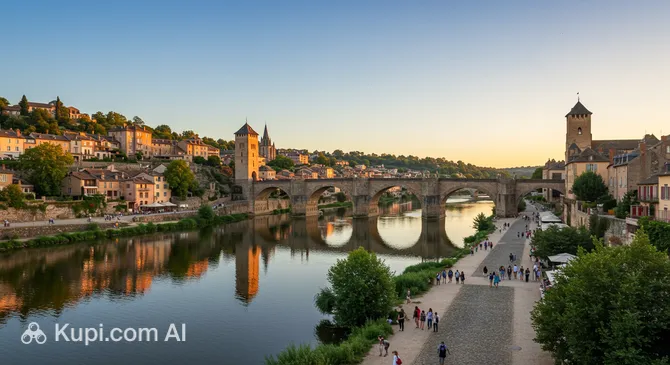
Cahors is a picturesque town nestled comfortably in a steep loop of the Lot River in southwestern France. As the administrative center of the department, it combines a compact feel (with a population of about 20,000) with the grandeur of ancient architecture. The city is situated on a peninsula surrounded by water, creating unique panoramas where river landscapes harmoniously coexist with ancient walls and green vineyards.

Cahors. Illustration.
Source: Kupi.com AI

Stepping into Cahors, travelers feel as if they have been transported to another era. Narrow cobbled streets and old quarters preserve the spirit of the Middle Ages, and the rich history of Cahors can be felt in every building. The main architectural landmarks are the majestic Saint-Étienne Cathedral, with its unique domes hinting at Eastern influence, and the famous Valentré Bridge. This fortified bridge with three towers is not just a symbol of the city but also a UNESCO World Heritage site, impressive in its preservation and power.

However, Cahors attracts visitors not only with its ancient monuments but also with its special atmosphere of southern hospitality. There is a relaxed pace of life here, perfect for gastronomic discoveries and leisurely strolls. The city is famous for its wine festivals, colorful street markets, and cozy cafes where you can sample local delicacies. Cahors is worth visiting for its unique combination of French charm, romance, and the opportunity to touch the living heritage of the Occitanie region.

Weather Overview

The climate in Cahors can be described as moderately warm, making the city pleasant to visit at any time of year. To plan your travel wardrobe properly, it is worth checking in advance what the weather in Cahors will be like during your chosen dates.

Summer here is delightfully warm: in July and August, the average daytime temperature rises to 27–28°C, and the number of rainy days is minimal (about 8 per month). Winters in the region are mild and not at all harsh. Even in January, the coldest month, nighttime temperatures rarely drop below 2.5°C, and during the day, the air warms up to an average of 9°C. However, it is worth considering that in winter and March, there is more precipitation—it can rain for up to 15 days a month.

Spring and autumn offer a "golden mean" for travelers. As early as May, the air warms up to a comfortable 20°C, and September retains a summer mood with highs around 24°C. Expect a warm, sometimes hot summer and cool, fairly damp winters.

Average monthly temperature

Average monthly precipitation

Interesting Facts

Beyond its main attractions, Cahors holds many fascinating secrets and legends that reveal themselves only to the most curious travelers. Here are a few facts that allow you to look at this city from a new perspective:

  • A deal with the devil on the Valentré Bridge. The main symbol of the city is shrouded in mystery. According to an old legend, the architect was unable to finish the bridge's construction on time and made a pact with the devil, promising him his soul. In the end, the architect outwitted the devil, who cursed one of the towers in anger. It is said that this is why you can see unusual details on it that recall this story.

  • Mentioned by Dante. In the Middle Ages, Cahors was such an influential financial and commercial center that it appeared in the pages of world classics. Dante Alighieri mentioned the usurers of Cahors in his "Divine Comedy," immortalizing the memory of the city's merchant past, the spirit of which still lingers among the old mansions.

  • Atypical Gothic. Saint-Étienne Cathedral is a rare example of an architectural blend of styles. Instead of the sharp spires common in France, it is adorned with two massive Byzantine-style domes. This makes the church a unique site on the famous pilgrimage route, the Way of Saint James.

  • Wine for coronations. The famous "black wine" of Cahors was valued in Europe long before the world learned about other French wines. Local winemakers proudly tell stories of how, in the past, barrels from Cahors were sent to England specifically for the solemn coronations of monarchs.

How to Get There

When planning a trip to this picturesque corner of the Occitanie region, it is worth thinking through the logistics in advance. Since Cahors does not have its own airport, tourists usually arrive at neighboring major transport hubs and then continue their journey by land. You can find all the ways to get to the city on a separate page, and below we will look at the most popular and convenient options.

The most popular option for international travelers is Toulouse-Blagnac Airport (IATA: TLS). This is a large international air hub located approximately 91 km from Cahors. Thanks to a developed network of motorways, the journey from there by taxi or rental car will take about 1 hour and 15 minutes. High passenger traffic ensures many flights from different countries, making this airport an excellent starting point.

If you are looking for a geographically closer option, consider Brive-Souillac Airport (IATA: BVE) in Brive-la-Gaillarde. The distance to the center of Cahors is only about 66 km, allowing you to get there by car in approximately 50–60 minutes. You can also consider flying through Bergerac Dordogne Périgord Airport (IATA: EGC) in Bergerac (about 84 km), although the choice of flights here may be more modest compared to Toulouse.

For clarity, here is a summary of the main airports:

AirportPassenger trafficDistance
Laroche Airport97 39766 km
Marcillac Airport100 00083 km
Roumanières Airport245 55784 km
Toulouse-Blagnac Airport9.6 mln91 km
Aurillac Airport29 65092 km

Traveling by rail is also a popular way to get around France. If you plan to take a train, it is important to consider the location of transfer hubs. One of the nearest major stations is Montauban Railway Station. It is located about 47 km away, and the car journey from the station to your destination will take less than an hour (approximately 40–50 minutes).

Another important transport hub is Gare de Toulouse-Matabiau in Toulouse (about 93 km from Cahors). This is one of the largest stations in the region, receiving high-speed trains (TGV) from all over the country. From here, it is convenient to transfer to a regional train directly to Cahors or rent a car to finish the trip.

Below is a table with information on the nearest major railway stations:

StationPassenger trafficDistance
Montauban Railway Station1.5 mln47 km
Agen Railway Station1.6 mln71 km
Matabiau Station9.8 mln93 km
Bordeaux Saint-Jean Station27.8 mln164 km
Agde Station757 491205 km

Main Attractions

While Cahors is primarily known for its medieval monuments, the modern rhythm of the city is best felt in its popular establishments, which have become attractions in their own right. Gastronomic culture here is held in high regard, and visiting iconic spots allows for a deeper understanding of the spirit of the Occitanie region.

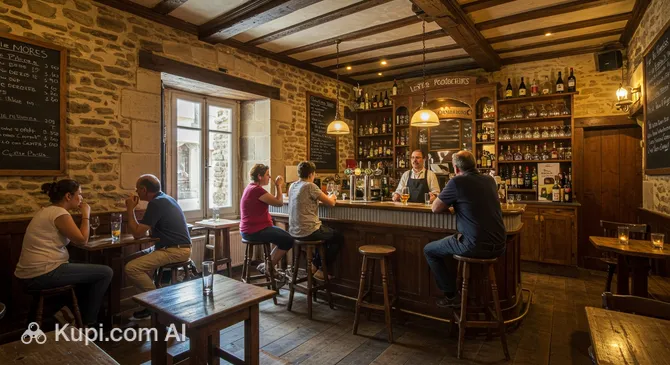
For immersion in an authentic atmosphere, it is worth visiting Les Petits Producteurs. This colorful spot is highly valued by lovers of local products. The concept of the establishment is built on supporting local farmers, so you can always try the freshest snacks and, of course, the famous "black wine" of Cahors. Tourists often note the friendliness of the staff and the opportunity to feel like part of the local community.

Les Petits Producteurs. Illustration.
Source: Kupi.com AI

Traveler photos:

If you are looking for a more refined gastronomic experience, pay attention to the restaurant L'Ô à la Bouche. This establishment is famous for its creative approach to traditional French cuisine. The chefs here masterfully work with seasonal ingredients, turning every dinner into a small event. The cozy interior and beautiful presentation make the restaurant an excellent choice to end a busy day of sightseeing.

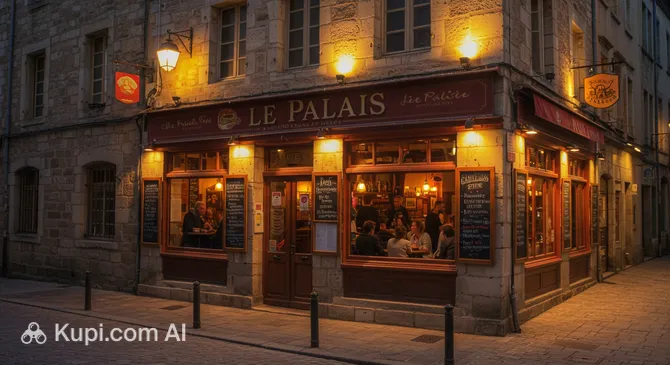
In the very heart of the city's life is Le Palais—a popular meeting place where life is always buzzing. Located on a busy boulevard, it attracts visitors with its classic French brasserie atmosphere. This is an ideal location to relax on the terrace, watch the passersby, and enjoy the architectural views of the central streets of Cahors.

Local Cuisine

A gastronomic journey to Cahors is unthinkable without experiencing its main pride—the legendary "black wine." Local vineyards, spread across the Lot River valley, give the world the rich red Cahors wine, based on the Malbec grape variety. It is distinguished by its deep dark color, tannins, and aromas of black berries, perfectly complementing the hearty dishes of the regional cuisine.

The cuisine of this part of France is famous for its heartiness and loyalty to tradition. Poultry dishes are invariably present on restaurant menus. You should definitely try duck confit (confit de canard)—a leg slow-cooked in its own fat to incredible tenderness—as well as the famous foie gras pâtés. Lovers of satisfying lunches will enjoy cassoulet—a thick, aromatic stew made from white beans with the addition of various types of meat and sausages.

One cannot ignore the delicacies with which the region's terroir is rich. The famous goat cheese Rocamadour is produced here—small soft rounds with a delicate texture. Another symbol of local gastronomy is the walnut: it is added to salads, used to make oil, and baked into delicious walnut cakes. In season, gourmets look for dishes featuring truffles and saffron on the menus, which are called "black diamonds" and "red gold" here.

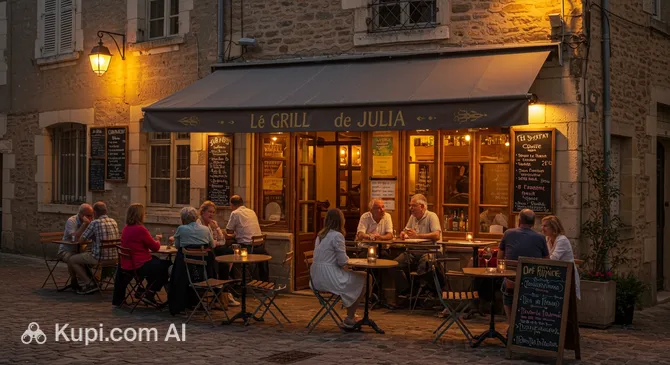
To appreciate the skill of local chefs, it is worth looking into the city's cozy establishments. For example, the restaurant Le Grill de Julia offers guests an excellent selection of dishes cooked over fire in a warm and casual atmosphere. It is a wonderful place to enjoy simple but high-quality regional products.

Le Grill de Julia. Illustration.
Source: Kupi.com AI

Traveler photos:

Food culture in Cahors is not limited to restaurants; the heart of gastronomic life beats at the markets, especially in Place Olivier-de-Magny. Here, locals and tourists buy fresh farm products, try dried sausage (saucisse sèche) with a fresh, crusty baguette, and simply enjoy socializing. Visiting the market is the best way to immerse yourself in the authentic atmosphere of the city and take home tasty memories.

Travel Tips

Preparing for a trip to Cahors is an anticipation of an encounter with the true French province, where history intertwines with modern comfort. To ensure your stay in the capital of the Quercy region goes smoothly and leaves only pleasant memories, we have gathered some proven practical recommendations for you.

  1. Clothing and Essentials. The city's historic center is paved with old cobblestones, so comfortable flat shoes are your top priority for walking. In Occitanie, it can be hot in the summer, so be sure to bring a hat and sunglasses. If you plan to visit Saint-Étienne Cathedral, choose clothing that covers your shoulders. Also, don't forget a power adapter (Type E) if your devices do not match the European standard.
  2. Transport. Cahors is very compact and is best explored on foot. To move around the city, there are free shuttles (Navette) connecting park-and-ride lots with the center. If you want to visit the surrounding vineyards, renting a car is essential. It's better to book a taxi in advance through the hotel reception or by phone, as "catching" a car on the street can be difficult.
  3. Finances. The official currency is the Euro. Bank cards are accepted almost everywhere, from restaurants to museums. However, for purchases at the famous market by the cathedral or in small bakeries, it's better to have some cash (small bills) with you. A daily budget depends on your plans, but a medium lunch will cost 20–30 euros. Tips are usually included in the bill, but leaving 1–2 euros on the table as a sign of gratitude is considered good manners.
  4. Health and Safety. Cahors is a quiet and safe city. Pharmacies are easily recognizable by the flashing green cross sign; they are well-stocked, and pharmacists can often provide basic advice. Tap water in France is of high quality and can be drunk safely. In restaurants, you can always ask for a free carafe of water (carafe d'eau).
  5. Communication. The primary language is French. In tourist areas, staff often speak English, but starting a conversation with a polite "Bonjour" is a golden rule. For communication, it is most convenient to buy a local prepaid SIM card (e.g., Orange or SFR) at tobacco shops (Tabac) or mobile phone stores. Free Wi-Fi is available in many cafes and public areas in the center.
  6. Local Etiquette. Politeness plays a huge role here. When entering a shop, cafe, or even a bus, always greet the staff or driver. In restaurants, it is not customary to call a waiter loudly or snap your fingers—it is enough to establish eye contact and slightly raise your hand. Lunch here is strictly on schedule (usually from 12:00 to 2:00 PM), and dinner starts after 7:00 PM.
  7. What to Avoid. Do not try to have dinner at an "off-peak" time (e.g., 5:00 PM)—most kitchens will be closed, and you will only be offered drinks. Also, at food markets, you should not touch fruits and vegetables with your hands without the vendor's permission. It is better to say hello and point to what you want to buy—they will choose the best product for you.
  8. Secret Gardens. Cahors has a unique feature—the "Secret Gardens" (Jardins Secrets). These are not just parks, but hidden green corners scattered throughout the city. To find them, look down: follow the copper acanthus leaves embedded in the sidewalk. This will turn your walk into an exciting quest.

We hope these tips help you feel at home in Cahors. Enjoy the slow pace of life, the magnificent views from the Valentré Bridge, and the taste of the legendary local wine!

Entertainment & Nightlife

Nightlife in Cahors is not about noisy metropolitan clubbing until dawn, but rather a tribute to the French "art de vivre" (the art of living). Evenings here are spent in a relaxed and friendly atmosphere, where the main value is conversation over a glass of good wine. The city falls asleep quite early, so the peak of activity occurs during the aperitif and dinner, which smoothly transitions into nighttime gatherings on the terraces.

The epicenter of evening life is Boulevard Gambetta. Most establishments where both tourists and locals like to relax are concentrated here and on the adjacent squares. The crowd in these places is very diverse: from students to respectable couples enjoying the cool of the evening. The dress code in most places is casual—the "casual" style is appropriate everywhere, although the French often prefer to dress slightly more elegantly (smart casual) for dinner in a restaurant.

If you want to feel the rhythm of the city, start your evening at Le Palais. This is a classic brasserie with a lively terrace, perfect for watching boulevard life with a cocktail or a glass of local beer. Large groups often gather here, and an atmosphere of celebration prevails.

Le Palais. Illustration.
Source: Kupi.com AI

Traveler photos:

For connoisseurs of a more intimate setting and wine culture, the bar Les Petits Producteurs is a must-visit. This place specializes in regional wines and snacks from local farmers. It is especially cozy in the evenings: dimmed lights, the aromas of cheeses and sausages, and the opportunity to discuss the specifics of the Malbec grape harvest with the bartender create a unique local flavor.

Practical tips for night owls:

  • Opening hours: Most bars close around 01:00 or 02:00 AM. If you are planning a late dinner, try to take a table by 9:00 PM, as restaurant kitchens close earlier than bars.
  • Prices: A glass of wine or beer costs on average 4–7 euros, cocktails range from 8 to 12 euros.
  • Safety: Cahors is a very safe city. Walking through the illuminated center at night does not cause concern. However, public transport does not run at night, and it is better to call a taxi by phone or through an app in advance, as it is difficult to hail a car on the street.

Daytime leisure in Cahors is just as fulfilling. The city offers a cultural program for lovers of history and art. You can visit the Henri Martin Museum to enjoy paintings, or take a boat trip on the Lot River to see the famous Valentré Bridge from the water. There is also a theater and a cinema in the city, which often become hubs of attraction during rainy weather.

Parks & Museums

Cahors offers its guests a wonderful combination of the stone majesty of the Middle Ages and vibrant greenery, making walks through the city a true aesthetic pleasure. The city has been awarded the prestigious "City of Art and History" status, and its park areas and museum collections harmoniously complement this title, revealing the cultural wealth of the Occitanie region.

The main "green" attraction of Cahors is the unique "Secret Gardens" (Jardins Secrets) project. This is not one large park, but a whole cluster of more than 20 themed gardens hidden in the most unexpected corners of the old town: in courtyards, at the foot of towers, and next to churches. Each garden has its own history and style. For example, the Moorish Garden (Jardin Mauresque) transports visitors into the atmosphere of an oriental tale with its fountains and the scent of jasmine, while the Witch and Dragon Garden intrigues with a selection of plants associated with ancient legends and magic. This is a real quest for tourists, allowing them to see the city from a new, botanical side.

For those who prefer a more traditional outdoor experience, the banks of the Lot River are the perfect place. The green embankments are beautifully equipped for leisurely promenades and picnics. Here you can relax in the shade of plane trees, enjoying the view of the slow-moving water and the famous Valentré Bridge. This natural area provides coolness on hot summer days and serves as a favorite vacation spot for both locals and travelers.

The cultural heart of the city is rightfully considered the Henri Martin Museum (Musée de Cahors Henri-Martin). Located in a former episcopal palace, this museum houses an extensive collection of works by the famous post-impressionist Henri Martin, who lived and worked in this region. In addition to paintings, the exhibition includes archaeological finds and rooms dedicated to Léon Gambetta—a famous native of Cahors and a prominent political figure of France. Visiting the museum allows you to trace the city's history from Gallo-Roman times to the flowering of 19th-century art.

Among the architectural monuments serving as an open-air museum, the cloister of Saint-Étienne Cathedral stands out. This Flamboyant Gothic gallery is not only impressive for its stone carvings but also hides another element of the "Secret Gardens" inside—a biblical garden. Here, architecture and nature merge, creating a space of silence and contemplation that is highly valued by travelers tired of the hustle and bustle.

Insider Tip: To make sure you don't miss any of the "Secret Gardens," watch your step while walking. The route is marked with special bronze acanthus leaves embedded directly into the pavement. By following these signs, you can find even the most secluded green oases that ordinary passersby often don't know about.

Getting Around

Getting around Cahors, a cozy city in southwestern France, is organized so that guests feel as comfortable as possible. Given the compact size of the historic center, many attractions are accessible on foot, but the public transport system here deserves special praise for its accessibility and simplicity.

A pleasant surprise for tourists is the fact that the entire public transport network, called Evidence, is completely free. You don't need to look for ticket offices, figure out fare zones, or download payment apps. Boarding buses is free for everyone, which significantly saves travelers time and budget.

The free electric shuttles—Navette—are particularly popular. These maneuverable minibuses run between park-and-ride lots (Parkings Relais) and the city center at intervals of 10–20 minutes. This is an excellent solution for car travelers: you can leave your car in a free parking lot on the outskirts and travel to the old town without any hassle.

In local transport, it is customary to follow simple rules of politeness. Upon entering, passengers must greet the driver (saying "Bonjour" is enough), and to get off, you must press the stop request button in the cabin in advance. The main routes operate from Monday to Saturday, roughly from 7:00 AM to 7:30 PM. When planning your trip, keep in mind that on Sundays and holidays, bus service may be very limited or non-existent.

For fans of active recreation, a bicycle is an excellent alternative. Riding along the picturesque banks of the Lot River is a special pleasure. You can rent a bike at specialized rental points (for example, the V-Lot service) or check for such a service at the tourist office and bike shops in the city. An ID and a deposit are often required for rental.

If you need a taxi, remember the provincial specifics: it is not customary to hail one on the road here. Cars rarely cruise the streets looking for customers. There is a taxi stand at the station, but the most reliable way is to book a ride by phone in advance or ask your hotel staff to call a car.

During the tourist season, an excursion train (Le Petit Train) also runs through the city. It departs from the embankment and makes a circular route through the main attractions. This is a wonderful opportunity to see the famous Valentré Bridge and ascend to panoramic viewpoints, combining transport with an engaging tour.

Accommodation

Where to stay:

Cahors offers travelers a variety of accommodation options that allow them to experience the atmosphere of this ancient city, regardless of their travel budget. Here you can find cozy family-run hotels in medieval buildings, modern chain hotels, apartments for long-term stays, and picturesque campsites on the banks of the Lot River. A special charm is added to the region by traditional guest houses (chambres d'hôtes), where hosts often offer not only a bed but also a homemade breakfast with local products.

When choosing an area to stay, most tourists prefer the historic center, located in the bend of the river. Staying here puts you within walking distance of the main attractions, such as Saint-Étienne Cathedral and colorful market squares. This is an ideal choice for those who want to enjoy evening strolls through cobbled streets without needing to use transport. For those traveling by car or seeking peace, the areas on the opposite bank of the river are suitable: they offer magnificent panoramic views of the city and the famous Valentré Bridge.

The price range varies depending on the season and level of comfort. Budget travelers can count on inexpensive guest houses and campsites, while the mid-range segment is represented by small three-star hotels offering an optimal balance of price and quality. Luxury lovers can look for accommodation in converted historic mansions or chateaus in the surrounding area, although the city center is dominated by mid-range and comfort-class housing.

Booking tip: Cahors is a popular tourist destination in the Occitanie region, especially in the summer months (July and August) and during wine festivals. Therefore, it is highly recommended to book accommodation in advance—preferably 2–3 months before the trip to get the best options at a favorable price. You can use popular international online platforms as well as direct booking on hotel websites, which sometimes allows you to receive pleasant bonuses or discounts.

Nearby Cities

For those who want to explore the surrounding area, Cahors serves as an excellent starting point for day trips to several interesting nearby places:

Just an hour's drive away is Montauban—a city of art and history, often called the "Pink City" in miniature. It is known for its red-brick architecture, the magnificent Place Nationale with its double arcades, and the museum of the famous painter Jean-Auguste-Dominique Ingres. It is an ideal place for a leisurely walk and an introduction to the cultural heritage of the region.

Slightly further away is Albi, whose Episcopal City is a UNESCO World Heritage site. The main landmark here is Sainte-Cécile Cathedral—the largest brick building in the world, resembling an impregnable fortress on the outside and striking with the elegance of its interiors. The city is also famous for the Toulouse-Lautrec Museum, which houses the largest collection of works by this post-impressionist artist.

Lovers of gastronomy and authentic atmosphere should head to Brive-la-Gaillarde. This city is famous for its renowned market, celebrated in songs, where you can find the best delicacies of the region. The historic center with its sandstone mansions and cozy cafes is perfect for a pleasant break after the journey.

CityPopulationDistance
Moissac13 37848 km
Montauban61 37248 km
Villefranche-de-Rouergue11 78149 km
Figeac9 80250 km
Sarlat-la-Canéda8 81652 km

These nearby destinations provide an insight into the diverse culture and landscapes of the region.

Shopping & Souvenirs

Shopping in Cahors is not so much a pursuit of fashion as it is a fascinating immersion into local traditions and gastronomy. The city does not claim to be a high-fashion capital, so you won't find a huge number of global luxury brand boutiques here. However, Cahors is famous for its authentic shops selling unique artisanal products, and, of course, its magnificent grocery stores offering the wealth of the Quercy region. It is an ideal place for "slow shopping," where every purchase is accompanied by a pleasant conversation with the vendor.

The city's main shopping artery is Boulevard Gambetta. This wide street crosses the center from north to south and concentrates the main clothing and shoe stores, bookstores, and pharmacies. If you turn off the boulevard onto narrow medieval streets, such as Rue Clément Marot or Rue du Maréchal Foch, you can discover small independent boutiques, antique shops, and artists' workshops that give shopping a special charm.

Large shopping centers are absent from the historic center of Cahors, allowing its ancient appearance to be preserved. For those looking for large hypermarkets and familiar mass-market chain stores, it is worth heading to the outskirts of the city, to commercial zones (for example, along Route de Toulouse). However, tourists generally prefer to stay in the center, where the shopping process can be combined with architectural sightseeing.

The true heart of commerce in Cahors is its markets. The most famous one unfolds in Place Chapou at the foot of Saint-Étienne Cathedral on Wednesdays and Saturdays. It is a colorful sight where farmers sell the freshest vegetables, fruits, and cheeses. No less important is the indoor market Halle de Cahors in Place Galdemar. This is the city's gastronomic temple, open from Tuesday to Sunday, where you can buy top-quality delicacies in any weather. In winter, the city also hosts the famous truffle markets, attracting gourmets from all over the country.

As souvenirs from Cahors, the famous "black wine" (Cahors Malbec) is a top choice. You can purchase it in specialized wine shops or in places that support local producers, such as Les Petits Producteurs, which often features an excellent selection of regional goods. Besides wine, look out for foie gras, truffles, walnut oil, and saffron, which is grown in the region. Craft lovers will appreciate ceramics and woodwork created by local artisans.

When planning a shopping trip, it is important to remember the traditional French schedule. Most small shops are open from 9:30 or 10:00 AM to 7:00 PM, but strictly close for a lunch break (usually from 12:00 or 12:30 PM to 2:00 or 2:30 PM). Many shops are closed on Sunday and Monday morning. Bank cards (Visa, Mastercard) are accepted almost everywhere, but for market purchases or small souvenirs, it's better to carry some cash in Euros.

The Tax Free system (VAT refund) is available for tourists from non-EU countries for a one-time purchase of more than 100.01 euros in a single store. However, keep in mind that many small private shops in Cahors may not support this system, so check for a "Tax Free" sticker in the window or ask the seller before making a large purchase.
Reached the end of the page?

That means the route is fully explored