Support

Dunkirk

About

Dunkirk is a true northern gem of France, snugly nestled on the coast of the English Channel. The city is located just 40 kilometers from Calais and about 300 kilometers from Paris, occupying a strategically important position near the border with Belgium. This makes Dunkirk a kind of gateway between France and Northern Europe. Historically, Dunkirk has always been a vital port, and today it proudly holds the title of the third largest port in the country.

With a population of about 86,000 people, Dunkirk is a lively and dynamic city where the atmosphere of a seaside resort harmoniously combines with that of a business center. Here, modern quarters sit side-by-side with ancient streets, and cozy cafes invite you to relax after a walk along the wide beaches. Administratively, Dunkirk is the center of the commune of the same name and an important transport hub for the Hauts-de-France region.
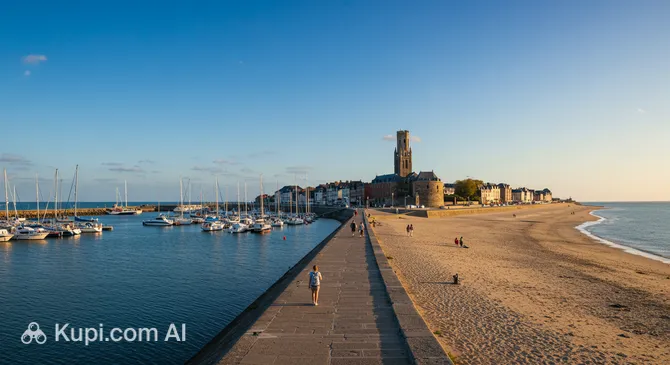
Dunkirk. Illustration.
Source: Kupi.com AI

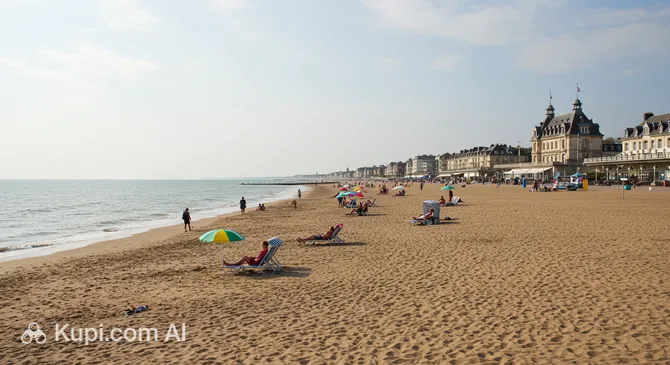
The city is famous for its hospitable atmosphere, love for vibrant festivals, and deeply rooted maritime traditions. One of the main attractions for tourists is the famous sandy beach of Malo-les-Bains, often called the "Queen of Northern Beaches." Travelers are also drawn to the unique blend of cultures—French, Flemish, and Belgian—which is felt in the architecture, cuisine, and lifestyle of the residents.

Dunkirk is an ideal place for those seeking to discover the authentic side of France, away from the bustle of major metropolises. Come here to enjoy the fresh sea breeze and get to know the rich history and culture of this amazing port city.

You can find more interesting facts on the Dunkirk city history page.
Weather Overview

The weather in Dunkirk is characterized by a temperate maritime climate. Summers here are usually mild, with average temperatures in July around 18.2°C and in August around 18.8°C. Average maximum temperatures in the warmest months (July-August) are about 21°C. Winters are cool, with the average temperature in January being around 6°C. Precipitation is distributed fairly evenly throughout the year; however, the number of rainy days increases during the autumn-winter period, peaking in December (about 17 days). Overall, expect moderately warm summers with occasional rain and cool, wetter winters. The fewest rainy days occur in June (about 9 days).

For more detailed information on weather conditions, including a monthly forecast and current weather, you can visit the Dunkirk Climate page.

Average monthly temperature

Average monthly precipitation

Interesting Facts

In addition to its famous historical events and picturesque coastline, Dunkirk hides many surprising stories and unique traditions that make it a truly special place. Here are just a few curious facts about this French city:

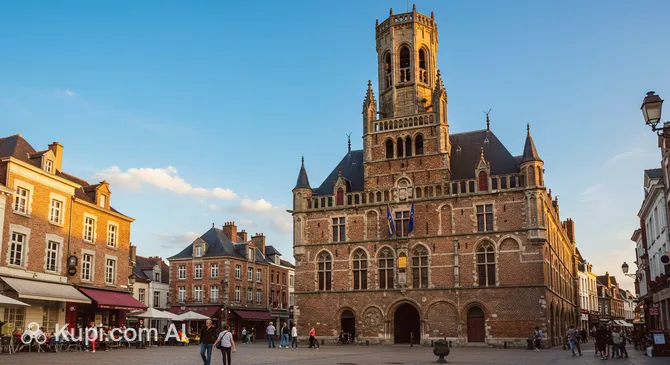
Belfry of Saint-Éloi, Dunkirk. Illustration.
Source: Kupi.com AI

Traveler photos:

  • Dunkirk is a city of corsairs! It was here that the famous naval hero Jean Bart was born, gaining fame as a clever and brave corsair in the 17th century. One of the city's central squares bears his name, and a majestic monument to him has become one of Dunkirk's symbols, serving as a reminder of its glorious maritime past.

  • The city has two belfries listed as UNESCO World Heritage sites. These are the tower of the Church of Saint-Eloi, known as the Belfry of Saint-Eloi, and the belfry of the City Hall. Their observation decks offer breathtaking views of the city, the port, and the endless expanses of the North Sea.

  • Dunkirk is known for its grandiose carnival, which takes place annually in January or February. This is not just a holiday, but an entire cultural phenomenon with centuries of history, when the city transforms into a sea of colors, music, and fun. The carnival is famous for its unusual traditions: for example, it is customary to throw smoked herring from the City Hall balcony into the cheering crowd of participants dressed in the most whimsical costumes.

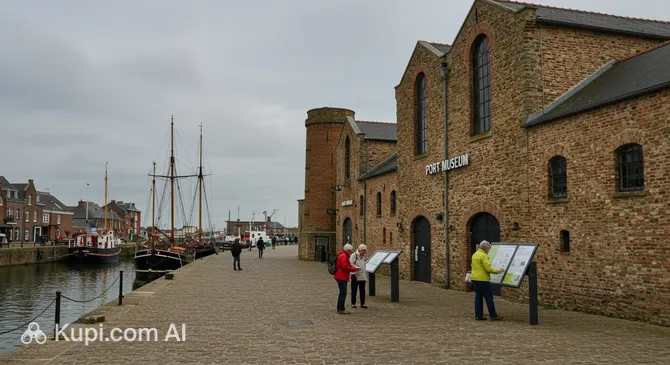
  • Among the city's unusual museums, the Port Museum of Dunkirk stands out, located in a former tobacco warehouse building. Here, you can not only learn about Dunkirk's maritime history but also board real historical vessels, such as the famous three-masted ship "Duchesse Anne."

How to Get There

Dunkirk occupies a strategically advantageous position on the North Sea coast, making it easily accessible for travelers from various parts of Europe. Thanks to the developed transport network of the Hauts-de-France region and its proximity to Belgium, you can get here in various ways. You can find all the details and plan your perfect route by following the link: all ways to get to the city of Dunkirk.

Although Dunkirk does not have its own passenger airport, its proximity to major transport hubs makes it easy to fly into neighboring cities and continue the journey by land. One of the most convenient options is Lille Airport (IATA: LIL), located in the city of Lille, about 73 km from Dunkirk. This is a medium-sized regional airport that receives flights from many cities in France and Europe. A trip from there by car or taxi will take about an hour.

For international travelers, an excellent choice is Brussels Airport (IATA: BRU), located in the capital of Belgium, Brussels. This is a major international hub located approximately 149 km from Dunkirk. From here, you can reach the coast by train or rental car in 1.5–2 hours. It is also worth mentioning Ostend-Bruges International Airport (OST) in the city of Bruges. It is located only 39 km from Dunkirk but serves fewer flights, mainly seasonal and charter destinations.

For convenience, here is summary information on the main airports:

AirportPassenger trafficDistance
Ostend-Bruges International Airport386 38739 km
Lille Airport1.8 mln73 km
London Southend Airport172 068132 km
Antwerp International Airport239 517147 km
Brussels Airport23.6 mln149 km

Rail service is another popular way to reach the region. Travelers often use major stations in neighboring cities as transfer points. The most important hub is Lille-Flandres Station in the city of Lille (about 66 km from Dunkirk). This is one of the busiest stations in France, with trains arriving from all over the country. Nearby is the Lille-Europe Station, which receives high-speed Eurostar and TGV trains from London, Brussels, and Paris. Regional trains (TER) run regularly from Lille to Dunkirk, with a travel time of about 30-40 minutes.

Another convenient entry point can be Calais-Fréthun Railway Station, located in the city of Calais, just 42 km from Dunkirk. High-speed trains arrive here, and from the station, you can quickly reach your destination by taxi or bus. The train ride itself through northern France allows you to enjoy scenic views of the plains and the coast.

Below is information on the nearest major railway stations:

StationPassenger trafficDistance
Calais-Fréthun Railway Station42 km
Brugge Railway Station6.6 mln44 km
Tourcoing Station710 22366 km
Lille Flandres Station19.5 mln66 km
Lille Europe Station7.2 mln66 km

Main Attractions

Dunkirk, a city with a rich maritime history and significant cultural heritage, offers tourists many interesting places to visit. From historical monuments to beautiful beaches, everyone will find something here to make their trip to France even more memorable.

One of the city's main landmarks is the Belfry of Saint-Eloi. This impressive bell tower, a UNESCO World Heritage site, towers over the city and offers a magnificent panoramic view of Dunkirk and its surroundings. Climbing to the top will be an unforgettable experience for any traveler interested in architecture and history.

Belfry of Saint-Éloi, Dunkirk. Illustration.
Source: Kupi.com AI

Traveler photos:

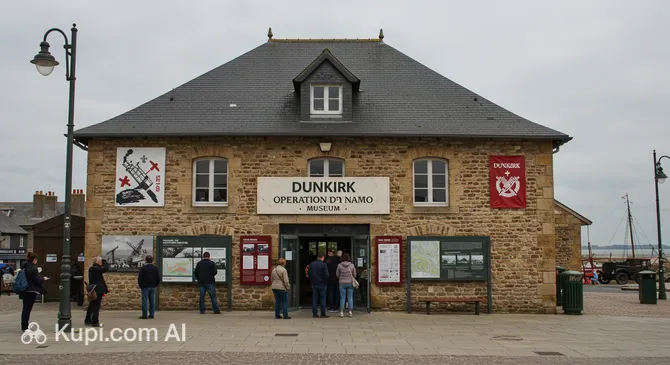
It is impossible to talk about Dunkirk without mentioning its role in World War II. The Dunkirk 1940 Museum: Operation Dynamo tells the detailed story of the famous evacuation of Allied forces, known as the "Miracle of Dunkirk." The museum's exhibits, which include soldiers' personal belongings, maps, photographs, and models, allow for a deeper understanding of the dramatic events of those days and their impact on the course of history.

To better understand the maritime soul of the city, it is worth visiting the Port Museum of Dunkirk. Located in an old 19th-century tobacco warehouse, the museum showcases the rich history of the port from its foundation to the present day. Here you can see ship models, navigation instruments, and learn about the lives of sailors, port workers, and the development of maritime trade, which has always played a key role in the life of Dunkirk.

Dunkirk Port Museum. Illustration.
Source: Kupi.com AI

Traveler photos:

For those looking for relaxation and fresh sea air, Malo-les-Bains Beach is the perfect place. This wide sandy beach, with its characteristic brightly colored beach huts, is a popular spot for walking, sunbathing, and water sports. It is especially lively during the summer months, attracting both locals and tourists with its relaxing atmosphere and beautiful views of the North Sea.

Malo-les-Bains Beach. Illustration.
Source: Kupi.com AI

Traveler photos:

Local Cuisine

The cuisine of Dunkirk is a fascinating journey at the crossroads of French and Flemish gastronomic traditions, where the treasures of the North Sea play the leading role. This port city will delight foodies with the freshest seafood and hearty, aromatic dishes that reflect its rich history and culture.

You should definitely try the famous waterzooi—a thick, creamy soup made with fish or chicken and vegetables. Another iconic specialty is moules-frites, mussels stewed in a flavorful broth (often with white wine or beer) and served with a large portion of crispy French fries. Also, do not miss the chance to taste smoked herring, fresh oysters, and scallops, which are prepared here in many ways. Those with a sweet tooth will enjoy the traditional "carnival" cake—an aromatic pastry with raisins and orange zest.

As for drinks, the proximity to Belgium has left its mark: excellent local beer is brewed in Dunkirk, including amber and dark ales. Of course, classic French wines are always available. Among non-alcoholic drinks, freshly squeezed juices and traditional coffee are popular.

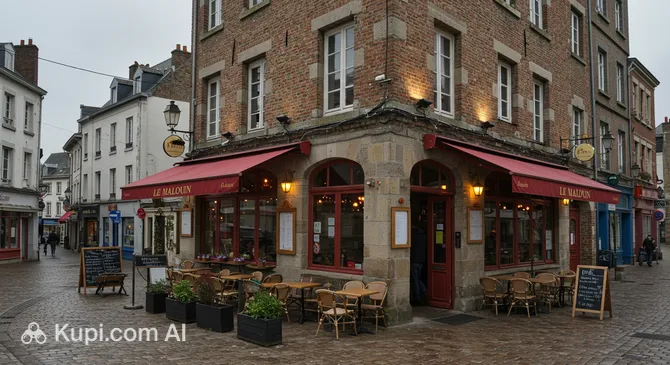
Locals and tourists love to enjoy meals in the numerous brasseries, especially those located along the waterfront, offering beautiful views and fresh seafood. One such place where you can get acquainted with the local cuisine is the restaurant Le Malouin. It is also worth visiting the farmers' markets, where you can find the freshest produce, local cheeses, sausages, and homemade pastries. During the famous Dunkirk Carnival, the city streets transform into a real gastronomic festival with stalls offering street food and traditional treats.

Le Malouin. Illustration.
Source: Kupi.com AI

Traveler photos:

Dunkirk's culinary scene attracts with its authenticity and emphasis on high-quality local products. It is an ideal place for those who want to experience the unique cuisine of northern France, enjoy fresh seafood, and feel the unique atmosphere of a port city with rich culinary traditions.

Travel Tips

Planning a trip to Dunkirk? Wonderful! To ensure your journey through this historic port city in northern France goes smoothly and leaves only pleasant impressions, we have prepared some practical tips.

  1. Clothing and items for the weather: The climate in Dunkirk is maritime and quite changeable. Bring clothing that can be layered, a waterproof jacket or raincoat, and a windbreaker, especially if you plan to walk along the coast. Comfortable shoes for long walks are a must. Don't forget a universal adapter for electrical appliances.
  2. Getting around the city: Dunkirk is quite compact. The main public transport is the DK'Bus Marine bus network, which, by the way, is free for everyone. Many areas are easy to explore on foot. For trips out of town or if you value mobility, you might consider renting a car, but it's not a primary necessity for the city itself. Taxis and services like Uber are also available.
  3. Financial matters: The official currency is the Euro (EUR). Bank cards (Visa, Mastercard) are accepted almost everywhere. ATMs (distributeur automatique de billets) are easy to find. Before your trip, check with your bank for terms of using your card abroad. Tips in restaurants are usually included in the bill (service compris), but if you particularly liked the service, you can leave an extra 5-10%. In taxis, it's customary to round up the fare.
  4. Health and safety: Pharmacies (pharmacie) are marked with a green cross; information about duty pharmacies can be found on the doors of the nearest one or online. EU citizens are recommended to have a European Health Insurance Card (EHIC). It is highly advisable for tourists from other countries to have travel insurance. Dunkirk is generally a safe city, but standard precautions (watching your belongings in crowded places, avoiding poorly lit areas at night) are always wise.
  5. Language and communication: The official language is French. In tourist spots and hotels, staff often speak English, but knowing a few basic phrases in French (Bonjour – Hello, Merci – Thank you, S'il vous plaît – Please, Excusez-moi – Excuse me) will be very useful and will endear you to the locals. Mobile internet and Wi-Fi are quite common in cafes and public places.
  6. Local etiquette: The French value politeness. When entering a shop or small cafe, it's customary to say hello ("Bonjour" by day, "Bonsoir" by evening) and goodbye ("Au revoir"). Using the informal "tu" is only for close acquaintances; use the respectful "vous" with strangers. Loud conversations in public places are discouraged.
  7. What to avoid: Try not to start discussions on sensitive political or historical topics unless you are sure of the context and the other person's reaction. Also, do not take photos of people without their permission, especially children.
  8. Feature of Dunkirk: Be sure to walk along Dunkirk's famous beaches, which played a key role during World War II (Operation Dynamo). Visiting memorials and the Dunkirk 1940 Museum will help you better understand the city's history. This is an important part of its identity.

We hope these tips make your trip to Dunkirk even more comfortable and fulfilling. We wish you unforgettable impressions from discovering this unique city!

Entertainment & Nightlife

In the evening, Dunkirk offers its guests various opportunities for rest and relaxation, though it cannot boast the scale of nightlife found in major metropolises. Here you will find cozy bars, several nightclubs, and restaurants that stay open late, allowing you to pleasantly end your day after sightseeing.

The main concentration of evening venues is in the city center, especially around Place Jean Bart and the adjacent streets, as well as in the port area, which has a special atmosphere. Here you can find both traditional French bistros and more modern bars. The crowd is mostly local, including students, and the atmosphere in most establishments is quite relaxed. The dress code is usually informal; smart-casual is suitable for most places. Bars start to liven up towards evening, while clubs generally fill up after 10:00-11:00 PM and stay open until the early morning, especially on weekends.

Several venues stand out among the popular spots for nightly recreation. If you are in the mood for dancing, look into the DK Park nightclub, known for its energetic music and young audience. Another option is the Tchin Tchin club, which also attracts nightlife enthusiasts. For those who prefer a quieter setting and a good selection of drinks, L'Escale Byzantine bar is a great place to spend time with friends.

DK Park. Illustration.
Source: Kupi.com AI

Traveler photos:

When planning an evening out, it is worth noting that on weekdays many establishments may close earlier than on weekends. Prices in the bars and clubs of Dunkirk generally align with the average level for French regional cities. At night, the most convenient way to get around the city is by taxi, which can be called by phone or found at designated stands. The central areas of the city are considered quite safe for night walks, though you should always take standard precautions: keep an eye on your belongings and avoid poorly lit or deserted areas.

During the day, Dunkirk also offers plenty of interest. Guests can immerse themselves in history by visiting the Port Museum of Dunkirk or the Dunkirk 1940 Museum: Operation Dynamo. For art lovers, the doors of the Dunkirk Museum of Contemporary Art and Action are open. And in good weather, it is pleasant to stroll along the famous Malo-les-Bains Beach or relax in one of the city parks, such as Fort Louis Park.

Parks & Museums

Dunkirk offers its guests not only an immersion into rich history but also wonderful opportunities for outdoor relaxation and discovery of cultural heritage through its diverse parks and fascinating museums. Here, everyone will find something to their liking, from quiet green corners to places that hold the memory of great events.

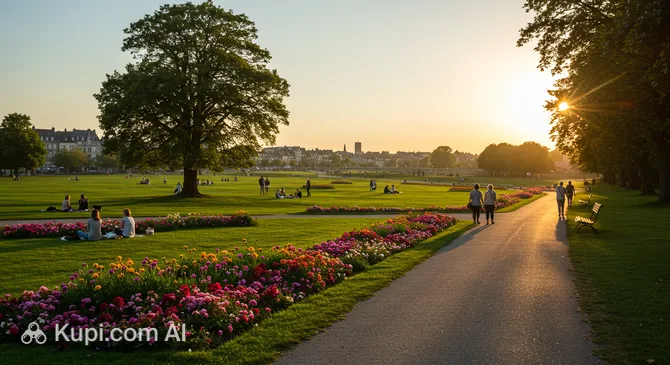
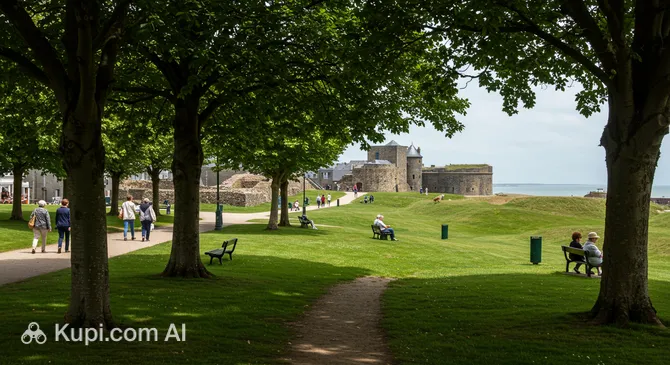
For lovers of seascapes and active recreation, the famous Malo-les-Bains Beach is a real gem. This wide sandy strip is perfect for long walks, sunbathing, water sports, or simply enjoying the fresh sea breeze. Another beautiful place for nature relaxation is Fort Louis Park. This green oasis, with remnants of historical fortifications, offers shaded alleys for leisurely strolls and a chance to touch the city's past in a calm setting.

Fort Louis Park. Illustration.
Source: Kupi.com AI

Traveler photos:

The city carefully preserves its history, and the best place to get acquainted with one of its most dramatic episodes is the Dunkirk 1940 Museum: Operation Dynamo. Its exhibition tells in detail about the heroic evacuation of Allied troops during World War II, making it a must-visit. To better understand Dunkirk's maritime soul, head to the Port Museum of Dunkirk. Here you will see ship models, learn about the lives of sailors, and the development of port infrastructure, which played a key role in the city's history. Art lovers will be interested in the Dunkirk Museum of Contemporary Art and Action (LAAC), which features a significant collection of 20th and 21st-century works.

Dunkirk 1940 Operation Dynamo Museum. Illustration.
Source: Kupi.com AI

Traveler photos:

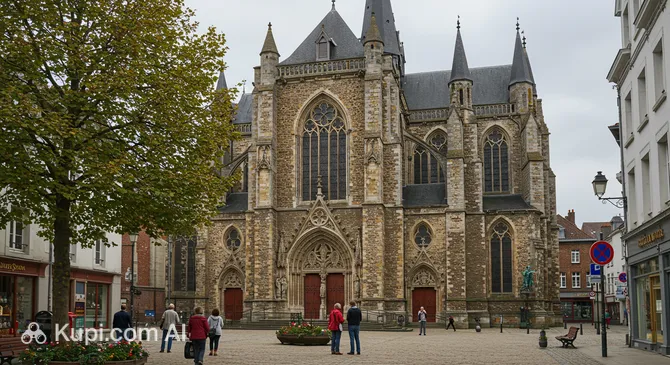
The architectural dominant and symbol of the city is the majestic Belfry of Saint-Eloi, whose bell tower is a UNESCO World Heritage site. Upon reaching its top, you will be rewarded with a breathtaking panoramic view of Dunkirk, its port, and the surrounding area. Near the belfry is the impressive Church of Saint-Eloi, also worth visiting for its rich history and architecture.

Saint Eloi Church. Illustration.
Source: Kupi.com AI

Traveler photos:

For family leisure, the Dunkirk Aquarium is an excellent choice, where you can see a variety of marine inhabitants of the region. And to feel the authentic atmosphere of the city, we recommend strolling along the port quays in the evening when the lights come on, or exploring the streets in search of interesting street art that adds modern charm to Dunkirk.

Getting Around

Getting around Dunkirk using public transport is surprisingly simple and pleasant, as its main feature is completely free travel for all passengers on the DK'BUS Marine bus network. This makes moving around the city and its surroundings not only convenient but also very economical.

The main form of public transport in Dunkirk is buses. The DK'BUS Marine network covers the entire city and adjacent communes, offering an extensive system of routes. The buses are modern, comfortable, and adapted for people with disabilities. Since travel is free, you don't need to worry about buying tickets, passes, or validating them. Just get on the bus and enjoy the ride.

Despite the free travel, it is important to know the schedules and routes. Information can be found on the transport company's official DK'BUS website, at bus stops (usually there are route maps and arrival times for the next buses), or through mobile travel planning apps. Buses run regularly, but frequency can vary depending on the time of day and day of the week (intervals may be longer on weekends and public holidays).

If you need alternative ways to get around, taxis are available in Dunkirk. They can be called by phone or found at designated stands, especially at the train station and in the city center. Another popular option, especially in good weather, is the bicycle. There are bike rental points in the city, allowing you to explore the waterfront and city streets at your own pace. Given Dunkirk's compactness, many attractions are within walking distance, especially in the city center.

Accommodation

In Dunkirk, a wide range of accommodation options is available to tourists, capable of satisfying various preferences and budgets. You can find everything from economical hostels and cozy guesthouses to comfortable mid-range hotels. For those who prefer more independence, apartments and houses are available for short-term rent. While the choice of luxury hotels may not be as extensive as in major tourist centers, quality options are still present.

Particularly popular with travelers are the areas located near main attractions and transport hubs. The city center offers convenient access to shops, restaurants, and historical sites such as the Belfry of Saint-Eloi or the Port Museum of Dunkirk. The coastal district of Malo-les-Bains, famous for its picturesque Malo-les-Bains Beach, is also an attractive place to stay, especially during the summer. Accommodation here provides excellent opportunities for relaxation by the sea and easy access to urban infrastructure.

To guarantee the best choice and prices, especially during the peak tourist season (summer months) or during major city festivals and events, it is recommended to book accommodation in advance. This will allow you not only to choose from a larger number of available options but also potentially to save money.

The price range for accommodation in Dunkirk varies from budget options to mid-range and higher-end offerings. You can book accommodation through popular international online platforms (e.g., Booking.com, Expedia, Airbnb), as well as directly on hotel websites or through local travel agencies. Comparing offers on different resources will help you find the most suitable option in terms of price and quality.

Nearby Cities

For those who want to explore the surroundings, Dunkirk serves as an excellent starting point for day trips to several interesting nearby places:

CityPopulationDistance
Saint Pol sur Mer20 4793 km
Coudekerque-Branche20 9253 km
Grande-Synthe22 7776 km
De Panne11 12916 km
Gravelines11 13218 km

A trip to Calais will allow you to see the famous "Burghers of Calais" sculpture by Auguste Rodin, visit the Museum of Lace and Fashion, and enjoy the views from the historic lighthouse. Béthune will charm you with its main square, Grand Place, and its impressive belfry, a UNESCO World Heritage site and symbol of the city. Hazebrouck, located in the heart of the Flemish plain, offers a chance to see traditional Flemish architecture, including the City Hall, and to visit the Augustinian Museum, which features a collection of local art and history.

These nearby destinations provide insight into the diverse culture and landscapes of the region, enriching your travel experience in France.

Shopping & Souvenirs

Dunkirk offers a variety of shopping opportunities, combining the charm of local shops with the convenience of modern shopping centers. Although the city is not famous for exclusive goods on a global scale, you can find quality French products, regional delicacies, and interesting souvenirs here, especially those related to maritime themes and the famous Dunkirk Carnival.

The main shopping arteries of Dunkirk are concentrated in the city center. Strolling through its streets, you will find many shops for clothing, shoes, and accessories, as well as bookstores and perfume boutiques. Rue Clemenceau and its adjacent side streets are particularly lively, where you can find both well-known brands and small independent shops.

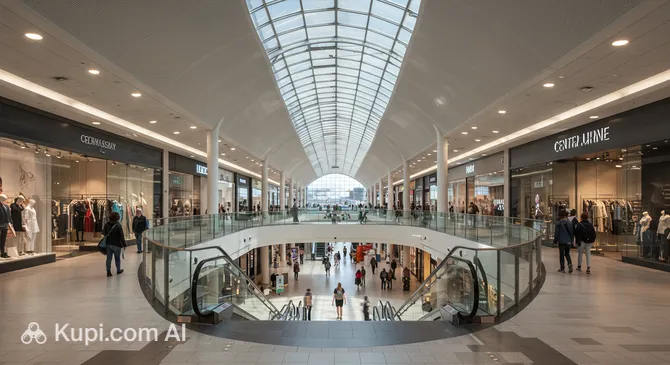
For those who prefer shopping under one roof, there are several shopping centers in Dunkirk. Among them is Pôle Marine, offering a good selection of shops and services. The Centre Marine shopping center is also popular, where you can find a variety of goods.

Centre Marine. Illustration.
Source: Kupi.com AI

Traveler photos:

In addition to shops, it is worth paying attention to the local markets. Markets are regularly held in Dunkirk where you can buy fresh products—fruits, vegetables, cheeses, seafood, as well as local delicacies. This is a great place to feel the city's atmosphere and purchase something delicious. Check out the market at Place du Général de Gaulle, which usually operates on Wednesday and Saturday mornings.

As souvenirs from Dunkirk, tourists often choose items with maritime symbolism: ship models, striped sailor shirts, and framed nautical knots. Local gastronomic specialties are also popular, such as smoked herring (hareng fumé), "gaufres fourrées" waffles, or local beer. If your trip coincides with the famous Dunkirk Carnival, you can find bright and original carnival attributes.

Most shops in Dunkirk are open from Monday to Saturday, usually from 9:00-10:00 AM to 7:00-7:30 PM. Some smaller shops may close for a lunch break (roughly from 12:30 PM to 2:00 PM). On Sundays, most shops are closed, except for some bakeries, pastry shops, and souvenir stalls in tourist areas. Bank cards (Visa, Mastercard) and cash are widely accepted for payment.

Tourists from countries outside the European Union can take advantage of the tax-free shopping system (Tax Free) when making purchases over a certain amount in participating stores. To do this, you need to ask the seller for a special form (bordereau de détaxe) and present it along with your purchases at customs when leaving the EU.

Reached the end of the page?

That means the route is fully explored