Support

SaintMalo

About

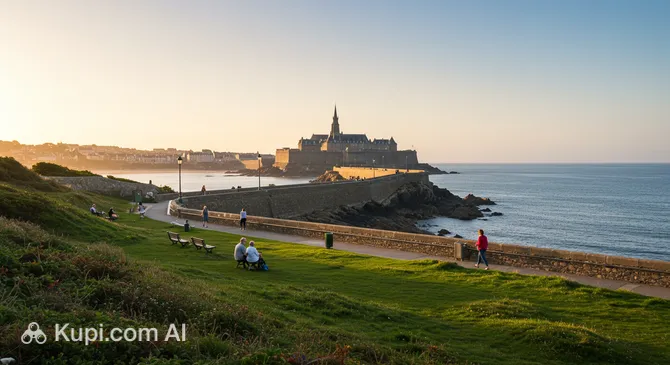
Saint-Malo is a city that looks as if it stepped off the pages of a thrilling adventure novel: incredibly picturesque, shrouded in mystery, and completely unique in its atmosphere. It is nestled on the northwestern coast of France, at the mouth of the Rance River, right on the shores of the English Channel. The city seems designed to surprise: its ancient fortress walls rise straight out of the water, and during the famous high tides, Saint-Malo appears to transform into an impregnable island fortress, cut off from the rest of the world.
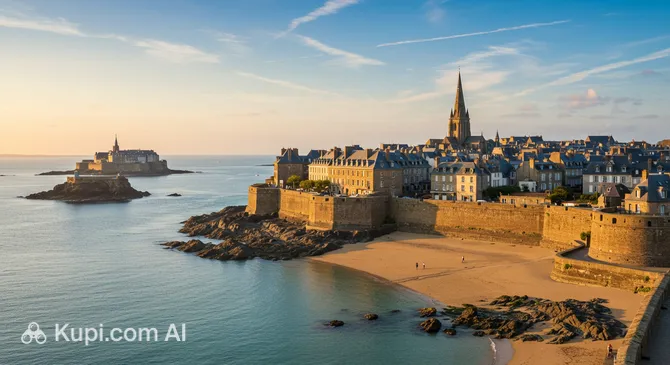
Saint-Malo. Illustration.
Source: Kupi.com AI

With a population of about 47,000 people, Saint-Malo remains a relatively small but highly significant center of the Brittany region. The city is traditionally divided into three main parts: Intra-Muros – the historical heart enclosed within massive fortress walls; Saint-Servan – the ancient quarter on the mainland; and Rothéneuf – a picturesque eastern suburb. Saint-Malo is not only an important administrative center but also a major seaport where ancient architecture and modern resort life blend harmoniously.

The city's crown jewel is undoubtedly Intra-Muros, which means "inside the walls." A walk along these ancient fortifications offers unforgettable views of the emerald sea, nearby islands, and the city itself. At low tide, you can walk to Fort National and the island of Grand-Bé, home to the tomb of the famous writer Chateaubriand. The atmosphere of Saint-Malo is permeated by sea breezes, the scent of salt, and the elusive spirit of past adventures from the days when the city was a corsair stronghold.

Saint-Malo is the perfect destination for those dreaming of the romance of medieval towns, seascapes, and leisurely evenings on the coast. Here, everyone will find something to their liking: from exploring narrow cobbled streets and cozy cafes to enjoying the freshest seafood. Come to Saint-Malo to experience its unique character and take home a piece of its maritime soul.

You can find more interesting facts on the Saint-Malo history page.
Weather Overview

The weather in Saint-Malo is characterized by a temperate maritime climate. Summers here are usually warm, with average temperatures in July and August around 18°C (highs can reach 20-21°C), and relatively low rainfall. Winters are mild but wetter, with average temperatures in January and December around 7-9°C and many rainy days. Expect warm summers with occasional rain and cool, damp winters. For a more detailed look at weather conditions by month, you can explore the Saint-Malo climate.

Average monthly temperature

Average monthly precipitation

Interesting Facts

Saint-Malo, the city of corsairs and majestic granite walls, is well-known to many travelers. But behind its rugged maritime facade lie surprising stories and little-known details that make it a truly unique place to explore.

Fort National. Illustration.
Source: Kupi.com AI

Traveler photos:

  • Independent Spirit: In the 16th century, the residents of Saint-Malo, known for their rebelliousness and independence, briefly declared their city an "independent republic"! Their motto proudly stated: "Ni Français, ni Breton, Malouin suis" (Neither French, nor Breton, I am a citizen of Saint-Malo).

  • Playing with the Ocean: The city is famous for having some of the strongest tides in Europe. At low tide, you can walk to iconic spots like Fort National or the island of Grand-Bé, where the famous writer Chateaubriand is buried. However, stay alert: the tide returns very rapidly, cutting off the path back to the mainland.

  • Birthplace of an Explorer: It was from Saint-Malo that Jacques Cartier set off on his famous expeditions. The French navigator is credited with the discovery of Canada and the exploration of the St. Lawrence River in the 16th century. The city carefully preserves the memory of its famous son.

  • Legal Corsairs: The famous corsairs of Saint-Malo, unlike ordinary pirates, acted with official permission from the French crown. They possessed a "letter of marque" (lettre de marque), which legalized their attacks on enemy ships and allowed them to share the loot with the state. You can learn more about their daily lives by visiting the House of the Corsair.

How to Get There

A journey to Brittany is the beginning of a fascinating adventure, and there are many ways to reach the corsair city on the coast. Thanks to France's well-developed transport infrastructure, your trip will be comfortable regardless of the mode of transport you choose. You can find out more about how to get to Saint-Malo by studying all the logistical details, but below we will look at the key transport hubs located nearby.

If you are planning to fly, it is important to know that the city itself does not have a large international airport, so travelers use neighboring air hubs. The closest is Pleurtuit Airport (DNR), located in the town of Dinard, just 8.2 km from Saint-Malo. This is a compact airport from which you can reach the resort center very quickly by taxi or transfer.

A larger and more popular hub for international and domestic flights is Rennes Airport (RNS). It is located about 68 km from the coast. The journey from Rennes Airport to Saint-Malo by car or public transport (bus + train combination) takes about 1 hour. There are also island airports in the region, such as Jersey Airport, though keep in mind that you will need to take a ferry from the islands to the mainland.

The main airports in the region are presented in the table below:

AirportPassenger trafficDistance
Pleurtuit Airport95 0008 km
Jersey Airport1.5 mln63 km
Rennes Airport600 00068 km
Guernsey Airport655 58897 km
Alderney Airport49 823118 km

Rail travel is one of the most convenient ways to get to Brittany. The main transfer hub is Rennes Railway Station (IATA: ZFJ), located 66 km from Saint-Malo. High-speed TGV trains from Paris arrive here. Regional express trains (TER) run regularly from Rennes to Saint-Malo, with a travel time of just under 1 hour. This stretch can also be covered in about an hour by car.

Another important transport hub is Nantes Railway Station (IATA: QJZ). It is further away, about 163 km, but it is an excellent entry point for those traveling through the western part of the country. The trip from Nantes to Saint-Malo by car or train takes about 2–2.5 hours, making this route quite accessible and scenic.

List of the nearest major railway stations:

StationPassenger trafficDistance
Rennes Station15.2 mln66 km
Nantes Railway Station15.5 mln163 km
Angers Saint-Laud Station5.7 mln171 km
Le Mans Railway Station5.4 mln179 km
Tours Railway Station6.5 mln246 km

Main Attractions

Saint-Malo, the famous city of corsairs, beckons travelers with its rich history and unique atmosphere. Here, every stone breathes antiquity, and the seascapes are truly breathtaking. Among the many interesting sites, several key attractions stand out as must-sees.

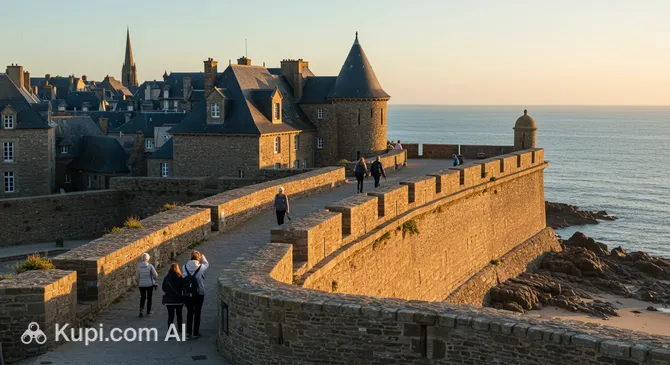
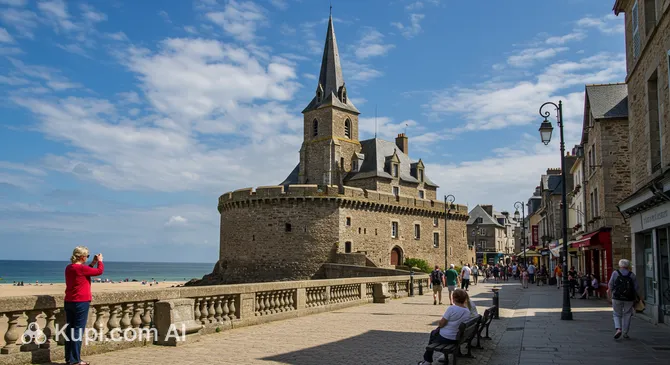
The heart of the city is undoubtedly Saint-Malo Intra-Muros – the historical center, entirely surrounded by ancient fortress walls. A stroll through its narrow cobbled streets, past tall granite houses, numerous cafes, and souvenir shops, transports you back to the era of brave seafarers and legendary pirates. It is a place where you can wander for hours, discovering new corners of the old town.

Saint-Malo Intra-Muros. Illustration.
Source: Kupi.com AI

Traveler photos:

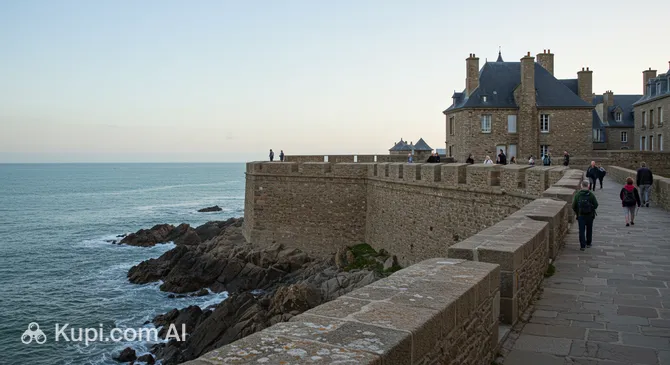
An integral part of Intra-Muros is the majestic Ramparts of Saint-Malo. These massive granite walls, built to protect the city, today offer one of the most impressive walks. From the top of the walls, you can enjoy stunning panoramic views of the emerald waters of the English Channel, the nearby islands, the port, and the old town itself. It is the perfect spot to feel the sea breeze and take unforgettable photos.

Saint-Malo Ramparts. Illustration.
Source: Kupi.com AI

Traveler photos:

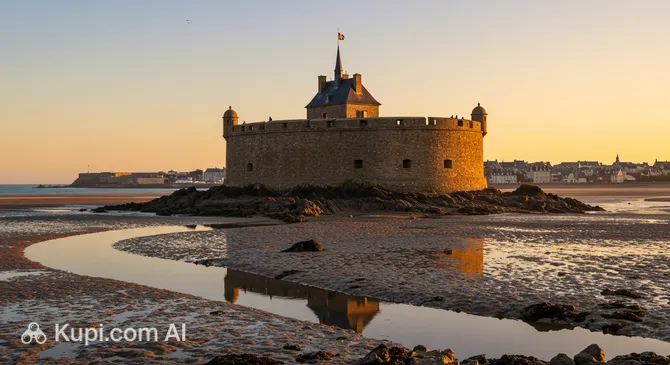
Opposite the city walls, on a small rocky island, stands Fort National. This historical fortress, built in the 17th century according to the designs of the famous military engineer Vauban, served to protect Saint-Malo harbor. The fort can be reached on foot during low tide. Visiting the fort is an opportunity to touch French history and enjoy magnificent views of the coastline and the city's fortifications.

Fort National. Illustration.
Source: Kupi.com AI

Traveler photos:

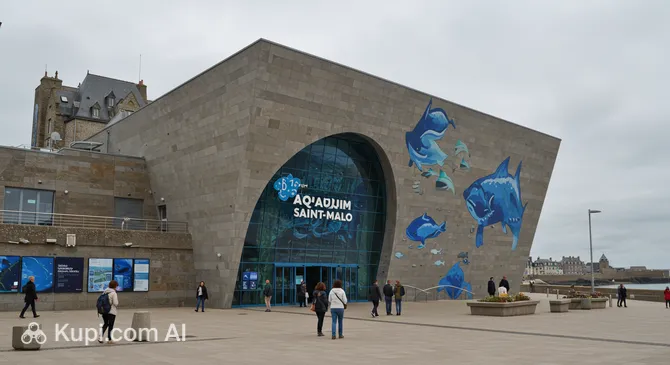
For those traveling with family or simply interested in the underwater world, the Great Aquarium Saint-Malo is a must-visit. It is one of the largest aquariums in France, showcasing a vast variety of marine life from all corners of the planet. Here you can see sharks, tropical fish, sea turtles, and much more. Especially popular are the submarine dive simulation and the circular shark tank.

Grand Aquarium Saint-Malo. Illustration.
Source: Kupi.com AI

Traveler photos:

Local Cuisine

The gastronomy of Saint-Malo is a true journey for connoisseurs of refined tastes, where Brittany's seafood takes center stage. Be sure to try the freshest seafood: oysters, mussels, scallops, and various shellfish, often served on ice platters straight from the waters of the English Channel. The plateau de fruits de mer – an impressive assortment of marine delicacies perfectly complemented by lemon and fresh herbs – is particularly popular.

Another source of local pride is the Breton galette (galettes) – thin, savory buckwheat pancakes. They are served with a wide variety of fillings: from the classic "complète" with ham, egg, and cheese to gourmet versions with seafood or vegetables. To accompany galettes, or indeed any other dish, the traditional Breton cider is perfect. In Saint-Malo, it is offered in a huge range, from dry and tart to sweet and sparkling, so everyone will find a drink to their taste.

Locals and tourists alike enjoy Breton delicacies in numerous restaurants and cozy bistros, especially in the historic Intra-Muros district. Don't pass by the street markets, where you can find fresh pastries, fragrant baguettes, and the famous Breton dessert – "kouign-amann", a multi-layered cake with a crunchy caramel crust. To fully experience the atmosphere of a Breton meal, stop by one of the traditional creperies, such as Chez le Sarrazin Creperie, which serves authentic galettes and crepes.

Chez le Sarrazin Crêperie. Illustration.
Source: Kupi.com AI

Traveler photos:

Saint-Malo's dining scene attracts tourists with its authentic Breton character, fresh ingredients, and variety of flavors. Here, every meal becomes a little discovery, whether it's an oyster tasting with a sea view or a cozy dinner with galettes and cider. In summer, the city comes alive with gastronomic festivals where you can sample the best local specialties and even participate in culinary workshops.

Travel Tips

Planning a trip to the amazing corsair city of Saint-Malo? Excellent! To ensure your journey through this gem of Brittany goes smoothly and leaves only the most pleasant impressions, we have prepared some practical tips.

  1. Clothing and Essentials: The climate in France, especially in coastal Saint-Malo, is changeable. Bring layered clothing: t-shirts, sweaters, a light jacket, and definitely something waterproof and windproof, even in summer. Comfortable shoes are your best friend for walking on the cobblestones of the old town and the fortress walls. Don't forget sunscreen, a hat, and a Type E power adapter. No specific dress code is required for visiting churches, but modest clothing is appropriate.
  2. Getting Around the City: The historic center of Saint-Malo, Intra-Muros, is best explored on foot. For trips to other districts or distant beaches, you can use the local buses of the Keolis Saint-Malo network. Taxis are available but can be expensive. Renting a car makes sense if you plan to explore the Brittany countryside, but parking in the city can be difficult, especially during peak season.
  3. Financial Matters: The official currency is the Euro (€). Bank cards (Visa, Mastercard) are accepted almost everywhere in shops, restaurants, and hotels. ATMs (DAB) are easy to find. It is recommended to notify your bank about your trip to avoid card blocks. Tips in France are usually included in the bill (service compris), but if the service was particularly good, you can leave 5-10% or round up the amount. An approximate daily budget (excluding accommodation) could be 50-70 euros per person, depending on your preferences.
  4. Health and Safety: Pharmacies (pharmacie) are marked with a green cross and are easy to find; check the schedule for duty pharmacies at night. In emergencies, call 112. Saint-Malo is a fairly safe city. However, as with everywhere, watch your belongings, especially in crowded places and on beaches. Avoid leaving valuables unattended.
  5. Communication: The main language is French. In tourist areas, many people speak English, but knowing a few basic French phrases (e.g., "Bonjour" – hello, "Merci" – thank you, "S'il vous plaît" – please) will be very helpful and appreciated by locals. Local SIM cards can be purchased at mobile phone shops or some supermarkets. Wi-Fi is available in many hotels, cafes, and restaurants.
  6. Local Etiquette: The French value politeness. When entering a shop or cafe, it is customary to say hello ("Bonjour" during the day, "Bonsoir" in the evening). When addressing someone, use "Monsieur" (sir), "Madame" (madam), or "Mademoiselle" (miss). Avoid speaking too loudly in public places.
  7. What to Avoid: Try not to start a conversation immediately in English; it's better to say hello in French first. Also, avoid criticizing French culture or cuisine – locals are very proud of their heritage. Do not enter private property without permission.
  8. A Saint-Malo Specialty – Tides: Be sure to check the tide schedule! Saint-Malo has some of the strongest tides in Europe. This is not only a spectacular sight but also a vital safety factor. Access to some attractions, such as Fort National or Grand-Bé island, is only possible during low tide. Never ignore warning signs and do not attempt to cross to the islands if the water begins to rise.

We hope these tips help you better prepare for your trip and fully enjoy the charm of Saint-Malo. We wish you an unforgettable journey through this historic city on the coast of the Emerald Coast!

Entertainment & Nightlife

As evening falls, Saint-Malo transforms, offering its guests a variety of options for relaxation and entertainment. Although the city is better known for its history and daytime activities, its nightlife is mainly concentrated within the walls of the old town (Intra-Muros) and along the promenade.

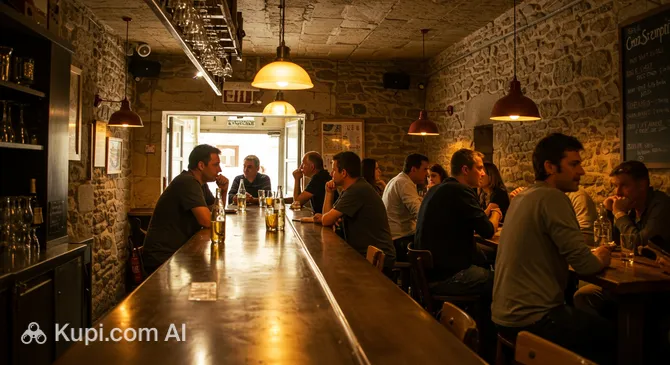
In Intra-Muros, you will find many cozy bars, pubs, and restaurants where you can enjoy local drinks such as cider or Breton beer and taste fresh seafood. The atmosphere here is usually relaxed and friendly, attracting both tourists and locals. Many establishments stay open late, especially during the summer season. The dress code in most places is quite casual.

One popular spot for an evening out is La Java Café, known for its lively atmosphere. For those seeking more traditional Breton flavors combined with drinks, Chez le Sarrazin Creperie might be just right. If you are in the mood to dance until dawn, it is worth checking out the night club Le Dock, which offers modern music and themed parties.

Le Dock. Illustration.
Source: Kupi.com AI

Traveler photos:

The best time to visit bars is after 9:00 PM when they start to fill up. Clubs usually come to life closer to midnight. Prices for drinks can vary but generally remain moderate. You can get back to your hotel at night by taxi; it is recommended to call them through official services or apps. The old town is considered safe enough for night walks, but as always, standard precautions should be taken.

During the day, Saint-Malo also offers plenty of excitement. You can explore the famous Ramparts of Saint-Malo, visit the Great Aquarium Saint-Malo, or walk through the historic center of Saint-Malo Intra-Muros. For family fun, try the Max Aventure Saint-Malo amusement park or the educational House of the Corsair.

Parks & Museums

Saint-Malo, a city with a rich corsair history and an impressive Breton coastline, offers its guests not only famous fortress walls but also charming green corners for relaxation and museums that dive deep into its unique maritime past and cultural heritage.

For those seeking peace and fresh air, Port-Breton Park will be a real discovery. Located a bit away from the busy center, this spacious park offers magnificent views of the bay and the Rance estuary. Here you can enjoy a leisurely walk among well-kept lawns and centuries-old trees, have a picnic, or simply relax while admiring the seascapes. It is a great spot for family outings and for those who appreciate being close to nature.

Port Breton Park. Illustration.
Source: Kupi.com AI

Traveler photos:

While not parks in the traditional sense, Saint-Malo's vast sandy beaches, such as the popular Bon-Secours Beach and the more secluded Saint-Enogat Beach, are the city's main natural zones. They are ideal for walks at low tide, sunbathing, and water sports. Special attention should be given to the island of Grand-Bé, accessible on foot during low tide. It holds the tomb of the famous French writer François-René de Chateaubriand and offers breathtaking panoramic views of the city and the endless sea.

Grand Bé. Illustration.
Source: Kupi.com AI

Traveler photos:

To touch the city's history, be sure to visit the House of the Corsair (La Demeure de Corsaire - Hôtel Magon). This beautifully preserved 18th-century mansion, which belonged to one of Saint-Malo's famous corsairs and shipowners, provides a glimpse into the lifestyle and era of wealthy seafarers. Tours, often led by descendants of the original owners, reveal the secrets of the house, from secret passages to luxurious interiors, telling the story of the heyday of privateering that made Saint-Malo famous.

Corsair's Mansion. Illustration.
Source: Kupi.com AI

Traveler photos:

Another important museum is the 1939-1945 Memorial (Mémorial 39-45). It is located in a former German bunker from World War II, which was part of the Atlantic Wall. The museum's exhibition is dedicated to the history of Saint-Malo during the occupation and the tragic events of August 1944, when the city was almost completely destroyed during the battles for its liberation. Visiting the memorial is an opportunity to gain a deeper understanding of an important and dramatic period in the city's history.

It is impossible to imagine Saint-Malo without its majestic fortress walls (Ramparts), which completely encircle the old town, known as Intra-Muros ("inside the walls"). Walking along them is a mandatory part of any tourist's itinerary, offering stunning views of the emerald sea, nearby islands, and the city itself. An important part of the defensive system is Fort National, located on a rocky island opposite the city walls and accessible for visits during low tide. It is also worth noting the elegant Villa Les Roches Brunes, a striking example of late 19th - early 20th-century resort architecture, which offers beautiful coastal views.

For families with children, an interesting addition to the cultural program could be a visit to the Saint-Malo Micro-Zoo, where you can see various animal species in a cozy setting. Fans of marine fauna will also appreciate the Great Aquarium Saint-Malo, one of the largest in France, offering a fascinating journey through the underwater world.

To experience the authentic atmosphere of Saint-Malo, don't be afraid to turn off the busy tourist routes inside Intra-Muros into quieter side streets. There you can discover charming old houses, cozy courtyards, and feel the spirit of the old corsair city. And for a truly unforgettable experience, climb the ramparts at sunset, when the setting sun paints the granite bastions and the sea surface in warm golden tones – a sight that will stay in your memory for a long time.

Getting Around

Getting around Saint-Malo and its surroundings is most convenient by bus. The city's transport network is called MAT (Malo Agglo Transports) and covers both the city itself and the neighboring communes. Buses run according to a schedule, which can be found at stops, on the network's official website, or in the mobile app.

The fare payment system is quite flexible. You can purchase a single ticket directly from the driver when boarding the bus, although this may be slightly more expensive. More economical options are often carnets – booklets of 10 tickets, or day, week, or month passes. Tickets and passes are also sold at special machines (if available at major stops), at the transport company's office, and in some tobacco shops (tabacs) and newsstands. Sometimes purchasing via a mobile app is available.

Tourists should keep a few practical points in mind. A purchased ticket must be validated every time you enter a bus using a special device. Buses usually run from early morning until evening, but intervals may increase in the evenings and on weekends, and some routes may not operate. Always check the schedule in advance, especially if you plan late trips. Within the old town, Intra-Muros, it is most convenient to get around on foot, as many streets are narrow and intended for pedestrians.

In addition to buses, there are other ways to get around Saint-Malo. Taxis can be found at special ranks or called by phone. Bicycle rental is very popular – it's a great way to explore the city and the picturesque coast at your own pace. Given the compactness of the historic center, walking remains one of the best ways to enjoy the atmosphere of Saint-Malo. In the summer season, small sea shuttles or motorboats may be available, connecting Saint-Malo with Dinard and other nearby points, which can be an interesting alternative and a short sea trip.

Accommodation

In Saint-Malo, you will find a wide range of accommodation options to suit the needs of all types of travelers. The city offers everything from cozy guesthouses and budget hotels to comfortable holiday apartments and elegant mid-range and luxury hotels. Here, everyone can find a place to stay that fits their taste and budget for an unforgettable holiday in this historic port city.

The most popular area for tourists is Saint-Malo Intra-Muros – the historical center surrounded by ancient fortress walls. Staying here allows you to be in the heart of the action, just steps away from iconic sites like the Ramparts of Saint-Malo and the Grande Porte. Hotels and apartments along the Sillon embankment are also in high demand, offering beautiful sea views and access to Bon-Secours Beach. A quieter atmosphere can be found in adjacent neighborhoods like Saint-Servan, which also offer a good selection of housing.

Ty Mat Residence. Illustration.
Source: Kupi.com AI

Traveler photos:

The price range for accommodation in Saint-Malo varies from budget options to more luxurious offerings. As an example of one accommodation option, we can mention the Ty Mat Residence. It is recommended to book your accommodation in advance, especially if your trip falls during the peak tourist season (summer months) or during major events and festivals. This will help you ensure the best choice and more favorable prices. Most hotels and apartments can be booked through popular online platforms or directly on hotel websites.

Nearby Cities

For those looking to explore the surrounding area, Saint-Malo serves as an excellent starting point for day trips to several interesting nearby locations:

Rennes, the lively capital of the Brittany region, is about an hour's drive away. This city attracts visitors with its rich history, beautifully preserved half-timbered houses in the old center like those at Place du Champ-Jacquet, the majestic Brittany Parliament building, and the extensive Thabor Park. Here, you can enjoy the atmosphere of ancient streets and the modern rhythm of a university city.

The coastal city of Saint-Brieuc, located to the west of Saint-Malo, offers visitors a charming historic center with the 13th-18th century Cathedral of Saint Stephen and picturesque views of the Bay of Saint-Brieuc. It is a great place for coastal walks, for example, along the GR34 trail, and for getting to know Brittany's maritime traditions.

Fougères is famous for one of the most impressive medieval fortresses in Europe – the Château de Fougères, which dominates the town. A trip here allows you to dive into history, explore the massive towers and walls of the castle, stroll through the ancient streets of the upper town, and enjoy views of the fortress and the surrounding Nançon River valley.

CityPopulationDistance
Dinard10 1813 km
Dinan14 40722 km
Granville12 56737 km
Lamballe12 57942 km
Avranches10 26448 km

These nearby destinations provide a glimpse into the diverse culture and landscapes of the Brittany region, perfectly complementing the experience of visiting Saint-Malo itself.

Shopping & Souvenirs

Saint-Malo offers an enjoyable shopping experience, especially if you are looking for authentic Breton goods and souvenirs. The city is famous for its maritime delicacies, local handicrafts, and, of course, products featuring Breton symbols. Most of the shops are concentrated in the historic center, making shopping also a delightful stroll.

The main shopping district of Saint-Malo is undoubtedly Saint-Malo Intra-Muros – the old town surrounded by fortress walls. Its narrow streets, such as Rue Saint-Vincent and Rue Porcon de la Barbinais, are lined with small boutiques, souvenir shops, clothing stores, patisseries, and shops selling local delicacies. You can find everything here, from traditional Breton clothing to modern designer pieces.

If you prefer larger shopping complexes, modern shopping centers are located outside the old town walls. Among them are the La Madeleine Shopping Center and the Le Cézembre Shopping Center. These feature well-known French and international brands, as well as hypermarkets where you can buy groceries and everyday goods.

La Madeleine Shopping Center. Illustration.
Source: Kupi.com AI

Traveler photos:

Markets in Saint-Malo are a great opportunity to soak up the local atmosphere and buy fresh produce. The most famous market, Halles Centrales in Intra-Muros, is open daily (except Mondays in the low season) and offers a rich selection of seafood, cheeses, meats, and vegetables. Additionally, open-air markets take place in different districts of the city on specific days of the week, where you can find clothes, souvenirs, and antiques.

As souvenirs from Saint-Malo, it is worth bringing back traditional Breton delicacies: salted butter caramels (caramels au beurre salé), Breton biscuits (galettes bretonnes, palets bretons), cider, or chouchen (a honey-based drink). Maritime-themed items are also popular – striped shirts (marinières), ship models, and items with Breton symbols, such as the ermine (l'hermine).

Most shops in Saint-Malo, especially in Intra-Muros, are open from 10:00 AM to 7:00 PM, and many take a lunch break from approximately 12:30/1:00 PM to 2:00/2:30 PM. During the tourist season, hours may be extended, and some shops also open on Sundays. Large supermarkets and shopping centers usually operate without a break. Bank cards (Visa, Mastercard) are accepted almost everywhere, but small shops or markets may require cash.

For tourists from countries outside the European Union, the Tax Free refund system is available in Saint-Malo, as in the rest of France. When purchasing goods for a certain amount in one store (usually over 100 euros), you can request a special form for a VAT refund. Be sure to check the conditions and the possibility of Tax Free directly in the shops.

Reached the end of the page?

That means the route is fully explored