Support

Alsatian Museum

About

The Alsatian Museum (Musée Alsacien) is a unique place in Strasbourg, France, where you can take a real journey back in time and immerse yourself in the atmosphere of traditional Alsatian life in the 18th and 19th centuries. This ethnographic museum lovingly recreates the daily life, customs, and folk art of the region, offering visitors an authentic look at Alsatian culture.
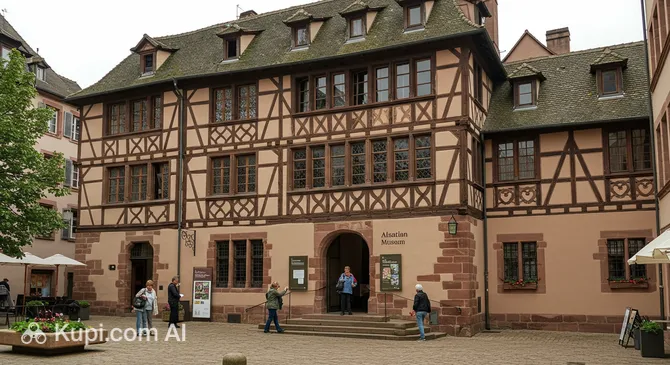
Alsatian Museum. Illustration.
Source: Kupi.com AI

Traveler photos:

The museum occupies several charming historical buildings located on the scenic Quai Saint-Nicolas along the Ill River. The buildings themselves, dating back to the 1600s, are striking examples of traditional half-timbered architecture; their waterfront facades seem to invite you inside to learn more about the past of this distinctive region.

Inside, a rich collection of over 5,000 exhibits awaits visitors. It features everyday items, furniture, costumes, ceramics, toys, and religious artifacts that tell the story of Alsatian life – from birth to death, from work in the fields to festive feasts. Of particular note is the valuable collection of items related to the daily life and culture of Alsatian Jews, making the exhibition even more multifaceted and interesting.

A visit to the Alsatian Museum is not just about viewing exhibits, but a true immersion into the history and soul of the region. It is a wonderful opportunity to learn how people lived in Alsace several centuries ago, understand their traditions, and feel the unique character of this part of France.

Contacts

To obtain the most up-to-date information about the Alsatian Museum, such as opening hours, ticket prices, and temporary exhibitions, we recommend checking official resources. The primary contact information is provided in the table below.

How to contactContact
Address23-25 Quai Saint-Nicolas, 67000 Strasbourg, France
Phone number+33 3 68 98 51 52
Websitewww.musees.strasbourg.eu

What to Do

At the Alsatian Museum, visitors set out on a fascinating journey through the history and daily life of the region. Here, you can examine numerous exhibits in detail that tell the story of Alsace's rich culture and traditions. Among them, you will find authentic clothing, antique furniture, various kitchen utensils, touching children's toys, and skillful works of folk artisans. The focus is on the everyday items, primarily of rural residents, allowing for a deep understanding of their daily lives.

Of particular interest to visitors are the magnificently recreated interiors of traditional Alsatian dwellings and public spaces. You can peek into a typical living room, known as a "Stùb," see an old kitchen, imagine yourself in an apothecary's surgery, and other characteristic rooms. These reconstructions allow you not just to see, but to feel the atmosphere of past centuries and imagine how life unfolded in Alsace.

Walking through the museum's three buildings, you will see not only common daily items and unique artifacts but also learn the stories behind them. The exhibits cover various aspects of Alsatian culture in detail, including traditional rituals such as Schiweschlawe, the specifics of celebrating Christmas with its decorated tree, the custom of "searching for chametz," and touching baptismal wishes. There are also rooms dedicated to viticulture and dairy farming—key sectors that shaped the region's economy and lifestyle.

In addition, the Alsatian Museum regularly organizes temporary exhibitions and various cultural events. This means that each visit can offer new impressions and a deeper understanding of the different facets of Alsace's rich heritage.

Getting There

The Alsatian Museum is located in Strasbourg, a city with a well-developed transportation infrastructure, making it easily accessible for visitors. The museum is situated in the historical part of the city, on the banks of the Ill River, allowing you to combine your visit with a pleasant walk through the picturesque surroundings of Strasbourg.

One of the most convenient ways to reach the Alsatian Museum is by public transport. Strasbourg boasts an excellent network of trams and buses. The stops closest to the museum are likely within walking distance. It is recommended to check the current routes and numbers for trams or buses heading to the Quai Saint-Nicolas area on the official website of Strasbourg's transport company or by using popular online maps and navigation apps.

If you prefer a more direct route or are traveling with luggage, taxis or ride-hailing services are available. A trip from Strasbourg’s central railway station or other central areas of the city to the museum usually doesn't take much time. Additionally, given the museum's location in the charming historic center, it is a pleasant walk from many of the city's other key attractions, allowing you to enjoy the architecture and unique atmosphere of Strasbourg along the way.

Nearest city: Strasbourg

History & Facts

The history of the Alsatian Museum began in 1902, when it was founded with the noble goal of preserving and showcasing the rich cultural heritage of the Alsace region in all its glory. It officially opened to the public on May 11, 1907. From the very beginning, the museum's mission has been to demonstrate the unique aspects of Alsatian culture, focusing on the traditions and everyday life of rural society in the 18th and 19th centuries, which shaped the identity of this distinctive land.

Over time, the museum has continuously grown and developed, expanding its collections and attracting more history enthusiasts. A significant milestone in its development was 1917, when the Alsatian Museum became the property of the city of Strasbourg. This event contributed to the institution's further prosperity. Notably, the museum itself is housed in several authentic buildings that are prime examples of traditional Strasbourg architecture. These buildings are historically valuable in their own right, fitting naturally into the museum's concept and enhancing the feeling of immersion into the past.

Today, the Alsatian Museum is more than just a repository of past artifacts. It serves as a living reflection of the region's multifaceted and constantly evolving culture, where various influences intertwine. The exhibits clearly demonstrate how life in Alsace has transformed from the 18th century to the present day, while emphasizing a steadfast commitment to unique traditions and the preservation of cultural identity. A visit to the museum offers a deeper understanding of the soul of Alsace and its people.

Time Needed

To fully appreciate the collection of the Alsatian Museum and immerse yourself in the atmosphere of traditional Alsatian life, most visitors will need approximately 1.5-2.5 hours. This is usually enough time to explore the main halls, the recreated interiors, and see key exhibits that tell the story of the region's daily life, crafts, and customs.

Of course, the length of your visit largely depends on your personal interest and how deeply you want to dive in. If you want to study every item in detail, read all the information boards, and truly feel the spirit of the past, you can easily allocate up to 3 hours or even slightly more for your visit. The museum spans several buildings, and its rich collection offers many interesting details for curious guests.

Some visitors prefer a quicker overview, which might take about 1 hour, but to really appreciate the uniqueness of the Alsatian Museum and its contribution to preserving cultural heritage, it is recommended not to rush. You should also consider that temporary exhibitions or special events, if they are held during your visit, may require additional time.

Working Hours

To ensure your visit to the Alsatian Museum is as comfortable as possible, we strongly recommend checking the current opening hours right before you go. Generally, museum schedules can change depending on the season, public holidays, or special events. You will always find the most accurate information on the museum's official website, mentioned in the contacts section, or by contacting tourist information centers in Strasbourg.

While the Alsatian Museum generally aims to be open to visitors year-round, it is always a good idea to check this information in advance. You should also check if advance ticket booking is required, especially if you plan to visit during the peak tourist season or for a popular temporary exhibition. This will help you avoid potential queues and guarantee your entry to the museum to explore the rich culture of Alsace.

DayOpening hours
Monday10:00 – 13:00, 2:00 – 18:00
TuesdayClosed
Wednesday10:00 – 13:00, 2:00 – 18:00
Thursday10:00 – 13:00, 2:00 – 18:00
Friday10:00 – 13:00, 2:00 – 18:00
Saturday10:00 – 18:00
Sunday10:00 – 18:00

Nearby

Visiting the Alsatian Museum is a wonderful opportunity to immerse yourself in the history and culture of the region. However, Strasbourg has much more to offer, and exploring nearby attractions can significantly enrich your travel experience. A walk through the surrounding area will allow you to discover other interesting corners of this charming city and gain a more complete picture of its diverse heritage.

There are several notable sites in the immediate vicinity of the Alsatian Museum that deserve your attention. This will allow you to plan your time efficiently and see more without spending too much time traveling. Below is a list of some of them, along with their approximate distance:

NameDistance
The Little Red Door0.1 km
Historical Museum of Strasbourg0.1 km
Strasbourg Museum of Fine Arts0.2 km
Museum of the Œuvre Notre-Dame0.2 km
Gutenberg Square0.3 km
Cathedral Square (Place de la Cathédrale) Strasbourg0.3 km
Historical Wine Cellar of the Hospices of Strasbourg0.3 km

Have you reached the end of the page?

So the route has been studied inside and out