Support

Valenciennes

About

Valenciennes is a true "diamond of the North," nestled on the banks of the Scheldt River in the Hauts-de-France region. Located just 50 kilometers from Lille and very close to the Belgian border, this city offers travelers a unique combination of French charm and Flemish solidity. If you want to discover what non-touristy and authentic France is like, this place is an ideal choice for getting to know the local flavor.

Valenciennes. Illustration.
Source: Kupi.com AI

Despite its modest size and population of about 43,000, the city plays an important role in the cultural life of the region. It is often called the "Athens of the North" due to its rich artistic heritage: it was the birthplace of great masters such as Antoine Watteau and Jean-Baptiste Carpeaux. The centuries-old history of Valenciennes can be felt while walking through its ancient streets, where every corner holds the memory of the past as the capital of the historic province of French Hainaut.

The main point of attraction for art lovers is the Museum of Fine Arts, which is considered one of the best in the region. Here you can not only enjoy masterpieces of painting and sculpture but also simply take a break from the hustle and bustle by immersing yourself in contemplation. Valenciennes invites guests to slow down, appreciate the architectural beauty, and taste local cuisine rarely mentioned in standard guidebooks.

Weather Overview

The climate in Valenciennes is temperate, with a noticeable Atlantic influence, which ensures mild weather without extreme temperature fluctuations. Summer here is comfortable and not too hot, which is perfect for long walks: in July and August, the average temperature is about 19°C, and during the day the air usually warms up to 23.5°C.

Winters in the city are cool but generally without severe frosts. In January, the coldest month of the year, the average temperature stays around 4.4°C, rarely falling below zero. Spring arrives gradually: while the breath of winter is still felt in March, by May it becomes significantly warmer, and daytime highs reach 18°C.

Precipitation falls fairly regularly throughout the year, so a little rain can catch you off guard even in the sunny season. Expect a warm summer with occasional rain and cool, damp winters. To plan your wardrobe correctly for the trip, we recommend checking the current weather in Valenciennes before you depart.

Average monthly temperature

Average monthly precipitation

Interesting Facts

Beyond its main attractions, Valenciennes holds many fascinating secrets that reveal themselves only to inquisitive travelers. This city wonderfully intertwines legends of the past with the living traditions of the present, creating a unique atmosphere at the intersection of cultures.
  • Valenciennes proudly bears the nickname "Athens of the North" due to its outstanding artistic history. It was here that great masters such as Antoine Watteau and sculptor Jean-Baptiste Carpeaux were born. To understand why a small town became a center of attraction for the creative elite, visit the Museum of Fine Arts of Valenciennes, which houses an impressive collection of their works.

  • The city is linked to a mystical legend and an annual tradition known as Saint-Cordon. Every second Sunday of September, thousands of residents make a pilgrimage along a 14-kilometer route around the city. Legend has it that the Virgin Mary herself drew this line with a "sacred cord" to protect the inhabitants from a plague epidemic in the Middle Ages.

  • Due to its geographical location and proximity to Belgium, Valenciennes has historically absorbed traits from two cultures at once. You can still hear echoes of Flemish speech here, and in its architecture, French sophistication harmoniously coexists with North European solidity, which is especially noticeable in the old part of the city.

  • The city landscape is full of contrasts: the majestic Basilica of Notre-Dame-du-Saint-Cordon and the Gothic Church of Saint-Géry serve as reminders of its spiritual heritage, while modern facilities, such as the futuristic Stade du Hainaut, demonstrate the city's dynamic development in the 21st century.

Museum of Fine Arts of Valenciennes. Illustration.
Source: Kupi.com AI

Traveler photos:

How to Get There

When planning a trip to this cozy French city, it is worth thinking about your route in advance. Valenciennes is located in the north of the country, near the border with Belgium, which opens up many travel options via the transport hubs of both countries. You can read more about how to get to Valenciennes by exploring all the available methods and choosing the most comfortable one for yourself.

The city of Valenciennes does not have its own airport, so it is most convenient to use the airports of neighboring cities. The closest is Lille Airport (LIL), located approximately 38 km from the center. This is a regional hub receiving flights from various parts of France and Europe. A trip by car or taxi from there will take about 35–40 minutes; you can also use a shuttle to the Lille train station and transfer to a train.

For international flights, an excellent option is Brussels Airport (BRU), located in the capital of Belgium (about 91 km from Valenciennes). This is a major international hub with a huge passenger flow. The journey by car on the highway will take approximately 1 hour and 10 minutes. Also popular is the low-cost hub Brussels South Charleroi Airport (CRL), located at a distance of about 68 km. A car transfer from there will take about 50 minutes.

For clarity, here is summary information on the main airports:
AirportPassenger trafficDistance
Lille Airport1.8 mln38 km
Charleroi Brussels South Airport10.5 mln67 km
Brussels Airport23.6 mln91 km
Ostend-Bruges International Airport386 387104 km
Antwerp International Airport239 517114 km

Railway connection is another popular and fast way to reach the region. Although Valenciennes has its own station, many tourists arrive via the major stations of the neighboring metropolis, Lille. Lille-Flandres Station (XFA) is a key transport hub located 44 km from Valenciennes. Regional trains (TER) depart regularly from here, delivering passengers to Valenciennes in just 30–40 minutes. By car, this journey takes about 45 minutes.

Another important point is the Lille-Europe (XDB) station, located nearby. High-speed Eurostar and TGV trains from London, Paris, and Brussels often arrive here. This makes a train trip a convenient alternative to flying.

Below is a table of the nearest major railway stations:
StationPassenger trafficDistance
Douai Station3.5 mln30 km
Lille Europe Station7.2 mln44 km
Lille Flandres Station19.5 mln44 km
Roubaix Station127 29345 km
Tourcoing Station710 22347 km

Main Attractions

Valenciennes is a city where history is harmoniously intertwined with nature and modernity. Exploring the main attractions will allow you not only to learn about the rich cultural heritage of the "Athens of the North" but also to find cozy corners for relaxation.

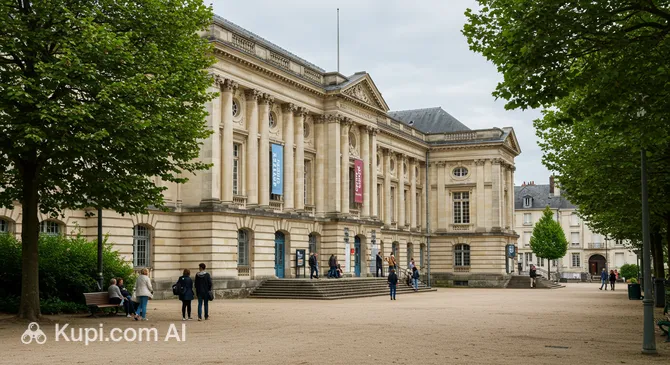
The undisputed cultural landmark is the Museum of Fine Arts of Valenciennes. This place holds a special status thanks to its magnificent collection of works, including masterpieces by famous city natives Antoine Watteau and Jean-Baptiste Carpeaux. Visitors are impressed not only by the collection of Flemish painting but also by the monumental sculpture hall, which is considered one of the most beautiful in France. The museum building itself is an architectural monument that creates a solemn atmosphere.

Museum of Fine Arts of Valenciennes. Illustration.
Source: Kupi.com AI

Traveler photos:

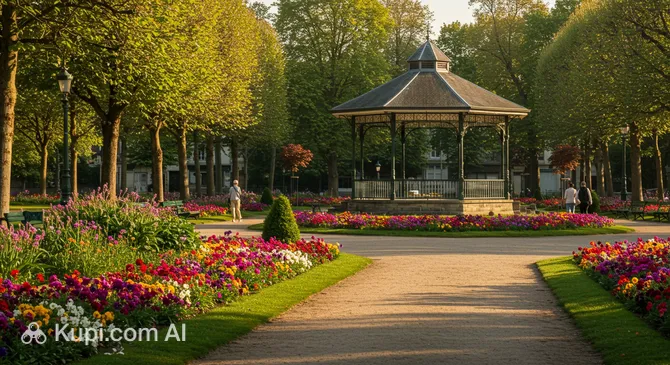
For those seeking tranquility in the city center, Parc de la Rhonelle is an ideal spot. This picturesque English-style garden was created in the early 20th century and has since remained a favorite walking spot for locals. Here you can admire century-old trees, elegant sculptures, and flower beds. The park is perfect for a peaceful rest after excursions: the quiet alleys and the view of the pond help you detach from the urban bustle.

Fans of active recreation and nature should head to the water at Étang du Vignoble. This vast body of water, located on the southern outskirts of the city, attracts not only fishermen and water sports enthusiasts but also those who simply want to walk along the scenic shores. The name of the place serves as a reminder that historically grapes were grown on these sunny slopes, adding a special charm to the landscape.

Vineyard Pond. Illustration.
Source: Kupi.com AI

Traveler photos:

The modern rhythm of life in Valenciennes is best felt in its heart, where the Place d'Armes Shopping Center is located. Situated on the main city square, it is an example of the successful integration of modern architecture into historical buildings. It is a popular spot for shopping and meeting up, from where it is convenient to continue exploring the surrounding old streets and cafes.

Local Cuisine

The gastronomic world of Valenciennes is a soulful union of French sophistication and hearty Flemish traditions. People here appreciate food that warms and provides comfort, which is especially relevant in the cool climate of the Hauts-de-France region. Local cuisine is famous for its generosity, the use of beer in hot dishes, and, of course, the famous northern cheeses.

The main dish that is definitely worth trying is carbonnade flamande. This is incredibly tender beef, slow-cooked in a beer sauce with spices and onions, traditionally served with French fries. Another pride of the region is Maroilles cheese. Despite its sharp, specific smell, it has a surprisingly mild, creamy taste. It is eaten as a standalone snack or used as a filling for savory pies — flamiche.

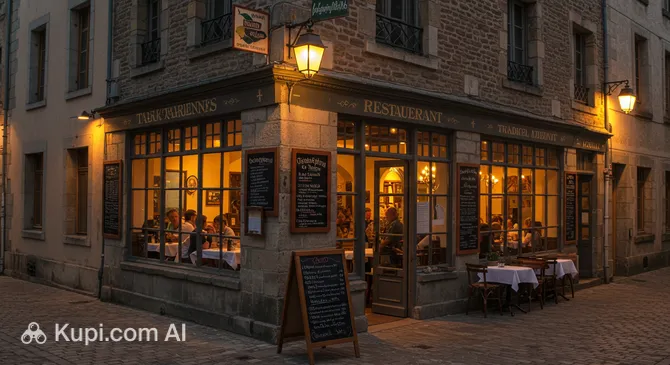
Chez Mon Vieux. Illustration.
Source: Kupi.com AI

Traveler photos:

As for drinks, Valenciennes, like the rest of northern France, is a land of brewing. Quality local beer is often preferred over wine: from light lagers to strong dark ales brewed at small monastery or craft breweries. With coffee or tea, it is customary to order sweet waffles with various fillings or desserts with Belgian chocolate, reminding you of the proximity to the neighboring kingdom's border.

The food culture in the city is very democratic. Locals love visiting street markets where you can buy fresh oysters, homemade sausages, and farm products. For a full lunch or dinner, tourists often choose cozy establishments with a homey atmosphere. For example, the restaurant Chez Mon Vieux offers guests the chance to immerse themselves in an authentic setting and appreciate the region's classic flavors. Also popular is Le Bistrot d'en Face, where tradition meets the casual atmosphere of a French bistro.

Travel Tips

Valenciennes is a hospitable and cozy city, but as with any trip, a little advance preparation will make your visit much more pleasant. We have gathered some practical tips to help you feel confident and avoid typical tourist inconveniences in this northern corner of France.

  1. Clothing and Weather. The climate in the Hauts-de-France region is changeable, so the best principle for clothing is layering. Even in summer, a light jacket or sweater for the evening won't hurt. Be sure to bring a reliable umbrella or raincoat: rain here can start suddenly. For walks in the historical center, choose comfortable flat shoes, as many streets are paved with cobblestones.

  2. Transport. The historical center of Valenciennes is quite compact and is most pleasant to explore on foot. For longer distances, the city tram network and Transvilles buses are excellent. Tickets can be bought at machines at stops; don't forget to validate them upon entry. Renting a car only makes sense if you plan trips to the outskirts of the region; within the city, a car can be a burden due to parking.

  3. Finance and Payments. The currency is the Euro (€). Bank cards (Visa, Mastercard) are accepted almost everywhere: in restaurants, museums, and supermarkets. However, for purchases in small bakeries (boulangerie) or at street markets, it is better to have some cash on hand. In France, tips are legally included in the bill (service compris), but leaving 1–2 euros or rounding up the amount as a sign of gratitude for good service is considered good manners.

  4. Safety and Health. Valenciennes is a quiet city, but standard precautions apply: watch your bags in crowded places and at the station. Pharmacies are easily recognized by a flashing green cross; many pharmacists speak English and can provide advice for minor ailments. The single emergency number is 112.

  5. Language and Communication. The main language is French. The level of English proficiency among locals varies: young people and tourism workers often speak it, but in small shops, you might not be understood. Learn a few basic phrases: "Bonjour" (hello), "Merci" (thank you), and "S'il vous plaît" (please). Locals really appreciate it when tourists try to speak their language and will be much friendlier towards you.

  6. Local Etiquette. The main rule of politeness in France is to always say hello ("Bonjour") when entering a shop, cafe, or even an elevator, and to say goodbye ("Au revoir") when leaving. Ignoring this ritual can be perceived as rudeness. In public places, it is customary to behave with restraint and speak quietly.

  7. What to Avoid. Don't try to have dinner at any time of the day. Most traditional restaurants operate strictly by the clock: lunch from 12:00 to 14:00 and dinner from 19:00 to 21:30. In the hours between, kitchens are often closed, and you can only count on fast food or cold snacks in a brasserie.

  8. Shop Opening Hours. Remember that Sunday in France is traditionally a family day and a day of rest. Most shops, including grocery supermarkets and clothing boutiques, are closed on this day or only work until noon. Plan your shopping and procurement of necessary items for Saturday.

By following these simple rules, you can easily blend into the rhythm of life in Valenciennes and enjoy its atmosphere without any extra hassle. We wish you unforgettable impressions and pleasant discoveries in this charming city!

Entertainment & Nightlife

Nightlife in Valenciennes is not like the noisy parties of major metropolises; it has its own unique, cozy, and friendly charm. As a student city with strong influences from neighboring Belgium, Valenciennes offers an excellent choice of venues where French wine culture meets the traditions of high-quality beer and cheerful social gatherings. The main activity here occurs on Thursday (student night), Friday, and Saturday.

The epicenter of evening life is the area around Place d'Armes and the adjacent streets, such as Rue de Paris and Rue de la Paix. Most popular bars and pubs are concentrated here. The atmosphere in these establishments is democratic and relaxed: there is usually no dress code (casual), and the crowd is a diverse mix of students, locals, and tourists. If you are looking for a place for an active and fun evening with friends, you should check out the Laser Game, Karaoke, and Blind Test Bar in Valenciennes. This venue is perfect for those who don't like to just sit at a table but prefer interactive entertainment and music.

For connoisseurs of more refined and quiet relaxation, an ideal location is the bar located in the historical building of a former hospital, which now houses the Royal Hainaut Spa & Resort Hotel. In the evening, an elegant atmosphere prevails here: under 18th-century vaults, you can enjoy signature cocktails or a glass of fine wine. This place requires a slightly more polished style of dress (smart casual) and is perfect for a romantic date or a calm end to the day.

Practical tips for night owls:

  • Opening hours: Most bars are open until 1:00 AM or 2:00 AM. Nightclubs stay open until dawn, but there are only a few in the city.
  • Prices: The average cost of a pint of beer is 6–8 euros, and a cocktail is 10–12 euros.
  • Safety: The center of Valenciennes is well-lit and safe for night walks. However, if your accommodation is on the outskirts, it is better to call a taxi or Uber after midnight, as public transport stops running quite early.

Speaking of entertainment, one cannot forget daytime leisure. Valenciennes is a cultural city with a wonderful theater, Le Phénix, which hosts national and international productions. For family tourists, an excellent option is Kaval'kid Valenciennes — an indoor entertainment park where children can burn off energy on slides and trampolines while parents plan their evening route.

Parks & Museums

Valenciennes is a city where art extends far beyond exhibition halls, and nature is harmoniously woven into the urban landscape. Ideal conditions have been created here for travelers to alternate cultural discoveries with relaxed outdoor recreation. The city's green zones are famous for their well-kept appearance and historical charm, while local museums house collections worthy of capital galleries.

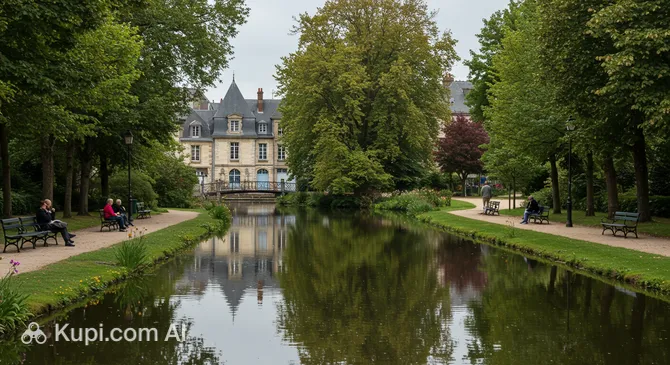
A true gem among the city gardens is Parc de la Rhonelle. This green oasis, laid out in the English style, is considered one of the most beautiful in the region. Walking along its winding paths, you will encounter century-old beeches, lindens, and sycamores that provide pleasant shade even on hot days. A special feature of the park is its rich collection of sculptures, many of which are copies of works by famous city natives. It is an ideal place for a leisurely stroll where nature and art complement each other.

Rhônelle Park. Illustration.
Source: Kupi.com AI

Traveler photos:

If you prefer larger-scale natural landscapes, head to Étang du Vignoble. This extensive water area on the edge of the city attracts fans of ecotourism and active recreation. Here you can watch waterfowl, have a picnic on the shore, or simply enjoy the silence away from city noise. The name "Vineyard Pond" is a reminder of the times when the hillsides were covered with vineyards, which adds historical flavor to the place.

The main cultural institution of the city is undoubtedly the Museum of Fine Arts of Valenciennes. It is often called one of the most significant regional museums in France. The collection is impressive in its scope: it features masterpieces of Flemish painting, including works by Rubens and Jordaens, as well as canvases by the famous city native Antoine Watteau. Special attention should be paid to the sculpture hall, which presents expressive works by Jean-Baptiste Carpeaux. Visiting this museum is a mandatory part of the program for any tourist interested in European art.

In addition to the main museum, the role of history keeper is performed by the Spanish House (Maison Espagnole). This 16th-century half-timbered building is a rare surviving example of architecture from the time of Spanish rule. Today, it houses the Tourist Office, but the building itself is a full-fledged museum object telling the story of Valenciennes' medieval past. It is also worth noting the architecture of the Basilica of Notre-Dame-du-Saint-Cordon, whose belfry dominates the city and is connected to the region's most important religious traditions.

For those traveling with children or looking for a different kind of entertainment, Kaval'kid Valenciennes operates in the city. This is an indoor amusement park that will be a great place for a family vacation, especially if the weather is not conducive to walking outside.

Insider tip: Valenciennes is often called an "open-air museum." Walking through the center, look around carefully: the city is decorated with many statues and monuments. Try to find all the sculptures scattered throughout Parc de la Rhonelle and the city center — this will turn an ordinary walk into an exciting quest in the footsteps of great masters.

Getting Around

Getting around Valenciennes is easy and convenient thanks to a well-thought-out public transport system managed by the company Transvilles. The "backbone" of city mobility is the modern tram. The network consists of two lines (T1 and T2) that connect the railway station, the historical center, the university campus, and neighboring suburbs. Trams run frequently, are quiet, and allow you to quickly reach most key locations.

The tram lines are supplemented by a dense network of bus routes covering all areas of the city and its surroundings. For tourists, a real find is the special shuttle Le Cordon. This is a free bus that runs on a circular route in the very center of the city, connecting the station with the main shopping streets and squares. The interval is about 15–20 minutes, making it an ideal option for short trips between attractions.

Payment is unified for all types of Transvilles transport. It is most profitable to purchase a 24-hour pass (Ticket Journée) if you plan to travel a lot, or use single tickets (Ticket Unit). You can buy them at automatic terminals at tram stops (they accept coins and cards) or at sales offices. A ticket can also be bought from the bus driver upon boarding, but this will cost a bit more than at a machine.

Important tip: there is a strict inspection system in the region. The ticket must be validated every time you enter a vehicle, even if you are just transferring from a bus to a tram. Yellow or grey validators are located inside the vehicles. Don't forget to tap your ticket or Pass Pass card until you hear the beep to avoid a substantial fine.

Given the compactness of Valenciennes' historical center, many distances are easily covered on foot. If you need to get somewhere late at night when public transport is no longer running (service usually stops around midnight), you should use a taxi or popular ride-hailing apps. Also, the city is developing its cycling infrastructure: the flat terrain makes cycling a great alternative in good weather.

Accommodation

The choice of accommodation in Valenciennes, while not as vast as in major metropolises, is capable of satisfying the demands of a wide variety of travelers. The city's hotel infrastructure is represented by a harmonious mix of reliable mid-range chain hotels, budget guest houses, and several unique historical properties converted for modern needs. Here you can find both a modest room for an overnight stay and luxurious apartments for a special occasion.

In terms of location, it is most convenient for tourists to stay in the historical center (Centre-Ville). Staying in the area of Place d'Armes or near the Museum of Fine Arts will allow you to be within walking distance of the main attractions, restaurants, and shops. If you plan to travel a lot around the region by train, consider accommodation options near the railway station — this is a practical and often more budget-friendly choice.

The true gem of the city's hotel stock is the Royal Hainaut Spa & Resort Hotel. This is not just a place to sleep, but a full-fledged attraction: the luxury resort hotel is located in a majestic former 18th-century hospital building, recognized as a historical monument. Here, guests can expect spacious rooms under ancient vaults, a spa center, and an atmosphere of exceptional comfort that contrasts with standard modern hotels.

Pricing policy in Valenciennes is quite democratic compared to Paris or even neighboring Lille. The cost of a night in a standard 3-4 star hotel usually ranges from 70 to 110 euros. Budget options can be cheaper, while luxury segment stays will cost from 150 euros and up. It is recommended to book accommodation through popular online platforms, which often allows you to find great special offers.

Despite the availability of vacant rooms on regular days, experienced travelers advise booking your hotel in advance. This is especially relevant if your trip falls during major cultural festivals or university events, when the demand for comfortable housing in the center increases sharply.

Nearby Cities

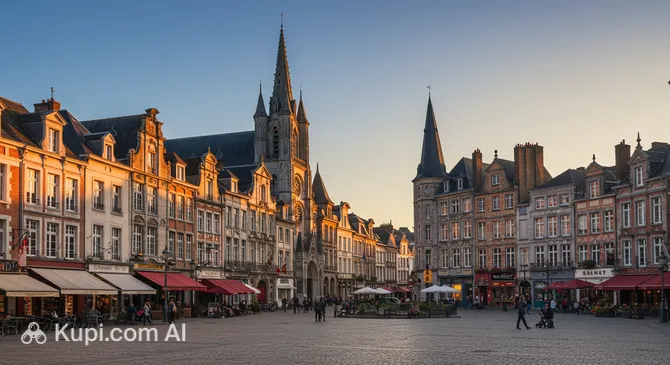
For those who want to explore the surrounding area, Valenciennes serves as an excellent starting point for day trips to several interesting nearby locations:

CityPopulationDistance
Anzin13 3292 km
Saint-Saulve11 3533 km
Marly12 0833 km
Bruay-sur-l'Escaut11 3115 km
Raismes12 4685 km

Special attention should be given to Saint-Amand-les-Eaux, located just 12 kilometers from Valenciennes. This town is known as the only thermal resort north of Paris, offering wellness treatments and relaxation. In addition, tourists are attracted by the majestic abbey tower, 82 meters high — an impressive example of Baroque architecture preserved to this day.

Another interesting destination is Cambrai. A city with a rich historical past, it is famous for its magnificent belfry (beffroi), which is included in the UNESCO World Heritage list. The gastronomic symbol of the place is the famous "bêtises" mint candies (Bêtises de Cambrai), which make an excellent souvenir from your trip.

These nearby destinations provide an insight into the diverse culture and landscapes of the region.

Shopping & Souvenirs

Shopping in Valenciennes is a pleasant and relaxed activity, free from the bustle of huge metropolises. The city offers a harmonious blend of major chain brands and charming private boutiques where you can find unique items. Thanks to the compactness of the center, a shopping trip here is easy to combine with exploring architectural beauties and relaxing in cozy cafes. Valenciennes is particularly famous for its gastronomic shops, which sell the best products of the Hauts-de-France region.

The heart of the city's commercial life is the pedestrian streets branching out from the main square. The main route for a shopaholic runs through Rue de la Paix and the neighboring Rue de Paris. This is where most clothing, shoe, perfume, and accessory stores are concentrated. Walking through this area, you will find both well-known European high-street brands and elegant French boutiques with local designer clothing.

If you prefer to do your shopping in one place, be sure to check out the Place d'Armes Shopping Center. This modern complex, successfully integrated into the historical ensemble of the central square, is the main attraction for shopping enthusiasts. Under its roof are dozens of fashion, cosmetics, and home goods stores, as well as a food court where you can have a snack between purchases.

For those who want to get a real taste of local life, a visit to the market is a must. The traditional street bazaar takes place on Place d'Armes on Wednesday and Saturday mornings. Here farmers sell fresh vegetables, fruits, flowers, and, of course, the famous northern cheeses. This is the best place to buy authentic products and chat with friendly vendors.

As souvenirs from Valenciennes, tourists most often take gastronomic delicacies. The city's signature dish is Lucullus de Valenciennes — a refined delicacy made of smoked beef tongue and foie gras. Also, look out for local craft beer and traditional sweets like waffles or candies. History buffs might be interested in the theme of famous Valenciennes lace: although it is difficult to find antique samples, souvenir shops carry modern items inspired by this craft.

Opening hours for shops in Valenciennes follow general French standards. Major shopping centers and chain stores are usually open from 09:30 or 10:00 to 19:00 without a break, from Monday to Saturday. Small private boutiques may close for a lunch break from 12:00 to 14:00 and are often closed on Monday mornings. Sunday is a day off for most retail outlets.

Bank cards (Visa, Mastercard) are accepted everywhere, and contactless payments are very popular even in small kiosks. Cash may only be needed at the market or for buying small souvenirs. Travelers from non-EU countries should remember the Tax Free system: for a single purchase over 100.01 euros in one store, you can apply for a tax refund (détaxe) if you ask for the appropriate form at the checkout.
Nearby cities

Reached the end of the page?

That means the route is fully explored